


At a Glance
• Conventional imaging does not pick up all potential retinal pathology.
• Peripheral lesions are predictive of increased risk for disease progression in diabetic retinopathy.
• Peripheral involvement is an important component of posterior uveitis and vasculitis.
Much of our work as retina specialists is appropriately focused on the posterior pole and protecting patients’ central vision, but lately our clinical horizons have broadened, particularly as the technological sophistication and practical utility of ultra-widefield (UWF) retinal imaging have improved. A rapidly growing body of research based on UWF imaging points to the relevance of findings from the periphery for early detection and management of macular disease, and to the significance of the periphery as a principal locus of the disease process and a viable target for treatment in its own right.1-3 The ability to obtain—and then readily share—multimodal, high-resolution digital images of 200˚ (82%) of the retina in a single, noncontact capture has changed the way we approach everything from screening and diagnosis to treatment planning and selection, and has even influenced the definition and grading of retinal disease. Whether it is the drusen and geographic atrophy associated with age-related macular degeneration (AMD), the extent and differentiation of choroidal melanomas and nevi, or the neovascularization, exudates, and retinal hemorrhages that help evaluate progression in diabetic retinopathy (DR), the retinal periphery contains pathology that we cannot afford to miss.
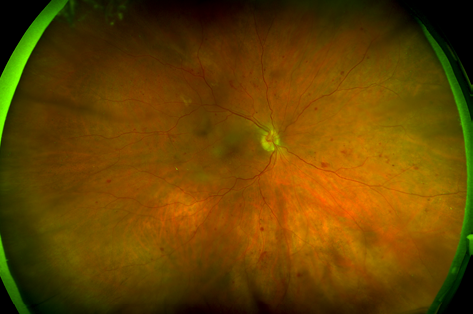
Figure 1. Ultra-widefield color image illustrating predominantly peripheral lesions in a patient with proliferative DR.
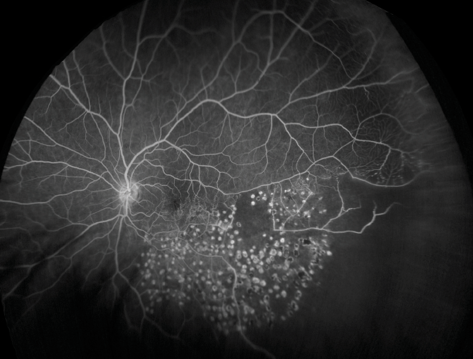
Figure 2. Optomap fluorescein angiography image of a treated RVO showing peripheral nonperfusion.
TOP REASONS TO IMAGE THE PERIPHERAL RETINA
Following are 10 reasons why UWF retinal imaging has helped move the periphery to the center of our attention.
1. Predicting Disease Progression in Diabetic Retinopathy
Results from a prospective 4-year study conducted by researchers at the Joslin Diabetes Center showed that the presence of predominantly peripheral lesions is predictive of a 3-fold increased risk of DR progression and a nearly 5-fold increased risk of developing proliferative DR.4 Slightly more than half (51%) of the patients who did not have proliferative disease at baseline were observed to have predominantly peripheral diabetic lesions, and 39% had DR progression, a finding that may help identify a subset of patients at higher risk for progression.1 Because these lesions are outside the area of the retina that can be visualized with traditional fundus photography, it is important to use UWF imaging to examine the periphery to accurately assess the severity of DR and evaluate the likelihood of progression (Figure 1).
2. Revealing the True Extent of Nonperfusion Associated With DR
More recently, the same group at the Joslin Diabetes Center demonstrated that areas of peripheral nonperfusion identified on UWF fluorescein angiography are highly correlated with the presence of predominantly peripheral lesions and with increased risk for the progression of DR. This connection explains the increased risk of progression associated with predominantly peripheral lesions.5
3. Insight Into Retinal Vein Occlusion and Its Treatment Course
Peripheral nonperfusion identified with UWF fluorescein angiography also has prognostic value in retinal vein occlusion (RVO). A prospective study of 32 patients with RVO and recurrent macular edema found that the extent of peripheral nonperfusion fluctuates over time and is related to the degree of macular edema.6 The amount of ischemia at baseline correlated with the magnitude of response to treatment, both in reduction of macular edema and improvement in visual acuity. The observation that patients with greater amounts of peripheral nonperfusion were more likely to have larger improvements in both macular thickness and visual acuity following anti-VEGF therapy underscores the potential importance of peripheral findings for treatment planning and disease management (Figure 2).
4. Imaging the Periphery Influences Management Decisions in Uveitis
Studies have confirmed that UWF color and fluorescein angiography imaging reveal pathology associated with noninfectious uveitis or vasculitis that would be missed on standard fundus photography and fluorescein angiography.7,8 The enhanced quality and resolution of UWF images, even in the presence of vitreous haze, is also an advantage. Investigators at the Wilmer Eye Institute found that the addition of UWF fluorescein angiography to clinical examination changed their management decisions for 48% of patients, compared with changes made for 16% of patients based on standard photography and examination.9
5. Conventional Imaging Does Not Pick Up onTwo-Thirds of Potential Retinal Pathology
It makes sense that, if we are imaging only part of the retina, then we will not detect all of the pathology that may be present. From holes, tears, and detachments to choroidal melanomas and nevi, it is difficult to get a complete picture—or in some cases see the pathology at all—if we are examining only the central 60˚. Clinical data reviewed over 3 years of UWF imaging research suggest that 66% of pathology occurs outside of the field of view of standard fundus photography.10 The presence of this pathology and its margins are better documented with UWF imaging.
For example, multimodal UWF permits evaluation of vascular lesions as well as their associated pathology, including exudative retinal changes, epiretinal membranes, and retinal traction, and is useful in assessing disease progression and treatment response.11 The ability to compare and contrast different channels improves diagnosis and management with, for example, red reflectance, autofluorescence, and indocyanine green (ICG), providing complementary information useful in differentiating choroidal nevi from tumor, examining intrinsic tumor vasculature, and assessing related pathology.12,13
6. A More Complete Picture of Retinal Changes Associated With AMD
As in other retinal disorders, the pathologic changes associated with AMD are not confined to the posterior pole. OPERA, a substudy of AREDS2, confirmed that peripheral abnormalities are present on UWF color and autofluorescence images in the vast majority of eyes that have advanced to at least intermediate AMD.14 Investigators identified drusen outside the posterior pole in 97% of these patients and reticular pigmentary degeneration in 68% of patients.14 How these common findings relate to the potential for vision loss in AMD is not yet understood, but peripheral involvement is an important component of the disease process and may become more relevant for patient management (Figure 3).
7. Comprehensive Evaluation of Peripheral Vascular Abnormalities
For the detection and monitoring of disorders that principally affect the retinal periphery, many of which appear in infancy or childhood, UWF imaging is increasingly indispensable. The use of UWF fluorescein angiography enhances evaluation and can guide treatment of peripheral arteriovenous abnormalities including rare congenital disorders such as Coats disease and familial exudative vitreoretinopathy,15 retinal hemangiomas and other vascular tumors, and retinopathy of prematurity. Because the Optos UWF systems obtain a high-resolution digital angiogram of the retinal periphery in a single, rapid, noncontact capture, they may be particularly helpful for assessing babies or young children who are difficult to image via conventional means.16,17
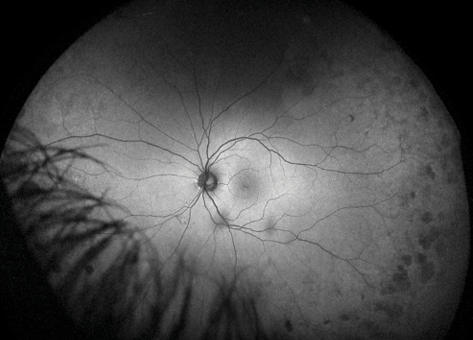
Figure 3. Optomap autofluorescence image demonstrating widespread peripheral changes associated with AMD. Image courtesy of SriniVas Sadda, MD, MD
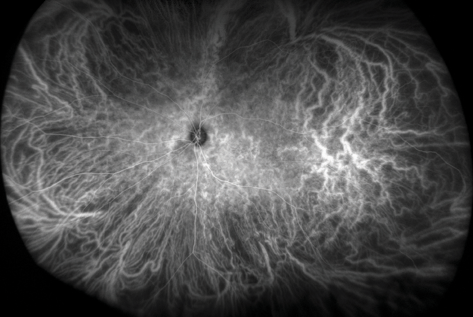
Figure 4. Early phase ultra-widefield ICG image of a patient with macular dystrophy.
8. Availability of UWF ICG Angiography
Cross-registration of different UWF imaging modalities provides the most comprehensive tool for evaluating peripheral retinal abnormalities. Optos added ICG angiography to its California UWF device’s imaging suite of color, fluorescein angiography, and autofluorescence. Supplementing other imaging modalities with 200˚ ICG angiography may have particular clinical utility in uveitis, tumors, and diseases of the choroid. Several recent publications have explored the clinical potential of UWF ICG imaging in central serous chorioretinopathy and a wide variety of other retinal conditions.18,19 For example, Klufas et al identified peripheral abnormalities on UWF ICG in a large proportion of cases, including in 59.4% of eyes with uveitis and 80% of eyes with AMD, suggesting that this modality may be broadly applicable in clinical practice (Figure 4).19
9. A Potential Window Into Systemic Diseases
Correlations between retinal pathology and the risk for development or progression of systemic diseases are now being established, but the ability to examine the retinal vasculature in high resolution with multimodal UWF imaging will certainly propel this compelling area of investigation forward. A number of studies, including the Beaver Dam Eye Study, the Blue Mountains Eye Study, and the Atherosclerosis Risk in Communities Study, have demonstrated modest to strong associations between retinal vascular signs and cardiovascular disease, particularly heart failure and stroke.20-22
Optos is participating in several studies of the retinal signs of systemic disease that incorporate UWF imaging to identify cardiovascular biomarker risk factors, evaluate multiple sclerosis, and better characterize the impact of aging on the retina. While we are already employing UWF imaging to help identify and manage the retinal manifestations of a variety of other systemic diseases ranging from diabetes to lupus and sickle cell anemia, the prognostic value of peripheral retinal findings for overall disease course must be established. The broad potential of this approach, however, is suggested by preliminary research that has examined the correlation between subretinal drusen and worsening mental status in patients with mild to moderate Alzheimer disease.23
A New Picture of the Normal Retinal Periphery
1. Sadda S, Sagong M, van Hemert J, et al. Ultra-widefield imaging of the peripheral retinal vasculature in normal subjects. Paper presented at: 15th Euretina Congress; September 17-20, 2015; Nice, France.
10. A Guideline for Treatment
We often think of UWF retinal imaging in the context of diagnosis and monitoring, but the full clinical potential of the technology lies in its expanded use in treatment planning, targeting, and assessment. Once treatment has been initiated, UWF imaging can help gauge the benefit of anti-VEGF therapy for DR, particularly its ability to slow progression to proliferative disease.
In one prospective, proof-of-concept pilot study in diabetic macular edema (DME), the combination of anti-VEGF treatment with panretinal photocoagulation targeted to areas of nonperfusion identified with UWF fluorescein angiography appeared effective in improving or resolving diffuse DME, improving or maintaining visual acuity, and reducing the frequency of intravitreal injections.24 Ultimately, the ability to intervene earlier and limit the extent of peripheral laser may give us the opportunity to improve the quality of our patients’ functionality, particularly with regard to their peripheral and night vision.
CONCLUSION
As more novel treatment options and approaches for retinal disease become available, and our understanding of the prognostic value of peripheral pathology for both ophthalmic and systemic disease improves, the clinical rationale for incorporating multimodal UWF retinal imaging into screening, diagnosis, monitoring, and management will continue to expand. UWF retinal imaging will likely play an increasingly central role in our daily clinical practice, ensuring that we do not miss critical signs in the retinal periphery.

Sunil Gupta, MD, is founder and manager of Retina Specialty Institute, with multiple locations in the Southeast; founder and chief medical officer of USRetina; and founder, chairman, and chief medical officer of IRIS: Intelligent Retinal Imaging Systems in Pensacola, Fla. He has a financial interest in IRIS: Intelligent Retinal Imaging Systems and USRetina and is a consultant for Genentech, Allergan, VisionCare, and Alcon. Dr. Gupta may be reached at sgupta@retinaspecialty.com.
1. Sim DA, Keane PA, Rajendram R, et al. Patterns of peripheral retinal and central macula ischemia in diabetic retinopathy as evaluated by ultra widefield fluorescein angiography. Am J Ophthalmol. 2014;158(1):144-153.
2. Patel M, Kiss S. Ultra-wide-field fluorescein angiography in retinal disease. Curr Opin Ophthalmol. 2014; 25(3):213-220.
3. Silva PS, Dela Cruz AJ, Ledesma MG, et al. Diabetic retinopathy severity and peripheral lesions are associated with nonperfusion on ultrawide field angiography. Ophthalmology. In press.
4. Silva PS, Cavallerano JD, Haddad NM, et al. Peripheral lesions identified on ultrawide field imaging predict increased risk of diabetic retinopathy progression over 4 years. Ophthalmology. 2015;122(5):949-956.
5. Silva PS, Dela Cruz AJ, Ledesma MG, et al. Diabetic retinopathy severity and peripheral lesions are associated with nonperfusion on ultrawide field angiography [published online ahead of print September 6, 2015]. Ophthalmology.
6. Singer M, Tan CS, Bell D, et al. Area of peripheral retinal nonperfusion and treatment response in branch and central retinal vein occlusion. Retina. 2014;34(9):1736-1742.
7. Hong BK, Khanamiri HN, Rao NA. Role of ultra-widefield fluorescein angiography in the management of uveitis. Can J Ophthalmol. 2013;48:489-493.
8. Leder HA, Campbell JP, Sepah YJ, et al. Ultra-wide-field retinal imaging in the management of non-infectious retinal vasculitis. J Ophthalmic Inflamm Infect. 2013;3(1):30.
9. Campbell JP, Leder HA, Sepah YJ, et al. Wide-field retinal imaging in the management of noninfectious posterior uveitis. Am J Ophthalmol. 2012;154:908-911. E2.
10. Optos. Data on file.
11. Heimann H, Jmor F, Damato B. Imaging of retinal and choroidal vascular tumours. Eye (Lond). 2013;27(2):208-216.
12. Distefano LN, Zapata MA, Leila M, et al. Autofluorescence and red reflectance imaging of choroidal nevus using ultra-wide-field scanning laser ophthalmoscope. Poster presented at: Association for Research in Vision and Ophthalmology Annual Meeting; May 4-8, 2014; Orlando, FL.
13. Medina CA, Singh AD. Imaging of intraocular tumors. Retinal Physician. 2014;11:19-25.
14. Domalpally A, Danis RP, Chew EY, et al. Ultra wide field autufluorescence imaging in age related macular degeneration-Optos peripheral retina (OPERA) age related eye disease study 2 (AREDS2) ancillary study. Invest Ophthalmol Vis Sci. 2014;55(13):3410.
15. Kang KB, Wessel MW, Tong J, et al. Ultra-widefield imaging for the management of pediatric retinal diseases. J Pediatr Ophthalmol Strabismus. 2013;50(5):282-288.
16. Fung THM, Muqit MMK, Mordant DJ, et al. Noncontact high-resolution ultra-wide-field oral fluorescein angiography in premature infants with retinopathy of prematurity. JAMA Ophthalmol. 2014;132(1):108-110.
17. Patel CK, Fung THM, Muqit MMK, et al. Non-contact ultra-widefield imaging of retinopathy of prematurity using the Optos dual wavelength scanning laser ophthalmoscope. Eye (Lond). 2013; 27(5):589-596.
18. Pang CE, Shah VP, Sarraf D, et al. Ultra-widefield imaging with autofluorescence and indocyanine green angiography in central serous chorioretinopathy. Am J Ophthalmol. 2014;158(2):362-371.
19. Klufas MA, Yannuzzi NA, Pang CE, et al. Feasibility and clinical utility of ultra-widefield indocyanine green angiography. Retina. 2015;35(3):508-520.
20. Klein R, Klein BE, Meuer SM. Retinal emboli and cardiovascular disease: the Beaver Dam Eye Study. Trans Am Ophthalmol Soc. 2003;101:173-182.
21. Smith W, Mitchell P, Leeder SR, Wang JJ. Plasma fibrinogen levels, other cardiovascular risk factors, and age-related maculopathy: the Blue Mountains Eye Study. Arch Ophthalmol. 1998;116(5):583-587.
22. Wong TY, Sharrett AR, Duncan BB, et al. Retinal arteriolar narrowing and risk of coronary heart disease in men and women. The Atherosclerosis Risk in Communities Study. JAMA. 2001;287(9):1153-1159.
23. Beguiristain MG, Zapata MA , Distefano LN, et al. Study of funduscopic and tomographic findings in the retina of patients with Alzheimer disease. Paper presented at: Association for Research in Vision and Ophthalmology Annual Meeting, May 3-7, 2015, Denver, CO.
24. Tornambe P, London N. Is DME a peripheral retina disease which secondarily involves the macula? Presentation to the Argentina Retina Society Meeting. November, 2014.


_1784132761.jpg?auto=compress,format&w=75)





