


Ultra-Widefield Findings Linked With DR Progression
The presence of predominantly peripheral lesions (PPLs) was associated with increased risk of diabetic retinopathy (DR) progression over 4 years, according to a study published in Ophthalmology.1
Researchers examined 200 eyes of 100 patients using ultra-widefield imaging and ETDRS photographs at baseline. At 4.2 ±0.3 mean years follow-up, ETDRS photographs were obtained, and researchers used those photographs to grade DR severity. The study’s main outcomes were rates of two-step or worse disease progression and progression to proliferative DR (PDR) at 4 years.
Eyes with PPLs had a 3.2-fold increased risk of two-step or more DR progression compared with eyes without PPLs (11% vs 34%; P = .005), and a 4.7-fold increased risk of progression to PDR (6% vs 25%; P = .005). The findings remained statistically significant after researchers adjusted for gender, diabetes type, diabetes duration, A1C level, and baseline DR severity.
1. Silva PS, Cavallerano JD, Haddad NM, et al. Peripheral lesions identified on ultrawide field imaging predict increased risk of diabetic retinopathy progression over 4 years. Ophthalmology. 2015;122(5):949-956.
Age, Subretinal Fluid, Among Baseline Factors Predicting Response in HARBOR Study
Worse best corrected visual acuity (BCVA), younger age, smaller total and occult choroidal neovascularization (CNV) leakage areas, and presence of subretinal fluid were baseline characteristics predictive of better visual acuity outcomes at 12 months for patients in the HARBOR study, according to a study published in the American Journal of Ophthalmology.1
Researchers examined the baseline characteristics of patients in the 0.5-mg treatment arm of HARBOR, a study that assessed the efficacy and safety of 0.5-mg and 2.0-mg doses of ranibizumab (Lucentis, Genentech) in patients with wet age-related macular degeneration (AMD). Doses were given monthly (n = 249) or as-needed (PRN) after three monthly loading doses (n = 251). Researchers assessed BCVA change from baseline at month 12, the percentage of patients who gained 3 lines or more of BCVA from baseline to month 12, and the percentage of patients who achieved 20/40 vision or better at month 12.
Baseline predictors of BCVA change or percentage of patients gaining 3 lines or more from baseline to month 12 included lower baseline BCVA, younger age, smaller total CNV leakage area, smaller area of occult CNV, and presence of subretinal fluid. Baseline predictors of 20/40 BCVA or better at month 12 were higher BCVA, smaller total CNV leakage area, and presence of subretinal fluid. Age and area of occult CNV were not baseline predictors for 20/40 or better vision at month 12.
1. Regillo CD, Busbee BG, Ho AC, et al. Baseline predictors of 12-month treatment response to ranibizumab in patients with wet age-related macular degeneration [published online ahead of print July 29, 2015]. Am J Ophthalmol.
Guidelines Released for Diabetic Eye Disease Screening in Children
Screening examinations for diabetic eye disease in children with type 1 diabetes could in most cases begin at age 15 or at 5 years after diagnosis of diabetes, whichever occurs later, according to a study published in Ophthalmology.1
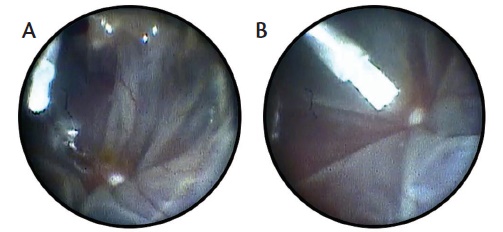
A retrospective consecutive cohort study was conducted to assess the effectiveness of annual eye examinations in children with diabetes. The study included 370 children (mean age 11.2 years, range 1-17.5 years) with type 1 or type 2 diabetes who underwent a total of 693 examinations. The mean duration of diabetes was 5.2 years (0.1-16.2 years) and mean A1C was 8.6 (5 to ≥14). None of the patients had DR; 12 had cataract, five of whom required extraction, and none of whom had cataract identified by diabetic eye screening. A total of 19 children had strabismus, and 41 children had high refractive error.
Researchers did not identify an association between these conditions and duration or control of diabetes. A literature review identified 15 years as the youngest age at which severe DR was diagnosed, and 5 years as the shortest duration of diabetes at which DR was diagnosed.
1. Geloneck MM, Forbes BJ, Shaffer J, et al. Ocular complications in children with diabetes mellitus [published online ahead of print August 31, 2015]. Ophthalmology.
Vitamin D Levels, Genotypes Linked to AMD Risk
Patients with deficient vitamin D levels and two risk alleles for the CFH and CFI genotypes had the highest likelihood of AMD progression, according to a study published in JAMA Ophthalmology.1 The results suggest a “synergistic effect between vitamin D status and complement cascade protein function,” according to the study authors.
Researchers examined postmenopausal women (N = 913) aged 54 to 75 years who participated in the Carotenoids in Age-Related Eye Disease Study and assessed levels of vitamin D, grouping participants into those with adequate (≥ 20 ng/mL), inadequate (≥12 to < 20 ng/mL), and deficient (< 12 ng/mL) levels. Women were also grouped based on the number of risk alleles for CFH and CFI they carried.
The researchers identified 550 women with adequate, 275 with inadequate, and 88 with deficient levels of vitamin D. A 6.7-fold increased likelihood of AMD (95% CI, 1.6-28.2) was observed among women in the deficient group who also had 2 risk alleles for CFH (synergy index [SI] for additive interaction, 1.4; 95% CI, 1.1-1.7; P for multiplicative interaction = .25). Additionally, researchers observed significant additive (SI, 1.4; 95% CI, 1.1-1.7) and multiplicative interactions (P = .02) for deficient women with 2 CFI alleles (odds ratio, 6.3; 95% CI, 1.6-24.2)
The researchers attributed wide CIs in the study to its limited sample size.
1. Millen AE, Meyers KJ, Liu A, et al. Association between vitamin D status and age-related macular degeneration by genetic risk [published online ahead of print August 27, 2015]. JAMA Ophthalmol.
Pegpleranib Shows Improved Vision When Paired with Anti-VEGF Agents in Phase 2 Trial
Patients with recalcitrant AMD who received anti-VEGF therapy with aflibercept (Eylea, Regeneron) or bevacizumab (Avastin, Genentech) in combination with pegpleranib (Fovista, Ophthotech) had improved vision at 3 and 7 months, according to a presentation by Pravin U. Dugel, MD, at the annual Euretina Congress in Nice, France.1
Pegpleranib is an anti–platelet-derived growth factor (PDGF) agent that inhibits PDGF, which in turn inhibits fibrosis. Patients (N = 30) in the study received aflibercept or bevacizumab treatment in combination with pegpleranib; some patients (n = 10) received pretreatment with pegpleranib. Of the patients in the study, 27 (90%) had experienced no fluid reduction or visual acuity improvement despite prior anti-VEGF treatment.
According to a report on Medscape, patients who underwent pretreatment with pegpleranib had an 11.1-letter improvement at 3 months and 16.5-letter improvement at 7 months. Patients who did not undergo pretreatment with pegpleranib had a 4.7-letter improvement at 3 months and a 4.4-letter improvement at 7 months.
1. Dugel PU. Anti-PDGF pretreatment in neovascular AMD – The significance of PDGF/VEGF crosstalk. Paper presented at: 15th EURETINA Congress; September 19, 2015; Nice, France.
CE Mark Given to AdaptDx
AdaptDx (MacuLogix) received the CE Mark, according to a company news release.
The CE Mark indicates that AdaptDx, an instrument that screens for early AMD by evaluating the time for retinal adaptation to darkness, conforms with safety and quality standards required for marketing a medical device in Europe.
Direct sales of the device will begin in 2016. n


_1784132761.jpg?auto=compress,format&w=75)





