




Cataract surgery is among the most common surgeries performed in the United States. Intraoperative and immediate postoperative complication rates have declined since the introduction of small-incision phacoemulsification cataract surgery, which has largely replaced large-incision extracapsular cataract extraction.1 However, as patients are now living longer and more people are undergoing cataract extraction, retina specialists are seeing more long-term complications of cataract surgery, such as dislocated intraocular lenses (IOLs).
AT A GLANCE
• Surgical approaches to dislocated IOLs include pars plana vitrectomy with either iris or scleral fixation of the current lens or IOL exchange.
• Most methods requiring lens exchange or scleral fixation of an existing lens necessitate a conjunctival peritomy, which is not ideal for patients with glaucoma.
• The technique described here avoids the large incision needed for IOL exchange and eliminates the need for a peritomy.
The incidence of dislocated IOLs is likely to continue to rise as the population ages. One reason is that a natural attrition of the lens zonules occurs with age. This is compounded by any history of vitrectomy, ocular trauma, pseudoexfoliation syndrome, or uveitis. Another reason is that, as surgery has become safer and the threshold for intervention has become lower, more patients are having cataract surgery earlier in life. This, combined with patients living longer, means that more IOLs must remain in eyes for longer periods than before.2,3
APPROACHES TO MANAGEMENT
Surgical approaches to dislocated IOLs that remain in the capsular bag include pars plana vitrectomy with either iris or scleral fixation of the current lens or exchange of the existing IOL for an anterior chamber or posterior chamber IOL.
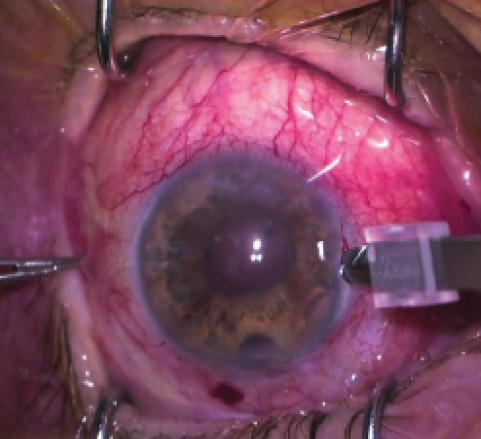
Figure 1. A guarded blade (0.5-mm depth) is used to fashion two partial-thickness corneal incisions at the 3 o’clock and 9 o’clock limbus.
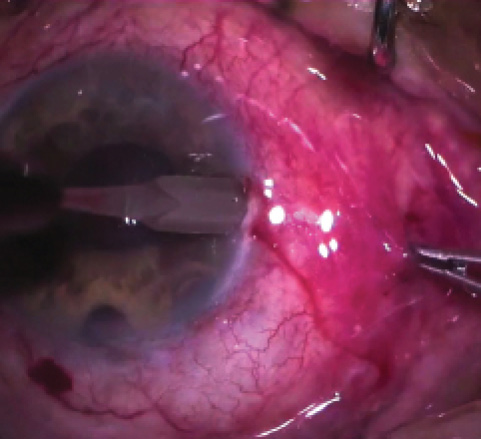
Figure 2. A crescent blade or a keratome is used to create a Hoffman pocket at approximately 50% scleral depth.
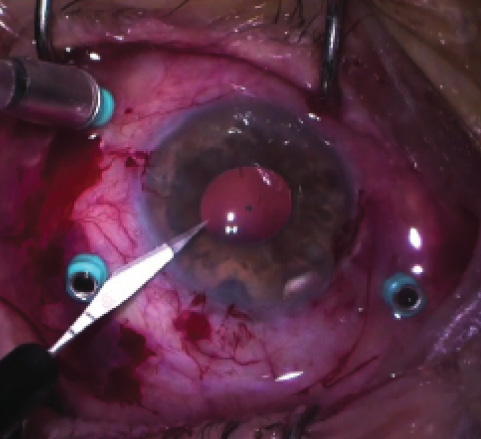
Figure 3. A paracentesis is created 1 clock hour superior to each Hoffman pocket.
These techniques, unfortunately, have limitations. First, most methods requiring lens exchange or scleral fixation of an existing lens necessitate a conjunctival peritomy, which is not ideal for patients with glaucoma. This is especially true for patients who may require filtering surgery in the future or who already have a filter in place. Also, endothelial cell loss can be significant, especially during IOL explantation and after anterior chamber IOL implantation. Finally, anterior chamber IOLs and iris-fixated IOLs are known to cause intraocular inflammation, which is often chronic and can be a challenge to treat.4,5
Techniques have been developed to reuse the dislocated IOL, minimize manipulation of the conjunctiva, and reduce trauma to the corneal endothelium. Here we describe a novel procedure developed in our practice that involves transconjunctival rescue with suture fixation of the IOL and capsular bag complex. This technique may mitigate some of the long-term risks of other surgical procedures.6,7
TECHNIQUE
A guarded blade (0.5-mm depth) is used to fashion two partial-thickness clear corneal limbal incisions 2 mm in length at the 3 o’clock and 9 o’clock positions (Figure 1). An angled crescent blade or a keratome is then used to make a partial-thickness Hoffman pocket, entering the cornea at the initial partial-thickness limbal incision and passing the blade posteriorly to create a pocket 3.5 mm in length. This incision is created parallel to the curvature of the globe at 50% of scleral depth (Figure 2). A 15° blade is then used to create a paracentesis incision 1 clock hour superior to each Hoffman pocket (Figure 3).
Sclerotomies are then created for a standard three-port pars plana vitrectomy using a transconjunctival trocar-cannula system. Vitrectomy is performed, including induction of posterior vitreous detachment and shaving of the vitreous base. The lens-bag complex is allowed to fall posteriorly onto the posterior pole.
End-grasping forceps are then used to engage the lens-bag complex at the haptic-optic junction of the IOL. It may be necessary to apply gentle pressure to penetrate the capsular bag to achieve adequate purchase of the IOL, which is then elevated to just behind the iris plane.
With the opposite hand, a bent 1-inch, 25-gauge needle with a tuberculin syringe handle is inserted 2 mm posterior to the limbus transconjunctivally and transclerally into the globe through the Hoffman pocket on the side opposite the hand holding the lens. The needle is used to penetrate the lens-bag complex near the haptic, close to the apex of its curvature. The forceps are then released and removed while the IOL is left hanging in position with the 25-gauge needle.
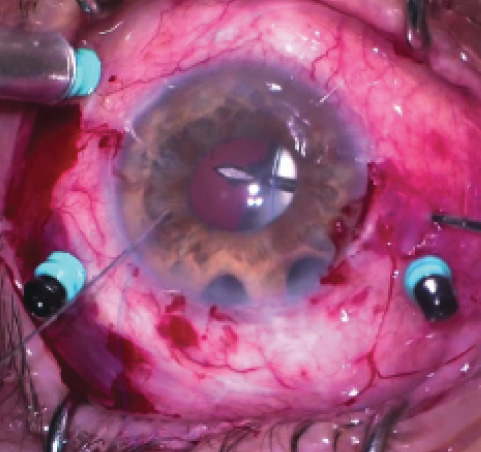
Figure 4. The long straight needle of a double-armed 9-0 polypropylene suture is passed backward through an opposing paracentesis wound and docked in the hub of a 25-gauge needle that has been passed through the lens-bag complex near the apex of the haptic’s curvature.
The first arm of a double-armed 9-0 polypropylene suture, on a long straight needle, is placed through the opposite paracentesis site backward, so as not to engage corneal tissue, and docked into the 25-gauge needle (Figure 4). The 25-gauge needle is then externalized along with the 9-0 polypropylene suture. The 25-gauge needle is again passed transconjunctivally and transclerally into the globe through the same Hoffman pocket, but more anteriorly positioned, 1.5 mm posterior to the limbus. The needle is then placed above the haptic and lens-bag complex.
The second arm of the double-armed suture is then passed backward through the same opposing paracentesis incision and is once again docked into the 25-gauge needle. The 25-gauge needle is again externalized with the 9-0 polypropylene suture needle within its hub, thereby creating a suture loop through one side of the lens-bag complex.
This process is then repeated on the opposite side. In order to do this, the IOL has to be placed on the posterior pole and then grasped using the opposite hand with end-grasping forceps at the haptic-optic junction. The suture passes are repeated using the other Hoffman pocket and its opposing paracentesis wound.
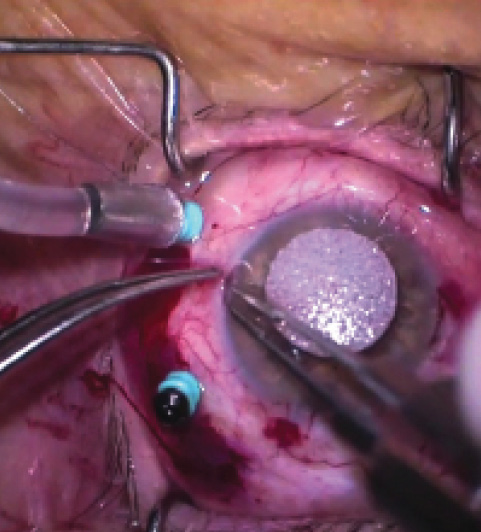
Figure 5. The knots are tied, trimmed, and tucked into the Hoffman pockets.
The lens-bag complex is now effectively lassoed with two-point fixation. The needles can be cut off and the 9-0 polypropylene sutures pulled up gently. A Sinskey hook is used within each pocket opening to retrieve both suture ends from within each Hoffman pocket. The sutures are tied in a standard 3-1-1 technique after first adjusting the tension of the initial three-loop on both sides to achieve perfect IOL centration. The suture knots are then buried into the Hoffman pockets (Figure 5). Acetylcholine chloride intraocular solution is injected into the anterior chamber to achieve miosis. The cannulas are all removed and all wounds are inspected and sutured if necessary.
SUMMARY
This technique allows the surgeon to avoid the large incision that may be required for IOL exchange, lowers the risk of iris chafing from iris fixation, and decreases endothelial cell loss from IOL exchange surgery or placement of an anterior chamber lens. Furthermore, in eyes with an existing bleb (as in our case example), the technique preserves the bleb and eliminates the need for a peritomy, which is important if filtering surgery may be needed at a later date. n
1. Minassian DC, Rosen P, Dart JK, et al. Extracapsular cataract extraction compared with small incision surgery by phacoemulsification: a randomized trial. Br J Ophthalmol. 2001;85(7):822-829. Erratum in: Br J Ophthalmol. 2001;85(12):1498.
2. Davis D, Brubaker J, Espandar L, et al. Late in-the-bag spontaneous intraocular lens dislocation: evaluation of 86 consecutive cases. Ophthalmology. 2009;116(4):664-670.
3. Jehan FS, Mamalis N, Crandall AS. Spontaneous late dislocation of intraocular lens within the capsular bag in pseudoexfoliation patients. Ophthalmology. 2001;108(10):1727-1731.
4. Wagner M, Cox T, Ariyasu R, et al. Intraocular lens implantation in absence of capsular support. Ophthalmology. 2003;110(4):840-859.
5. Dick HB, Augustin AJ. Lens implant selection with absence of capsular support. Curr Opin Ophthalmol. 2001;12(1):47-57.
6. Hoffman RS, Fine H, Packer M. Scleral fixation without conjunctival dissection. J Cataract Refract Surg. 2006;32(11):121-128.
7. Prenner, JL, Wheatley HM, Wilgucki, JD. A novel approach for rescuing and scleral fixating a posterior dislocated intraocular lens/bag complex without conjunctival opening. Retina. 2013;33(9):1980-1982.
Section Editor Dean Eliott, MD
• associate director, retina service, Massachusetts Eye and Ear, Boston, Mass.
Section Editor Ingrid U. Scott, MD, MPH
• professor of ophthalmology and public health sciences, Penn State Hershey Eye Center, Hershey, Pa.
Nicholas D. Chinskey, MD
• vitreoretinal fellow at The Retina Institute in St. Louis, Mo.
• financial interest: none acknowledged
• nchinskey@gmail.com
Sumit P. Shah, MD
• surgeon at NJ Retina in New Jersey
• financial interest: none acknowledged
• shahsp1@gmail.com


_1784132761.jpg?auto=compress,format&w=75)




