


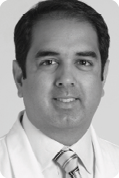

Describe the most challenging surgical case you faced as a young retina surgeon.
I do not think it was a single case that was challenging. Instead, teaching fellows how to operate and effectively communicating the pearls of vitreoretinal surgery while keeping them out of trouble and preventing complications is something that I find challenging and rewarding. It is a fine balance between allowing them the freedom to feel comfortable and confident on their own and looking out for the patient’s best interest. Typically I am assigned a first-year fellow straight from residency. While most people might balk at the prospect, I look at it as a sign that my colleagues think highly of my teaching ability and that I have a good chance at shaping how the fellow ultimately turns out.

Managing an OR staff requires a unique skill set. What pearls can you offer colleagues for making sure their OR staff keeps their OR running smoothly?
There is a lot that goes into the surgical planning and day-to-day operations of the OR to make it run as efficiently as possible. In the days prior to surgery, our team, which includes the fellow and the scrub nurse, meets to discuss each case. We identify the techniques to be used, the necessary instruments, the surgical complexities we might encounter and what might we do, and the case order. My typical methodology is to arrange cases in order of complexity, with the easiest cases scheduled earliest. Such a defined schedule lets me know how my day will run and ensures patient satisfaction with the length of surgery. I clearly communicate to the OR staff how close I am to finishing a procedure to make sure the next patient is prepped. Finally, I participate in all aspects of room turnover, including moving the patient to the next bay and completing paperwork so my staff can begin prepping the room for the next patient.

The inaugural Retina World Congress (RWC) will convene in February 2017 in Fort Lauderdale, Fla. What should attendees expect?
Expect a relaxed atmosphere with some of the best speakers and a format that is open, collaborative, and engaging. More than 35 retina societies from across the globe were involved in the planning and execution of this one-of-a-kind meeting and more than 85 US and international speakers have been confirmed. The Marriott Harbor Beach in Fort Lauderdale is an amazing venue and I am so proud to serve as president for this inaugural meeting.

Describe the challenges you faced in organizing the RWC’s first meeting.
It actually hasn’t been much of a challenge at all. The idea of having an internationally planned meeting with so many worldwide retina societies participating resonated with so many people. We have the benefit of a venue that is well known and liked by all. The only logistical issue really has been making sure that every group is represented in some way. I am proud of the effort that the RWC board of directors and planning committee have put forth for this meeting and I look forward to more meetings in the future.

What do you regard as the pinnacle of professional achievement?
I am blessed to work at a fantastic institution at the Cleveland Clinic Cole Eye Institute with excellent mentors and friends. This has allowed me to serve on leadership boards for many professional societies, editorial boards for journals, and as a leader in our field. Probably my most treasured professional achievement is attending some of our annual conferences and meeting with some of the fellows whom I have trained. The list of fellows is now 10 years long and, while that might not seem very lengthy, I have had the pleasure of training and mentoring many people who have gone on to do great things and contribute to retina in a meaningful way. n


_1784132761.jpg?auto=compress,format&w=75)





