




Diabetes is a leading cause of blindness both globally and in the United States. Diabetic retinopathy (DR) is estimated to affect 28.5% of the US diabetic population aged 40 years and older—or approximately 4% of the entire US population over age 40.1 Multiple landmark studies have shown that, with early diagnosis and treatment of DR through photocoagulation2-4 and intravitreal pharmacologic therapy,5,6 severe vision loss from retinopathy can be reduced in more than 90% of eyes. Consequently, multiple groups, including the American Academy of Ophthalmology (AAO), have developed guidelines recommending that patients with diabetes receive regular eye examinations, with the duration between visits based on the severity of retinopathy (Figure).7 However, studies show that approximately half of patients with diabetes do not adhere to these recommendations for regular eye examinations.8,9
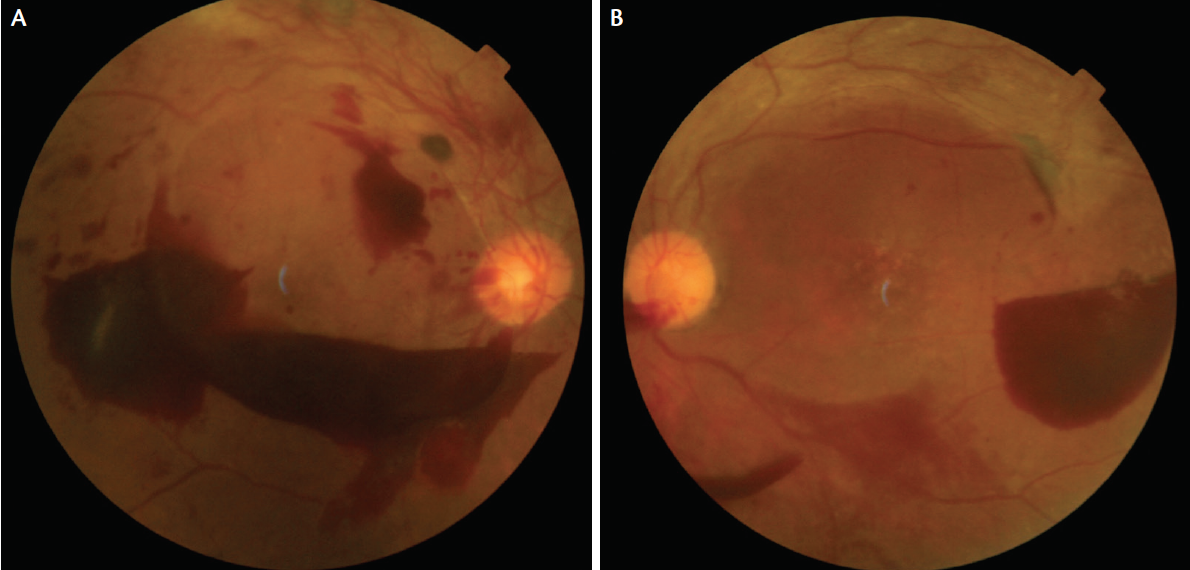
Figure. Fundus photos of a patient with proliferative diabetic retinopathy. Right eye image shows preretinal heme, neovascularization of the disc, and neovascularization elsewhere (A). Left eye image shows similar pathology as well as traction superiorly (B). Image courtesy of Damien Rodger, MD, PhD.
AT A GLANCE
• Diabetic eye examinations present opportunities to improve overall diabetic care; however, rates of adherence to recommended examinations are generally low.
• According to one study, adherence rates significantly improved among patients with documented communication between primary care providers and ophthalmologists.
• Improved communication can play a pivotal role in patient care, as it serves as a mechanism for providers to educate one another about patients’ disease manifestations, adherence, and treatment plans.
With a sizeable portion of Americans with diabetes forgoing regular eye care, important questions arise. Which patients are most at risk for poor adherence? What interventions might improve diabetic eye care? This article addresses these and other issues.
COORDINATION OF CARE FOR PATIENTS
WITH DIABETES
Communication between primary care physicians (PCPs) and ophthalmologists can play a pivotal role in patient care, as it serves as a mechanism for providers to educate one another about patients’ disease manifestations, adherence to therapy, and treatment plan. A letter from a PCP to an ophthalmologist can provide an understanding of a patient’s systemic complications from diabetes and his or her current treatment regimen. The ophthalmologist can then discuss this information with the patient and use it to emphasize the importance of appropriate follow-up care.
Conversely, when an ophthalmologist writes a letter to a PCP, this helps the PCP understand the patient’s current ocular treatment regimen and recommended follow-up time, which the PCP can reinforce to the patient, encouraging him or her to seek future eye examinations.
FACTORS THAT AFFECT ADHERENCE
Physician Communication
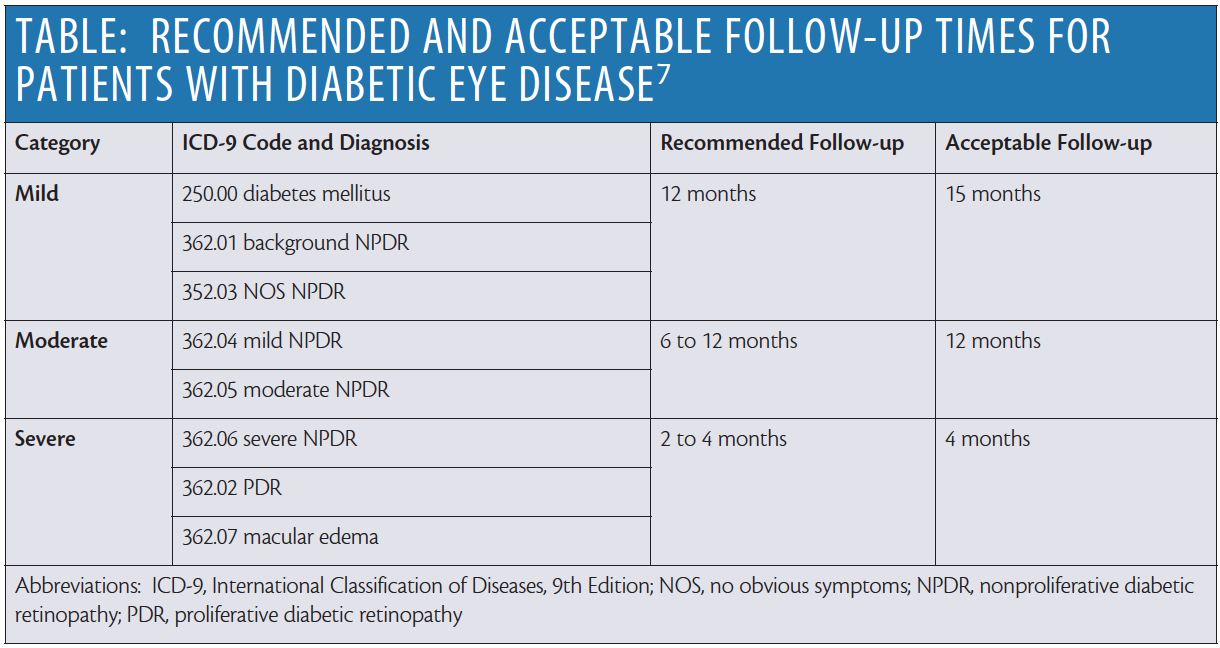
In a recently published study, we investigated factors associated with diabetic eye examination adherence, notably whether written communication between ophthalmologists and PCPs affected patient follow-up.10 We performed a retrospective review of 1968 patients with diabetes whose first clinical visit with dilated fundus examination at a general ophthalmology or retina clinic within the Wills Eye Hospital system occurred between January 1, 2007, and December 21, 2010. In our clinics, all written communication between ophthalmologists and PCPs is photocopied and placed in patient charts. This information was recorded during the chart review and data extraction for our study. A patient was considered adherent if he or she obtained a dilated fundus examination within the AAO’s acceptable time frame following his or her initial clinic visit: within 15 months for mild DR, within 12 months for moderate DR, and within 4 months for severe DR or diabetic macular edema (Table).
Overall, the adherence rates seen in our review were as low as rates similarly documented in previous studies: 41% of our patients attended recommended follow-up examinations. However, adherence significantly improved among patients with documented physician communication. After using multivariable analysis controlling for other variables, patients with written communication from an ophthalmologist to their PCP had 1.47 times higher odds of adhering to AAO follow-up recommendations (P = .0071). Additionally, patients with written communication from their PCP to an ophthalmologist had 1.53 times higher odds of adhering to follow-up care (P = .036).
Patient Characteristics
In addition to physician communication, we explored patient characteristics and variables that could affect exam adherence. After controlling for other factors, we found that patients with increased severity of retinopathy (P < .0001) and patients over age 65 years (P = .027) had significantly higher odds of adherence. We also found that nonsmokers had significantly higher odds of adherence (P < .0001) than smokers, which may indicate that nonsmoking status is correlated with an overall greater adherence to health care recommendations. Interestingly, patients with HbA1C or blood glucose levels listed in their charts were also found to have significantly higher rates of follow-up. Given that these variables are usually self-reported by patients in our clinics, this finding may be a surrogate for a higher level of health awareness and involvement, correlating with a higher likelihood of better eye care. We found no association between diabetic eye exam adherence and sex, insurance status, ethnicity, driving distance to our clinic, or socioeconomic status.
PHYSICIAN COMMUNICATION: A POTENTIAL INTERVENTION TO IMPROVE DIABETIC EYE CARE
Several studies have examined the impacts of various interventions to improve diabetic eye care with variable success. In one study, a multifaceted program was implemented to improve adherence of physicians to guidelines for care of patients with diabetes using physician detailing, patient education sessions, and computerized meal planning.11 One year after the program was begun, adherence to optimal guidelines improved in a number of categories, including physician referral to eye specialists (25% at baseline vs. 33% at 1 year). However, after 2 years of interventions, adherence to almost all guidelines returned to rates indistinguishable from baseline.
Another study evaluated whether multiple mailed reminders could increase rates of diabetic eye examinations compared with a single mailed reminder.12 Multiple reminders did increase eye examination rates, but the improvement at 1 year was small (35.4% eye examination rate after a single reminder vs. 37.0% after multiple reminders). Neither of these interventions achieved a rate of eye examination adherence of more than 40%, highlighting the need for additional tools to improve eye care in people with diabetes.
A diabetic eye examination presents an opportunity to improve overall diabetic care. When patients are able to see a fundus photograph or angiogram showing damage to their retinal vasculature and are told that similar pathology is likely occurring throughout the body, it may help them to better understand the disease and to commit themselves to improved diabetic control.
Given the generally low rates of adherence to recommended eye examinations cited in national statistics and in our recent study, interventions to improve these rates are needed. Communication between ophthalmologists and PCPs is associated with improved diabetic eye care, which raises the prospect that improved intercommunication could result in higher quality care. Our own study suggests that this is the case for patients with diabetes. n
1. Zhang X, Saaddine JB, Chou CF, et al. Prevalence of diabetic retinopathy in the United States, 2005-2008. JAMA. 2010;304(6):649-656.
2. Photocoagulation treatment of proliferative diabetic retinopathy. Clinical application of Diabetic Retinopathy Study (DRS) findings, DRS Report Number 8. The Diabetic Retinopathy Study Research Group. Ophthalmology. 1981;88(7):583-600.
3. Early photocoagulation for diabetic retinopathy. ETDRS report number 9. Early Treatment Diabetic Retinopathy Study Research Group. Ophthalmology. 1991;98(5 Suppl):766-785.
4. Photocoagulation for diabetic macular edema. Early Treatment Diabetic Retinopathy Study report number 1. Early Treatment Diabetic Retinopathy Study research group. Arch Ophthalmol. 1985;103(12):1796-1806.
5. Nguyen QD, Brown DM, Marcus DM, et al. Ranibizumab for diabetic macular edema: results from 2 phase III randomized trials: RISE and RIDE. Ophthalmology. 2012;119(4):789-801.
6. Korobelnik JF, Do DV, Schmidt-Erfurth U, et al. Intravitreal aflibercept for diabetic macular edema. Ophthalmology. 2014;121(11):2247-2254.
7. American Academy of Ophthalmology. Diabetic retinopathy preferred practice pattern – updated 2016. www.aao.org/preferred-practice-pattern/diabetic-retinopathy-ppp-updated-2016. February 2016. Accessed July 29, 2016.
8. Kuo S, Fleming BB, Gittings NS, et al. Trends in care practices and outcomes among Medicare beneficiaries with diabetes. Am J Prev Med. 2005;29(5):396-403.
9. Brechner RJ, Cowie CC, Howie LJ, et al. Ophthalmic examination among adults with diagnosed diabetes mellitus. JAMA. 1993;270(14):1714-1718.
10. Storey PP, Murchison AP, Pizzi LT, et al. Impact of physician communication on diabetic eye examination adherence: results from a retrospective cohort analysis. Retina. 2016;36(1):20-27.
11. Kirkman MS, Williams SR, Caffrey HH, et al. Impact of a program to improve adherence to diabetes guidelines by primary care physicians. Diabetes Care. 2002;25(11):1946-1951.
12. Halbert RJ, Leung KM, Nichol JM, et al. Effect of multiple patient reminders in improving diabetic retinopathy screening. A randomized trial. Diabetes Care. 1999;22(5):752-755.
Julia A. Haller, MD
• ophthalmologist-in-chief at Wills Eye Hospital in Philadelphia, Pa.
• member of the Retina Today editorial advisory board
• financial interest: none acknowledged
• jhaller@willseye.org
Philip Storey, MD, MPH
• chief resident at USC Roski Eye Institute in Los Angeles, Calif.
• financial interest: none acknowledged
• storey.p@gmail.com


_1784132761.jpg?auto=compress,format&w=75)





