


You are the first 5Q interviewee in Retina Today since March, when COVID-19 took the wheel. How did the pandemic affect you personally and professionally? Based on your interactions with colleagues, would you say retina specialists are generally still interested in remaining up to date on new developments or that they are on COVID overload and need a break from coverage?
That’s a perfect question for me as I have been affected both personally and professionally. My wife became very ill with COVID-19 in March and is still struggling with the aftereffects. I relearned much about critical care medicine and rehab during this time. I personally lost taste and smell with no other symptoms and now have antibodies along with the lingering question of “Why her and not me?”
Professionally, my practice was in the process of implementing LEAN processes when COVID-19 hit, making it easier to adapt to the new rules and practice patterns. We were assisted by federal relief money, did not have to eliminate any staff members, and came through as strong as ever.
Most of us are experiencing COVID-19 fatigue due to the ever-changing restrictions and constant mask use with no end in sight. Unfortunately, COVID-19 went from an infectious disease to a political issue, leading to sharpened opinions, skepticism, and ultimately COVID-19 overload.
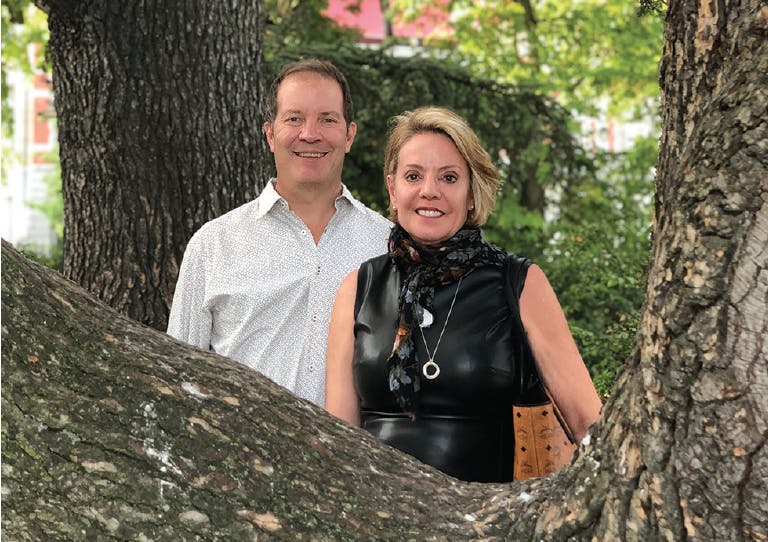
Figure. Dr. Joondeph and his wife Shirley in Geneva after the Retina Society meeting in London last year.
What professional accomplishment are you most proud of?
I am most proud of developing a happy, efficient, and productive clinical team, along with having appreciative patients. That means more to me than papers or awards. But I also value my membership in the Macula Society and Retina Society, as well as the opportunity to publish and contribute to the field.
Why did you choose to pursue a master’s degree in health care leadership? What do you plan to do with it, or how has it already benefited you?
When my youngest was in high school, I wanted a new challenge. The University of Denver was close by and offered classes one evening per week. After 3 years, I had my master’s degree—and, if I’m allowed to brag, a 4.0 GPA, which is better than I had in college. What I learned has assisted me with leadership positions within my practice and refined my writing skills.
In terms of leadership, I’m more of an idea than a process person. And I have an aversion to meetings, so I have gravitated toward writing, converting my ideas to words.
One of my professors encouraged me to write an opinion piece on health care for a local business journal. The writing bug bit me hard, and I am now a columnist for American Thinker, Rasmussen Reports, and a local newspaper. I have published more than 700 opinion pieces about political issues, including health care, and I have given radio interviews on these subjects.
Because politics is a touchy subject, I have been called all manner of names by friends, relatives, and professional colleagues who have an aversion to viewpoints other than their own, but such is the nature of political discourse these days. I smile and keep writing, in awe of how consuming and divisive politics is to some.
What new technological advances do you find exciting?
I marvel at gadgets and devices, watches that tell me my heart rhythm and oxygen level, cars that drive themselves, and the world at my fingertips via the phone in my pocket. In retina, I am intrigued by gene therapy, creating a drug factory in the eye. I was honored to present on this subject at the recent Retina Society meeting.
You enjoy golfing and skiing. Did you do both as a child, or did you pick these sports up as an adult? Do any of your children share these interests?
I dabbled in both as a kid, but without lessons, I was just having fun with my friends. I waited until adulthood to take both seriously and try to reach a level of competence. Living on a golf course, I have ample opportunity to play. My wife and three kids all participate to varying degrees. The climate in Colorado is ideal for both sports, sometimes even on the same day.


_1784132761.jpg?auto=compress,format&w=75)





