


Tractional retinal detachments (TRDs) can develop in patients with poorly controlled proliferative diabetic retinopathy (PDR). Diabetic TRD repair is one of the most challenging procedures that vitreoretinal surgeons face, particularly when a patient is young, lacks a posterior vitreous detachment, and has an adherent vitreoretinal interface. Furthermore, each diabetic TRD case is unpredictable, as some fibrovascular proliferation and traction may be easy to segment and remove, while other areas may require extensive instrumentation. Herein, we describe a case of diabetic TRD requiring the use of bimanual vitrectomy and membrane peeling owing to extensive fibrovascular proliferation.
Case Report
A 31-year-old woman with poorly controlled type 1 diabetes presented to the eye clinic with PDR and sudden vision loss in the left eye. She has a history of trauma to the right eye as a child, resulting in poor vision in the right eye since childhood. Visual acuity in the right eye was counting fingers, and visual acuity in the left eye was hand motion.
Dilated fundus examination of the right eye revealed PDR with flat fibrovascular proliferation around the arcades without evidence of retinal detachment. Dilated fundus examination of the left eye revealed vitreous hemorrhage with a total macula-off TRD from PDR with extensive areas of traction and fibrosis. Preoperative intravitreal bevacizumab was administered to the left eye, and surgery was performed shortly thereafter.
A 25-gauge Bi-Blade vitrectomy was performed using the Stellaris Elite Vision Enhancement System (Bausch + Lomb). Intraoperative examination revealed a macula-off total diabetic TRD with extensive fibrovascular proliferation around the arcades (Figure 1). A peripheral vitrectomy was performed first to relieve anterior-posterior traction. A thick sheet of posterior fibrovascular proliferation remained. The vitrector was used to carefully segment and delaminate around tractional membranes, using intravitreal triamcinolone to stain vitreous membranes (Figure 2). The shave vitrectomy setting on the Stellaris Elite was used for careful membrane dissection.
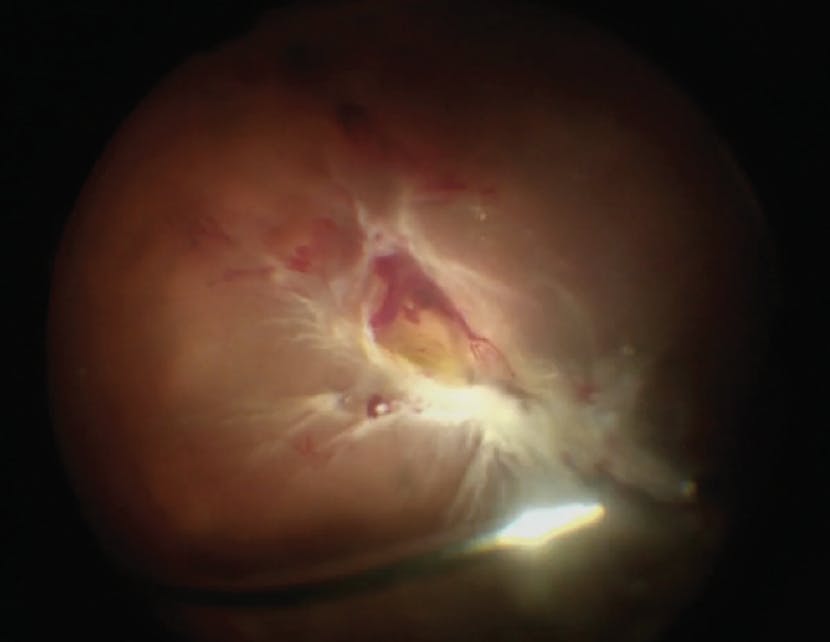
Figure 1. A macula-off tractional diabetic retinal detachment is noted, with extensive posterior fibrovascular proliferation.
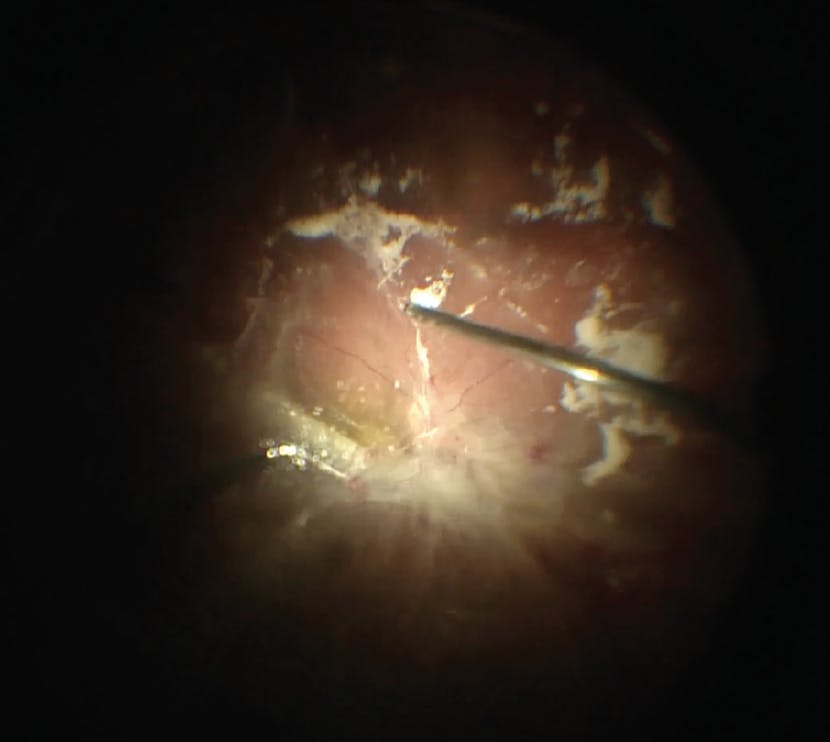
Figure 2. Intravitreal triamcinolone improves visualization of vitreous membranes for meticulous dissection.
A chandelier endoilluminator was placed to enable use of bimanual instrumentation. Forceps and the vitrector were used to carefully peel and segment around all areas of vitreoretinal traction and fibrovascular proliferation (Figure 3), using caution to avoid causing iatrogenic retinal breaks. This is a slow and meticulous process, but when performed correctly, it can achieve adequate relaxation of the retina.
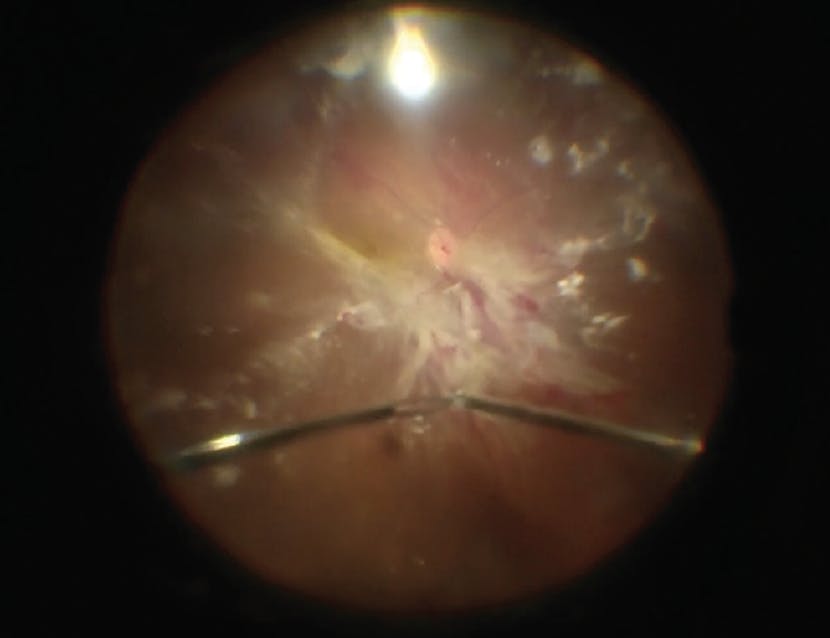
Figure 3. Chandelier visualization allows for bimanual peeling of membranes using a vitrector and forceps.
Once all areas of traction were relieved, diathermy was used to mark the site of pre-existing retinal breaks, and an air-fluid exchange was performed. Laser panretinal photocoagulation was applied to the retinal periphery for 360° and around the retinal breaks (Figure 4). The 1000-centistoke silicone oil was placed in the eye in exchange for air, and the sclerotomies were sutured closed.
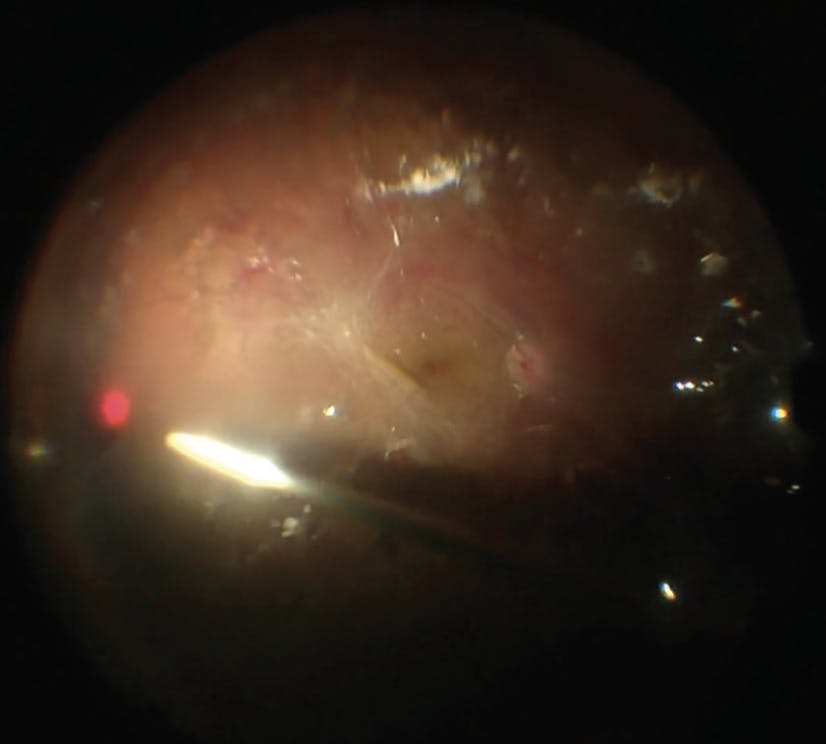
Figure 4. Endolaser photocoagulation is performed to the retinal periphery for 360 and to the retinal breaks.
At the 6-month follow-up visit, the patient was doing well, with visual acuity of 20/80 and an attached retina under oil.

Discussion
Diabetic TRDs are some of the most difficult and painstaking surgeries that the vitreoretinal surgeon must perform. These cases require patience and precision and can be unpredictable in nature.
Preoperatively, it is important to discuss realistic visual expectations and surgical outcomes with the patient. The patient must be aware that these surgeries are complex, and that secondary surgery may be needed.
We are advocates of preoperative anti-VEGF therapy to help decrease intraoperative hemorrhage and improve surgical outcomes.1-3 Preoperative panretinal photocoagulation can also be a useful adjunct, not only to decrease operative time but also to create areas of adhesion that can serve as points of countertraction.
Visualization is critical during these cases, and diligent corneal lubrication is necessary. These cases can be long and arduous, so it is critical to take all steps to optimize intraoperative visualization, whether via adequate corneal lubrication or preoperative cataract extraction. In addition, adjunctive agents such as triamcinolone can help delineate vitreous from retina.
The key to diabetic retinal detachment repair is to relieve all areas of anterior-posterior traction and tangential traction. Historically, this was done with a variety of surgical instruments, but with the advent of small-gauge vitrectomy and excellent fluidics, more surgeons elect for vitrector-assisted membrane peeling without the use of other instrumentation.4 In complex cases, however, we find that the bimanual technique can be helpful to adequately remove all areas of traction.5 Chandelier visualization was critical in this case to facilitate comfortable bimanual membrane dissection. Note that residual fibrovascular pegs can be left behind, as long as areas of traction are relieved.
Once membranes are relieved, the appropriate tamponade can be selected. While we use gas tamponade for most of our diabetic TRD repairs, we elected oil in this case because of the patient’s monocular status and the need for immediate visual rehabilitation.
Conclusion
Diabetic TRDs are among some of the most challenging vitreoretinal surgeries. With improvements in instrumentation, smaller-gauge vitrectomy, and fluidic control that allows for close membrane dissection, these cases have become easier to tackle, although vigilance is still needed to achieve surgical success and avoid iatrogenic complications.
1. Zhao XY, Xia S, Chen YX. Antivascular endothelial growth factor agents pretreatment before vitrectomy for complicated proliferative diabetic retinopathy: a meta-analysis of randomised controlled trials. Br J Ophthalmol. 2018;102(8):1077-1085.
2. Rizzo S, Genovesi-Ebert F, Di Bartolo E, et al. Injection of intravitreal bevacizumab (Avastin) as a preoperative adjunct before vitrectomy surgery in the treatment of severe proliferative diabetic retinopathy (PDR). Graefes Arch Clin Exp Ophthalmol. 2008;246(6):837-842.
3. Modarres M, Nazari H, Falavarjani KG, et al. Intravitreal injection of bevacizumab before vitrectomy for proliferative diabetic retinopathy. Eur J Ophthalmol. 2009;19(5):848-852.
4. Berrocal MH. All-probe vitrectomy dissection techniques for diabetic tractional retinal detachments: lift and shave. Retina. 2018;38 Suppl 1:S2-S4.
5. Shroff CM, Gupta C, Shroff D, et al. Bimanual microincision vitreous surgery for severe proliferative diabetic retinopathy: outcome in more than 300 eyes. Retina. 2018;38 Suppl 1:S134-S145.
