

Watch all complex surgical case videos at eyetube.net/editorial-feature/retina-clinical-case-compendium-2021
The use of ultrasonic power in intraocular surgery is well established, particularly in the anterior segment for cataract removal. Historically, removing vitreous has required variations on vitreous cutter systems that have an opening at the instrument tip that closes at high frequency in a guillotine fashion, which cuts the vitreous collagen fibers while they are being aspirated. Ultrasonic vitrectomy has been attempted in the past, but there have been difficulties in performing it reliably. The main issue has revolved around how to transform the probe vibration energy into a suitable system that can shear vitreous collagen fibers.
Considering how safe and efficient our modern high-speed guillotine vitrectomy cutters function, any technology that attempts to replace them has a high bar to clear. On the other hand, guillotine cutters have certain intrinsic problems. They will always have pulsatile flow through the probe simply because of the opening and closing of the cutter opening. The pulsatile flow amplitude can be ameliorated by increasing the cutting frequency, but it will never be fully linear without pulsations. What is more, the vitreous cutter has difficulties when encountering certain hard tissues, such as dense lens material. When performing posterior lensectomy, surgeons must alternate between using a vitreous cutter to remove vitreous and a fragmatome ultrasonic handpiece to remove lens material. The opening port of the fragmatome handpiece is not adequate to remove vitreous. In addition, pneumatic cutters require an adequate supply of pressurized gas to drive the closing and opening of the cutting blade at the tip of the guillotine vitrectomy handpiece.
The new iterations of ultrasonic vitrectomy probes, now called hypersonic vitrectomy, reliably remove vitreous and shear collagen fibers without the use of a guillotine cutter. This has been achieved by engineering a metallic probe with a small opening at the distal tip. The diameter of the current probe orifice is 180 by 360 μm. The probe vibrates at 31 kHz with a linear displacement of 60 μm. The handpiece aspirates at a controlled vacuum through the opening at its tip. The rapid movement of the small tip while aspirating can shear vitreous collagen fibers at the metal edge of the tip orifice. Because there is no cutting blade that closes the opening of the port, aspiration is continuous while the ultrasonic movement is shearing vitreous fibers. The smaller opening diameter of the port, in comparison to the size of the port opening in the guillotine cutter systems, means that the flow through the port in milliliters per unit time is less than in the guillotine cutter systems. This means the travel distance of the vitreous fibers through the port before being cut is significantly reduced, as well. The combination of continuous yet reduced flow gives the surgeon increased control of vitrectomy dynamics.
As I alluded to previously, another benefit of the hypersonic system is that it facilitates the removal of harder materials such as dense cataracts. Economy of instruments is always beneficial in surgery from a cost standpoint, as well as for inventory management and maintenance. From a clinical perspective, this enables us to perform posterior lens removal through standard small-gauge cannulas, obviating the need for conjunctival peritomy and direct sclerotomies. In addition, fragmatomes have a significantly larger diameter and lumen, with even higher aspiration flow than provided by small-gauge infusion cannulas. It is not unusual to have potentially dangerous transient hypotony during fragmatome lensectomy because of a mismatch between infusion and aspiration flow. Removal of lens material with the smaller opening of the hypersonic vitrectomy probe avoids this scenario of intraoperative transient hypotonous collapse of the globe. Furthermore, the high flow of the fragmatome can aspirate vitreous fibers inadvertently and potentially cause retinal traction and tears. Because the hypersonic system removes both vitreous and lens material indistinctly, it also eliminates the vitreous pulling that a standard fragmatome can create.
There are some potential negatives of the hypersonic vitrectomy system. The handpiece is heavier than the pneumatic guillotine cutters, which can lead to hand fatigue during longer cases. The vibrating shaft of the device must be shielded from the ocular tissues with adequate vitrectomy cannulas to avoid creating a thermal burn from friction.
Hypersonic vitrectomy does involve a learning curve for surgeons. Because the dynamics and fluidics are different from those of guillotine cutters, surgical techniques must be altered slightly. I have learned to move the tip of the device much more slowly and deliberately than with guillotine cutters. Despite the impression that the vitrectomy is proceeding more slowly, the actual surgery time is equal to or slightly less than during guillotine vitrectomy. This implies that not only should techniques be optimized, but the way the surgeon visually interprets the advancement of the surgery also needs recalibration.
The following cases demonstrate the use of a hypersonic vitrectomy probe, first in a standard macular hole surgery, and, second, with a hypermature cataract that was dropped into the vitreous cavity. These two cases span a spectrum from the simple to the complex and demonstrate the flexibility of the Vitesse Hypersonic Vitrectomy technology (Bausch + Lomb).

Case 1: Standard Macular Hole Surgery
For this case, we used triamcinolone to mark the vitreous and improve visualization of vitrectomy dynamics. Surgery was begun with the Vitesse probe in the mid-vitreous and demonstrates how normal vitreous can be removed with the hypersonic system (Figure 1). The ability to have linear control of vacuum while maintaining proportional flow and engaging vitreous is a significant benefit over traditional systems. Removal of vitreous is smooth and predictable without pulsatile flow.
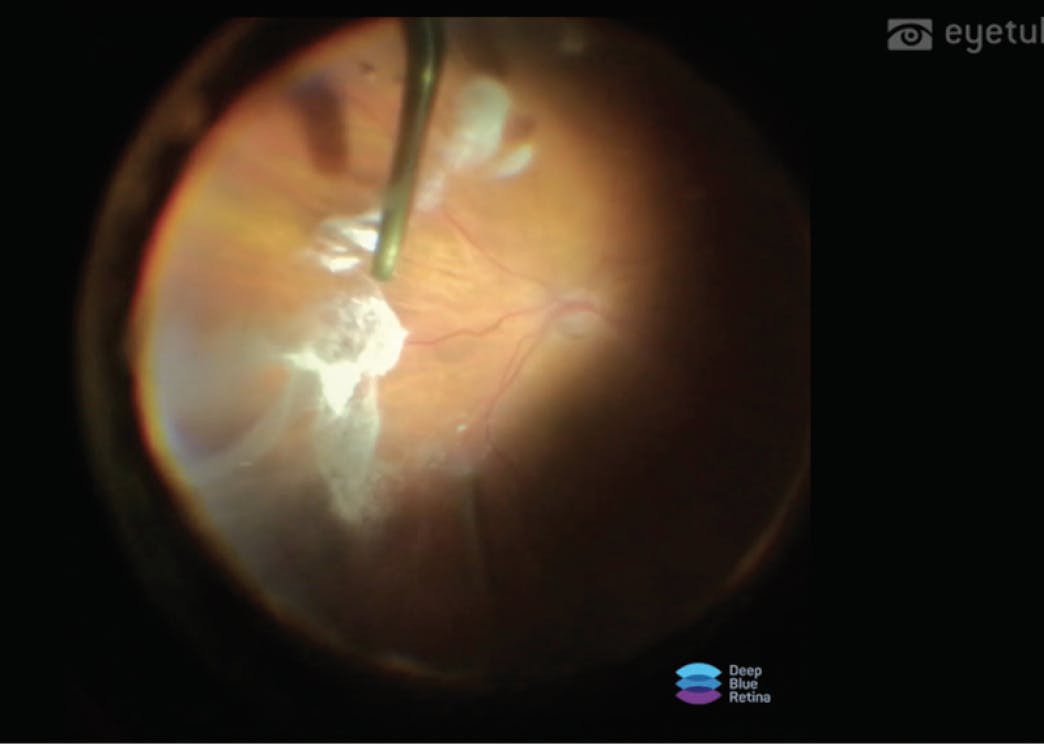
Figure 1. Core vitrectomy with the Vitesse probe. Triamcinolone was used to facilitate visualization.
A posterior vitreous detachment was performed using the Vitesse probe. Occlusion of the small opening is easy, and the ability to utilize linear high vacuum allows for controlled grasping of the posterior hyaloid to lift it over the optic nerve and extend the separation to the periphery.
Peripheral vitrectomy with the hypersonic system (Figure 2) may be safer than standard guillotine cutter vitrectomy, because non-pulsatile linear flow decreases peripheral retinal traction caused by intermittent tugging of the peripheral vitreous typical of guillotine cutters. I have performed peripheral vitrectomy with the hypersonic system adjacent to retinal neovascularization in sickle cell disease, and the decrease in retinal traction becomes even more evident in these cases, which are prone to peripheral retinal tears at the base of the neovascularization.
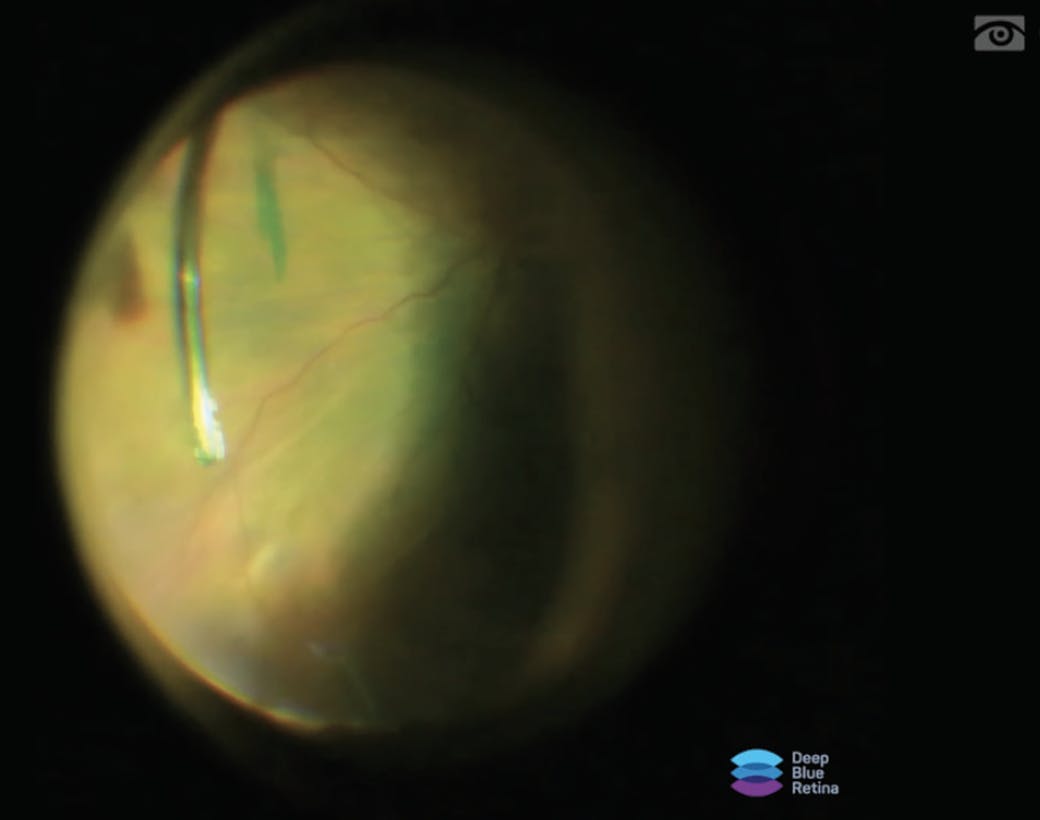
Figure 2. Peripheral vitrectomy with the Vitesse probe. We were able to remove all peripheral vitreous without difficulty.
This case demonstrates how the Vitesse hypersonic system can function efficiently and safely in a standard, noncomplicated, macular surgery.
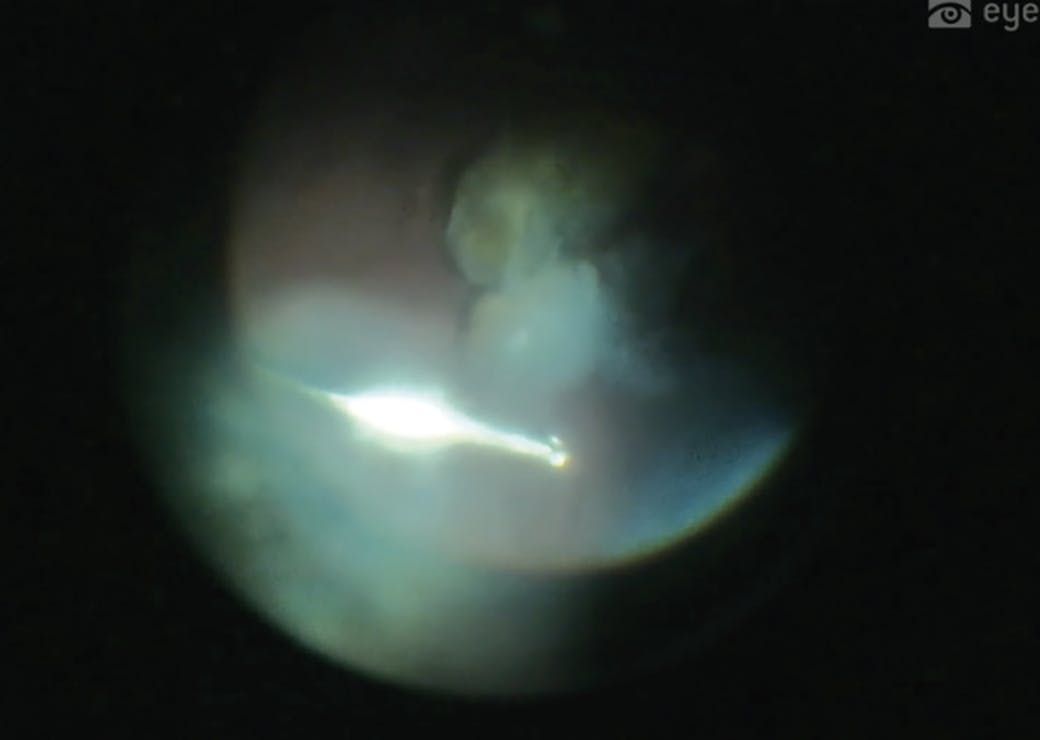
Figure 3. With the Vitesse, we are able to perform vitrectomy and remove lens material without needing to switch to a fragmatome. This is done even in the presence of very dense nuclear material.
Case 2: Hypermature Cataract Lensectomy
The eye in this surgery had undergone attempted cataract surgery for a hypermature cataract that had become complicated by a capsular rupture and dropped nucleus. The patient was referred to us with an edematous cornea and retained dense nuclear and epinuclear fragments.
The surgery was performed in its entirety using the 23-gauge Vitesse hypersonic system. This case required the ultrasonic capacity of the Vitesse system to perform the vitrectomy and removal of lens fragments in tandem. The hypersonic probe removed soft lens fragments without difficulty. The hard nuclear fragments required grasping with aspiration only and progressively increasing the power of the handpiece (Figure 3). Using immediate full ultrasonic power often leads to the pieces being pushed away from the vitrectomy tip. The power of the hypersonic system is defined as the stroke length of anterior posterior displacement of the tip. By using dual footpedal control of linear aspiration and linear ultrasonic power, we were able to approach the nuclear fragments initially by increasing the aspiration linearly until the fragments were tightly grasped and occluding the tip of the probe and then increasing the power progressively in a linear fashion. The hypersonic system enabled us to perform safe vitrectomy whenever vitreous came to the port, even when engaging dense lens material (Figure 4). This decreased the possibility of vitreous traction, which may occur when using a typical fragmatome handpiece and vitreous approaches the tip.
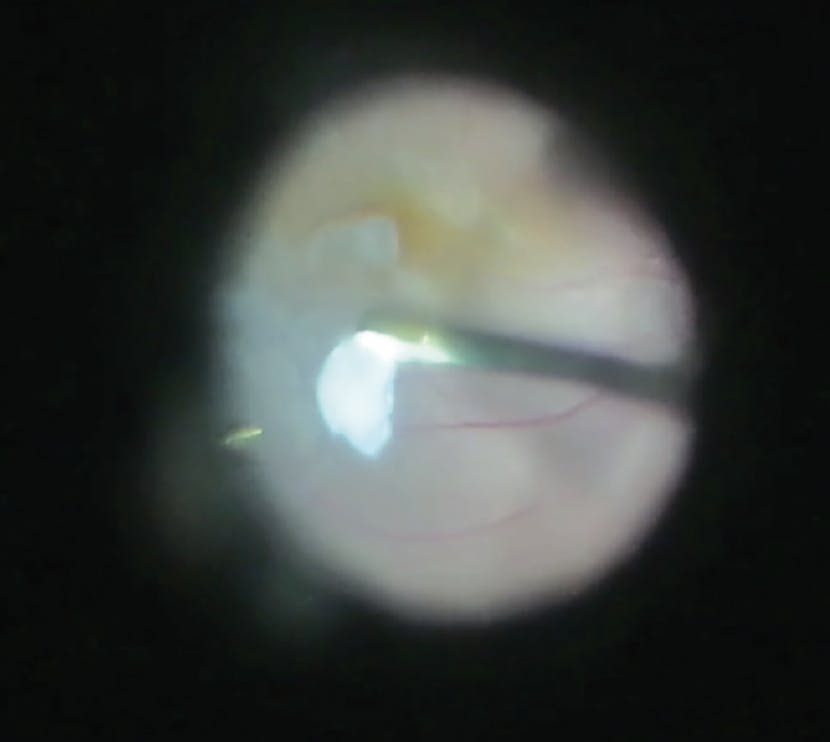
Figure 4. From the smaller lens pieces to the larger lens pieces, we were able to remove all of the IOL remnants.
This case demonstrates how the Vitesse system can be utilized for removal of dense lens material without the typical fragmatome. This can be an added benefit of the hypersonic vitrectomy system over the standard guillotine cutter systems.
Conclusion
Hypersonic vitrectomy rests on the well-utilized physics of ultrasound probes for intraocular surgery. Improvements in tip design, vibration frequency, and machine software control of tip dynamics have enabled us to reinvent vitrectomy using ultrasonic probes. I feel that these new versions of the technology have the potential to replace even our most efficient and safe standard vitrectomy probes.
