Increased Control of Vitreous Dynamics image

Editorially Independent Content, Supported With Advertising from Bausch + Lomb and NIDEK

July/August 2021 Supplement | Clinical Case Compendium

Increased Control of Vitreous Dynamics

Jorge I. Calzada, MD, FACS headshot

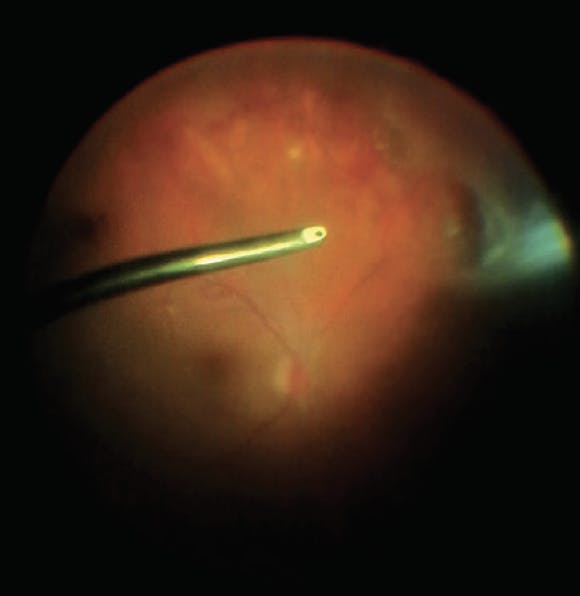
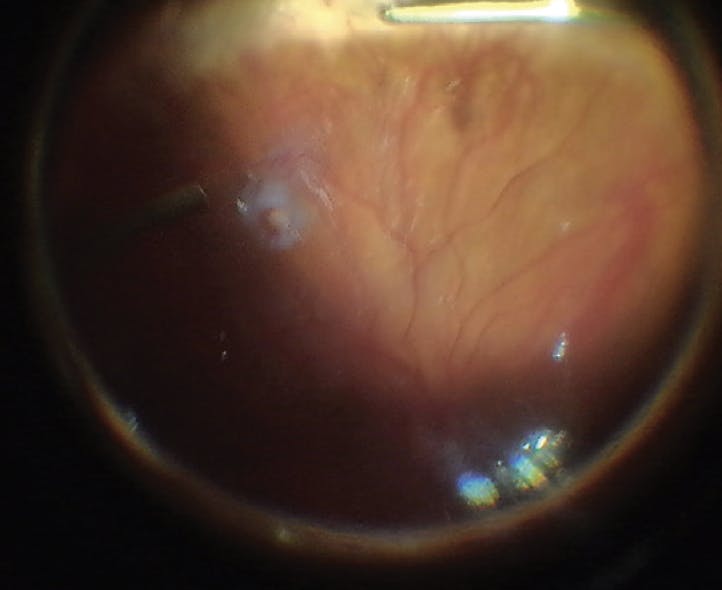
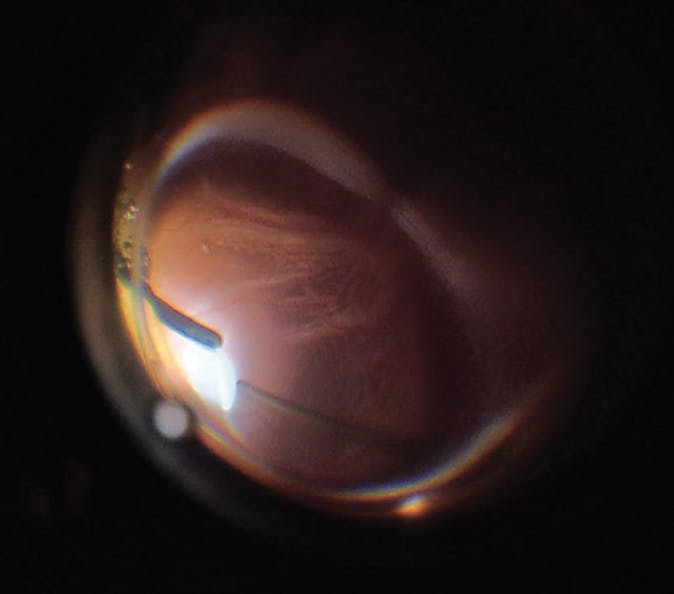
The Vitesse Hypersonic Vitrectomy system (Bausch + Lomb) has been engineered to answer some of the lingering questions with ultrasonic cutting systems to finally deliver on its promise. The move away from guillotine style cutters to one driven by hypersonic energy, achieved by employing a small opening at the distal tip that vibrates at 31 kHz with a linear displacement of 60 µm, allows the cutter to operate with consistent flow that is 100% open 100% of the time. While technically interesting, the real proof of the design translates to surgical performance, where it enables efficient vitreous removal.1 In my hands, the Vitesse offers increased control of vitreous dynamics, resulting in a shearing action that allows me to safely and efficiently remove even the densest fibrous tissue. Below are a few images of the Vitesse used in a range of cases, which helps to demonstrate that this cutting system is useful for all types of pathology the retina surgeon encounters (Figures 1-7).
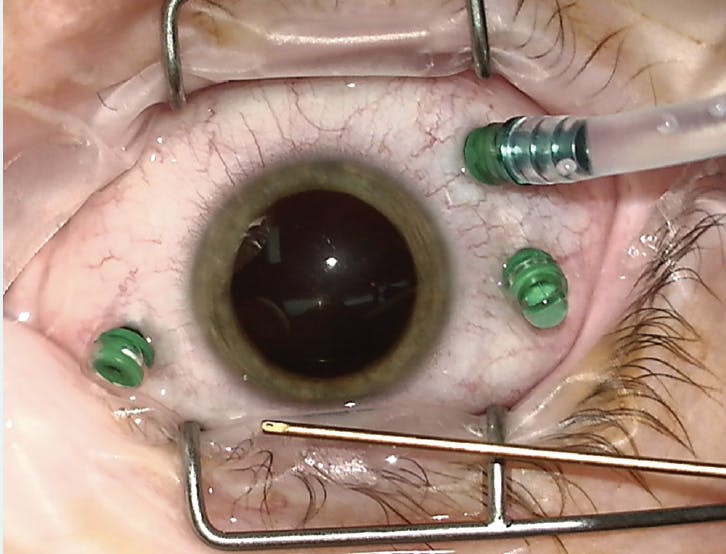
<p>Figure 1. Demonstrating the tip characteristics and size of the 23-gauge Vitesse system.</p>

Click to view larger

Figure 1. Demonstrating the tip characteristics and size of the 23-gauge Vitesse system.

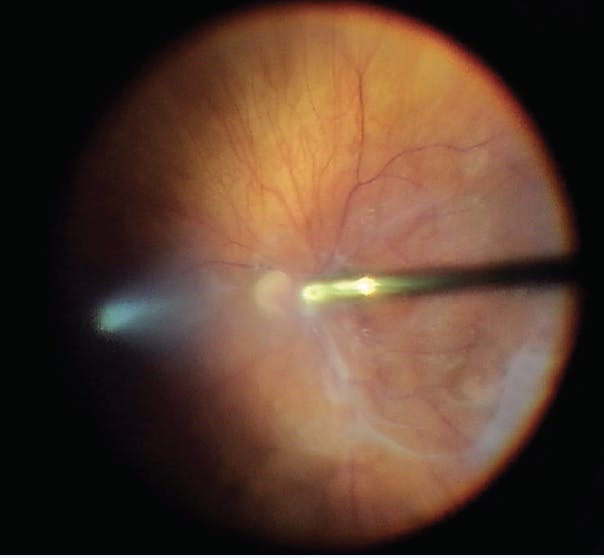
<p>Figure 2. Patient with a chronic diabetic traction retinal detachment. The Vitesse probe is approaching the optic nerve as dissection is initiated.</p>

Click to view larger

Figure 2. Patient with a chronic diabetic traction retinal detachment. The Vitesse probe is approaching the optic nerve as dissection is initiated.
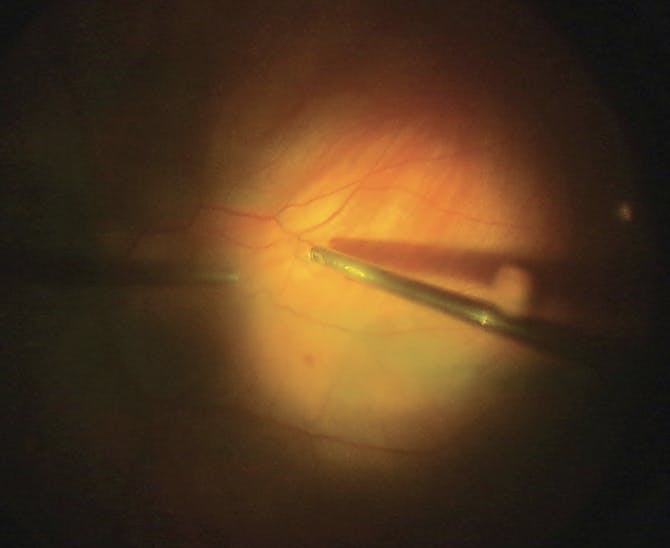
<p>Figure 3. Mid-equatorial vitrectomy with the Vitesse system following membrane peeling.</p>

Click to view larger

Figure 3. Mid-equatorial vitrectomy with the Vitesse system following membrane peeling.

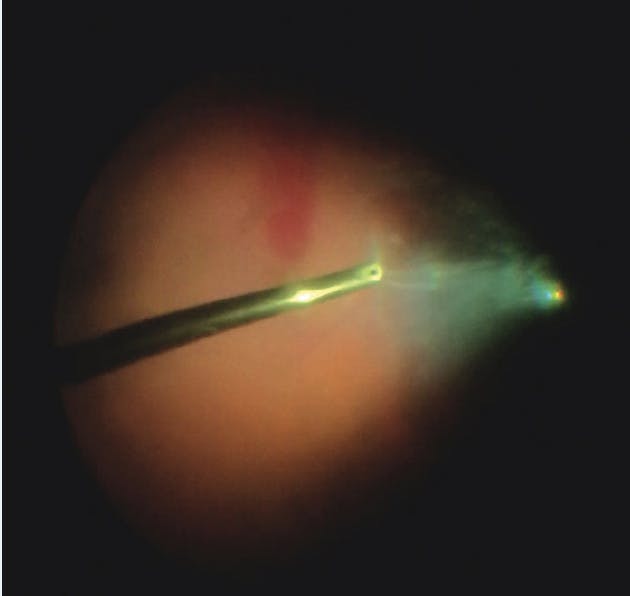
<p>Figure 4. Core vitrectomy for a diabetic vitreous hemorrhage using the hypersonic Vitesse system.</p>

Click to view larger

Figure 4. Core vitrectomy for a diabetic vitreous hemorrhage using the hypersonic Vitesse system.

<p>Figure 5. Hypersonic tip during vitrectomy for diabetic vitreous hemorrhage.</p>

Click to view larger

Figure 5. Hypersonic tip during vitrectomy for diabetic vitreous hemorrhage.

<p>Figure 6. Hypersonic vitrectomy of the peripheral vitreous under air infusion following drainage of subretinal fluid through a retinotomy.</p>

Click to view larger

Figure 6. Hypersonic vitrectomy of the peripheral vitreous under air infusion following drainage of subretinal fluid through a retinotomy.

<p>Figure 7. Peripheral vitrectomy during a rhegmatogenous retinal detachment repair using the Vitesse probe.</p>

Click to view larger

Figure 7. Peripheral vitrectomy during a rhegmatogenous retinal detachment repair using the Vitesse probe.

Jorge I. Calzada, MD, FACS headshot

Jorge I. Calzada, MD, FACS

  • • CEO and Founder, Deep Blue Retina, Memphis, TN, and Adjunct Professor of
  • • Ophthalmology, Truhlsen Eye Institute, University of Nebraska, Omaha
  • JIC@DeepBlueRetina.com
  • • Financial disclosure: Consultant (Bausch + Lomb)

Next Article in this Supplement

Vitrectomy for Rhegmatogenous Retinal Detachment Secondary to Acute Retinal Necrosis

Sneha Padidam, MD Priya Sharma Vakharia, MD

View Article Fill 1