


Acute retinal necrosis is a rare viral infection that can lead to vision loss and blindness if not treated expeditiously. Typically caused by varicella zoster virus, herpes simplex virus (HSV), or Epstein-Barr virus,1-3 acute retinal necrosis requires prompt treatment with systemic and intravitreal antiviral agents to achieve control.4-7 Secondary retinal detachment has been reported in up to 50% of cases and can be challenging to repair.8 Herein, we describe repair of a rhegmatogenous retinal detachment secondary to acute retinal necrosis from HSV.

Case Report
A 24-year-old woman presented to the eye clinic with decreased vision in the left eye for 5 days. Visual acuity was 20/20 in the right eye and 20/400 in the left eye. Examination of the right eye was unremarkable. Examination of the left eye revealed anterior chamber inflammation, vitritis, and peripheral retinal whitening with areas of occlusive vasculitis. The left eye also exhibited optic nerve edema and pallor. The diagnosis of acute retinal necrosis was made, and the patient was admitted for intravenous acyclovir and intravitreal foscarnet injections.
Examination of the left eye the next day revealed a severe exudative retinal detachment with dense vitritis, which was treated with concurrent systemic intravenous corticosteroids. The exudative retinal detachment resolved, but 2 weeks later a rhegmatogenous retinal detachment was noted on serial B-scan ultrasonography, and the decision was made to go to the operating room for surgical repair. The patient had received 2 weeks of systemic acyclovir along with five intravitreal foscarnet injections at this point.
A 23-gauge scleral buckle/pars plana vitrectomy was performed on the left eye using the Stellaris Elite Vision Enhancement System (Bausch + Lomb). Although most of our surgeries are performed using 25-gauge instrumentation, we decided to use 23-gauge for this case to enable us to use the wide range of instruments available in our specific surgical setting. A scleral buckle procedure was performed to support the vitreous base.
A core pars plana vitrectomy was performed, and once the hyaloid was carefully lifted and the vitritis was cleared, a total macula-off rhegmatogenous retinal detachment was visible. The peripheral retinitis was totally regressed, with residual peripheral atrophy. Retinal breaks were noted at the border of the retinitis and the healthy retina, most prominently inferotemporally (Figure 1). A peripheral shave vitrectomy was performed, and a localized inferotemporal retinectomy was created (Figure 2). Perfluorocarbon was used to flatten the retina, and laser was performed for 360° at the posterior border of the retinitis (Figure 3). The perfluorocarbon was then exchanged for air, and the air was exchanged for 1,000-centistoke silicone oil. The retina remained flat under oil with good peripheral laser. The instruments were removed, and the conjunctiva was closed over the scleral buckle.
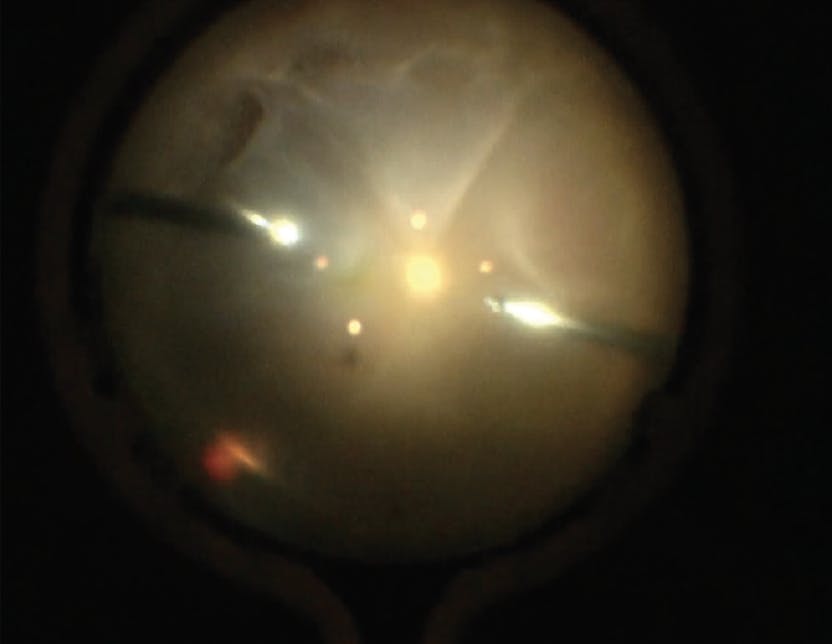
Figure 1. Intraoperative visualization after core pars plana vitrectomy reveals a maculaoff retinal detachment with inferotemporal retinal breaks.
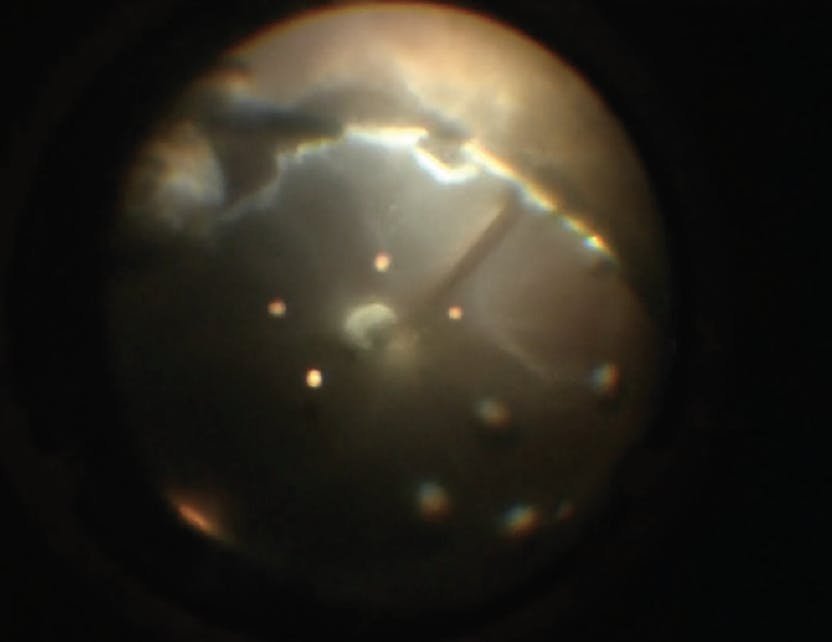
Figure 2. Creation of an inferotemporal retinectomy at the border of healthy retina and ischemic retina to allow for good retinal relaxation.
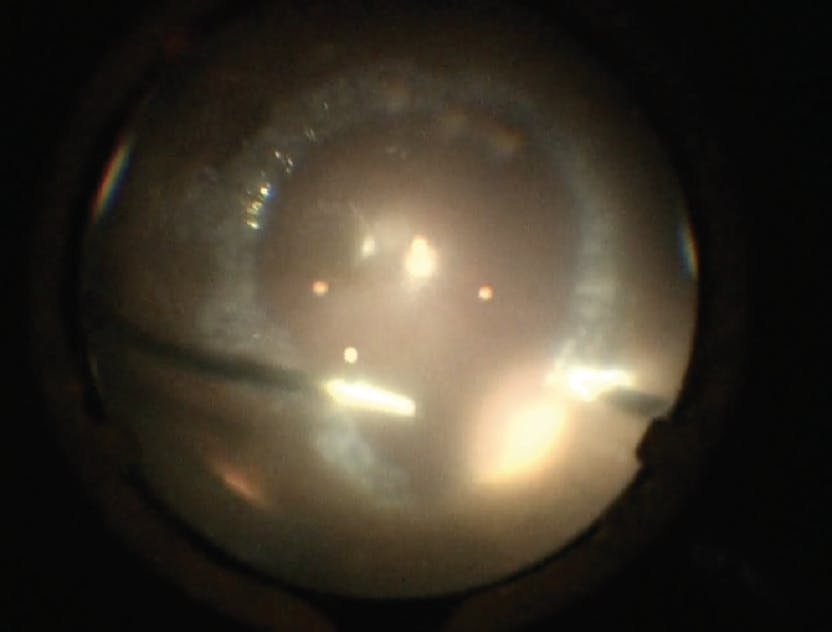
This patient has remained stable with a flat and attached retina at her most recent follow-up visit 4 months postoperatively. Visual acuity remains limited at counting fingers. The retinitis remains regressed, and the patient continues with oral valacyclovir therapy.
Conclusion
This case demonstrates the surgical repair of a secondary rhegmatogenous retinal detachment. The key to repair of any complex surgical case is preoperative planning and preparation. Although we did not encounter any tractional membranes during this case, we were prepared for meticulous dissection in the event that a posterior vitreous detachment was not present. We also had the full arsenal of surgical instrumentation at our disposal if we needed to use a bimanual technique or chandelier visualization.
Secondary rhegmatogenous retinal detachment from acute retinal necrosis can be challenging to repair, and visual acuity and single surgery success in these cases is guarded. Areas of retina that are affected by retinitis are not healthy and will likely be sources of secondary retinal breaks. Therefore, laser should be applied posterior to areas of regressed retinitis to allow the appropriate adherence of the retinal pigment epithelium to the retina. Regardless, the patient should be counseled extensively on the guarded visual prognosis and the high risk of secondary retinal detachment.
1. Culbertson WW, Blumenkranz MS, Haines H, et al. The acute retinal necrosis syndrome. Part 2: histopathology and etiology. Ophthalmology. 1982;89(12):1317-1325.
2. Lewis ML, Culbertson WW, Post JD, et al. Herpes simplex virus type 1. A cause of the acute retinal necrosis syndrome. Ophthalmology. 1989;96(6):875-878.
3. Nishi M, Hanashiro R, Mori S, et al. Polymerase chain reaction for the detection of the varicella-zoster genome in ocular samples from patients with acute retinal necrosis. Am J Ophthalmol. 1992;114(5):603-609.
4. Palay DA, Sternberg P Jr, Davis J, et al. Decrease in the risk of bilateral acute retinal necrosis by acyclovir therapy. Am J Ophthalmol. 1991;112(3):250-255.
5. Aizman A, Johnson MW, Elner SG. Treatment of acute retinal necrosis syndrome with oral antiviral medications. Ophthalmology. 2007;114(2):307-312.
6. Aslanides IM, De Souza S, Wong DT, et al. Oral valacyclovir in the treatment of acute retinal necrosis syndrome. Retina. 2002;22(3):352-354.
7. Savant V, Saeed T, Denniston A, Murray PI. Oral valganciclovir treatment of varicella zoster virus acute retinal necrosis. Eye (Lond). 2004;18(5):544-545.
8. Tibbetts MD, Shah CP, Young LH, et al. Treatment of acute retinal necrosis. Ophthalmology. 2010;117(4):818-824.
