


Prior Authorization: A preapproval process required by some insurance payers to determine coverage for a specific service. In a retina practice, these policies mostly impact intravitreal injections and surgical procedures.
Step Therapy: A policy that requires a mandated drug therapy, typically a lower-cost drug (eg, bevacizumab) and documented failed response before initiating a preferred drug (eg, ranibizumab, aflibercept).
Successfully navigating the challenges of prior authorization (PA) and step-therapy policies can have a positive impact on your revenue cycle management. Here are four actionable steps that will lighten the burden of these policies on the retina practice.
STAY CURRENT
Payer policies vary by insurance carrier and are updated frequently. For the top insurance carriers in the practice, research the PA and step-therapy requirements for the most frequent services provided, including injection of anti-VEGF medications. Most payers require PA for the higher-cost anti-VEGF agents, but that doesn’t necessarily exclude lower-cost drugs such as bevacizumab (Avastin, Genentech) or other services.
Along with these requirements, many payers have limited exceptions for requesting a retroactive PA, so identifying policies and requesting PA prior to treatment will reduce denials.
For payers with step-therapy policies, the requirements may vary. Using a mandated (generally lower-cost) drug and documenting a failed response before initiating the preferred (higher-cost) drug is the basic concept. However, it is crucial to identify each payer’s definition of “failed response” based on its guidelines. It may be defined as lack of response to a 3-month regimen, visual acuity reduction, and/or certain diagnostic testing findings. Identifying the details of these policies is crucial for understanding reimbursement guidelines.
IDENTIFY PAYER NUANCES
When coding for bevacizumab intravitreal injections, the HCPCS code to use may vary by payer. Similar to the variations among the Medicare Administrative Contractors (MACs), commercial and Medicare Advantage plans may require different HCPCS codes for reporting bevacizumab for ophthalmic use.
A commercial payer may recognize J9035 for oncologic use but require J7999 for intravitreal injection. Others may deny claims unless billed with a miscellaneous HCPCS code: for example, J3490 or J3590. Payers have also published policies that allow J9035 with a PA but do not require PA if bevacizumab is coded with C9257, which is usually coded only as facility billing. Understanding PA policies is one step, but confirming any unusual coding requirements for bevacizumab will further streamline the process.
ASSIGN A PA SPECIALIST
Designating a staff member to be the PA expert in the practice can be advantageous. This individual can be made responsible for proactively identifying new or revised payer policies and providing internal education. As payers often update policies with limited or no communication, tasking a staff member to research these changes and promptly notify all stakeholders will limit unexpected PA or claim rejections.
DEVELOP AN INTERNAL RESOURCE
Given the challenges of policies varying by payer, it can be helpful to create an internal reference guide. This document can provide quick access to PA or step-therapy guidelines for a specific service, medication, or payer (Table). Such an internal resource can also indicate when a referral is required by a health maintenance organization.
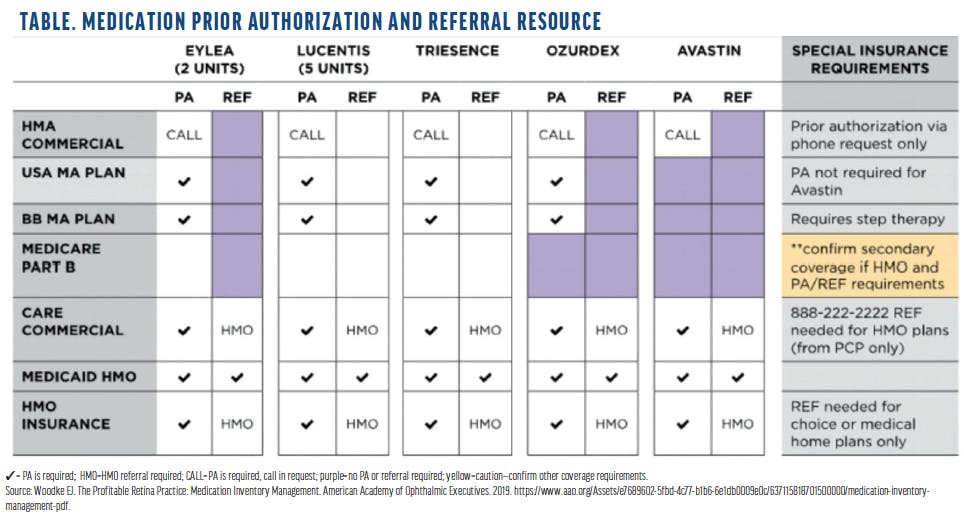
Practice management systems often provide alerts or reminders when a service is ordered for a specific insurance payer. These automated tools can prompt the user to obtain PA or review step-therapy guidelines.
There are many types of resources that can assist with the PA process. The key is that such resources should be easily accessible, effective, and constantly reviewed and updated to stay current with payer rules.
INVOLVE THE TEAM
From check-in to examination, each person involved in the patient encounter can help to ensure that the PA process is correctly completed. This requires the oversight of the PA specialist, a commitment to education with access to current quick reference guides, and adherence to the following steps.
- Prior to an encounter, staff members review scheduled procedures for referral, PA, or step-therapy requirements and request as appropriate.
- During the check-in process, the staff confirms the patient’s current insurance carrier and checks eligibility.
- Scribes prompt the retina specialist regarding specific payer requirements when services are ordered.
- Business office staff confirm that authorization is requested or received prior to claim submission.
- When staff members identify a change in payer policy, all internal resources are updated and all stakeholders notified.
Diligence and teamwork are essential for any process, including navigating PA requirements and payer policies. In a retina practice, this is crucial, and a commitment from the entire practice team will contribute to overall success.
For more AAO resources on PA and step therapy, including a PA checklist, visit aao.org/retinapm.


_1784132761.jpg?auto=compress,format&w=75)





