


_1615312717.png)
- Noninfectious posterior uveitis patients treated with the fluocinolone acetonide intravitreal implant 0.18 mg (Yutiq, EyePoint Pharmaceuticals) experienced significantly lower disease recurrence compared with patients who received the sham.
- Although 7-year data from the MUST study suggested that systemic steroid therapy resulted in superior visual gains from baseline compared with local steroid therapy, some authors have argued that this conclusion may be flawed.
- Long-term sustained-release local therapy may result in positive outcomes for patients with noninfectious posterior uveitis.
Patients with chronic noninfectious uveitis of the posterior segment (NIU-PS) have a number of therapeutic options, including systemic therapy, short-duration local antiinflammatory therapy, and long-duration local antiinflammatory therapy. Innovations in the latter option have the potential to reduce patients’ treatment burden while also offering relief from NIU-PS.
A review of recent literature illustrates why long-duration steroid therapy for NIU-PS can be effective, efficient, and economical. This article focuses on data related to the fluocinolone acetonide intravitreal implants 0.18 mg (Yutiq, EyePoint Pharmaceuticals) and 0.59 mg (Retisert, Bausch + Lomb). The case that follows demonstrates the effect local therapy can have on patients with NIU-PS.
THREE-YEAR RESULTS
Last year Jaffe et al published 3-year results of a phase 3 trial assessing the safety and efficacy of the fluocinolone acetonide intravitreal implant 0.18 mg for the treatment of NIU-PS.1
Patients were randomly assigned 2:1 to receive treatment with the implant (n = 87) or sham injection plus standard of care (n = 42). Outcomes were evaluated at 36 months.
The researchers found that patients in the treatment group experienced significantly fewer cumulative uveitis recurrences compared with those in the sham group (66% vs 98%, P < .001), and also had a longer median time to first recurrence (657 days vs 71 days, P < .001). Patients in the sham group experienced a mean 5.3 recurrences during the study period compared with 1.7 recurrences in the treatment group (P < .001). Nearly all participants in the sham group (98%) required adjunctive treatment compared with 58% of treated patients.1
HUNGRY FOR MORE UVEITIS LITERATURE?
Here are a few bite-sized summaries.
Fellow-Eye Data at 3 Years
Patients with bilateral NIU-PS in a phase 3 study evaluating the fluocinolone acetonide intravitreal implant 0.18 mg received therapy in the eye with worse disease, leaving the other eye as a natural history study of disease progression. At 3 years, untreated fellow eyes had higher rates of uveitis recurrence and local steroid injections. Rates of IOP elevations and use of IOP-lowering medication were similar between the implant-treated and fellow eyes.1
Cost-Effectiveness of Localized Steroid Therapy
The fluocinolone acetonide intravitreal insert 0.19 mg (Iluvien, Alimera Sciences), FDA-approved to treat diabetic macular edema, is approved to treat NIU-PS in the United Kingdom.2 The UK National Institute for Health and Care Excellence evaluated the cost-effectiveness of the 0.19-mg implant for the treatment of recurrent NIU-PS and found that the treatment was a cost-effective use of National Health Service resources.3
1. Sharma S. Course of non-infectious uveitis affecting the posterior segment: fellow-eye data from a 3-year study of the fluocinolone acetonide intravitreal insert. Invest Ophthalmol Vis Sci. 2020;61(7):5364.
2. Alimera Sciences. Alimera Sciences announces approval received in the mutual recognition procedure for new indication for Iluvien in Europe [press release]. March 25, 2019. Accessed June 9, 2021. investors.alimerasciences.com/prviewer/release_only/id/3700779
3. Pouwels XG, Petersohn S, Carrera VH, et al. Fluocinolone acetonide intravitreal implant for treating recurrent non-infectious uveitis: an evidence review group perspective of a NICE single technology appraisal. PharmacoEconomics. 2020;38(5):431-441.
Although IOP at month 36 was similar in both study arms, approximately 6% of eyes in the treatment group required IOP-lowering surgery compared with almost 12% in the sham group. Cataract surgery was required in approximately 74% of eyes in the treatment arm compared with almost 24% of eyes in the sham arm. The study authors concluded that the side effect profile of treatment with the implant was acceptable compared with sham-treated eyes.1
SEVEN-YEAR DATA DEBATE
In the Multicenter Uveitis Steroid Treatment (MUST) trial, first published in 2011, patients with noninfectious intermediate, posterior, or panuveitis were randomly assigned to receive systemic steroid therapy or the fluocinolone acetonide intravitreal implant 0.59 mg.2 Researchers determined that both therapy options resulted in similar improvements in visual acuity at 24 months. Although patients in the implant group had higher rates of cataract formation, elevated IOP, and glaucoma, they also experienced greater improvement from baseline in vision-related quality of life and lower rates of residual active uveitis.
After 7 years of follow-up in MUST, patients in the treatment arm lost 5.9 letters from baseline, whereas those who underwent systemic therapy gained 1.2 letters.3 The difference was considered clinically significant.
LEARN MORE ABOUT RETISERT
In these two surgical videos, Thomas Aaberg Jr, MD, and Chris Reimann, MD, share tips for Retisert-related surgery and discuss their approach with a RETINAWS panel.
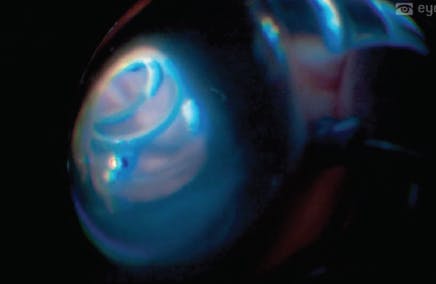
Thomas Aaberg Jr, MD, shares a case involving Retisert with RETINAWS panel.
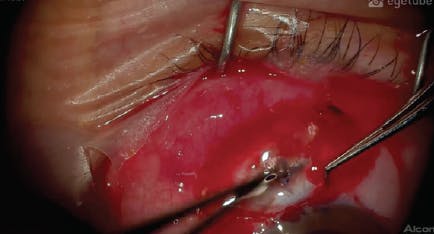
Chris Reimann, MD, reviews pearls for the management of a complication in a patient with Retisert.
Publication of these 7-year data resulted in some disagreement among uveitis specialists, and a 2019 editorial by Albini et al outlined concerns about the study’s structure and conclusions.4 For example, the authors argued, because the MUST study was not designed to evaluate outcomes at 7 years, conclusions about efficacy at 7 years cannot be drawn. The authors also noted that 85% of patients randomly assigned to receive the implant had it implanted within 3 years, and only 27% of those patients received an implant in the 3 years preceding the 7-year timepoint. By contrast, 64% of patients in the systemic therapy arm received some form of treatment in the 6 months before the 7-year timepoint. Given that the implant releases its drug for an average 3 years,5 Albini et al noted therefore that most patients in the local therapy arm were not being dosed with fluocinolone acetonide at the 7-year endpoint, whereas most patients in the systemic arm were receiving treatment late in the study period. In addition, some patients in the systemic arm had previously undergone treatment with the fluocinolone acetonide intravitreal implant 0.59 mg.
Albini et al concluded that the 7-year data, although perhaps useful for generating hypotheses, do not necessarily reverse the primary finding of the original 2-year study. Clinicians treating uveitis, they suggested, should still consider a sustained-release fluocinolone implant as an option for certain patients.4
CASE EXAMPLE
A 47-year-old woman presented with sarcoid panuveitis in both eyes (Figure 1). The patient began therapy with difluprednate ophthalmic emulsion 0.05% (Durezol, Novartis) four times a day OU, prednisone taper starting at 60 mg, and adalimumab 40 mg (Humira, AbbVie) every 2 weeks. At 1 month, while she was receiving high-dose prednisone, her uveitis was well controlled. However, as she tapered the prednisone there were signs of disease recurrence at 2 months follow-up, and oral methotrexate 15 mg daily was added to the regimen.
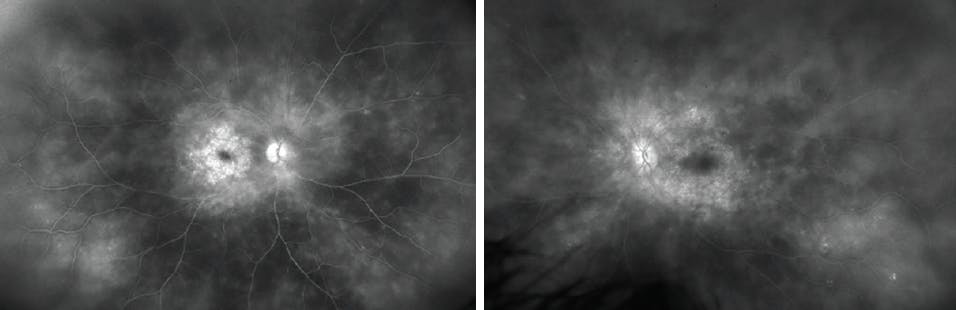
At 6 months, there was still active uveitis. A fluocinolone acetonide intravitreal implant 0.18 mg was administered in each eye. At 9 months, the patient’s disease demonstrated significant resolution (Figure 2).
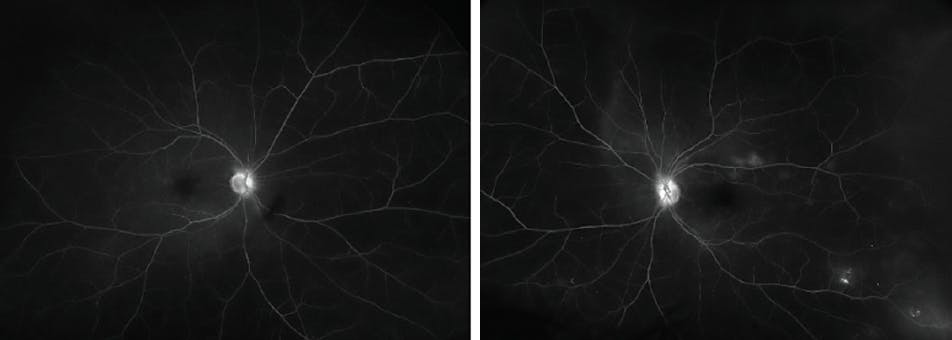
Figure 2. Nine months after therapy was initiated with the fluocinolone acetonide intravitreal implant 0.18 mg, disease resolution was observed.
WRAP-UP
This case highlights the value of long-term sustained-release local steroid therapy for the treatment of NIU-PS. This therapeutic approach can be considered in patients who require recurrent local therapy, who have an incomplete response to systemic immunomodulatory therapy, or who need to discontinue immunomodulatory therapy secondary to intolerance or contraindications.
1. Jaffe GJ, Pavesio CE, Study Investigators. Effect of a fluocinolone acetonide insert on recurrence rates in noninfectious intermediate, posterior, or panuveitis: three-year results. Ophthalmology. 2020;127(10):1395-1404.
2. Multicenter Uveitis Steroid Treatment (MUST) Trial Research Group; Kempen JH, Altaweel MM, Holbrooke JT, et al. Randomized comparison of systemic anti-inflammatory therapy versus fluocinolone acetonide implant for intermediate, posterior, and panuveitis: the multicenter uveitis steroid treatment trial. Ophthalmology. 2011;118(10):1916-1926.
3. Writing Committee for the Multicenter Uveitis Steroid Treatment (MUST) Trial and Follow-up Study Research Group; Kempen JH, Altaweel MM, Holbrook JT, et al. Association between long-lasting intravitreous fluocinolone acetonide implant vs systemic anti-inflammatory therapy and visual acuity at 7 years among patients with intermediate, posterior, or panuveitis. JAMA. 2017;317(19):1993-2005.
4. Albini T, Callaway NF, Jaffe GJ, et al. MUST beg to differ. Ophthalmic Surg Lasers Imaging Retina. 2019;50(5):266-268.
5. Jaffe GJ. Reimplantation of a fluocinolone acetonide sustained drug delivery implant for chronic uveitis. Am J Ophthalmol. 2008;145(4):667-675.


_1784132761.jpg?auto=compress,format&w=75)





