_1638887923.jpg?auto=compress,format)

What is known about the role of the classical pathway in age-related macular degeneration (AMD)?
Complement component 1q (C1q) is widely understood as the initiating molecule of the classical complement cascade. Upon binding to specific substrates, the C1q complex becomes activated, which triggers activation of components within the downstream pathway (Figure 1). In geographic atrophy (GA), C1q associates with activating substrates in multiple layers of the outer retina, including photoreceptor cell synapses within the outer plexiform layer, photoreceptor cell outer segments within the photoreceptor layer, and drusen within layers below the photoreceptor cells (Figure 2). Substrates in these different layers include phosphatidyl serine, C-reactive protein, amyloid material, and hydroxyapatite, among others.
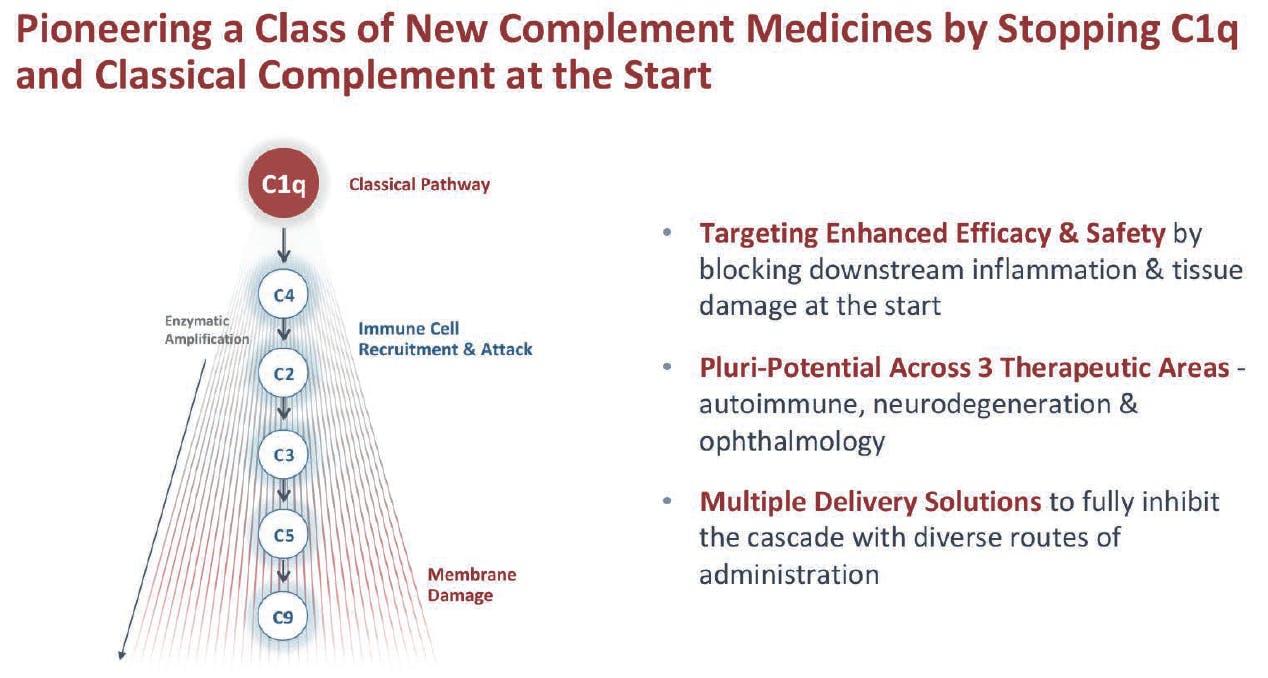
Figure 1. C1q initiates activation of the classical complement pathway, which represents a series of enzymatic reactions that amplify the initial signal, culminating in damaging inflammation to the photoreceptors and retinal pigment epithelium.
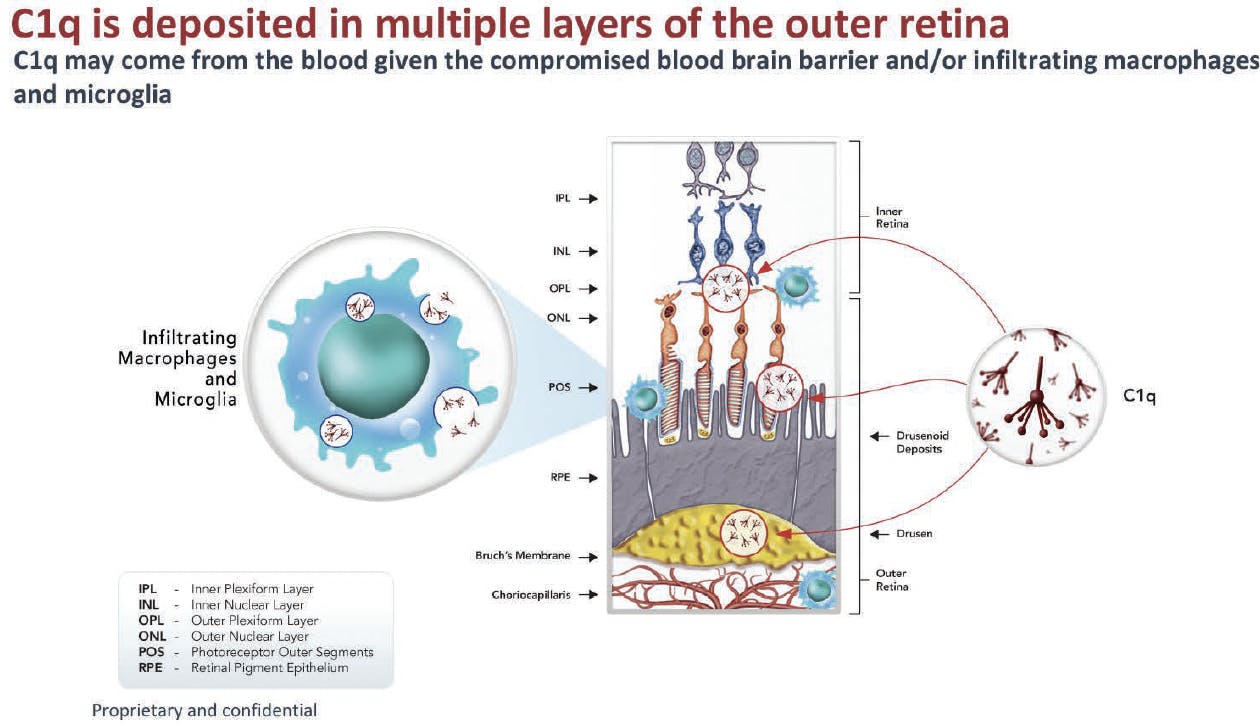
Annexon’s data suggest that C1q and classical complement activation contribute to loss of photoreceptor neurons, which is consistent with other neurodegenerative diseases where C1q triggers aberrant synapse pruning and becomes part of the neurodegenerative process. Chronic activation of the classical cascade drives deposition of C1q, C4b, C3b, and C5b-9, each of which can contribute to tissue damage.
Anti-C1q will block deposition of C1q and all downstream components within the classical pathway (including C3b and C5b-9). In contrast, direct inhibition of C3 or C5 will not block upstream deposition of C1q or C4b, or C3b in the case of a C5 inhibitor, and these components can continue to drive complement-mediated tissue damage in a chronic setting.1 Therefore, we think it is important to inhibit C1q upstream. Selective inhibition of C1q will block the entire classical cascade (including C3 and C5), but will leave C3 and C5 available within the lectin and alternative complement pathways for normal immune function. Among other issues, full inhibition of C3 or C5 with direct inhibitors may lead to neovascularization of the retina.2
Some of the foundational work with ANX007, Annexon’s lead candidate in AMD/GA, was performed in glaucoma disease models. How is that work relevant to AMD?
The role of C1q in synapse elimination and neurodegeneration was first discovered in an animal model of glaucoma, where C1q deposition on synapses within the inner plexiform layer was found to occur before other pathological changes within the retina could be observed.3 Inhibition of C1q was subsequently found to be protective against synapse loss and was protective of retinal structure or function in multiple animal models of glaucoma.4 Likewise, in a mouse model of GA, we observed that C1q is deposited on synapses of the outer plexiform layer (unpublished), which are synapses on photoreceptor neurons that are damaged in GA, and that inhibition of C1q was protective of retinal function in a model of photoreceptor cell damage.5
Where is ANX007 currently in the developmental pipeline?
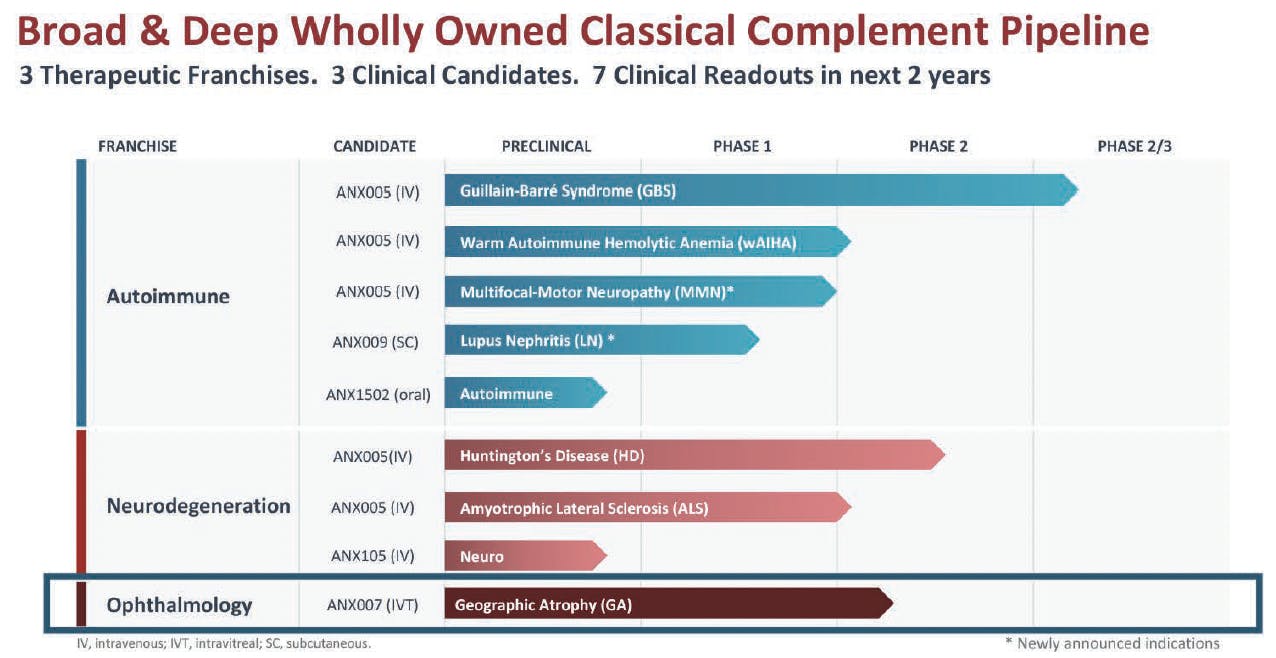
Annexon has successfully completed phase 1 studies of ANX007, demonstrating full target engagement within the eye that lasts at least 1 month with either low or high doses. These results suggest that monthly or every-other-month dosing may be possible. Annexon is currently conducting a phase 2 proof-of-concept study in patients with GA (NCT04656561; see info box for more information). Annexon is the only company working on developing the therapeutic potential of C1q inhibition and is focusing on diseases in which the classical pathway is a key driver of tissue damage, including an array of antibody-mediated autoimmune disorders and neurodegenerative diseases. Annexon has multiple fit-for-purpose compounds in its portfolio, including ANX005 for systemic administration, ANX007 for intravitreal dosing, and ANX009 with subcutaneous dosing for blood-based disorders. In addition, Annexon has unique follow-on compounds, including ANX105, a next generation monoclonal antibody, and ANX1502, an oral small molecule inhibitor of the classical pathway (Figure 3).
1. Mannes M, Dopler A, Zolk O, et al. Complement inhibition at the level of C3 or C5: mechanistic reasons for ongoing terminal pathway activity. Blood. 2021;137(4):443-455.
2. Langer HF, Chung KJ, Orlova VV, et al. Complement-mediated inhibition of neovascularization reveals a point of convergence between innate immunity and angiogenesis. Blood. 2010;116(22):4395-4403.
3. Stevens B, Allen NJ, Vazquez LE, et al. The classical complement cascade mediates CNS synapse elimination. Cell. 2007;131(6):1164-1178.
4. Williams PA, Tribble JR, Pepper KW, et al. Inhibition of the classical pathway of the complement cascade prevents early dendritic and synaptic degeneration in glaucoma. Mol Neurodegener. 2016;11:26.
5. Jiao H, Rutar M, Fernando N, et al. Subretinal macrophages produce classical complement activator C1q leading to the progression of focal retinal degeneration. Mol Neurodegener. 2018;13(1):45.
