As surgeons, we continually strive to refine our procedures and techniques, embracing the latest innovations and trends. In this case, I used the CryoTreq to simplify a multistep procedure with successful results.
CASE PRESENTATION
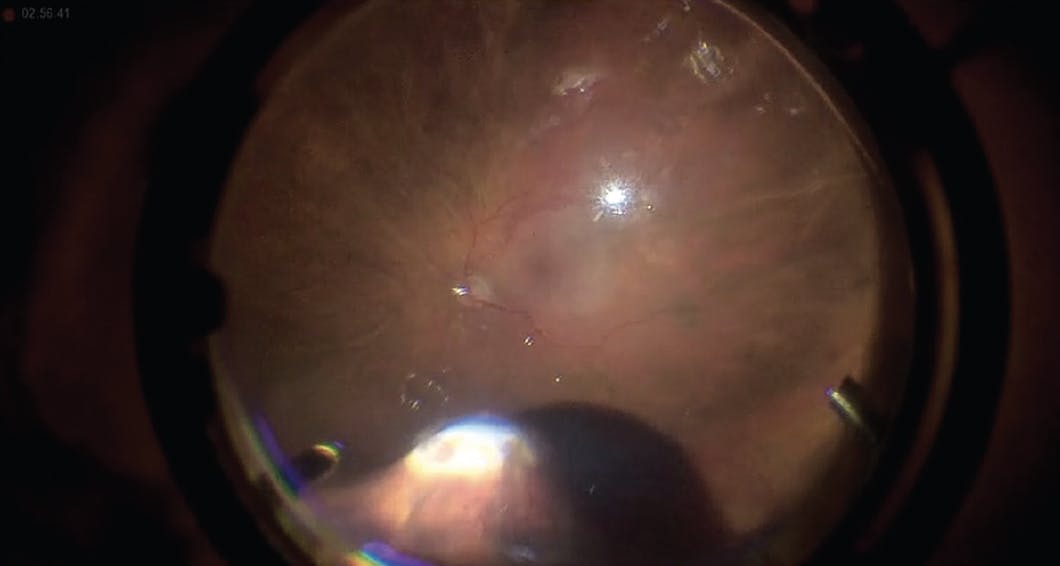
Background. A 68-year-old man complaining of flashes and reduced visual acuity during prior weeks presented to our clinic. The patient’s fundus examination revealed a small retinal detachment at the nasal superior quadrant (Figure 1) and a small full-thickness macular hole with some epiretinal membrane. There were also two small peripheral retinal tears at the 12 and 12:30 clock positions.
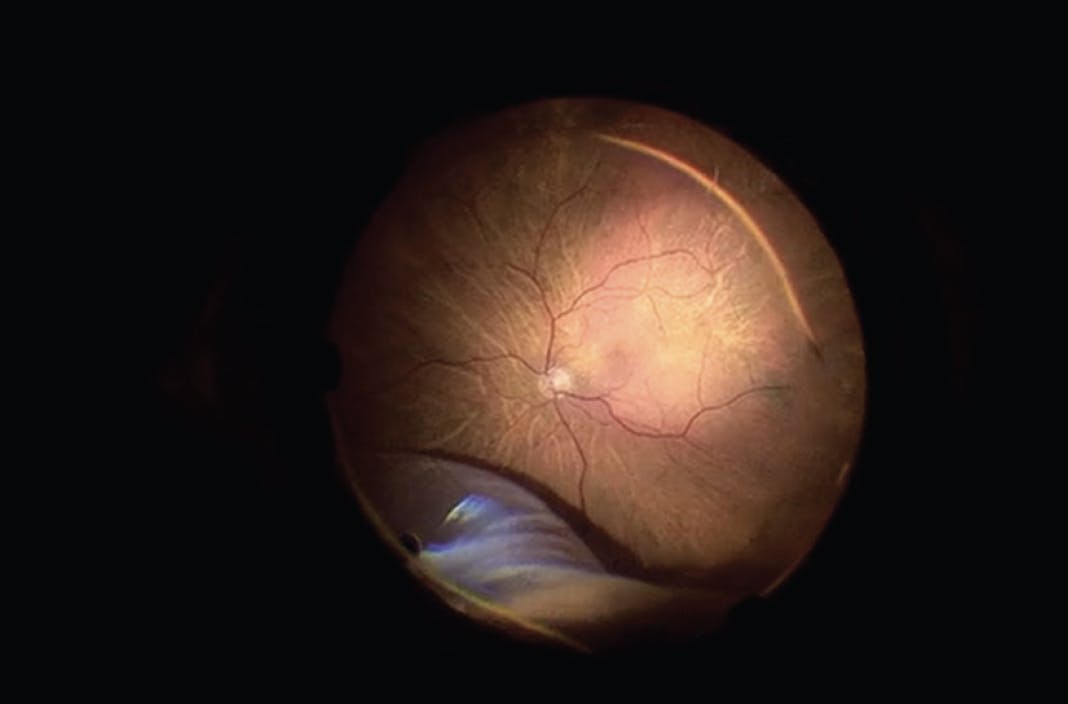
Surgery. Due to the patient’s age and the presence of an early cataract, I decided to perform a combined procedure (cataract surgery and internal limiting membrane [ILM] peeling). The tear’s peripheral location at the 12 clock position could have converted this into a complicated case due to the difficult position to reach. One of the advantages of the cryosurgery is that, as opposed to laser treatment, it’s effective even in the presence of subretinal fluid. In my opinion, this simplifies this case. For this reason, I used CryoTreq.
Initially, I addressed the ILM and epiretinal membrane. My objective was to peel all at once. Due to the epiretinal tissue, however, repeat maneuvers were necessary. I then drained the peripheral subretinal fluid and treated the small tear at the 12 clock position. The retina was attached in that position, so I was able to perform a laser treatment. In the 12:30 clock position, however, the retina was still detached. Therefore, I decided to mark the area with diathermy and then performed fluid/air exchange thereby draining the remaining subretinal fluid and avoiding the use of heavy liquids. As the retinal tear was located extremely anterior and the reduced view aggravated safe laser treatment, I decided to perform a CryoTreq procedure (Figure 2). This simple procedure allowed for safe surgery despite impaired visualization under air. Finally, the remaining subretinal fluid in the macular hole was drained and the hole successfully closed.