


The treatment of retinal tears and detachments almost always requires surgical intervention, and a variety of surgical options are available. Today, between 10% and 20% of cases require scleral buckling which, when the lesion is limited to one quadrant, could be the only surgery executed. In our opinions, the most relevant latest innovation is cryotherapy with CryoTreq (Vitreq, a Beaver-Visitec International company; Figure 1). During this treatment, extreme cold is applied on the episcleral tissue to induce chorioretinal adhesion by creating a retinopexy that seals the retina against the wall of the eye.
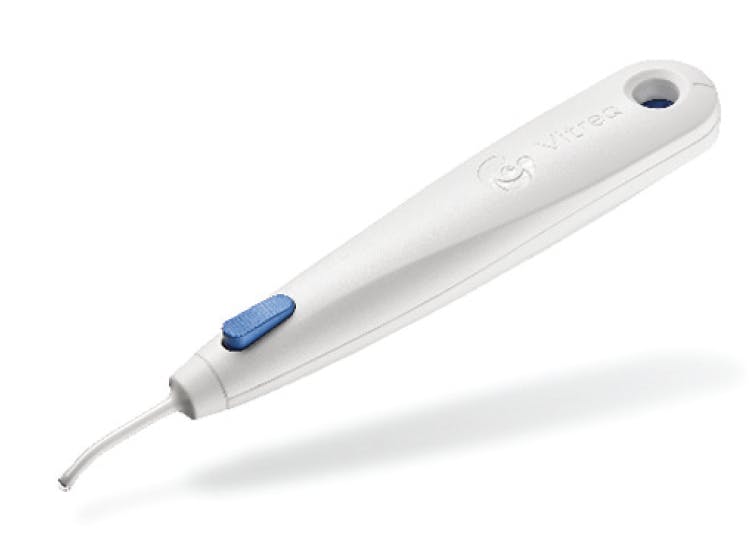
Traditional cryotherapy is cumbersome and expensive, but with CryoTreq, the surgery becomes straightforward. It eliminates the need for foot-controlled bulky equipment, time-consuming and uncertain priming, and unreliable reusable cryoprobes. CryoTreq’s tip reaches cryogenic temperatures within a few seconds of activation and can deliver a minimum of 15 freeze dots on the same patient.
CryoTreq provides an alternative to laser photocoagulation. This is especially helpful for lesions located toward the anterior sector of the eye and initial localized retinal detachments. This minimally invasive, ab externo approach to the treatment of retinal tears and detachments requires minimal time for preparation, and it is an intuitive procedure to perform.
The preparation of cryo equipment is preceded by a high level of uncertainty due to the various elements that must work at the same time, including moving the machine into the OR; having the gas tanks charged and the filters cleaned; finding the sterilized probes; educating the nurse who must be able to turn on, perform checks, and set up the cryo equipment; assembling the equipment; verifying probe functionality; and finding an accessible space for the cryo pedal between the many pedals that already crowd the area under the operating bed. These steps add distressing complexity that sometimes cause us to prefer the laser even if it was not explicitly indicated.
