
Yutiq Header
Yutiq Header

Sponsored by EyePoint Pharmaceuticals

October 2021 Supplement | YUTIQ® (fluocinolone acetonide intravitreal implant) 0.18 mg case studies

Chronic Postsurgical Posterior Uveitis With Macular Edema OS

A Real-world Case Provided by Dr. Robert Sisk, Cincinnati, OH

Robert Sisk, MD headshot

Initial Presentation

Patient demographics

70-year-old white male

Relevant medical history

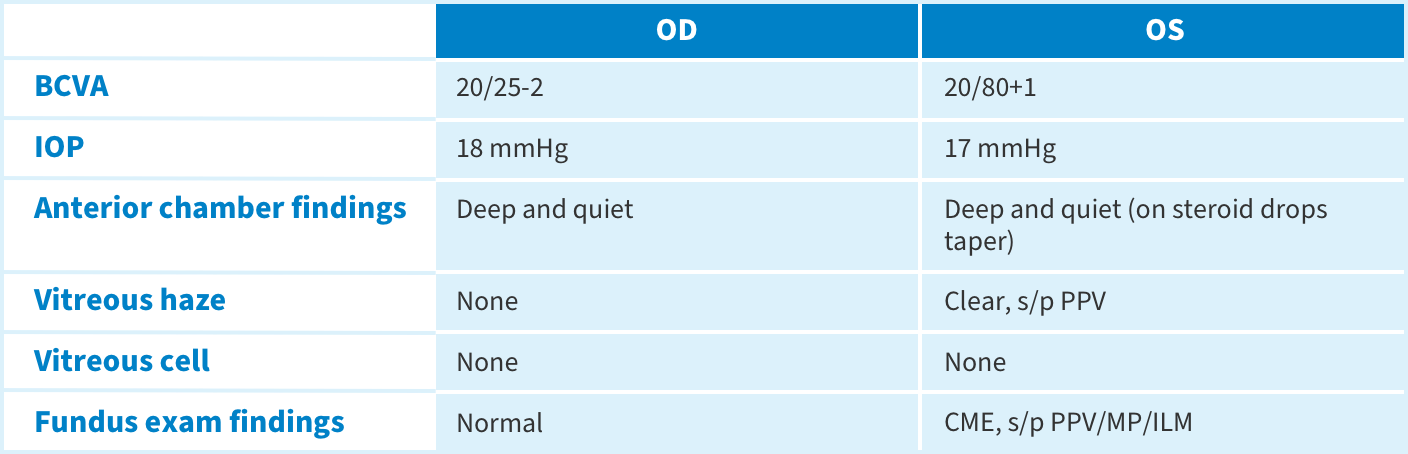
History of PPV OS for symptomatic vitreous opacities, subsequently developed symptomatic epiretinal membrane and underwent 25G PPV/MP/ILM 2 months before presentation

Chief ocular complaint and duration of complaint

Persistent blurred vision and metamorphopsia noted initially 5 weeks after surgery, improved with steroid treatments, but frequently recurrent
Diagnosis

Chronic postsurgical posterior uveitis with macular edema OS

Previous treatments before YUTIQ

Short-duration intravitreal dexamethasone implants

Focal retinal photocoagulation

Steroid drops

YUTIQ treatment

OS only

Nine Months Follow-up After YUTIQ Treatment
Additional comments

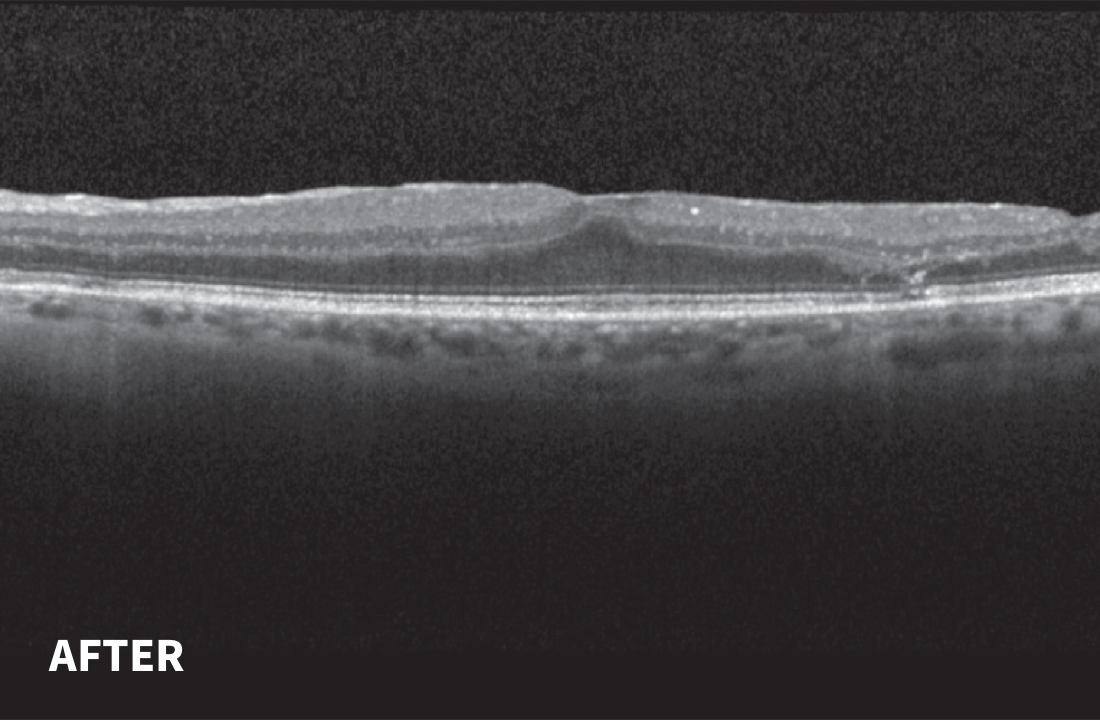
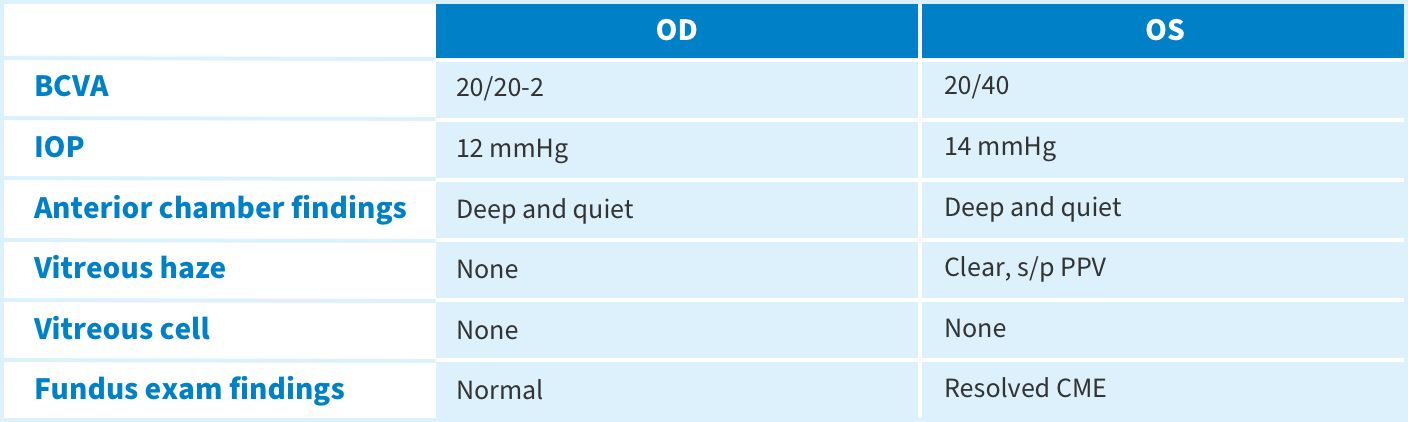
No interval follow-up due to COVID-19; CME resolved with improvement in visual acuity

Will continue to monitor for late recurrence and potential need for retreatment with YUTIQ

Would like to obtain FA to evaluate for subclinical leakage in the context of a dry macula by OCT

Case Imagery
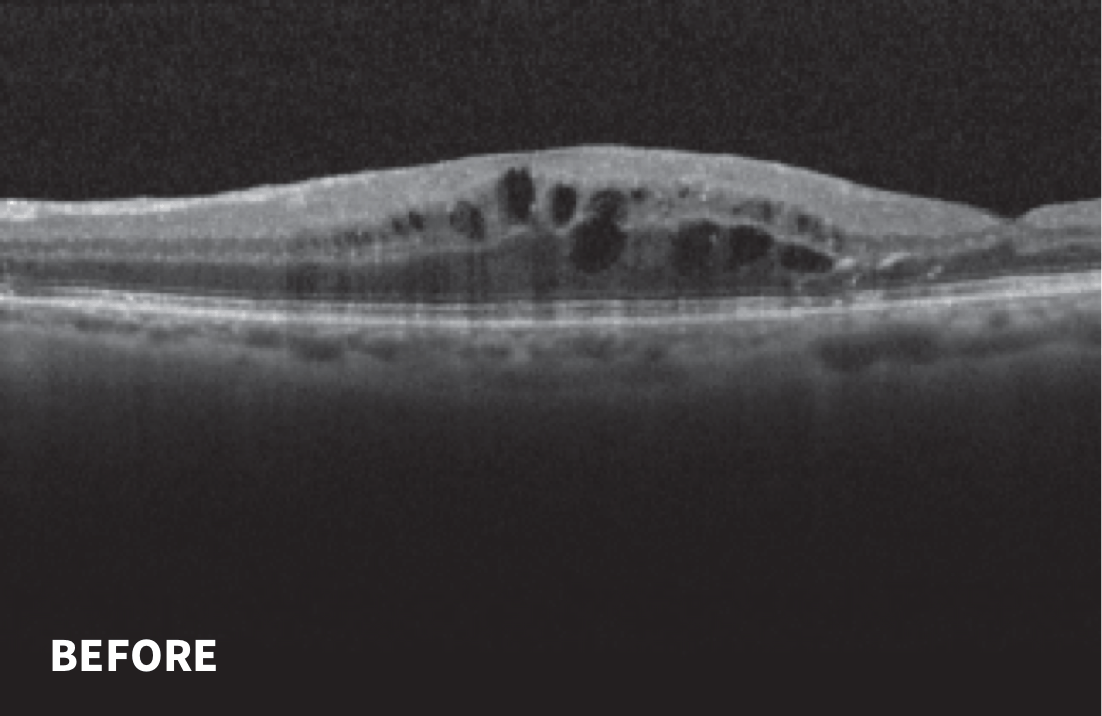
<p>Figure 1. Before YUTIQ Treatment OS: OCT</p>

Click to view larger

Figure 1. Before YUTIQ Treatment OS: OCT

<p>Figure 2. After 9 Months YUTIQ Treatment OS: OCT</p>

Click to view larger

Figure 2. After 9 Months YUTIQ Treatment OS: OCT

BCVA=best corrected visual acuity; CME=cystoid macular edema; FA=fluorescein angiography; ILM=internal limiting membrane; IOP=intraocular pressure; MP=macular pucker; OCT=optical coherence tomography; PPV=pars plana vitrectomy.

Robert Sisk, MD headshot

Robert Sisk, MD

Adult and Pediatric Vitreoretinal Surgery
Cincinnati Eye Institute

Director of Pediatric Retina Surgery
Director of Ophthalmic Genetics
Cincinnati Children’s Hospital

Associate Professor of Ophthalmology, Affiliated
University of Cincinnati Department of Ophthalmology

Next Article in this Supplement

Chronic Posterior Uveitis, Irvine Gass Syndrome OD

Sabah Shah, MD

View Article Fill 1

YUTIQ and the YUTIQ logo are registered trademarks of EyePoint Pharmaceuticals, Inc.

©2021 EyePoint Pharmaceuticals, Inc. All rights reserved.

480 Pleasant Street, Suite B300, Watertown, MA 02472

08/2021 US-YUT-2100113

Important Safety Information

INDICATIONS AND USAGE

YUTIQ® (fluocinolone acetonide intravitreal implant) 0.18 mg is indicated for the treatment of chronic non-infectious uveitis affecting the posterior segment of the eye.

IMPORTANT SAFETY INFORMATION

CONTRAINDICATIONS

Ocular or Periocular Infections: YUTIQ is contraindicated in patients with active or suspected ocular or periocular infections including most viral disease of the cornea and conjunctiva including active epithelial herpes simplex keratitis (dendritic keratitis), vaccinia, varicella, mycobacterial infections and fungal diseases.

Hypersensitivity: YUTIQ is contraindicated in patients with known hypersensitivity to any components of this product.

WARNINGS AND PRECAUTIONS

Intravitreal Injection-related Effects: Intravitreal injections, including those with YUTIQ, have been associated with endophthalmitis, eye inflammation, increased or decreased intraocular pressure, and choroidal or retinal detachments. Hypotony has been observed within 24 hours of injection and has resolved within 2 weeks. Patients should be monitored following the intravitreal injection.

Steroid-related Effects: Use of corticosteroids including YUTIQ may produce posterior subcapsular cataracts, increased intraocular pressure and glaucoma. Use of corticosteroids may enhance the establishment of secondary ocular infections due to bacteria, fungi, or viruses. Corticosteroids are not recommended to be used in patients with a history of ocular herpes simplex because of the potential for reactivation of the viral infection.

Risk of Implant Migration: Patients in whom the posterior capsule of the lens is absent or has a tear are at risk of implant migration into the anterior chamber.

ADVERSE REACTIONS

In controlled studies, the most common adverse reactions reported were cataract development and increases in intraocular pressure.

Please see full Prescribing Information at YUTIQ.com.