


AT A GLANCE
- The advent of endoscopy-assisted vitrectomy using a 3D heads-up display has addressed many concerns associated with traditional endoscopy.
- The authors compared endoscopy-assisted vitrectomy versus vitrectomy alone for rhegmatogenous retinal detachment with complex proliferative vitreoretinopathy and increased their reattachment rate by close to 20% using the endoscopic view in all clear media cases.
- Endoscopy-assisted vitrectomy can also help in posteriorly-located subretinal membrane peeling and suprachoroidal visualization.
Ophthalmic endoscopy is an important tool in the OR to avoid ‘blind’ pars plana vitrectomy (PPV) in cases where the standard microscope view is particularly challenging or even impossible. Endoscopy affords surgeons two advantages:
Endoscopy-guided vitrectomy allows the surgeon to bypass any anterior segment optical aberrations and opacities, such as corneal edema or scarring (keratoprosthesis is an alternative method).
Endoscopy-assisted vitrectomy is used in the setting of clear media, combined with microscope/3D heads-up display and wide-angle viewing systems, to enhance visualization of anterior structures, such as the anterior vitreous base, ciliary body, and posterior chamber without disturbing tissue interactions.1 Endoscopes offer both high magnification and a wide field of view (ranging from 90° to 140°), which increase the safety of surgical procedures and facilitate the identification of subtle findings, such as small retinal breaks or holes and anteriorly-entrapped small residual silicone oil droplets.
Although endoscopic PPV has been around for quite some time, few vitreoretinal surgeons have mastered it and currently include it as part of their everyday surgical armamentarium. This is due, in part, to the low resolution and lack of proper lighting when using small-gauge endoscopy probes. Larger gauges provide decent image quality but require larger wounds that could cause complications.
However, the advent of endoscopy-assisted PPV using a 3D heads-up display has addressed many of these concerns, and vitreoretinal surgeons should revisit its usefulness. In this article, we discuss tips and tricks of endoscopy-assisted vitrectomy used in combination with a 3D heads-up display system (Ngenuity, Alcon).
A 3D DISPLAY SETUP
With a 3D heads-up display, surgeons can view two image feeds side-by-side on the same screen: the 3D image coming from the microscope and the 2D endoscopy image (Video). This overcomes the “I don’t know where I am” feeling that surgeons can have when viewing only the 2D endoscopy screen. The improved light source from the endoscopy console (Endo Optiks E2, Beaver-Visitec) in combination with the 4K image monitor allows surgeons to use 23-gauge endoscopy probes, which provide better fluidics control and make it easy to switch hands for a better 360° perspective.
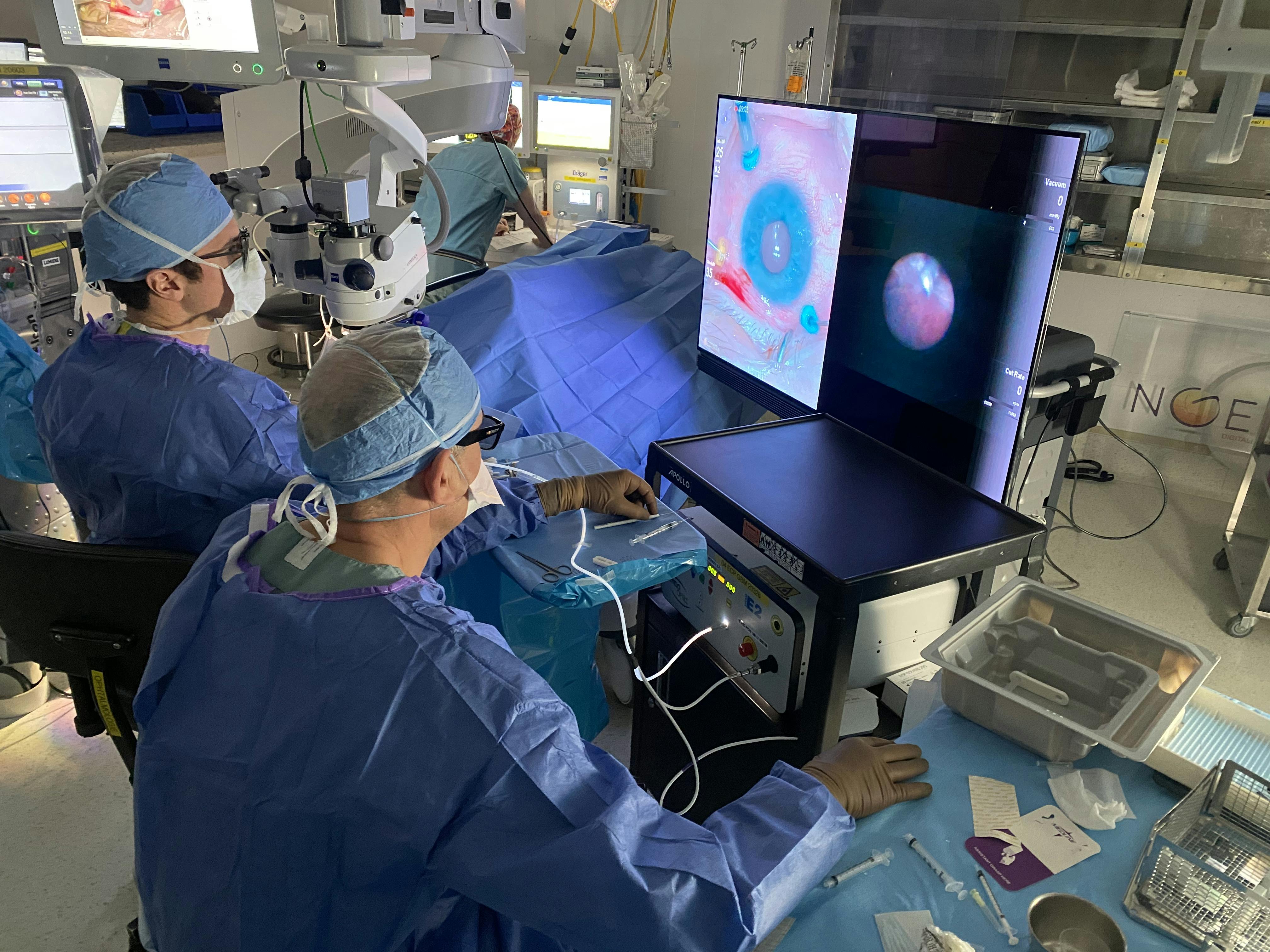
Video. Endoscopy with the 3D Heads-Up Display: The Setup
This setup is beneficial for many cases, including anterior proliferative vitreoretinopathy (PVR) peeling, retinal redetachments with no known cause, silicone oil removal, severe uveitis with persistent hypotony, ocular trauma, and haptics verification for sulcus or fixated IOLs.
Sturzeneker et al recently introduced an alternative way to capture endoscopy images and convert them into 4K or higher signals, bypassing the endoscopy console altogether. This approach may improve image quality and significantly cut the cost for surgeons who do not have access to an endoscopy console (Figure 1).2
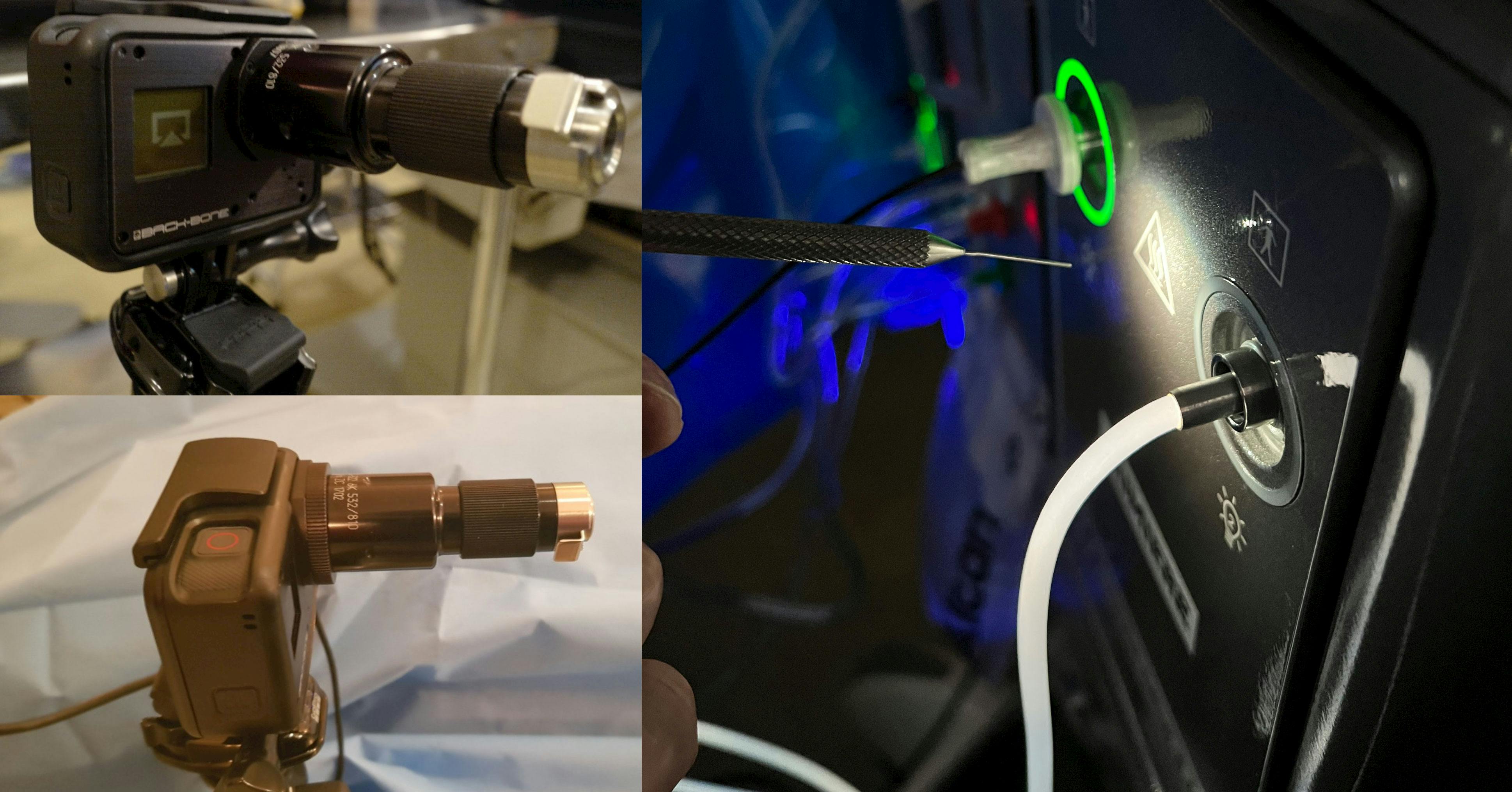
Figure 1. Surgeons can plug an endoscopy probe into a GoPro camera with a C-mount and video adaptor (A and B). The HDMI output cable from the GoPro connects to the Ngenuity HDMI input and the light connector connects into the vitrectomy machine light source (C).
TIPS AND TRICKS
- The ability to visualize structures with scleral depression doesn’t replace the value of endoscopy because scleral depression can distort the interactions between the anterior vitreous and structures behind the iris, leading to misinterpretations.
- We recently compared endoscopy-assisted PPV versus PPV alone for rhegmatogenous retinal detachment (RRD) with complex PVR, and we increased our reattachment rate by close to 20% using the endoscopic view in all clear media cases.3
- Placement of a scleral buckle (SB) does not prevent or release traction from anterior PVR. In severe cases, proliferation occurs anterior to the buckling effect, and an SB does not replace an anterior hyaloid endoscopy-assisted shave and removal. In some cases, contraction and detachment of the nonpigmented epithelium layer of the pars plana can become contiguous with the peripheral retina. In this situation, surgeons may have to remove the nonpigmented epithelium layer with the anterior retina. Using an endoscopic technique, surgeons can enter with a 25-gauge vitrectomy probe anteriorly between the fibrotic tissue and retinal pigment epithelium (RPE) or the ciliary body, turn the port towards the retina or the fibrotic tissue, and remove it from the outside-in while decreasing the trauma to the underlying RPE and choroid.
- Some series in the past have shown limited success of endoscopy to revert chronic hypotony.4 But the key is to detect and treat early. The longer a patient has sustained low IOP, the more likely that the ciliary body becomes atrophic from chronic traction and, thus, less salvageable with endoscopy. Sometimes, ultrasound biomicroscopy or anterior segment OCT may help in early detection of the hypotony cause, but many times only endoscopy will clearly assess the ciliary body status and presence of traction.
- Adding a chandelier during endoscopy-assisted PPV may help to illuminate wider fields of view and facilitate some surgical steps, such as finding small pseudophakic retinal breaks or anterior retinal contraction that could be easily missed in lower light settings.
- In cases of silicone oil removal, particularly without proper vitreous base shaving, endoscopy-assisted PPV can detect residual oil droplets stuck on the vitreous behind the iris or in the posterior chamber (even after multiple fluid-air exchanges). This approach can also help clinicians identify potential causes of retinal redetachments left undetected by scleral depression.5
- Endoscopy-assisted PPV is useful in more posteriorly-located subretinal membrane peeling and suprachoroidal visualization (Figure 2).
- During endoscopy-assisted PPV with perfluorocarbon (PFC) liquid, clinicians who switch to fluid-air exchange can keep the endoscopy probe tip inside the PFC bubble to avoid a compromised view due to air in the anterior chamber and/or IOL condensation. Clinicians will also be able to visualize subretinal fluid drainage and obtain a more complete PFC removal.
- If hard-to-control bleeding occurs during complex surgery, clinicians can raise the level of the PFC, so the blood floats anteriorly on its surface. By inserting the endoscope into the PFC bubble, the surgeon will have a clearer view.
- In open-globe injuries, fibrotic scar tissue formation can permanently damage the ciliary body structure, especially in the presence of vitreous hemorrhage and/or uveal tissue prolapse. Early intervention with endoscopy to remove vitreous hemorrhage and shave the vitreous base may decrease the risks of fibrotic contraction and ciliary body destruction.
- Endoscopy-assisted PPV may also help differentiate encapsulated small intraocular foreign bodies (IOFBs) from surrounding fibrotic tissue, fibrin, and blood.
- When trocar placement is a challenge, in aphakic or even pseudophakic eyes, clinicians can place an infusion line in the anterior chamber and use the endoscopy probe through the limbus to detect the proper pars plana region and avoid trocar placement into the subretinal or suprachoroidal space or even more anteriorly through the ciliary processes (in case of smaller eyes).
- In cases of Boston keratoprosthesis type 1, retroprosthesis membrane formation is due to proliferation over the anterior hyaloid scaffold. Particularly in cases combined with glaucoma tube shunts, endoscopy-assisted PPV is highly recommended for peeling all anterior hyaloid and vitreous base.
- The more attached the posterior hyaloid is to the retina and/or optic nerve, the more likely the anterior hyaloid is firmly adhered as well. Staining the posterior hyaloid with triamcinolone crystals can help in these cases. In extreme scenarios of anterior hyaloid adhesion, peeling with forceps or pneumatic hyaloid detachment can be attempted (Figure 3).6
- Endoscopy can be useful for IOL haptics placement. Even a well-centered sulcus IOL can have one or both haptics misplaced over the ciliary processes or at the pars plana. For scleral fixated IOLs, clinicians can fixate them posterior to the ciliary processes. In general, to decrease ciliary body trauma, clinicians can place the haptics 2.5 mm from the limbus for 3-piece IOL flanged techniques (such as the Yamane) and 3 mm to 4 mm from the limbus for 4-point fixation IOLs, such as Goretex sutured IOLs (Figure 4).7
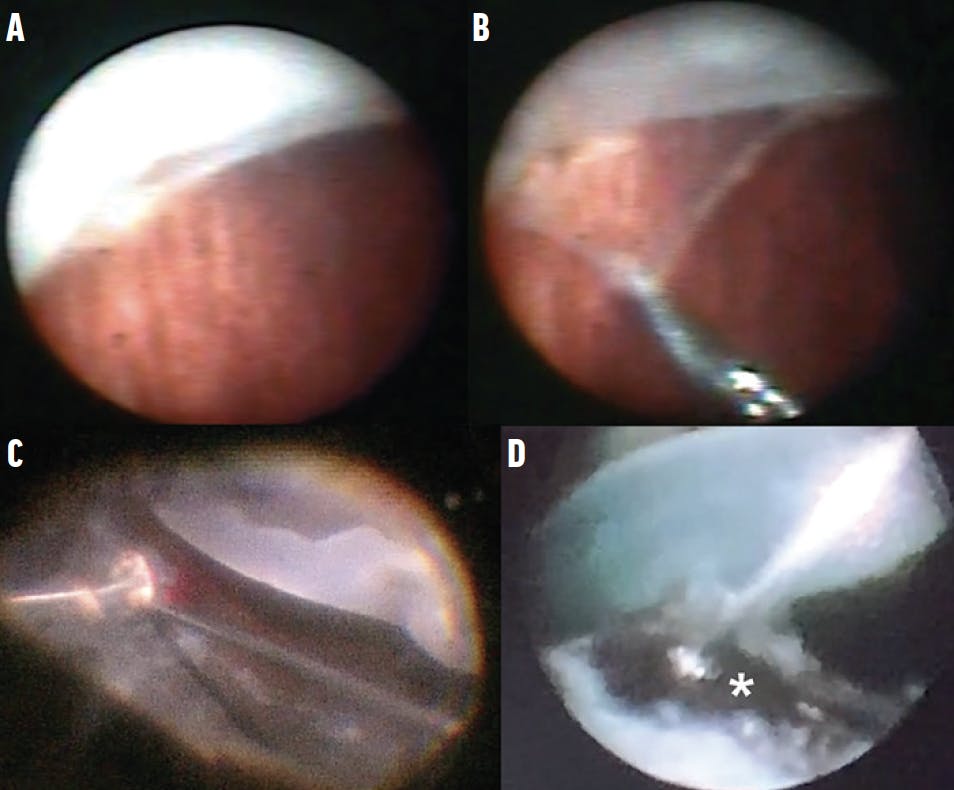
Figure 2. Endoscopic view of the subretinal space,shows a subretinal membrane (A) and subretinal membrane peeling (B). The microscope view identifies a hole on the choroid (C; focal illuminated area), while the endoscopic view inside the choroidal hole identifies a bubble of heavy silicone oil (*) in the suprachoroidal space (D).
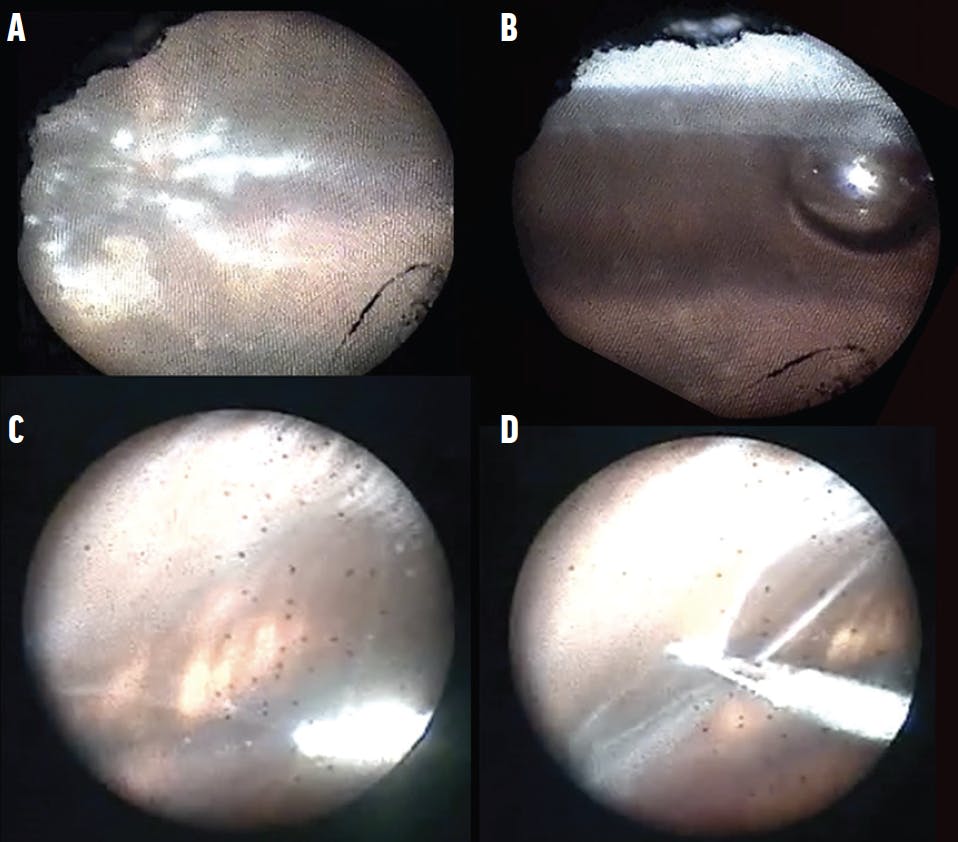
Figure 3. Triamcinolone staining is used for vitreous base shaving (A). Note the air bubble entrapped between the pars plana and the anterior hyaloid (B). The anterior hyaloid is dissected using the 25-gauge vitrectomy probe (C) and 25-gauge forceps (D).
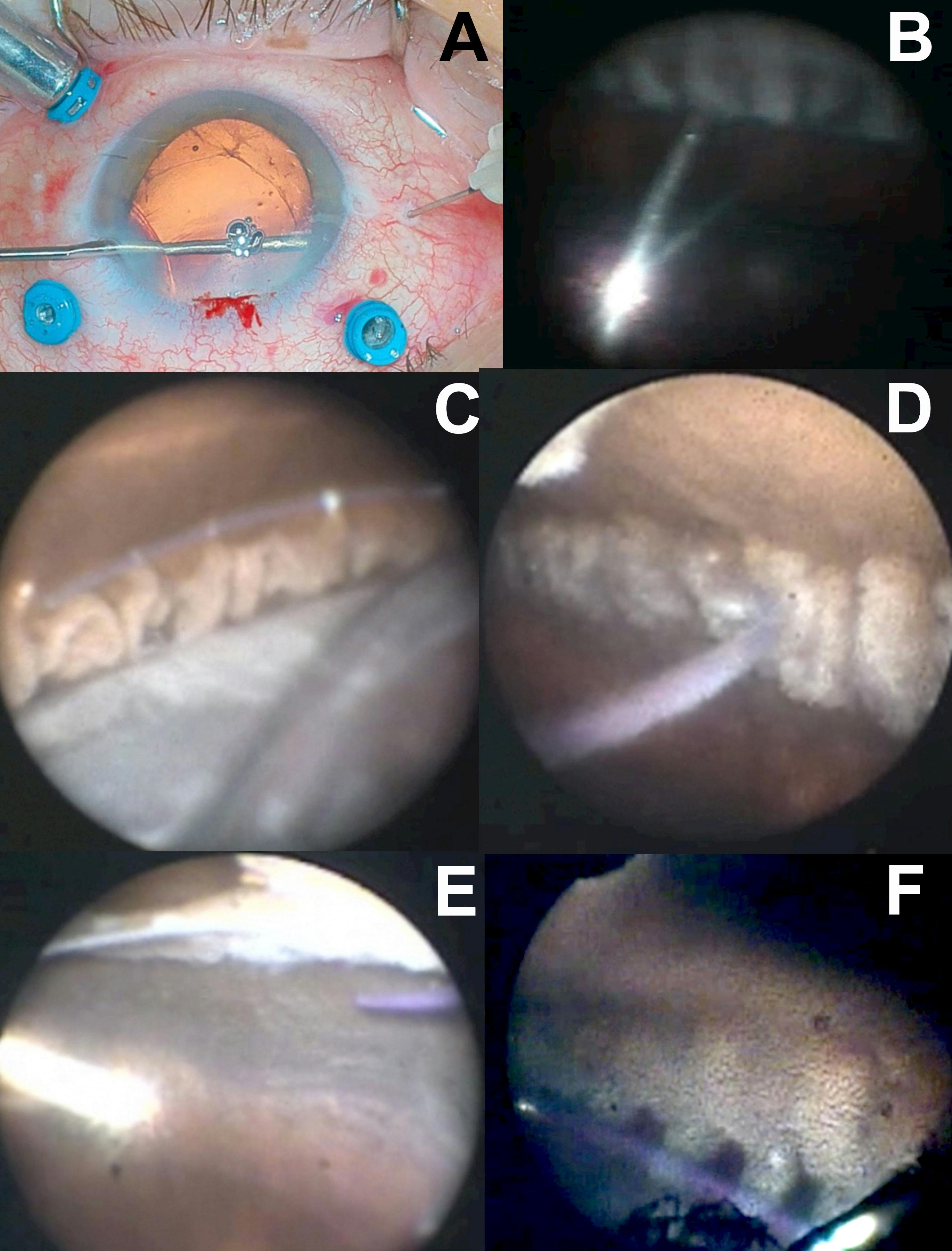
Figure 4. When positioning IOL haptics, the split screen shows the 3D display of a 30-gauge needle placed 2.5 mm from the limbus for flanged IOL haptic transconjunctival scleral fixation. The microscope feed (A) and the endoscopy feed (B) demonstrate the needle posteriorly to the ciliary processes. The well-centered IOL has haptics well-positioned on the ciliary sulcus (C). This patient experienced recurrent vitreous hemorrhage post-flanged IOL fixation, and the endoscopy image shows the haptic piercing through a ciliary process (C). A well-centered sulcus IOL had one haptic at the pars plana (E; right side of the image). With another sulcus IOL with postoperative chronic cystoid macular edema, endoscopy revealed the haptic splitting the ciliary processes (F).
WHAT’S OLD IS NEW
Sometimes, new technology improves the utility of techniques nearly forgotten. Combining 3D wide-angle images with endoscopy allows surgeons to visualize areas that are unreachable by the surgical microscope. Undoubtedly, the efforts spent by vitreoretinal surgeons to improve their endoscopic skills will pay dividends for myriad cases.
1. Rezende FA, Vila N. New era in endoscopic vitreoretinal surgery. Graefes Arch Clin Exp Ophthalmol. 2019;257(12):2797-2798.
2. Sturzeneker G, Pereira RR, Nakaghi RO, Maia A. Modified portable camera endoscope for posterior segment surgery. Retina. 2021;41(1):228-229.
3. Rezende FA, Vila N, Rampakakis E. Endoscopy-assisted vitrectomy vs. vitrectomy alone: comparative study in complex retinal detachment with proliferative vitreoretinopathy. Int J Retina Vitreous. 2020;6:34.
4. Lee GD, Goldberg RA, Heier JS. Endoscopy-assisted vitrectomy and membrane dissection of anterior proliferative vitreoretinopathy for chronic hypotony after previous retinal detachment repair. Retina. 2016;36(6):1058-1063.
5. Vila N, Rampakakis E, Rezende FA. Endoscopy-assisted vitrectomy outcomes during silicone oil removal after complex retinal detachment. J Vit Ret Dis. 2019;3(6):445-451.
6. Dirani A, Ciongoli MR, Lesk MR, Rezende FA. Small-gauge endoscopy-guided pneumatic anterior hyaloid detachment: a new surgical technique for combined pars plana vitrectomy and pars plana glaucoma drainage implant. Ophthalmic Surg Lasers Imaging Retina. 2018;49(1):48-50.
7. Sugiura T, Kaji Y, Tanaka Y. Anatomy of the ciliary sulcus and the optimum site of needle passage for intraocular lens suture fixation in the living eye. J Cataract Refract Surg. 2018;44:1247-1253.

_1784132761.jpg?auto=compress,format&w=75)





