


AT A GLANCE
- All surgeons placing a port delivery system (PDS) with ranibizumab (Susvimo, Genentech/Roche) for the first time should receive formal training and guidance from surgical liaisons.
- Implantation of the PDS is reimbursable under CPT code 67027 with subsequent drug refills coded similarly to standard intravitreal injection (CPT code 67028).
- Think like a glaucoma specialist: the conjunctiva and Tenon’s are the king and queen when it comes to reducing future implant exposure.
With the port delivery system (PDS) with ranibizumab (Susvimo, Genentech/Roche) now FDA-approved, providers and patients will have to weigh the risks and benefits of proceeding with surgical placement of the device versus continuing standard in-office intravitreal injection therapy.
All surgeons placing a PDS for the first time should receive formal training and guidance from surgical liaisons. This article serves as a guide to maximize success and avoid pitfalls during this straightforward procedure—it is not a substitute for thorough training.
Careful and meticulous surgical technique is paramount to reduce the chance of complications. The guidance presented in this article is based on the authors’ collective experiences placing the PDS during clinical trials and the cumulative experience of the investigators throughout the various ongoing PDS trials. Presented here are 10 surgical pearls for successful PDS implantation.
1. EVALUATE THE PATIENT CAREFULLY
First, perform a careful in-office slit lamp examination to diligently inspect the surgical eye’s conjunctiva for areas of thinning and/or scarring. Patients with previous glaucoma surgery involving the superior quadrants are not surgical candidates at this time. The implant is typically inserted 4 mm posterior to the limbus in the superotemporal quadrant. Do not place the implant in an alternative quadrant because no data or surgical experience supports such a decision.
A thorough preoperative assessment can help avoid serious intraoperative and postoperative issues such as conjunctival retraction or erosion with implant exposure and subsequent infection. Patients with untreated conjunctival or lid infections are not good candidates for the device until the infections are addressed. Dry eye disease was not an exclusion criterion for enrollment in the PDS trials, but patients with severe dry eyes may not make ideal candidates.
2. SET YOURSELF UP FOR SUCCESS
Place a valved cannula transconjunctivally using a trocar blade in the inferotemporal quadrant with an angled entry wound. We prefer to use a 25- or 27-gauge cannula. Insert an infusion line via the cannula and keep it closed. Leave ample room between the infusion and the planned implant site while simultaneously avoiding excessive inferior placement of the infusion, which can limit your ability to rotate the eye later in the procedure. Place a corneal traction suture in the superotemporal quadrant using a 7-0 polyglactin 910 (Vicryl, Johnson and Johnson) suture to assist with this rotation. Adequate exposure of the superotemporal quadrant will facilitate the subsequent surgical steps. Evaluation of surgical videos during the clinical trials often revealed that inadequate exposure was associated with subsequent surgical technical difficulties.
3. MAKE THE PERFECT PERITOMY AND DON’T FORGET TENON’S
Fashion a superotemporal peritomy starting near the limbus measuring 6 mm by 6 mm in size, including a single relaxing radial incision. Do not leave an island of conjunctival tissue at the limbus; instead, it should be flush with and follow along the limbus. Remember that Tenon’s capsule generally inserts 2 mm posterior to the limbus, and it is important to generously undermine both Tenon’s and conjunctiva to maximize mobility for closure. This dissection can extend well beyond the 6 mm of the original conjunctival peritomy. Use non-toothed forceps to avoid button-holing the tissue. Think like a glaucoma specialist: the conjunctiva and Tenon’s are the king and queen when it comes to reducing future implant exposure.
4. ENSURE HEMOSTASIS
Apply wet-field cautery to any actively bleeding or visibly engorged episcleral vessels at or near the intended insertion site; this will help to improve visualization of the sclera and allow for better detection of possible bleeding from the incision later in the procedure. Better visualization will facilitate all subsequent steps, so having control of the surgical field cannot be overstated. A little time spent with cautery can save more time later in the procedure.
5. LOAD THE IMPLANT PROPERLY
Fill the implant with ranibizumab using the proprietary fill needle under magnification. Fill the implant slowly over at least 5 seconds with a dome of fluid visualized at the tip. Ensure that all air bubbles have been expressed from the implant before inserting and turn the implant over to visualize both sides for air. The initial fill equipment makes this step relatively straightforward, but there is always room for operator error (ie, don’t forget to fill the device).
6. SIZE, MARK, AND CUTDOWN THE SCLERAL INCISION
Mark the sclera 4 mm posterior to the limbus at the desired implant location, and then mark a 3.5 mm length at this distance. Use a 20-gauge microvitreoretinal (MVR) blade to create a 3.5 mm lamellar incision down to bare pars plana. Hold the MVR blade perpendicular to the sclera and perform this incision under the magnification of an operating microscope. Use the incision measurement gauge that is included with the implant to confirm a correctly sized 3.5 mm incision. Oversizing the incision may increase risk of device dislocation, while undersizing may result in vitreous hemorrhage during or following insertion. If the wound is greater than 3.5 mm, place a nonabsorbable suture (8-0 or 9-0 nylon) on the side away from the relaxing conjunctival incision to make the wound 3.5 mm.
7. LASER METHODICALLY
Use an endolaser probe to coagulate the exposed pars plana. We prefer a 25- or 27-gauge endolaser probe with a setting of a single spot application, 300 mW power, and 1,000 ms duration. Be methodical with laser application, starting at one end of the incision and applying a single spot at a time while moving to the opposite end. The laser spots should be overlapping with special attention directed at the corners of the wound. Avoid direct contact with the target tissue, and ensure each spot is applied for a full second. Keep the area as dry as possible to allow uptake of laser in the pars plana choroid. You can detect proper ablation of the pars plana with a color change to gray or black, contraction of the pars plana tissue resulting in a perforated appearance, and visible extravasation/blebbing of vitreous fluid.
Port Delivery Basics
The port delivery system (PDS) with ranibizumab (Susvimo, Genentech/Roche) is an ophthalmic drug delivery system that relies on a transscleral subconjunctival surgically implanted drug reservoir for continuous delivery of a customized formulation of ranibizumab. The PDS is approved for the treatment of wet AMD in patients who have had at least two previous intravitreal injections of anti-VEGF and have shown a clinical response. The device consists of the refillable 20 μL drug reservoir, a self-sealing septum, a release control element, and an extra scleral flange. Implantation of the PDS is reimbursable under CPT code 67027 with subsequent drug refills coded similarly to standard intravitreal injection (CPT code 67028).
The PDS, designed to remain in place for the life of the patient, is a therapeutic platform that could potentially be used with other pharmacologic agents as they become available.
8. ENTER THE VITREOUS CAREFULLY AND BE READY TO CAUTERIZE
Pass a 3.2 mm slit knife in and out through the center of the dissected sclera with a perpendicular slow and steady approach (Figure 1). Make sure not to move the blade tangentially to avoid enlarging the incision and initiating bleeding. After entering the vitreous, take a time-out during the surgery to observe for any bleeding at the edges of the incision. If there is, apply gentle fine-tip cautery to stop any bleeding without enlarging the wound.
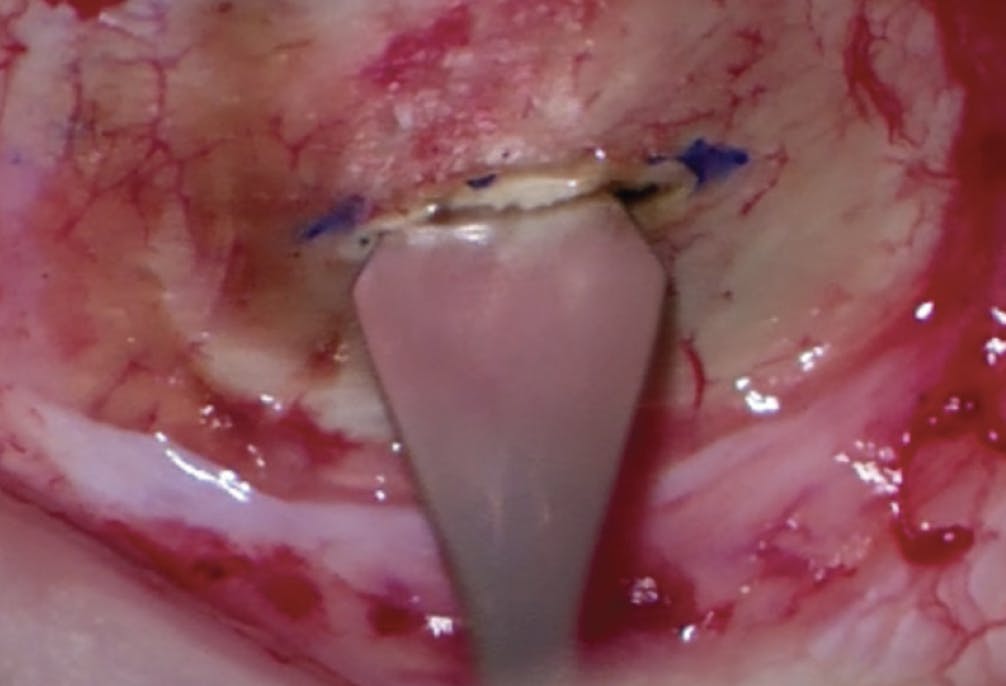
Figure 1. When entering the vitreous with the 3.2 mm slit knife, be sure to use a perpendicular, slow, and steady approach.
9. INSERT THE IMPLANT SMOOTHLY
Stabilize the globe with a second hand and fine-toothed forceps while slowly inserting the implant in a perpendicular fashion through the full-thickness incision. Avoid taking too flat an angle and aim for the center of the vitreous cavity. Opening the infusion line once the implant tip has entered the incision is helpful to pressurize the eye and provide countertraction. After the implant is in the proper position with the gripper tips against the sclera, activate the insertion tool release button and use the closed ends of the implant insertion tool to seat the implant flush with the globe. If there was excessive vitreous prolapse that was not repositioned during the implant placement, use a vitrector to remove any excess around the implant (Figure 2).
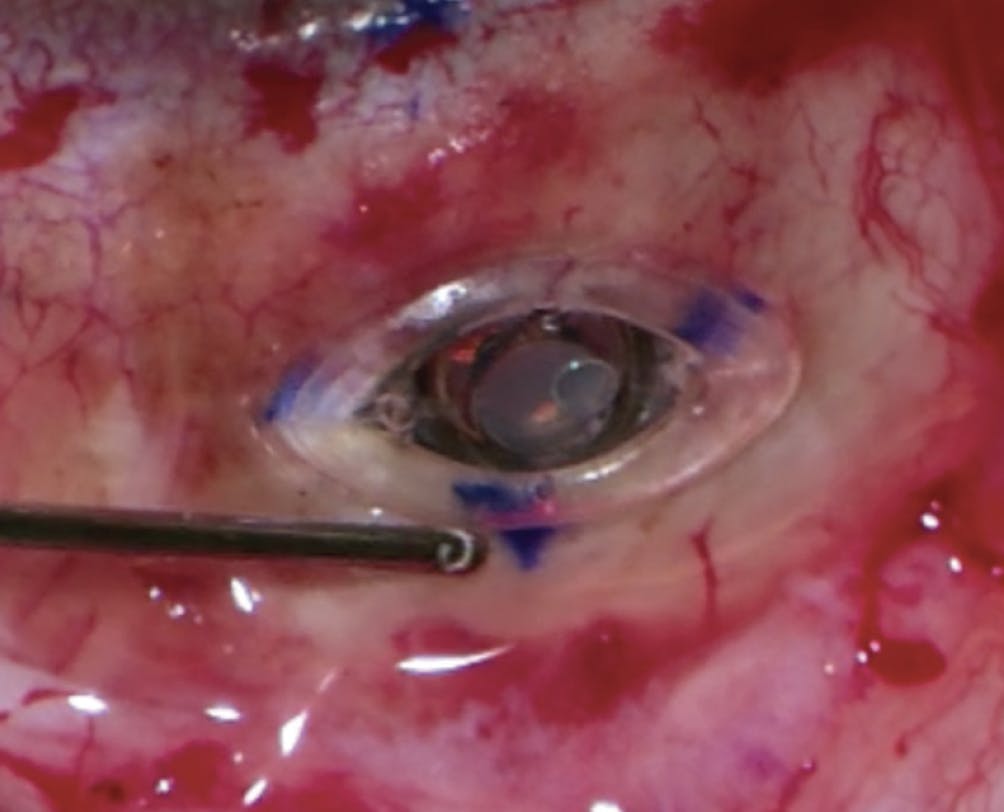
Figure 2. If necessary, perform vitrectomy around the implant after placement to remove any excessive vitreous prolapse.
10. CLOSE WITH PRECISION
The closure is one of the most important steps. Use non-toothed forceps to prevent inadvertent trauma to the conjunctiva and ensure that the conjunctiva and Tenon’s capsule are reattached fully up to the limbus with a little overlap. Hydration of Tenon’s will help mobilize and identify the tissues. Anchor the peritomy corners with a partial-thickness scleral bite through both conjunctiva and Tenon’s (Figure 3). Close any radial ‘relaxing’ incisions with interrupted 8-0 Vicryl sutures. The closure should place the wound away from the implant. Test the closure at the end by ensuring that the conjunctiva cannot be easily retracted from the limbus and rests snuggly anterior to the limbus. Remove and close (if necessary) the infusion cannula, assess the implant position using indirect ophthalmoscopy, and inject subconjunctival antibiotics and corticosteroids away from the implant site.
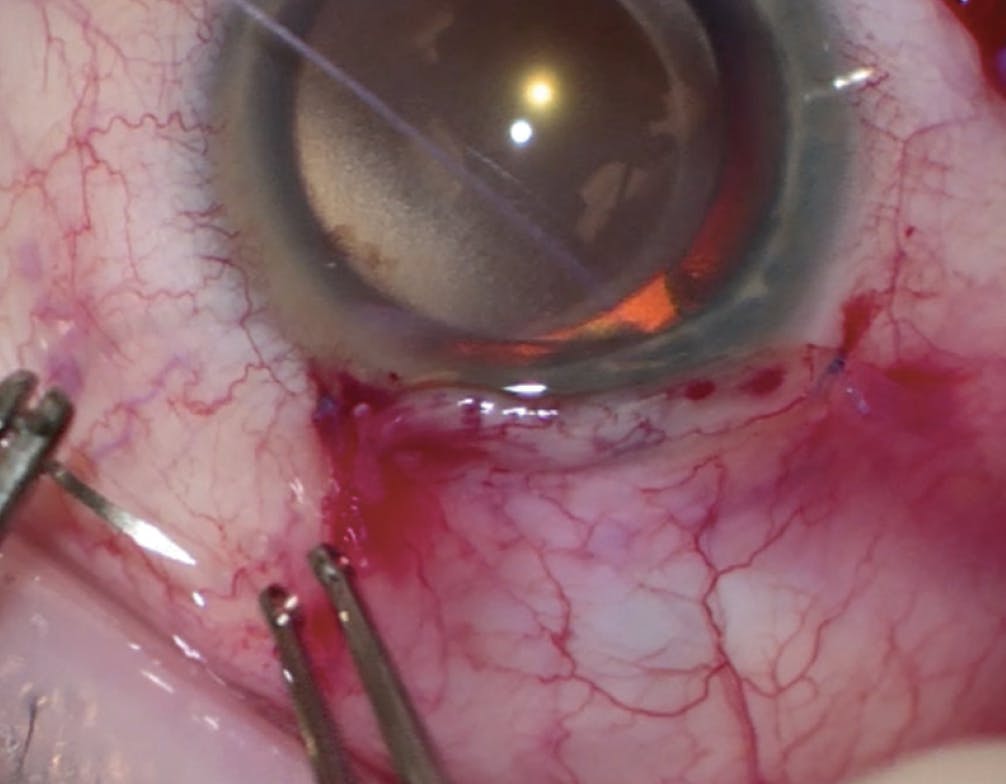
Figure 3. During the closure, the conjunctiva and Tenon’s are pulled up and secured with limbal scleral bites.
FINAL THOUGHTS
With proper guidance and training, appropriate patient selection, and meticulous and careful surgical techniques, you can achieve success and reduce the chance for complications when implementing this first-in-class addition to the retina toolkit.


_1773249222.png?auto=compress,format&w=75)





