



AT A GLANCE
- As the port walls of a hypersonic vitrectomy probe vibrate at ultrasonic frequencies, the incoming vitreous is sheared with a cut rate equivalent to millions of cuts per minute.
- Hypersonic vitrectomy can cut and aspirate vitreous and other tissue such as lens material.
- A prospective study reported outcomes of 50 real-world cases and noted technical issue in 46% of eyes that underwent hypersonic vitrectomy.
Hypersonic vitrectomy, unlike traditional vitrectomy systems, uses ultrasonic power to actuate the vitrectomy probe. Since the 2017 FDA approval of the Vitesse (Bausch + Lomb) hypersonic 100% open-port vitrectomy system, more than 50 surgeons in more than 10 countries have completed over 400 surgeries using the system. Although the technology is early in its deployment, it remains a promising tool for vitreoretinal surgery. In this article, we provide a background on this technology, ideal cases for which it can be used by any vitreoretinal specialist, and where the technology is headed.
THE UPSIDE OF HYPERSONIC VITRECTOMY
Traditional vitrectors operate with guillotine-based cutters driven by a variety of different mechanisms. These systems aspirate vitreous fibers and cut them once they are inside the needle port. Recently, the ever-increasing cut rates of guillotine vitrectomy cutters have improved flow by decreasing the viscosity of aspirated vitreous; however, further improvements will be constrained by cut rate and duty cycle.
Hypersonic vitrectomy is a departure from this traditional technology. The Vitesse system operates as a single-lumen needle (currently 23-gauge) with an open-port design connected to a transducer that generates ultrasonic energy (Figure 1). That energy is transmitted through the needle to deliver focused tissue cutting capability by the port itself, with a mechanism of action described as mechanical shearing. As the port walls vibrate at ultrasonic frequencies, the incoming vitreous is sheared with a cut rate equivalent to millions of cuts per minute. This process changes the properties of the aspirated vitreous dramatically. The long collagen fibrils that are responsible for the mechanical properties of the vitreous are broken down to a microscopic size by the shearing action, such that it dramatically reduces the vitreous strength and apparent viscosity. This mechanism is designed to allow for continuous, uninterrupted, and efficient aspiration with a smooth action (Figure 2). It also reduces vitreous traction, as only sheared vitreous enters the inner needle lumen, in contrast to pneumatic cutters that first aspirate and then cut the vitreous.
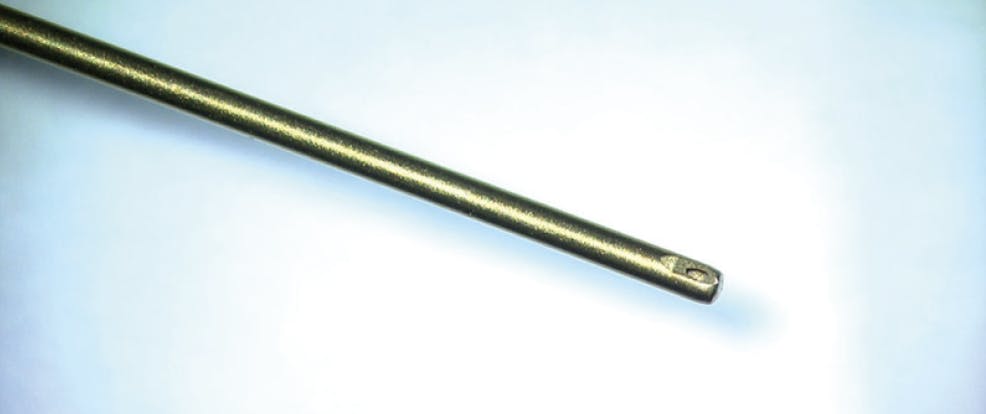
Figure 1. The open port of the hypersonic vitrectomy needle delivers focused tissue cutting capability, shearing the vitreous with a cut rate equivalent to millions of cuts per minute.
Image courtesy of Bausch + Lomb
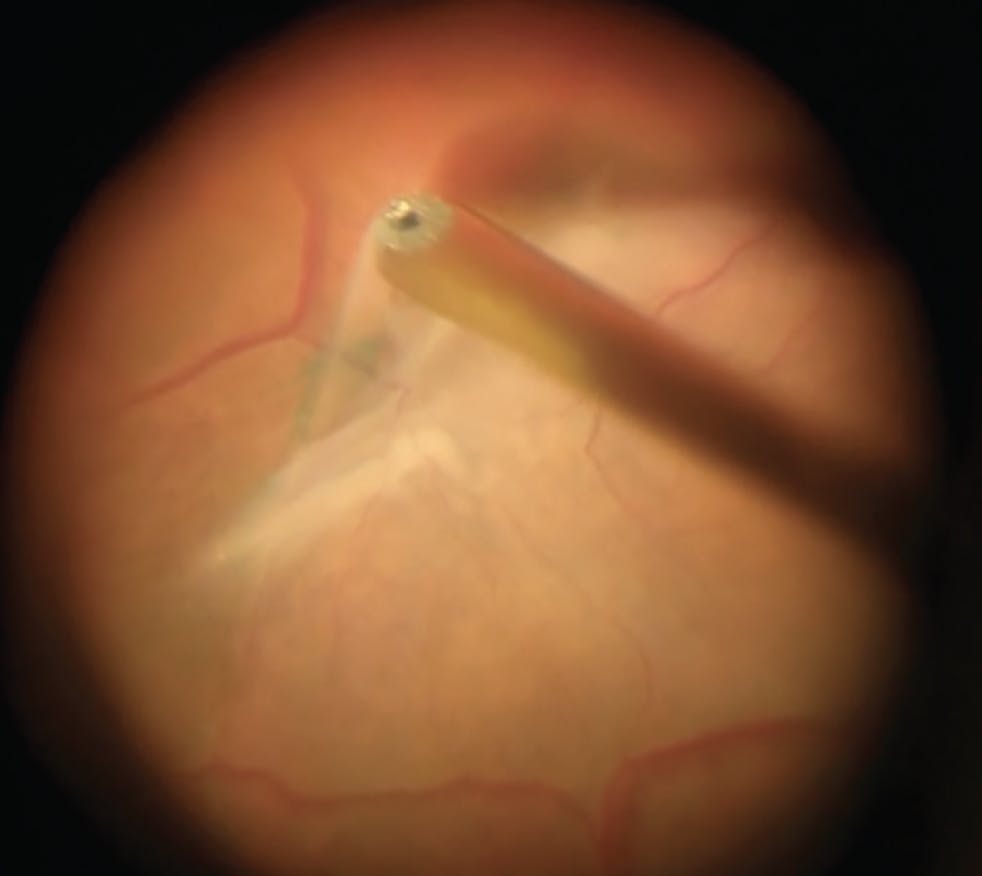
Figure 2. Hypersonic vitrectomy may prove to be a useful tool for peeling membranes, as the mechanism of action allows for continuous and uninterrupted aspiration.
Image courtesy of Bausch + Lomb
Hypersonic vitrectomy is an attractive option from a clinical and practical perspective. It does not require high-pressure air infrastructure and may allow operation in almost any environment. In addition to practically eliminating noise and vibration, it can also cut and aspirate other substances and tissues, such as silicone oil and lens tissue.
Hypersonic vitrectomy technology and the single-needle lumen design removes some of the limitations of traditional pneumatic cutters including size, possibly allowing for smaller needle gauge than 27 gauge and curved needle design. Furthermore, the single-needle design with a constantly open port should overcome the limitations created by the duty cycle and the double-needle designs of guillotine vitrectomy probes.
THE DOWNSIDE
There are also potential disadvantages of the hypersonic vitrectomy system. A hypothetical concern related to the use of ultrasound-driven probes is the substantial heat production that may induce intraocular thermal damage.1 This concern is particularly notable for intrascleral damage immediately proximal to the handpiece, given that there is an absence of intraoperative fluid that typically serves as a cooling agent. Retinal damage could be caused by a hypersonic vitrectomy probe but is mitigated by the cooling effect of cycling intraoperative fluid. Nonetheless, to address this concern, the hypersonic system uses polyamide- rather than metal-based cannulas.
Another theoretical concern may involve cavitation, which is the generation of vapor cavities in regions of very low pressure values with the potential to disrupt the surrounding retinal tissue. The occurrence of cavitations is a function of ultrasound power and needle design. Thus far, due to Vitesse’s unique design and low power operation, the sytem has yet to produce any cavitation phenomena, even at the maximum stroke of 60 µm.2
Although the hypersonic vitrectomy system received FDA and CE clearance, there is only preliminary data in the literature regarding its safety and efficacy. Recently, a prospective multicenter study reported outcomes of 50 real-world cases and noted technical issue in 46% of eyes. The most common issue was inadequate vitreous liquefaction, leading to the formation of fibrous vitreous strands, in some cases accompanied by vitreous incarceration at the probe port. Because of these issues, 30% of procedures that started with hypersonic vitrectomy were converted to guillotine-based vitrectomy.1 Another multicenter study of 64 patients reported inadequate vitreous liquefaction in 13% of cases.3 From a surgical standpoint, the occurrence of inadequate vitreous liquefaction with the formation of vitreous strands can result in vitreoretinal tractions and, potentially, iatrogenic retinal tears.
HOW TO INTEGRATE HYPERSONIC VITRECTOMY INTO YOUR OR
To truly appreciate the fluidics of hypersonic vitrectomy, new users can consider trialing the system with a retained lens material surgery and silicone oil removal.
The hypersonic vitrectomy system can more efficiently remove silicone oil, particularly small emulsified droplets—a more difficult task with pneumatic guillotine cutters. The hypersonic probe fragments the silicone oil into tiny droplets, allowing for their aspiration out of the eye. During these cases, injecting triamcinolone into the vitreous cavity will allow the surgeon to better appreciate the fluidics of the system. In general, the sphere of influence of the hypersonic cutter is smaller and more precise that traditional cutters, acting more like a 27-gauge guillotine cutter rather than a 23-gauge guillotine cutter.
Retained lens material is another appropriate indication to evaluate the system for the first time and test the fluidics of the hypersonic vitrector, as the surgeon can usually forgo the need for a larger 20-gauge fragmatome.
Surgeons who use the Stellaris Elite system can switch between a 23-gauge guillotine cutter and the hypersonic handpiece throughout a procedure—no need to open an additional pack. This can be a nice feature to help surgeons integrate Vitesse into their surgical armamentarium.
It is helpful to have a knowledgeable company representative present for the initial cases, particularly when modulating the system features, such as stroke (ie, how far the probe moves, which influences how material enters the port), frequency, vacuum, and pulse mode. The features of a hypersonic system differ from traditional cutters when it comes to vacuum or changing to a biased closed duty cycle for shaving.
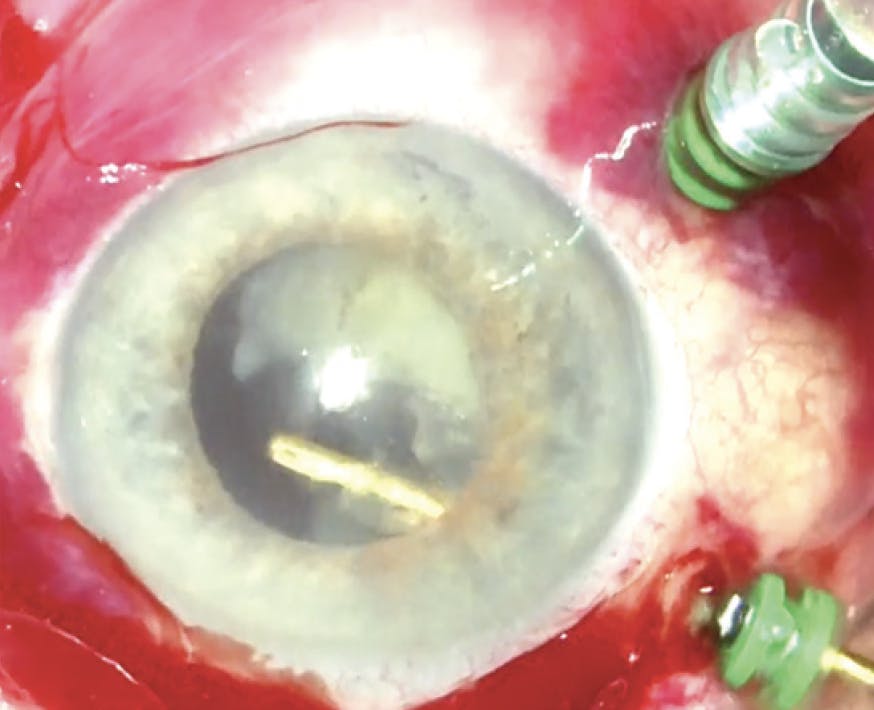
Hypersonic Vitrectomy For Removing Retained Lens Material
FUTURE DIRECTIONS
Surgeon feedback led to the development of an optimal device configuration for the latest iteration of the hypersonic vitrectomy system, including a higher frequency setup, new control software, and a new port design. A 25-gauge system is also under development. Future technical advances may further increase the range of ultrasound power.
Hypersonic vitrectomy offers retina specialists a rare opportunity to help change the landscape of surgery with a disruptive technology. For eager surgeons with an open mind, hypersonic vitrectomy holds far more potential than just ‘ultrasound with a 1 million cut rate.’ The technology, still under investigation and development, aims to potentially become a mainstream vitreoretinal surgical option.
1. Romano MR, Caretti L, Ferrara M, et al. Twenty-three-gauge hypersonic vitrectomy: real-world surgical evidence. Retina. 2021;41(12):2523-2530.
2. Stocchino A, Nepita I, Repetto R, et al. Fluid dynamic assessment of hypersonic and guillotine vitrectomy probes in viscoelastic vitreous substitutes. Trans Vis Sci Tech. 202;9(6).
3. Blinder KJ, Awh CC, Tewari A, Garg SJ, Srivastava SK, Kolesnitchenko V. Introduction to hypersonic vitrectomy. Curr Opin Ophthalmol. 2019;30(3):133-137.


_1784132761.jpg?auto=compress,format&w=75)





