


Various ocular diseases present with findings in the retinal periphery, making widefield imaging a useful tool for diagnosis, monitoring response to therapy, and telemedicine. Widefield fundus imaging does not replace dilated ophthalmoscopy, but it is often an important adjunct to escalate the clinical examination. Vigilant clinical examination of the peripheral retina with scleral indentation is crucial for clinical decision making, and auxiliary testing with scanning laser ophthalmoscopy (SLO)-based widefield imaging can help to document findings.1 The case series presented here demonstrates the utility of SLO-based imaging for patients presenting with signs and symptoms of rhegmatogenous retinal detachment (RD).
We captured widefield fundus photographs of six patients who presented with RD. The patients underwent refraction, IOP assessment, slit-lamp examination, and dilated indirect ophthalmoscopy by a specialist. The SLO had a widefield (163° measured from the center of the eye) lens attachment available. The device scans the retina through a confocal optical setup with a small coaxially placed pinhole that lets light in from the focal planes, while blocking backscattered and out-of-focus light.
CASE NO. 1
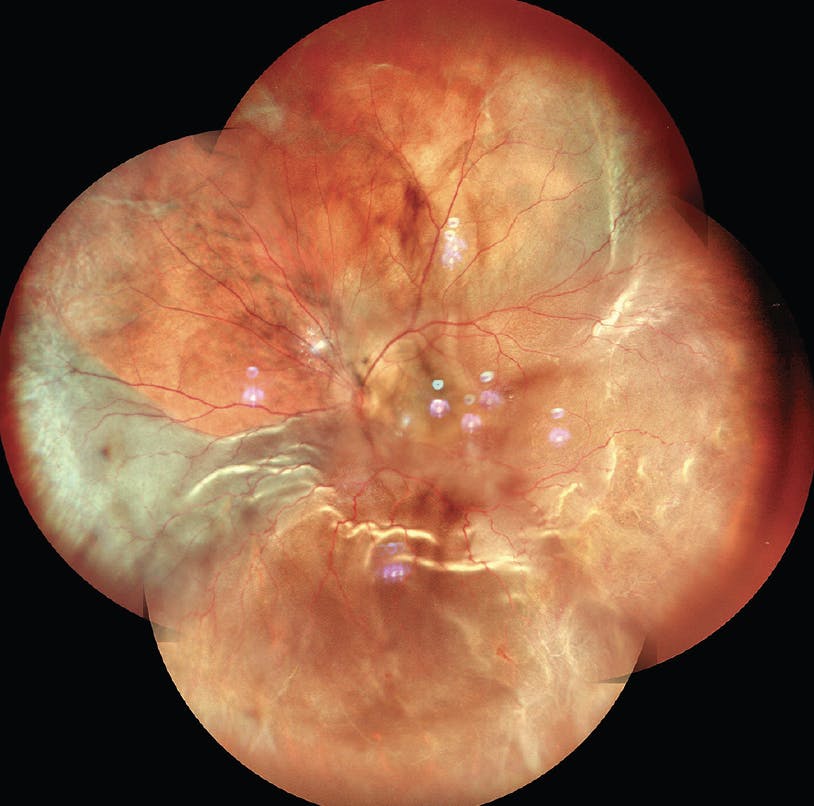
A 36-year-old male presented with loss of vision in the left eye for 1 month and a VA of 6/60. He was diagnosed with a macula-off RD in the left eye. Widefield fundus imaging of the left eye revealed the RD extending between 2 and 10 clock hours with multiple holes seen inferiorly between the 5 and 6 clock hours. He underwent bimanual vitrectomy with gas. Postoperatively, his VA was 6/24 OS.
CASE NO. 2
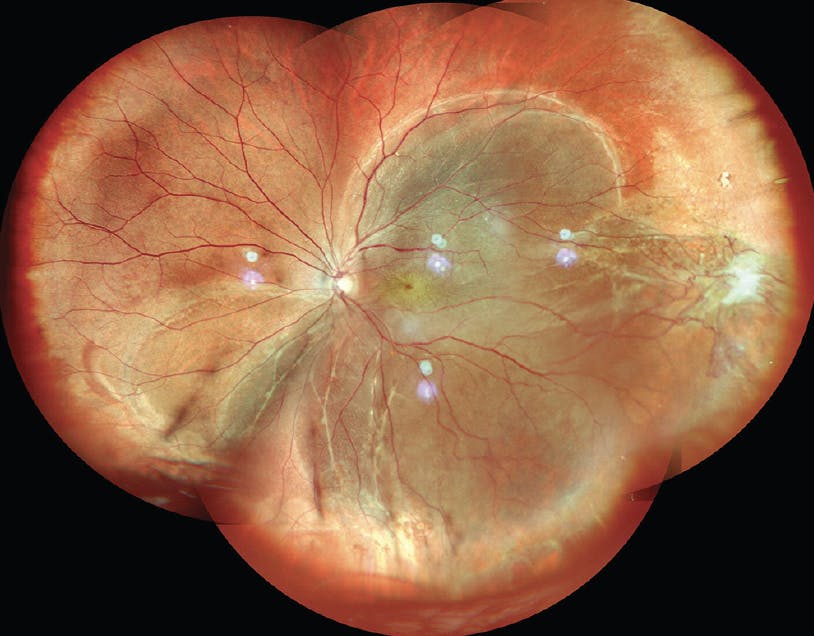
A 24-year-old male presented with decreased vision in the left eye for 2 years and VA of counting fingers at 3 m. He gave a history of RD surgery performed elsewhere for the same complaint. SLO-based widefield fundus photography of the left eye showed an RD extending from 3 to 8 clock hours with proliferative vitreoretinopathy and a demarcation line inferonasally. Several holes were seen inferiorly between the 4 and 6 clock hours. We performed bimanual vitrectomy on the left eye with silicone oil infusion. He reported a VA of 6/36 OS postoperatively.
CASE NO. 3
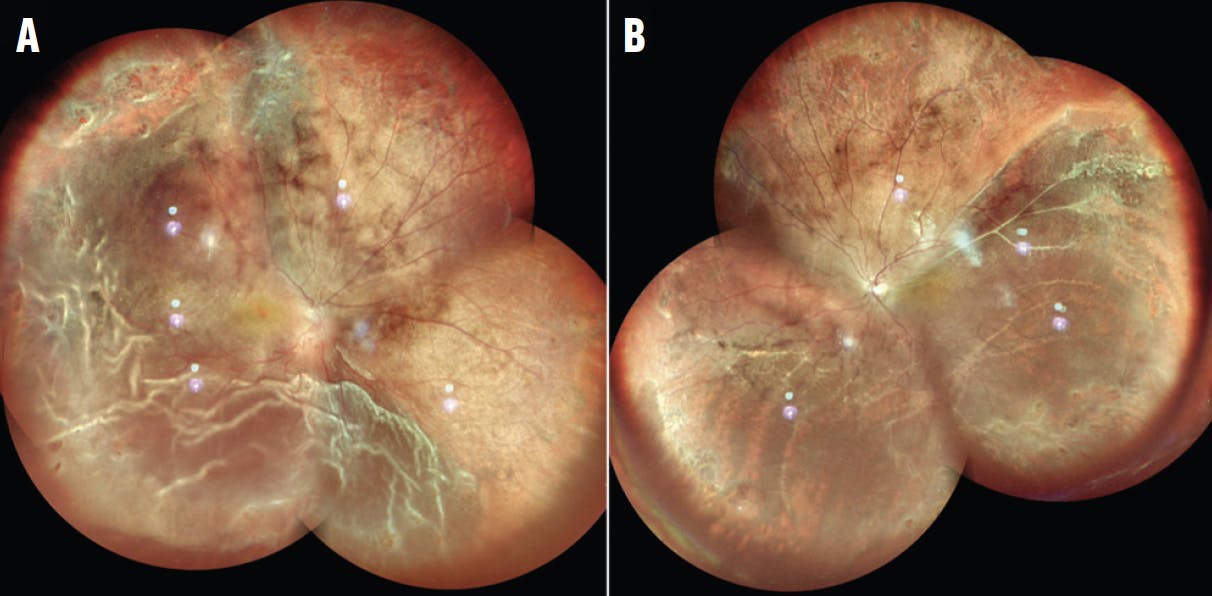
A 22-year-old male presented with loss of vision in both eyes for 1 month. He had a VA of 6/60 OU. On widefield fundus photography, we noted a subtotal macula-off RD in his right eye extending between the 5 and 12 clock hours (A). There were multiple small holes extending between the 8 and 11 clock hours. He also had an RD in the left eye extending between the 2 and 8 clock hours with multiple holes inferiorly and temporally between the same clock hours (B). We recommended a scleral buckle with bimanual vitrectomy for both eyes, which was successful.
CASE NO. 4
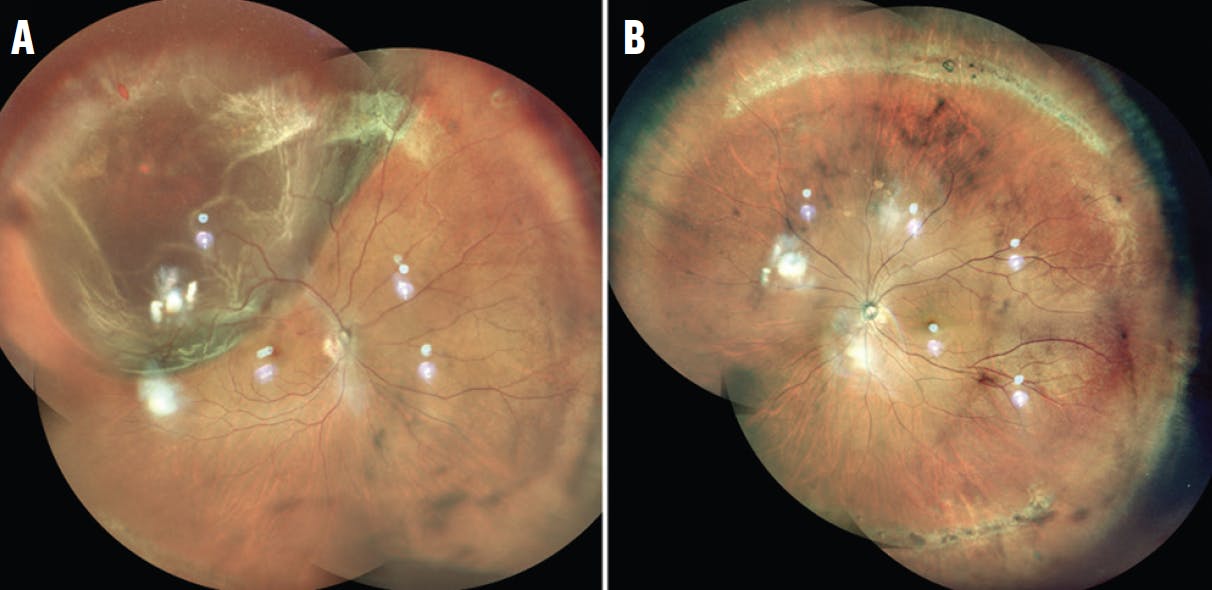
A 44-year-old male presented with diminished vision in the right eye for 6 days. His VA was 6/6 OU. Widefield fundus photography showed an RD in the right eye superiorly extending between the 9 and 12 clock hours with two holes superotemporally at the 10 clock hour with lattice degeneration inferotemporally (A). Imaging showed lattice degeneration in the left eye with multiple holes present superiorly between the 11 and 2 clock hours and inferiorly pigmented lattice between the 5 and 7 clock hours (B). The patient underwent bimanual vitrectomy with gas in the right eye and prophylactic laser treatment in the left eye. Postoperatively he reported a VA of 6/6 OD.
CASE NO. 5
A 29-year-old male presented with loss of vision in the right eye 10 days, after being hit in the eye with a tennis ball. He reported a VA of 6/6 OD and gave a history of laser treatment for a retinal tear in the right eye, performed at another clinic. SLO-based widefield imaging revealed an RD extending between the 4 and 8 clock hours with a large tear inferiorly extending between the 6 and 8 clock hours that had organized vitreous hemorrhage around it. He underwent bimanual vitrectomy with gas in the right eye and reported a postoperative VA of 6/6 OD.
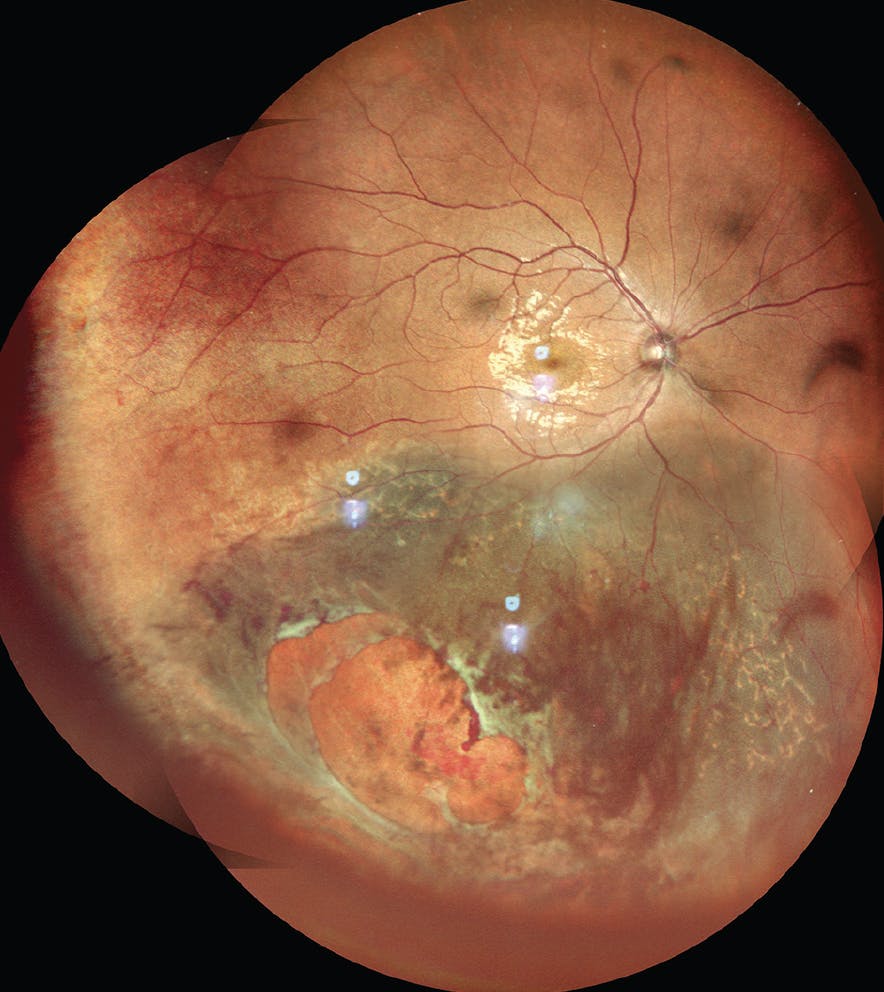
CASE NO. 6
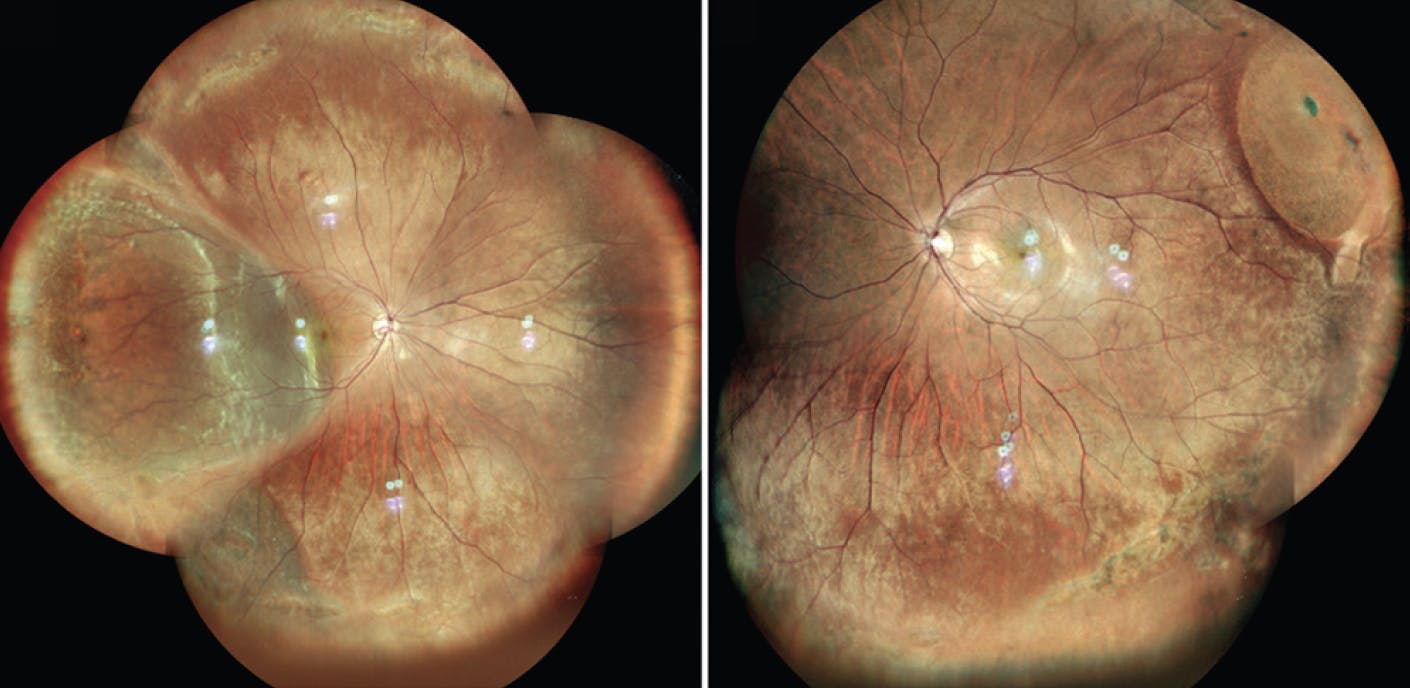
A 31-year-old male presented with diminished vision in the right eye for 1 week. His VA was 6/36 OD and 6/6 OS. Widefield fundus photography revealed a macula-off RD extending between the 7 and 10 clock hours. Multiple holes with lattice degeneration were noted at the 9 clock hour. Multiple lattices were also seen at the 11, 1, 2, and 7 clock hours. In his left eye, a schitic area was found between the 1 and 2 clock hours, and inferior lattice was seen between the 4 and 6 clock hours. He was treated with bimanual vitrectomy with silicone oil infusion for his right eye and a prophylactic laser 1 month later for his left eye. He reported a postoperative VA of 6/18 OD.
DISCUSSION
Widefield images are defined as single-capture images centered on the fovea that capture retinal anatomic features beyond the posterior pole, but posterior to the vortex vein ampulla, in all four quadrants.2 To efficiently identify RD using artificial intelligence, the first step is to obtain fundus images covering the peripheral retina—made possible with recent technological advances, such as SLO-based imaging. Of course, dilated fundus examination by a clinician with the help of an indirect ophthalmoscope remains the standard of care for RD diagnosis.
In our study, we performed a complete dilated indirect ophthalmoscopic examination of the patients before capturing fundus photography. We found that the SLO-based fundus images were on par with the clinical findings obtained through the dilated fundus examination by the specialist.
Our results show that SLO-based widefield imaging can provide the necessary details to help clinicians effectively diagnose RD.
This system can be used to detect RDs as a part of ophthalmic health in busy hospitals lacking access to ophthalmic specialists. It can also help to reveal peripheral RDs in patients who cannot endure a dilated fundus examination. Widefield images such as those presented in this article may also alleviate the burden of documenting myriad peripheral lesions. Moreover, they add an objective aspect to the documentation, which can augment subjective perceptions in charting.
1. Shoughy SS, Arevalo JF, Kozak I. Update on wide- and ultra-widefield retinal imaging. Indian J Ophthalmol. 2015;63(7):575-581.
2. Choudhry N, Duker JS, Freund KB, et al. Classification and guidelines for widefield imaging: recommendations from the international widefield imaging study group. Ophthalmol Retina. 2019;3:843-849.


_1773249222.png?auto=compress,format&w=75)





