


What led you to a career as a retina specialist?
My dad was a general surgeon, so I knew I wanted to be a surgeon, but after rotations at David Geffen School of Medicine at UCLA in Los Angeles, I knew that I did not want to be a general surgeon. I was amazed by retinal surgery and the technical ability to do microsurgery with the operating microscope. There was beauty and intricacy in the surgery, as well as the positive effect it had on the lives of patients.
You are the founding partner of a practice with six locations. What are some of the benefits and challenges that come with developing a practice with multiple offices?
I founded Retina Consultants of Hawaii with a vision of creating a world-class retina practice that could allow patients in Hawaii to receive the most advanced retina care here in our island state. By attracting three other top retina specialists, we can now treat patients effectively on three different islands. Patients not living by our main offices in Honolulu and Oahu can be treated on Kauai and Maui without catching a plane for an office visit and treatment—this became especially important with the frequent visits required for intraocular injections. The main challenges have been the transportation and scheduling of our staff to fly to our clinics, the logistics of handling and transporting intravitreal medications, and the volume of patients requiring care at our clinics.
You lecture frequently around the world. What has been the most memorable trip and why?
I have learned so much from my colleagues around the globe and have really enjoyed the friendships I have made. Choosing the most memorable trip is difficult as I have lectured at many society meetings and international meetings on six continents. One of the most memorable would have to be the one that included my family. In 2010, there was an international retina meeting in Istanbul, Turkey. At that time, we were still refining the introduction of anti-VEGF treatments, and I presented the first prospective trial of ranibizumab (Lucentis, Genentech/Roche) for a subtype of exudative macular degeneration, polypoidal choroidal vasculopathy. This was an investigator-sponsored trial done only at our site, the Hawaii Macula and Retina Institute. In addition, my family enjoyed the culture and sights of Istanbul and the incredible caves and beauty of Cappadocia—we even stayed in a cave hotel.
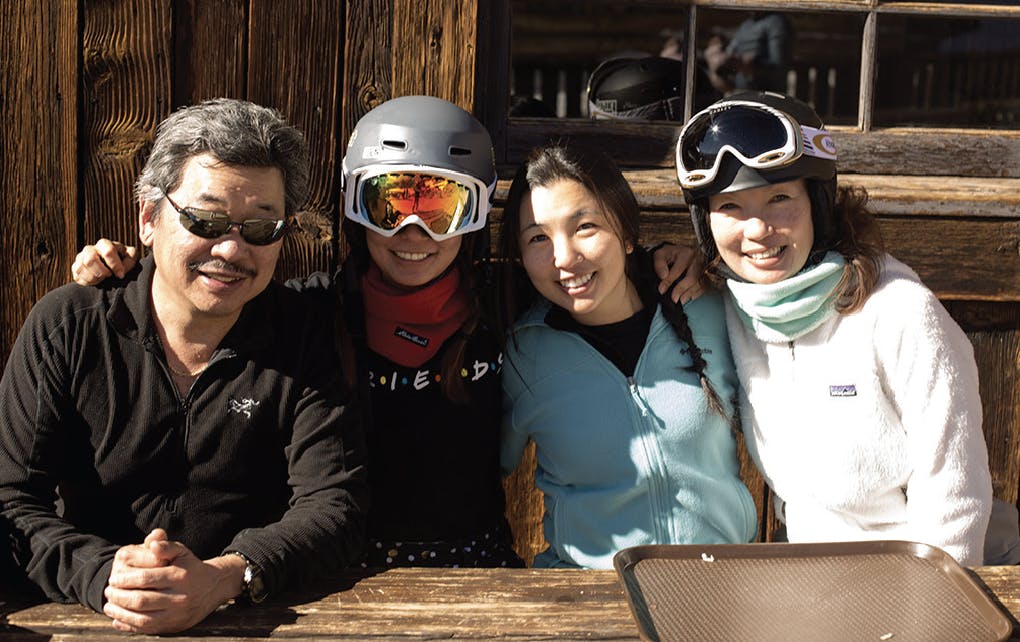
Figure. Dr. Kokame and his family on the slopes of Telluride, Colorado. Although he lives in Hawaii and grew up surfing in its waters, Dr. Kokame’s passion is skiing in the snowy mountains.
How has the pandemic affected your practice in Hawaii?
At the beginning of the pandemic there was a marked effect with the limitation of our practice to emergency patients and those requiring injections, and the limitation of surgery to emergency patients. There was significant concern for our patients, doctors, and staff. There was also the financial burden on our practice; however, we did not lay off any of our staff, and with the help of government support we weathered the initial impact. Now with appropriate precautions our practice and surgical volume are back to normal. However, the marked infectivity of the new COVID-19 variants now makes staffing a problem with multiple unplanned and sudden absences due to infection.
Your research programs have brought advanced treatments to Hawaii. What professional accomplishment are you most proud of?
My proudest accomplishment is having been awarded the J. Donald M. Gass Medal from the Macula Society. Dr. Gass, the father of medical retina, developed much of our understanding of retinal diseases by his keen observation and putting his findings into a logical yet creative framework. He was also an incredible role model for me with his humble and family-oriented approach to life. I have attempted to model my life after his, and to be awarded the Gass Medal is my most cherished professional accomplishment.


_1773249222.png?auto=compress,format&w=75)





