


SYFOVRE® (pegcetacoplan injection) is indicated for the treatment of geographic atrophy (GA) secondary to age-related macular degeneration (AMD).
SELECT SAFETY INFORMATION
SYFOVRE is contraindicated in patients with ocular or periocular infections, and in patients with active intraocular inflammation
Please see additional important Safety Information at the bottom of the page.
GA Mechanism of Disease
The risk factors for developing GA include genetics,5,11 age,12 obesity,13 smoking,13 and certain comorbidities.13 A family history of AMD accounts for more than 50% of the risk attributed to an individual’s likelihood of developing AMD and GA, specifically. Although age is the greatest risk factor for AMD, obesity and certain dyslipidemias, as well as cardiovascular disease, can also play a role.13 The most important lifestyle modifications individuals can take to guard against the development of GA are smoking cessation, as well as nutritive dietary changes.
WHAT IS THE COMPLEMENT CASCADE?
The complement cascade is a part of the immune system that defends the body against infection. When functioning normally, its role is to recognize and eliminate pathogens and damaged cells. However, when the complement system is overactivated, it can attack healthy cells and tissue. Complement overactivation is associated with geographic atrophy (GA), a leading cause of blindness, where retinal cells are destroyed by complement-driven mechanisms. The complement cascade may be activated by three pathways all converging at C3. The central protein of the complement cascade C3 controls all downstream effects that can drive disease, including cell removal, inflammation, and cell death or dysregulation. When C3 activates, it splits into two fragments: C3b tags cell surfaces in a process that marks cells for removal, while C3a sends a signal to immune cells to activate inflammation in surrounding tissues. Downstream activation drives the formation of membrane attack complexes on cell surfaces causing cell dysregulation and potentially cell rupture and death.
Pathophysiology research points to a strong association between GA and complement overactivation. Genome-wide association studies indicate that complement gene variants are associated with an increased risk of developing GA.3 Histology of eyes with GA has shown complement deposition in the areas of GA and in the surrounding areas,14 and the peripheral blood of patients with GA has shown increased systemic levels of activated complement products15 (see sidebar, What is the Complement Cascade?).
Mechanism of Action of SYFOVRE in GA
SYFOVRE (pegcetacoplan, formerly APL-2) is a complement inhibitor comprising two identical cyclic peptides attached to a polyethylene glycol (PEG) chain.1 (The chain is a long polymer, called polyethylene glycol, which gives the molecule a longer half-life and improved solubility.16-18) Each of the peptides in SYFOVRE binds to C3 and its activation fragment C3b to regulate the overactivation of complement1 (Figure 1). Pegcetacoplan is not a biologic or produced in a cell line; it is made through synthetic chemistry.
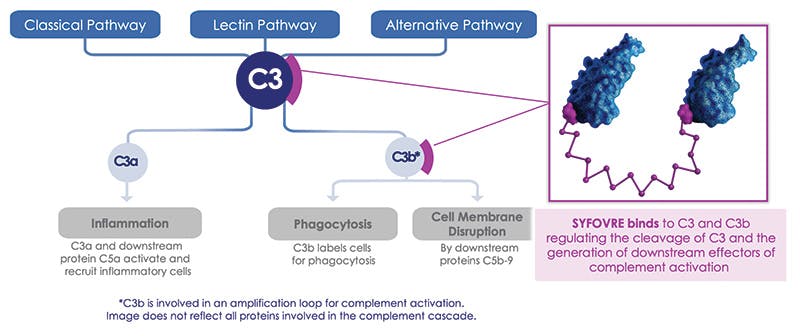
Figure 1. SYFOVRE targets c3 and c3b to help regulate complement overactivation in GA.1,7,14,15,19-23
Design of the SYFOVRE Phase 3 Clinical Trials
OAKS and DERBY were two global phase 3 clinical trials that were designed to evaluate the efficacy and safety of SYFOVRE over 24 months (Figure 2). The data from these trials culminated in the approval of SYFOVRE by the FDA as the first treatment for GA secondary to AMD in 2023.1,2
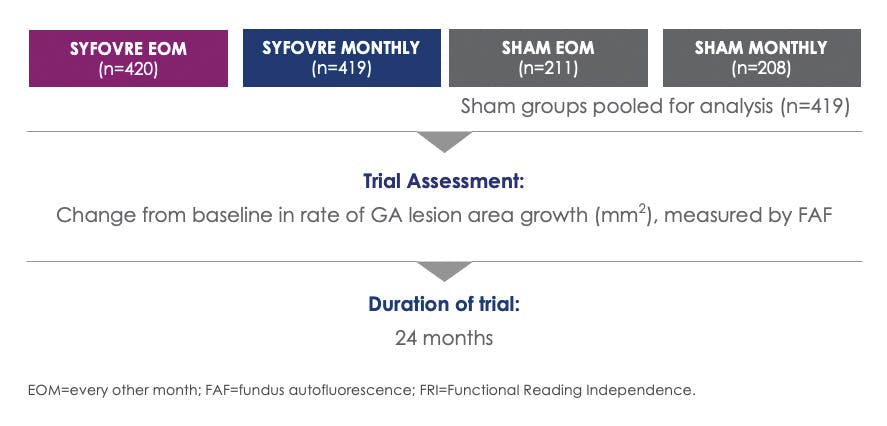
Figure 2. Two phase 3 trials evaluated efficacy and safety over 24 months of patients with GA secondary to AMD (n=1,258).1,2 These trials were double-masked and randomized 2:2:1:1. Patients who completed trials were eligible to continue into the 3-year, open-label extension trial, GALE.24
In this double-masked program, 1,258 patients with GA secondary to AMD, 637 in OAKS and 621 in DERBY, were enrolled and randomly assigned (2:2:1:1) to receive 15 mg/0.1 mL intravitreal SYFOVRE monthly or every other month (EOM) and sham monthly or sham EOM, for 24 months.1,2
Key Trial Assessment
The key trial assessment in the OAKS and DERBY trials was the change from baseline in the rate of GA lesion area growth in mm2 as measured by fundus autofluorescence, with a total trial duration of 24 months.1 Importantly, patients who completed either of these phase 3 clinical trials were eligible to continue into a 3-year open-label extension trial, GALE,24 which is ongoing.
Inclusion Criteria Representative of Real-World Patients
The OAKS and DERBY trials were designed to enroll a broad range of patients2 (Figure 3). Inclusion and exclusion criteria for the OAKS and DERBY trials are shown in Figure 3. Baseline characteristics of the patients included in the studies were similar to common profiles of patients with GA: on average, these individuals were in their late 70s, 50% to 60% were female, most were white, and approximately 20% had wet AMD in the fellow eye.25 Approximately 1/3 of the enrollees were from outside the United States; the rest were US residents. The mean size of the lesions in the study eyes was just over 8 mm2. Over 60% of patients had lesions with subfoveal involvement (wherein the lesion crossed the center of the fovea). At baseline, the Early Treatment Diabetic Retinopathy Study (ETDRS) was approximately 58 to 61 letters, with an average BCVA of approximately 20/60.2
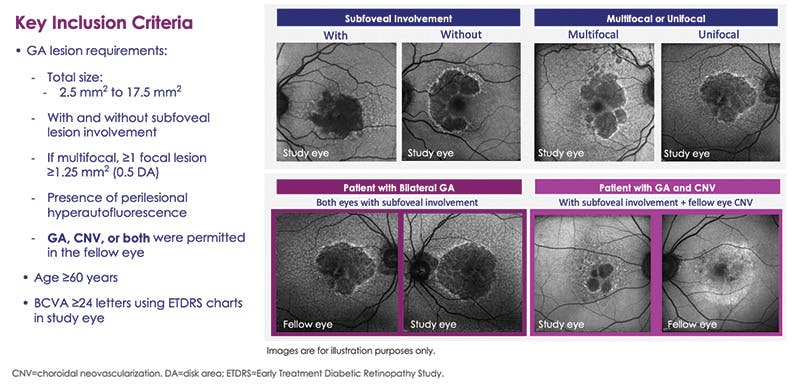
Figure 3. The OAKS and DERBY phase 3 clinical trials were designed to enroll a broad range of patients. Key exclusion criteria2 included GA secondary to any other conditions other than AMD, such as Stargardt disease, and a history of wet AMD in the study eye, as well as prior participation in any interventional clinical trials (for eyes) and the presence of any active ocular disease.
Efficacy Data
Both OAKS and DERBY studies confirmed that, compared with sham, SYFOVRE reduced GA lesion growth rate through month 24 (Figures 4 and 5).1 Over 2 years, the percent of reductions vs sham in GA lesions growth rate were 17% (every-other-month dosing) and 20% (monthly dosing) in the combined data from OAKS and DERBY. The treatment effect increased throughout the individual 6-month segments. With monthly dosing, the effect increased from 13% to 19% to 20% and then to 30% in the first, second, third, and fourth 6-month intervals, respectively. With every-other-month dosing, the effect increased from 12% to 17% to 17% and 24% for these same 6-month intervals, respectively. The key finding from the combined data from OAKS and DERBY was that SYFOVRE slowed GA progression with increasing effects over time in both monthly and every-other-month arms.2
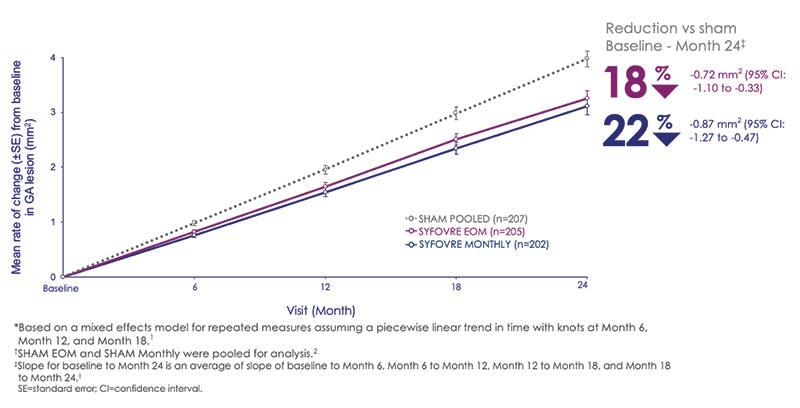
Figure 4. This graph shows the reduction in lesion growth rate with SYFOVRE vs. sham pooled in the OAKS clinical trial.1*† SYFOVRE achieved continuous reductions in lesion growth rate through Month 24.
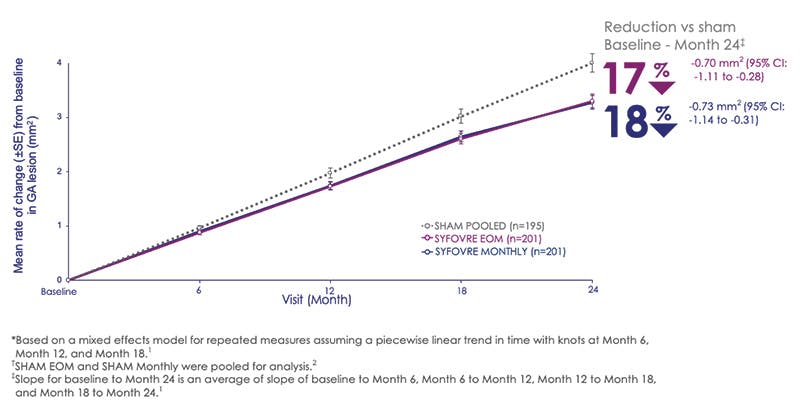
Figure 5. This graph shows the reduction in lesion growth rate with SYFOVRE vs. sham pooled in the DERBY clinical trial.1*† SYFOVRE achieved continuous reductions in lesion growth rate through Month 24.
Recent studies indicate that lesions in eyes without subfoveal involvement will grow faster over time.26 Among eyes with lesions with no subfoveal involvement, there was a 23% (every-other-month dosing) and 26% (monthly dosing) growth reduction with SYFOVRE treatment compared with sham in the OAKS and DERBY combined data. In patients with foveal involvement at baseline, GA lesion growth was reduced 16% (every-other-month dosing) and 18% (monthly dosing) compared with sham (OAKS & DERBY combined data). All OAKS and DERBY combined piecewise linear analyses did not have a prespecified statistical procedure controlling for type 1 error (ie, it did not control for false-positive determination of statistical significance).2
Safety Data
In total, 839 patients were exposed to SYFOVRE, and 417 to sham. The most common adverse events (≥ to 5%) were ocular discomfort, neovascular AMD, vitreous floaters, and conjunctival hemorrhage (Figure 6).1 Ischemic optic neuropathy (ION) was reported in 1.7% of patients treated monthly, 0.2% of patients treated every other month, and none of the patients assigned to the sham treatment.1 Of eight total events of ION, seven occurred in the monthly arm and one in the every-other-month arm; five of them were not classified as serious adverse events. All cases were nonarteritic anterior ION (NAION). All patients had disc structure considered “at risk,” with a small cup-to-disc ratio, as well as systemic comorbidities associated with an increased risk of the event, such as age, hypertension, hyperlipidemia, diabetes, or obstructive sleep apnea.2
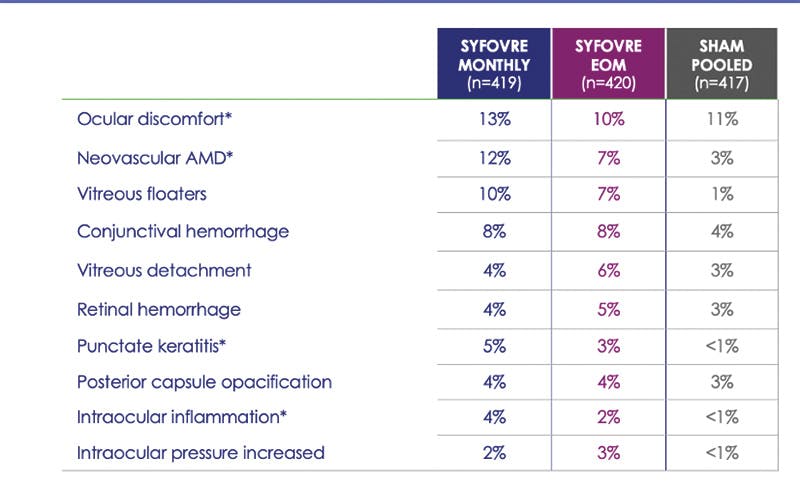
Figure 6. OAKS and DERBY data combined: adverse reactions in study eye reported in ≥ 2% of patients treated with SYFOVRE through month 24.1,2
*The following reported items were combined:
• Ocular discomfort included: eye pain, eye irritation, foreign body sensation in eyes, ocular discomfort, abnormal sensation in eye
• Neovascular age-related macular degeneration included: exudative age-related macular degeneration, choroidal neovascularization
• Punctate keratitis included: punctate keratitis, keratitis
• Intraocular inflammation included: vitritis, vitreal cells, iridocyclitis, uveitis, anterior chamber cells, iritis, anterior chamber flare
In general, few serious ocular treatment-emergent adverse events (TEAEs) were seen within any arm of either trial (Figure 7). In OAKS, 2.3% of patients in the monthly arm experienced ocular serious TEAEs, 1.9% in the every-other-month arm, and 0.5% in the sham control group. In the DERBY trial, 1.9% of patients experienced ocular serious TEAEs in the monthly arm, 1% in the every-other-month arm, and 1% in the sham pooled treated group.2
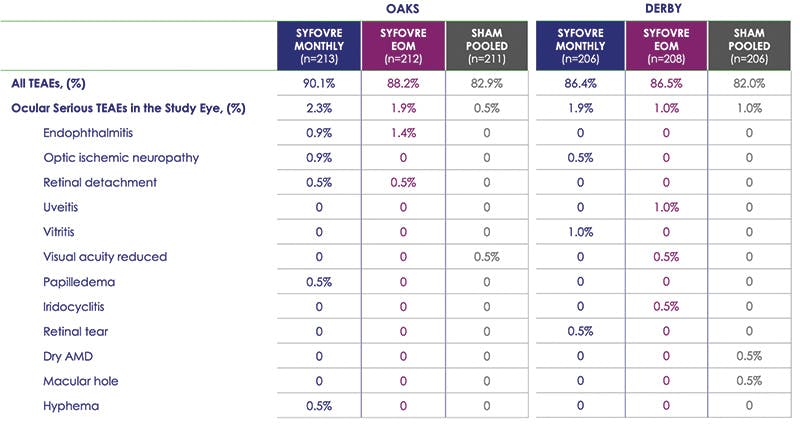
Figure 7. Overall and serious ocular treatment-emergent adverse events through month 24 in the OAKS and DERBY clinical trials.2
Through 24 months, 12% of patients in the monthly arm, 7% of patients in the every-other-month arm, and 3% of patients in the sham arm experienced the development of neovascular AMD.1 Most of these events were classified as type-1 lesions on fluorescein angiogram, which was taken at the time of exudation.2 All patients in the treatment arms who developed neovascular AMD continued therapy with SYFOVRE and received anti-VEGF therapy per protocol, except for one who discontinued treatment. Determination about the administration of anti-VEGF therapy was at the discretion of the investigator.2 In case anti-VEGF is required, it should be given in a separate injection from SYFOVRE administration. Patients receiving SYFOVRE should be monitored for signs of neovascular AMD.1
Over 24 months, a total of 11,736 injections were administered in the two trials.2 At the conclusion of the trials, there had been 28 cases of intraocular inflammation, for a rate of 0.24% per injection, and four reported cases of infectious endophthalmitis at a rate of 0.034% per injection.2 It is important to note that SYFOVRE is contraindicated in patients with active intraocular inflammation and in patients with ocular or periocular infections.1
SYFOVRE (pegcetacoplan injection) is the first FDA-approved treatment for GA secondary to AMD. With it, practitioners have a treatment that may help slow the progression of GA lesions and this disease.1
INDICATION
SYFOVRE® (pegcetacoplan injection) is indicated for the treatment of geographic atrophy (GA) secondary to age-related macular degeneration (AMD).
IMPORTANT SAFETY INFORMATION
CONTRAINDICATIONS
- SYFOVRE is contraindicated in patients with ocular or periocular infections, and in patients with active intraocular inflammation
WARNINGS AND PRECAUTIONS
- Endophthalmitis and Retinal Detachments
- Intravitreal injections, including those with SYFOVRE, may be associated with endophthalmitis and retinal detachments. Proper aseptic injection technique must always be used when administering SYFOVRE to minimize the risk of endophthalmitis. Patients should be instructed to report any symptoms suggestive of endophthalmitis or retinal detachment without delay and should be managed appropriately.
- Retinal Vasculitis and/or Retinal Vascular Occlusion
- Retinal vasculitis and/or retinal vascular occlusion, typically in the presence of intraocular inflammation, have been reported with the use of SYFOVRE. Cases may occur with the first dose of SYFOVRE and may result in severe vision loss. Discontinue treatment with SYFOVRE in patients who develop these events. Patients should be instructed to report any change in vision without delay.
- Neovascular AMD
- In clinical trials, use of SYFOVRE was associated with increased rates of neovascular (wet) AMD or choroidal neovascularization (12% when administered monthly, 7% when administered every other month and 3% in the control group) by Month 24. Patients receiving SYFOVRE should be monitored for signs of neovascular AMD. In case anti-Vascular Endothelial Growth Factor (anti-VEGF) is required, it should be given separately from SYFOVRE administration.
- Intraocular Inflammation
- In clinical trials, use of SYFOVRE was associated with episodes of intraocular inflammation including: vitritis, vitreal cells, iridocyclitis, uveitis, anterior chamber cells, iritis, and anterior chamber flare. After inflammation resolves, patients may resume treatment with SYFOVRE.
- Increased Intraocular Pressure
- Acute increase in IOP may occur within minutes of any intravitreal injection, including with SYFOVRE. Perfusion of the optic nerve head should be monitored following the injection and managed as needed.
ADVERSE REACTIONS
- Most common adverse reactions (incidence ≥5%) are ocular discomfort, neovascular age-related macular degeneration, vitreous floaters, conjunctival hemorrhage.
Please see full Prescribing Information for more information.
