






In recent years there has been significant research into, and development of, a range of treatment options for dry AMD, including cell-based therapies, bioelectronic implants, visual cycle modulators, gene therapy and oral and systemic interventions focused on anti-inflammatory, antioxidant and vitamin derivative agents.2,3 While an aspirational goal of treatment is to restore lost visual function in patients with GA, there have been meaningful developments in slowing the growth of atrophy by inhibiting the complement system.
The complement system in geographic atrophy
The complement comprises three pathways: the classic pathway, activated by antigen–antibody complexes; the lectin pathway, activated by polysaccharides on microorganisms; and the alternative pathway, which both undergoes spontaneous activation and pathogen activation. These different pathways converge with the cleavage of complement factor C3 into C3a, which induces inflammation, and C3b, which labels cells for phagocytosis. At this stage, the cascade either inactivates in host cells, or continues to the cleavage of complement factor C5 into C5a and C5b; C5b then forms complexes with downstream complement factors to trigger the membrane attack complex.4,5
Uncontrolled activation of the complement system has been implicated in the development and progression of GA, as have upregulation of several complement factors, including C3 and C5.1 Drusen formation has also been linked to complement pathway overactivation.4
Complement inhibition therapy for geographic atrophy
Two complement inhibitors have provided positive efficacy data for slowing the growth of atrophy: the C3 inhibitor pegcetacoplan and the C5 inhibitor avacincaptad pegol. Both of these agents have been granted FDA approval for treatment of GA secondary to AMD.
In the OAKS and DERBY trials, pegcetacoplan was associated with a 17–19% reduction in lesion growth (depending on dosing frequency), improving to a 24–30% reduction in months 18–24, versus sham. In the GATHER-1 and -2 trials, avacincaptad pegol demonstrated a reduction in lesion growth rate of 14–27% (GATHER-1 and -2, respectively), versus sham. Both drugs are administered as monthly (or alternating months, as an option with pegcetacoplan) intravitreal injection.
These treatments give ophthalmologists, for the first time, an effective intervention for meaningfully slowing the progression of GA. However, there have been adverse events associated with both treatments that require consideration by prescribing physicians, and discussion with patients who may be candidates for treatment. Safety concerns fall into several categories: intraocular inflammation (IOI), macular neovascularization (MNV), conversion to nAMD and retinal vasculitis.
No IOI events were recorded in the GATHER-1 or -2 trials,6,7 but were observed in 3.8% of the monthly 2.1% of the every-other-month recipients of pegcetacoplan.8 New-onset MNV was observed in 4.9–6.0% of patients receiving avacincaptad pegol, with a similar incidence reported in recipients of pegcetacoplan. An estimated 10–20% of people taking complement inhibition therapy experienced conversion to nAMD as a consequence of treatment. There appears to be no trend as to at what point in treatment patients might convert to nAMD. As of July 2023, there have been seven confirmed events of retinal vasculitis (4 occlusive, 3 non-occlusive) in patients who have received pegcetacoplan.9 Occlusive vasculitis leads to reduced blood flow to the retina, which can potentially lead to loss of vision.
Complement inhibition therapy in practice
The expert consensus group considered two initial questions on the role of complement inhibition in the management of GA.
There was strong agreement that both efficacy and safety outcomes have room for improvement (Figure 1), but acknowledgment that the recent developments represent a huge advance in the treatment of dry AMD and GA. Prof Loewenstein noted that there are still no treatments that provide functional improvement, and that this is now the goal of pharmaceutical intervention.
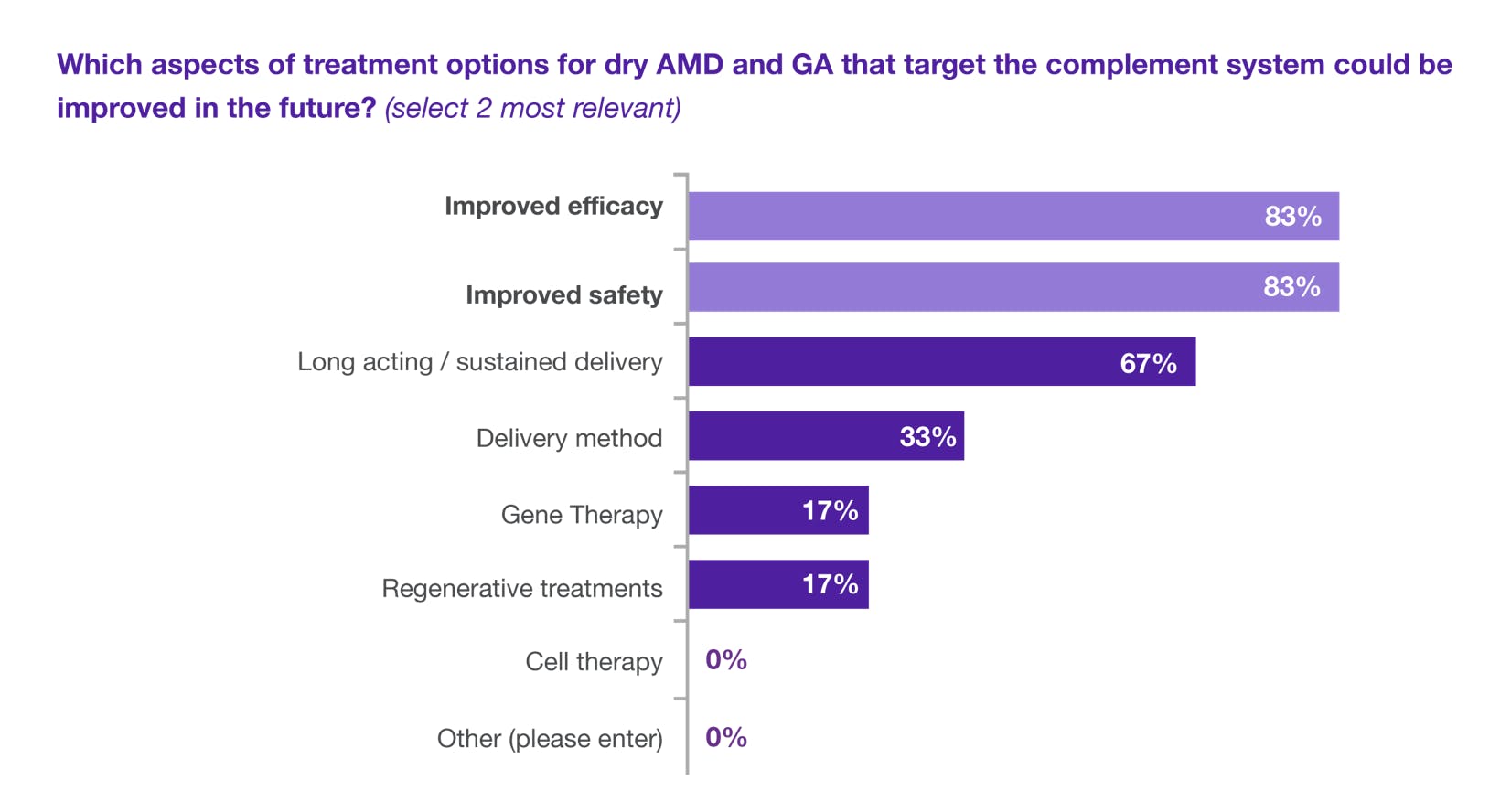
Figure 1. Experts anticipated improvements in efficacy and safety for treatments targeting the complement system in the future.
There was also agreement on the need for a longer duration of action, enabling intervals between injections to extend beyond monthly or every-other-month injections.
There was unanimous agreement that IOI was the greatest concern in initiating treatment (Figure 2). The experts were keen to see more data and understand if there are any signals to help predict whether a patient is at risk of IOI.
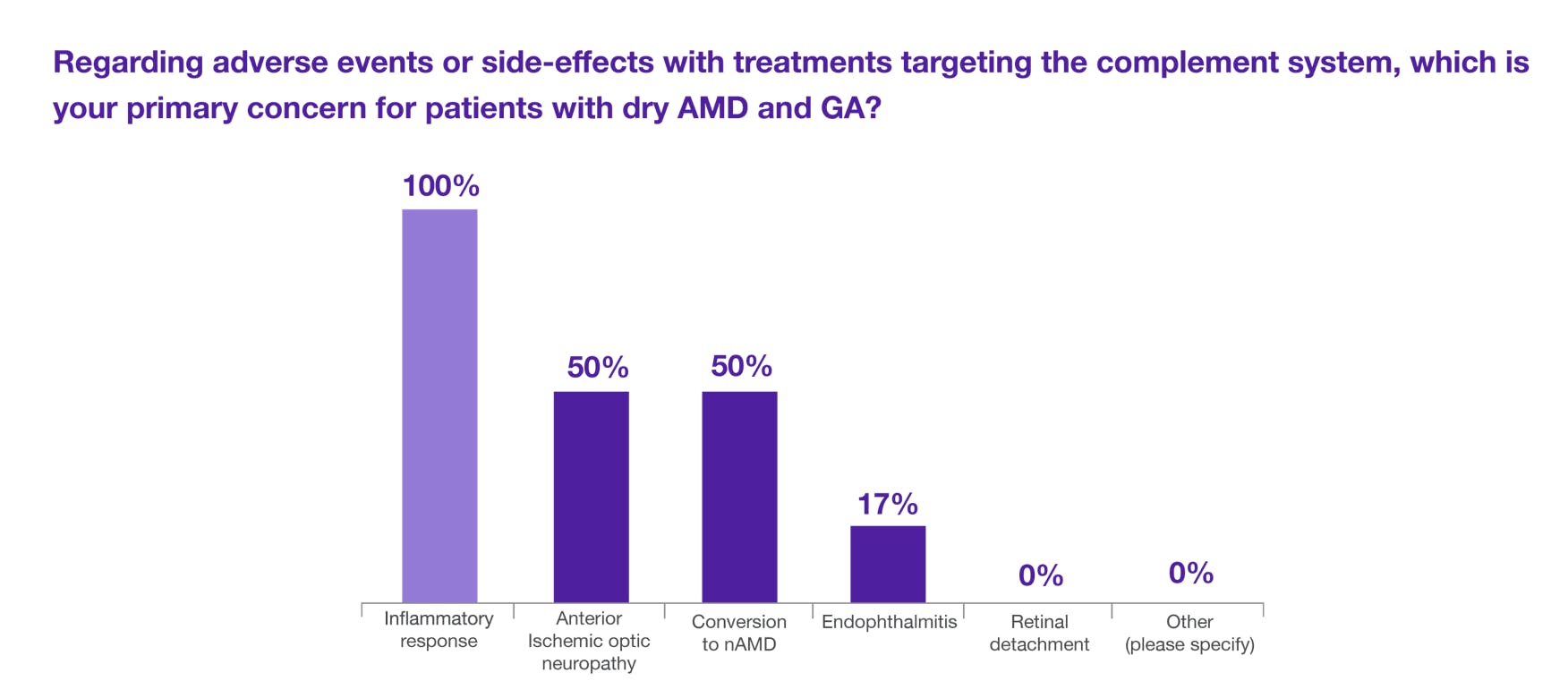
Figure 2. When it comes to potential side effects of the GA treatments targeting the complement system, the experts unanimously voiced a concern regarding a possible inflammatory response. nAMD, neovascular age-related macular degeneration.
Only half of the expert panel considered conversion to nAMD as a significant concern; however, the ability to predict patients in whom this might occur is important. The major consideration for a patient with de novo exudative AMD would be the requirement, both financially and in terms of time and travel, for additional treatment. As this treatment would likely be another course of intravitreal injections, patient comfort and compliance would be challenged.
The group then considered the patient profile most suited to treatment with complement inhibition therapy, and how to discuss the intervention with candidate patients. Initially, while data are still emerging and cost burden is still to be processed thoroughly, the experts were in favour of selecting patients with severe disease, for whom the intervention might be sight-saving. The ideal patient might already have experienced central GA in one eye, and therefore be highly invested in treatment to preserve sight in the seeing eye.
The experts considered that only motivated patients will gain benefit from complement inhibition therapy, as compliance to monthly injections will be required. Moreover, efficacy of treatment is only maintained with sequential administration and the benefit of therapy might be lost over a relatively short period of missed appointments.
Another barrier to compliance, and therefore a key topic for discussion, is that patients won’t see functional benefit from treatment. Delayed progression of atrophy may be a more difficult concept for a patient to imagine positively, compared with a treatment that increases visual acuity or low-light adaptation over time. A patient with bilateral, early-stage extra-foveal GA with only mild loss of visual acuity may not choose to commit to monthly injections in both eyes.
Prof Vujosevic suggested that as experience with complement inhibition therapy increases, other patient profiles would be considered, including those with milder disease at a younger age, who would benefit from delayed progression of atrophy over a longer period of time, with a greater amount of preserved vision, than a patient with very late-stage disease. However, motivation to adhere to the injection regimen would be key in assessing the patient’s suitability for treatment. Prof Tufail agreed that an early intervention could have great benefit for the patient but would need to be balanced against the risks associated with receiving monthly intravitreal injections for the rest of their life.

1. Chew EY, Clemons TE, Agron E, et al. Long-term effects of vitamins C and E, beta-carotene, and zinc on age-related macular degeneration: AREDS report no. 35. Ophthalmology. Aug 2013;120(8):1604-11 e4. doi:10.1016/j.ophtha.2013.01.021
2. Rubner R, Li KV, Canto-Soler MV. Progress of clinical therapies for dry age-related macular degeneration. Int J Ophthalmol. 2022;15(1):157-166. doi:10.18240/ijo.2022.01.23
3. Wright CB, Ambati J. Dry Age-Related Macular Degeneration Pharmacology. Handb Exp Pharmacol. 2017;242:321-336. doi:10.1007/164_2016_36
4. Desai D, Dugel PU. Complement cascade inhibition in geographic atrophy: a review. Eye (Lond). Feb 2022;36(2):294-302. doi:10.1038/s41433-021-01765-x
5. Boyer DS, Schmidt-Erfurth U, van Lookeren Campagne M, Henry EC, Brittain C. The Pathophysiology of Geographic Atrophy Secondary to Age-Related Macular Degeneration and the Complement Pathway as a Therapeutic Target. Retina. May 2017;37(5):819-835. doi:10.1097/IAE.0000000000001392
6. Khanani AM, Patel SS, Staurenghi G, et al. Efficacy and safety of avacincaptad pegol in patients with geographic atrophy (GATHER2): 12-month results from a randomised, double-masked, phase 3 trial. Lancet. Sep 8 2023;doi:10.1016/S0140-6736(23)01583-0
7. Jaffe GJ, Westby K, Csaky KG, et al. C5 Inhibitor Avacincaptad Pegol for Geographic Atrophy Due to Age-Related Macular Degeneration: A Randomized Pivotal Phase 2/3 Trial. Ophthalmology. Apr 2021;128(4):576-586. doi:10.1016/j.ophtha.2020.08.027
8. Wykoff CC. Treatment of geographic atrophy secondary to AMD with pegcetacoplan: Two-year outcomes from the randomized phase 3 OAKS and DERBY trials. 2022:
9. Apellis. Apellis Provides Update on Review of Rare Safety Events with SYFOVRE® (pegcetacoplan injection) for Geographic Atrophy. 2023. Available from: https://investors.apellis.com/news-releases/news-release-details/apellis-provides-update-review-rare-safety-events-syfovrer#:~:text=Most%20common%20adverse%20reactions%20. [Accessed Oct 2023].
