






Imaging techniques and testing
The experts were in complete agreement that optical coherence tomography (OCT) is essential in any diagnosis of suspected dry AMD (Figure 1). OCT reveals the loss of the outer retinal layers and the collapse of overlying layers in the presence of GA. Typically, there is hypertransmission in the absence of retinal pigment epithelium (RPE) and photoreceptors.
Where available, fundus autofluorescence (FAF) imaging is also a primary diagnostic imaging modality. FAF detects areas of hypo-autofluorescence associated with RPE loss at the GA lesion and various patterns of abnormal hyperautofluorescence patterns in the border zone of GA. FAF may be sensitive to autofluorescence patterns associated with specific genetic mutations underlying dry AMD and could provide useful information prior to treatment initiation.
Some physicians may choose to study fundus photography as part of their investigation, and this modality has the advantage of being widely available. Multimodal imaging is important in excluding late presentation of retinal/macular dystrophy from a diagnosis.

In patients with confirmed atrophic AMD, OCT angiography (OCT-A), fluorescein angiography (FA) and indocyanine green (ICG) angiography are not necessary; however, these modalities are useful in excluding a diagnosis of nAMD, and for the monitoring of de novo neovascularization post initial diagnosis. Prof Kaiser noted that experts may have selected OCT-A, FA and ICG angiography in their responses as modalities to detect CNV and conversion from dry AMD to nAMD that has been reported with the recent treatments that inhibit the complement cascade. These modalities therefore become more important in the decision to initiate complement inhibition therapy and monitor patients receiving the treatment than as a tool for GA diagnosis.
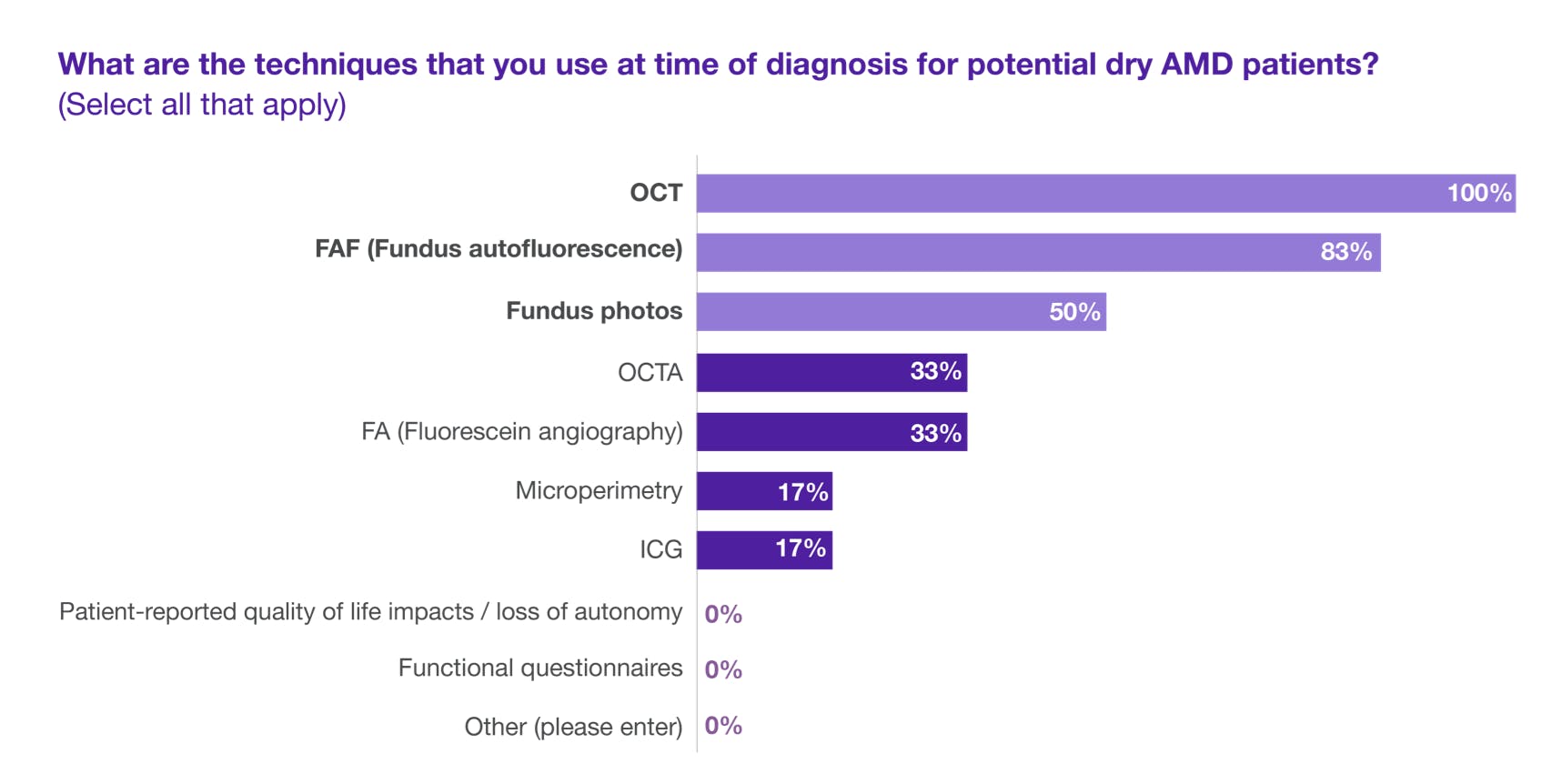
Figure 1. According to the experts, the key imaging techniques for diagnosing a suspected dry AMD patient are OCT and FAF. FAF, fundus autofluorescence; ICG indocyanine green angiography; OCT-A; optical coherence tomography angiography; OCT, optical coherence tomography.
Most of the expert panel felt that in routine practice the use of functional testing besides best-corrected visual acuity (BCVA) was impractical for assessing GA. Microperimetry might be used in an academic setting, or where it is a required parameter to measure during a clinical trial. This is because the process is relatively time consuming for the physician and patient. Prof Vujosevic and Dr Udaondo noted that the technique is valuable in more complicated diagnoses, such as where there is discordance between results from other imaging modalities and the patient’s reporting of visual acuity, where the physician has doubts about fixation or where there is suspected involvement of the fovea. Other types of functional testing, such as low-luminance VA or contrast sensitivity assessment were considered to be of relatively low value in the diagnosis and monitoring of dry AMD and GA given the associated time burden in routine clinical practice.
Although a patient’s perception of their vision is always an important component of a consultation, the experts felt that any tools used to assess this subjective parameter, including currently available questionnaires, would not be able to provide the type of clear diagnostic information that is available with OCT and FAF. Furthermore, Prof Tufail noted that by the time a patient notices an effect on their quality of life (QoL), the disease state will be quite advanced; the aim of diagnosis and risk stratification is to prolong the period before reading and other day-to-day tasks are impaired. It has also been observed that baseline lesion size in GA does not correlate closely with BCVA; consequently, assessment of vision is not of strong diagnostic value for early atrophic disease.¹
Assessing risk of disease progression
Between 2018 and 2020 a consensus group, which included Prof Tufail and Prof Holz, defined two new terms to describe OCT-observed structural changes that occurred before the development of atrophy in people with AMD.2,3 These terms classified incomplete or complete RPE and outer retinal atrophy (iRORA and cRORA, respectively) and are intended to help identify patients at risk of progression to severe GA. cRORA comprises four elements:
- A region of hypertransmission of at least 250 μm in diameter
- A zone of attenuation or disruption of the RPE of at least 250 μm in diameter
- Evidence of overlying photoreceptor degeneration
- All (1–3) occurring in the absence of signs of an RPE tear.
All experts in this consensus group agreed that cRORA and iRORA are reliable markers for assessing progression of dry AMD towards GA. There was broad agreement that all of the other listed markers, hyperreflective foci, hypertransmission (which is also a component of cRORA), subretinal drusen deposits, large drusen bodies, pigmentary changes and FAF patterns, were appropriate in determining risk of GA (Figure 2). Prof Kaiser explained that the presence of hyperreflective foci, especially over a drusen or a drusenoid pigment epithelial detachment is indicative of rapid development of GA and is a critical marker of risk. Prof Loewenstein noted that hypertransmission defects are a novel parameter that physicians are increasingly using as a sign of progression to GA. It can be considered that GA is ‘a big hypertransmission defect’, and that identifying patients with small areas of hypertransmission is key to predicting progression to advanced atrophy.

Subretinal drusen deposits (SDDs) are associated with a thinning choroid and with progression to GA.¹ Prof Vujosevic suggested that SDDs, large drusen bodies and large pigmentary changes could be identified readily in less-specialized clinics and are important markers for more general opthalmology clinics.
Significant pigmentary change, for example, is an easy-to-detect characteristic that could quickly identify an at-risk patient and facilitate referral to a specialist.
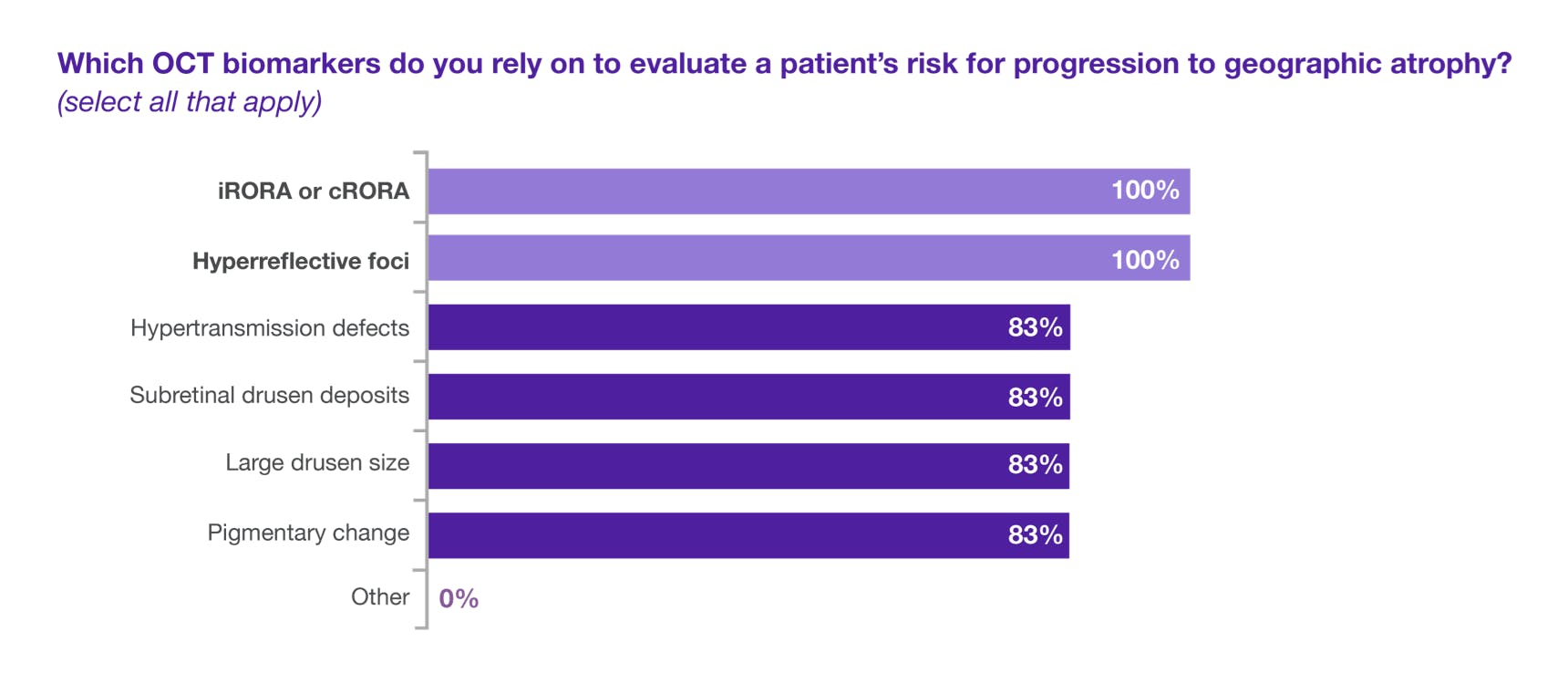
Figure 2. The consensus panel unanimously agrees that the top biomarkers to evaluate a dry AMD patient's risk to GA progression are iRORA/cRORA and hyperreflective foci. cRORA, complete retinal pigment epithelium and outer retinal atrophy; iRORA, incomplete retinal pigment epithelium and outer retinal atrophy.
Predictors of rapid atrophy progression
There was strong agreement in the expert consensus group that size, location and multifocality of lesions, along with perilesional FAF patterns, and the presence of reticular pseudodrusen (RPD)/SDDs were key predictive factors for rapid progression of GA (Figure 3).
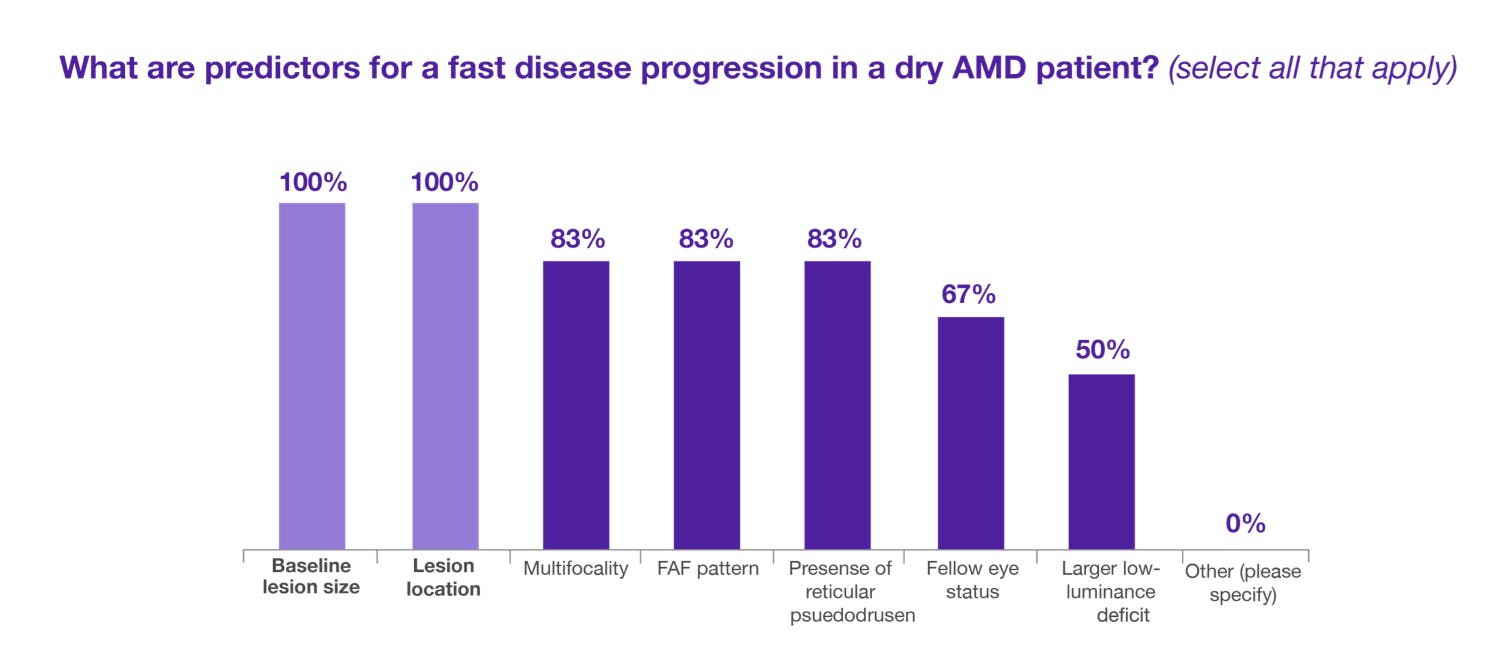
Figure 3. The expert panel identified baseline lesion size and lesion location as the leading predictors for fast disease progression. FAF, fundus autofluorescence.
Multifocal lesions and lesions close to the fovea are always markers for rapid progression. Dr Udaondo reinforced that the best way to assess changes in lesions was to use a multimodal imaging approach, and not to rely on any single measure. This is particularly important with patients who may not collaborate well with extensive imaging – for example someone who is uncomfortable with FAF and for whom infrared assessment may provide useful data.
There was some discussion on the relative merits of assessing size/area of a lesion compared with its rate of growth. Prof Kaiser illustrated that a large lesion that grows 2 mm per year, for example, in every direction is going to grow faster than a smaller lesion by definition - but may not actually be progressing more rapidly than a small lesion that is increasing by a larger proportion of its baseline size. It was suggested that using a square-root transformation of lesion size increase, as is commonly used in clinical trials, could add insight into growth rate irrespective of area.

Prof Loewenstein described how abnormal perilesional FAF patterns can provide insight into how rapidly atrophy might progress: diffuse, branching autofluorescence has been associated with more rapid growth than focal or banded patterns.⁴
Increased risk of RPD/SDD formation is associated with genetic variants that are known to increase risk of AMD development, including mutation of CFH, ARMS2, and high-temperature requirement A serine peptidase 1 (HTRA1).⁵ SDD and drusen are understood to have different pathogenesis pathways in AMD from one another, and SDD has been associated with rapid GA progression.¹
There was some debate about the role of fellow eyes status as a predictor of rapid disease progression. Prof Kaiser agreed that GA in the one eye is certainly a risk factor for developing atrophy in the other eye, but that it is not clearly predictive of how quickly that atrophy will progress. Prof Holz noted that fellow eye status is supported as being predictive of rate of progression as well as risk.⁶
Monitoring dry AMD: markers of disease progression
There was complete consensus that growth of atrophic lesions and increasing loss of visual acuity were the key markers of worsening dry AMD (Figure 4). Prof Vujosevic noted that these markers may present at different points in progression and not, at first, simultaneously. Because atrophy may not occur initially near the fovea, there may be negligible effect on BCVA – but measurement and monitoring of lesion size and growth rate is essential. Loss of visual acuity is likely to occur at a late stage of disease progression.

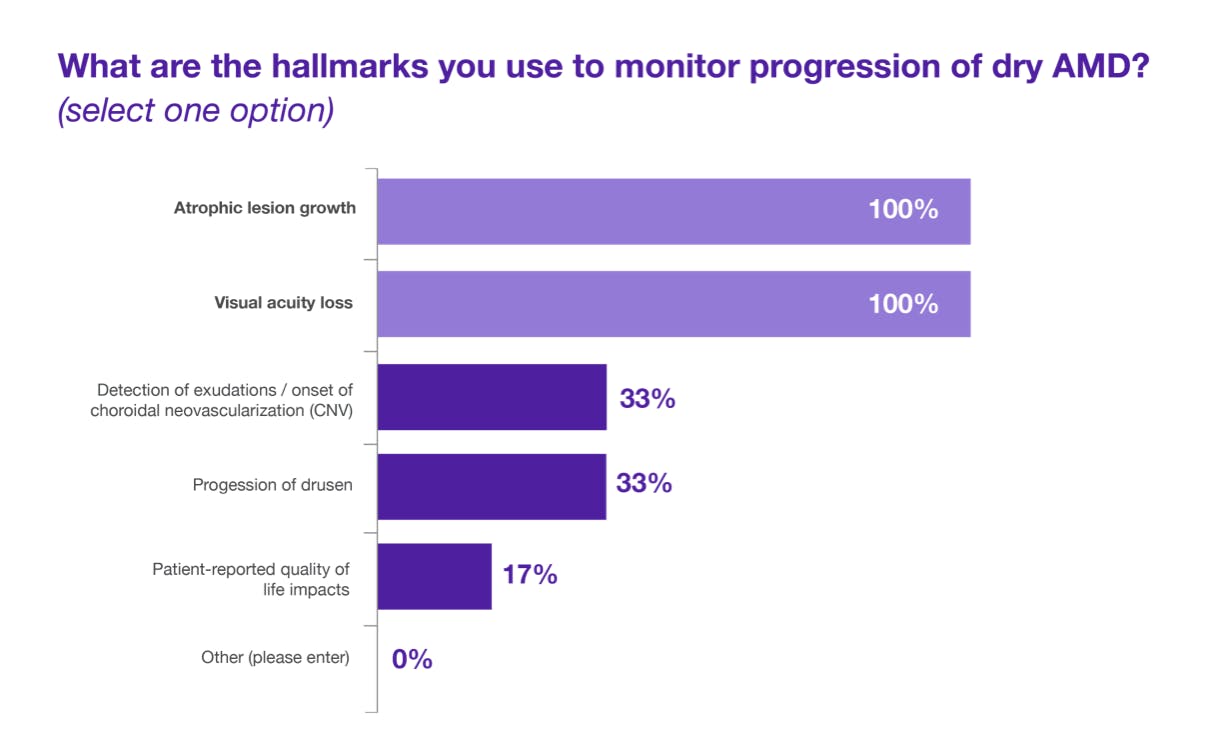
Figure 4. There was consensus among the expert panel that atrophic lesion growth and visual acuity loss are the top two hallmarks for monitoring dry AMD disease progression.
Prof Kaiser suggested that the low selection of ‘patient-reported QoL impact’ as a response to this question was because, in the clinic and at an individual level, QoL is hard to interpret. Impact of disease on QoL at a population level in a clinical trial can provide meaningful insight – and changing trends in QoL can be assessed in response to treatment in sufficiently large cohorts. However, the value of a single-patient report is lower in practice than that of objective measures of progression. Prof Loewenstein also noted that QoL impact may be perceived differently depending on whether the patient is affected in their first eye or both eyes.
Detection of exudation or onset of CNV are not typical markers of dry AMD progression but may have been raised here in relation to the observations of de novo CNV and conversion from dry AMD to nAMD in recent complement inhibition therapy clinical trials. However, several experts remarked that CNV can develop in patients with early-stage dry AMD and it is worth checking for neovascular developments in examinations.
1. Fleckenstein M, Mitchell P, Freund KB, et al. The Progression of Geographic Atrophy Secondary to Age-Related Macular Degeneration. Ophthalmology. Mar 2018;125(3):369-390. doi:10.1016/j.ophtha.2017.08.038
2. Guymer RH, Rosenfeld PJ, Curcio CA, et al. Incomplete Retinal Pigment Epithelial and Outer Retinal Atrophy in Age-Related Macular Degeneration: Classification of Atrophy Meeting Report 4. Ophthalmology. Mar 2020;127(3):394-409. doi:10.1016/j.ophtha.2019.09.035
3. Sadda SR, Guymer R, Holz FG, et al. Consensus Definition for Atrophy Associated with Age-Related Macular Degeneration on OCT: Classification of Atrophy Report 3. Ophthalmology. Apr 2018;125(4):537-548. doi:10.1016/j.ophtha.2017.09.028
4. Bindewald A, Schmitz-Valckenberg S, Jorzik JJ, et al. Classification of abnormal fundus autofluorescence patterns in the junctional zone of geographic atrophy in patients with age related macular degeneration. Br J Ophthalmol. Jul 2005;89(7):874-8. doi:10.1136/bjo.2004.057794
5. Wightman AJ, Guymer RH. Reticular pseudodrusen: current understanding. Clin Exp Optom. Sep 2019;102(5):455-462. doi:10.1111/cxo.12842
6. Chakravarthy U, Bailey CC, Scanlon PH, et al. Progression from Early/Intermediate to Advanced Forms of Age-Related Macular Degeneration in a Large UK Cohort: Rates and Risk Factors. Ophthalmol Retina. Jul 2020;4(7):662-672. doi:10.1016/j.oret.2020.01.012
