






Management in routine practice
Until recently, no pharmaceutical interventions were suited to the treatment of dry AMD and GA. Experts were asked to discuss their management approaches prior to the availability of complement inhibition therapy (Figure 1).
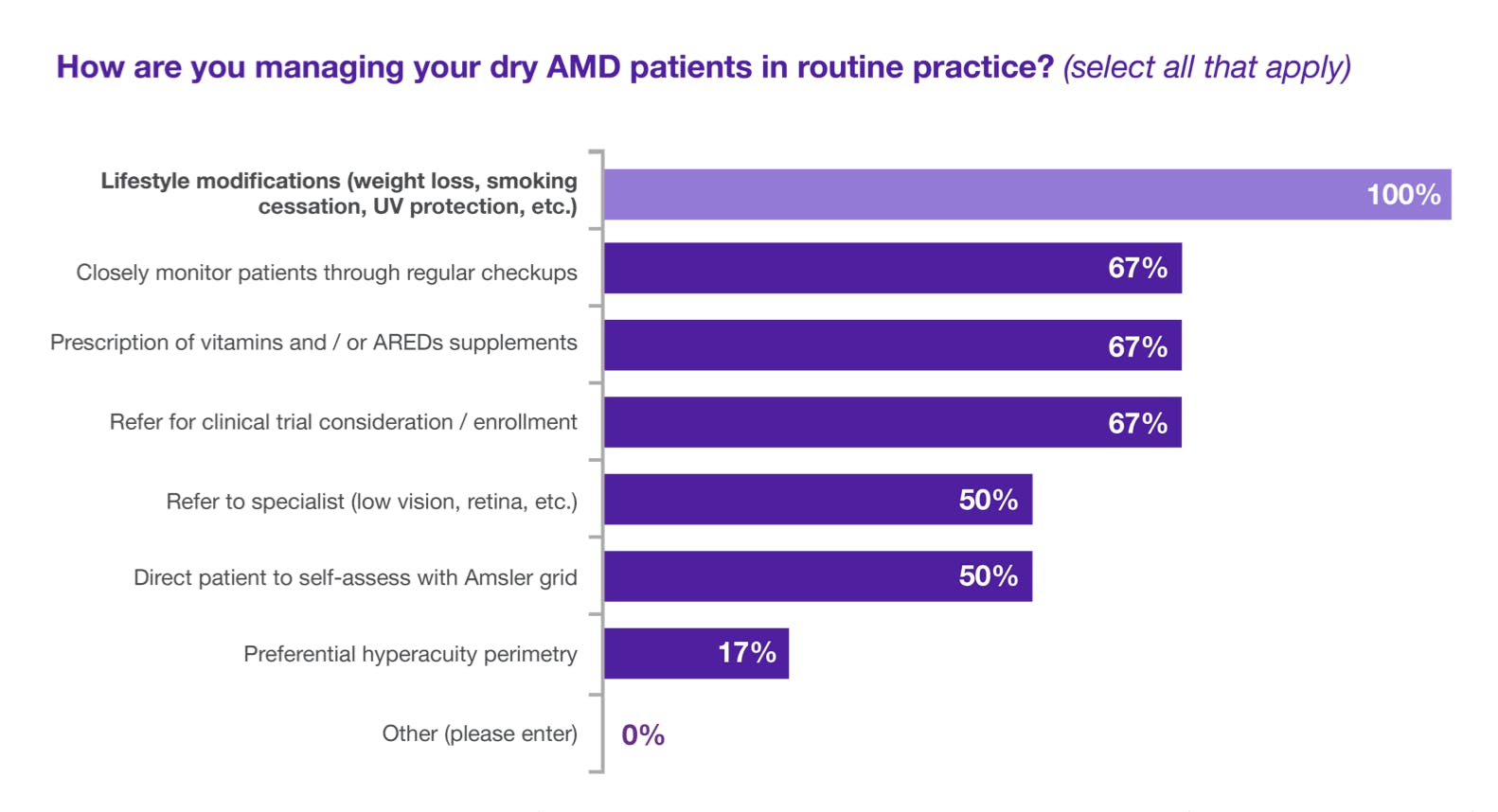
Figure 1. The expert panel agreed that positive lifestyle changes are central to managing dry AMD patients. AREDS, Age-Related Eye Disease Studies; UV, ultraviolet.
Consensus was unanimous on the importance of modifying lifestyle in improving the prognosis of dry AMD. In general, every modification that is helpful for improving overall, cardiac and renal health is helpful for managing the progression of dry AMD. There are several key areas of modification to discuss with patients:
- Diet: Increased intake of antioxidants, such as those in green leafy vegetables, may help slow the progression of dry AMD.1
- Smoking cessation: Smoking is a significant risk factor for AMD. Stopping smoking may reduce the risk of disease progression.2
- Exercise: Physical activity has been associated with a lower risk of AMD, and obesity has been identified as a risk factor for disease developement.3,4
- UV protection and blue light filtering: Sunglasses with UV protection may minimize retinal damage, although the evidence directly linking this to slowing AMD progression is not robust. Links between blue light radiation and AMD have also been suggested.5
- Blood pressure and cholesterol levels: Control of systemic conditions like hypertension and high cholesterol is recommended, although their direct impact on AMD is still under study.4
- Alcohol consumption: Increased alcohol intake has been identified as a risk factor for developing GA, and moderation of consumption should be considered.6
The use of AREDS supplements did not achieve full consensus in this survey but was broadly supported. The AREDS supplements are defined as: high-dose antioxidants, vitamins C and E, beta carotene, and zinc supplements,7 which can be further supplemented with the omega-3 oils docosahexaenoic acid (DHA) and eicosapentaenoic acid (EPA).7 Prof Tufail summarized that AREDs supplements are believed to have little direct effect on the progression of dry AMD or GA, but provide a reduction in risk of neovascular events and the development of advanced nAMD – so their use in managing dry AMD is not controversial. Prof Kaiser added that the reduction of risk of CNV was the reason he would always use vitamins, antioxidants, and supplements in patients with dry AMD, and would consider this standard of care. Prof Holz suggested that there may be forthcoming data showing that AREDS supplements can impact the rate of geographic atrophy progression, but currently these are not peer reviewed nor published.
Findings for ‘referral to a specialist’ were complicated by the fact that the expert group respondents were the retinal specialist to whom patients were referred, so they may not have selected this option in the questionnaire. All experts agreed that patients should be referred to specialist care as appropriate, and that referral to a low-vision clinic may help preserve some function in patients with advanced disease.
There was debate around the use of an Amsler grid in self-monitoring of disease. Half of the expert group found that in practice, patients were reluctant to use the grid regularly, and that it was unlikely to provide meaningful feedback that would not arise from another source – for example a patient noticing that a window frame was ‘wavy’. Other experts felt that encouraging use of the grid as part of a care strategy could be beneficial; for example, seeing the grid on the fridge door may remind a patient to take supplements or to think about their diet. Dr Udaondo suggested that if patients are using an Amsler grid, they should not be under pressure to scrutinize the lines and try to record changes daily but should use it as a periodic check to see if any changes in vision arise, and these can be discussed with the ophthalmologist.
The expert group considered this set of specialists’ responses in terms of advice for ophthalmologists working in routine practice. There was full consensus that routine standard of care would include the following in nearly all cases:
- Close monitoring of patients with regular check-ups
- Encouragement of positive lifestyle modification
- Use of AREDS supplements
- Referral to a specialist as appropriate.

Frequency of check-ups for patients with dry AMD
There was consensus that, in general, dry AMD patients should be seen approximately every 6 months for monitoring of disease progression, and for assessing response to management strategies. De novo neovascularization and potential conversion to nAMD may require additional visits. Similarly, patients with GA in both eyes, especially if one has lost sight, may require more frequent visits. In some cases, such as early disease state with only one OCT biomarker of atrophy, annual check-ups may be more appropriate than 6-monthly visits, but this would be assessed on a case-by-case basis.
Prof Tufail added that patients who are candidates for a clinical trial may be seen more often, especially where they have any vision-threatening elements, or rapid progression of atrophy.
Dr Udaondo added that follow-up of patients might be made easier, less time-consuming for both the physician and patient, and more accessible with development of tele-medicine and remote OCT submission.
Typical time to progression of peripheral GA
Experts agreed that peripheral GA could be expected to progress to central, vision-affecting GA in two to four years, depending on the individual case. This experience-based estimate assumes no treatment option is available beyond lifestyle modification and a vitamin/supplement regimen and has the potential to be extended with the availability of complement inhibition therapy.
Prof Loewenstein expanded on this estimate, noting that "If the lesion is close to the fovea, progression to central GA might be around two years; if it’s very far from the fovea, it can be longer, around three years, but it really depends where the lesion is located, as well as on other parameters". Profs Holz and Vujosevic both added that if a specialist were to see a patient who was referred only once lesions were detected close to the fovea, progression to central GA could occur in only a few months.
Clinical markers of successful GA management
Considering treatment of GA prior to the availability of complement inhibition therapy, the expert consensus group agreed strongly on four markers of effective management: delayed encroachment of atrophic lesions toward the fovea, preserved visual acuity, maintenance of patient QoL and an overall slowing of lesion growth (Figure 2).
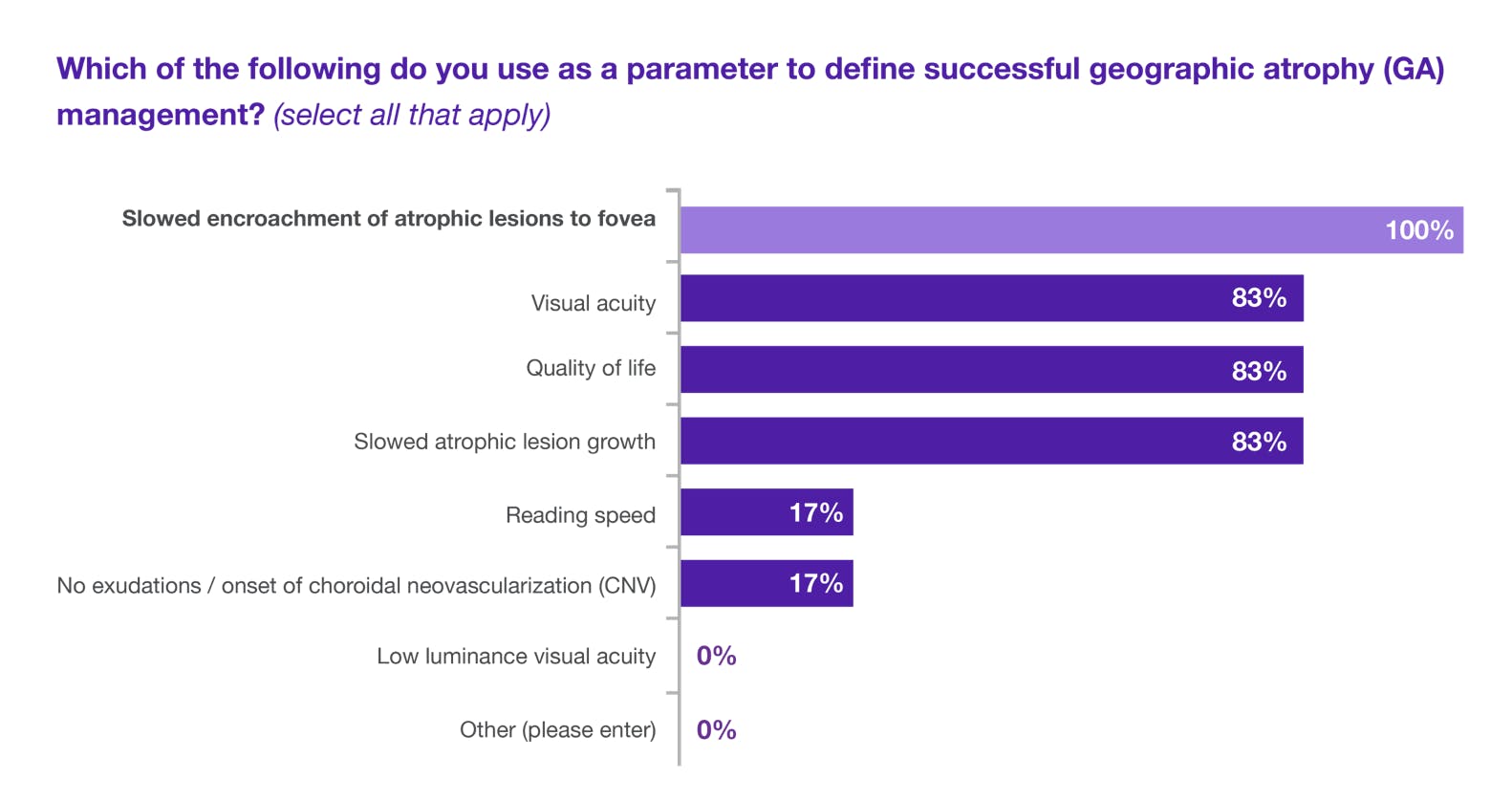
Figure 2. The expert panel agreed that a slowed encroachment of atrophic lesions on the fovea should be the top parameter to define successful GA management.
Prof Kaiser felt that these findings were also in the correct order: for the physician, delaying lesion encroachment to the fovea is the main goal of management; for the patient, preserving visual acuity and QoL are the highest priority outcomes. Prof Loewenstein noted that more emphasis is placed on lesion growth rate and size, rather than proximity to the fovea, in clinical trial outcomes, but agreed that, in practice, encroachment to the fovea is the main indicator of failing management.
Prof Vujosevic noted that reading speed might be captured under the QoL assessment for many patients. As an individual parameter to measure in the clinic, reading speed is difficult and time-consuming to evaluate, and needs at least another data point against which to compare. Prof Tufail agreed, commenting that specifically trying to measure reading speed as a marker of progression may not be suitable for routine practice.
1. Chew EY, Clemons TE, Agron E, et al. Long-term effects of vitamins C and E, beta-carotene, and zinc on age-related macular degeneration: AREDS report no. 35. Ophthalmology. Aug 2013;120(8):1604-11 e4. doi:10.1016/j.ophtha.2013.01.021
2. Seddon JM, Reynolds R, Yu Y, Daly MJ, Rosner B. Risk models for progression to advanced age-related macular degeneration using demographic, environmental, genetic, and ocular factors. Ophthalmology. Nov 2011;118(11):2203-11. doi:10.1016/j.ophtha.2011.04.029
3. Loprinzi PD, Swenor BK, Ramulu PY. Age-Related Macular Degeneration Is Associated with Less Physical Activity among US Adults: Cross-Sectional Study. PLoS One. 2015;10(5):e0125394. doi:10.1371/journal.pone.0125394
4. Garcia-Layana A, Cabrera-Lopez F, Garcia-Arumi J, Arias-Barquet L, Ruiz-Moreno JM. Early and intermediate age-related macular degeneration: update and clinical review. Clin Interv Aging. 2017;12:1579-1587. doi:10.2147/CIA.S142685
5. Yam JC, Kwok AK. Ultraviolet light and ocular diseases. Int Ophthalmol. Apr 2014;34(2):383-400. doi:10.1007/s10792-013-9791-x
6. Kuan V, Warwick A, Hingorani A, et al. Association of Smoking, Alcohol Consumption, Blood Pressure, Body Mass Index, and Glycemic Risk Factors With Age-Related Macular Degeneration: A Mendelian Randomization Study. JAMA Ophthalmol. Dec 1 2021;139(12):1299-1306. doi:10.1001/jamaophthalmol.2021.4601
7. Age-Related Eye Disease Study Research G. A randomized, placebo-controlled, clinical trial of high-dose supplementation with vitamins C and E, beta carotene, and zinc for age-related macular degeneration and vision loss: AREDS report no. 8. Arch Ophthalmol. Oct 2001;119(10):1417-36. doi:10.1001/archopht.119.10.1417
