






The primary risk factor for developing GA as a progression of AMD is age. There is a strong genetic component contributing to the risk of developing AMD; mutations in complement factor H (CFH) and the age-related maculopathy susceptibility1 (ARMS2) gene are strongly linked to the risk of AMD.1 The primary non-genetic risk factors for the development and worsening of AMD are smoking and hypertension; other risk associations include hyperopia, female gender and increased body mass index (BMI).2 Without modification, these risk factors are associated with progression to advanced AMD.3
Risk factors for disease development and progression
AMD was estimated to affect around 196 million people in 2020, and this could increase to 288 million people in 2040.4 Published AMD demographic studies show a predisposition for older adults, with prevalence increasing significantly after the age of 50. Caucasians and Europeans are at a higher risk compared to other racial groups.4,5

GA may affect up to 5 million people worldwide,6 and the prevalence of GA is projected to continue to rise in the coming years, with an estimated 18.57 million cases globally by the year 2040.4 This increase will be driven by demographic shifts, which could result in the >65 years population doubling, and the >80 years population tripling by 2050.7
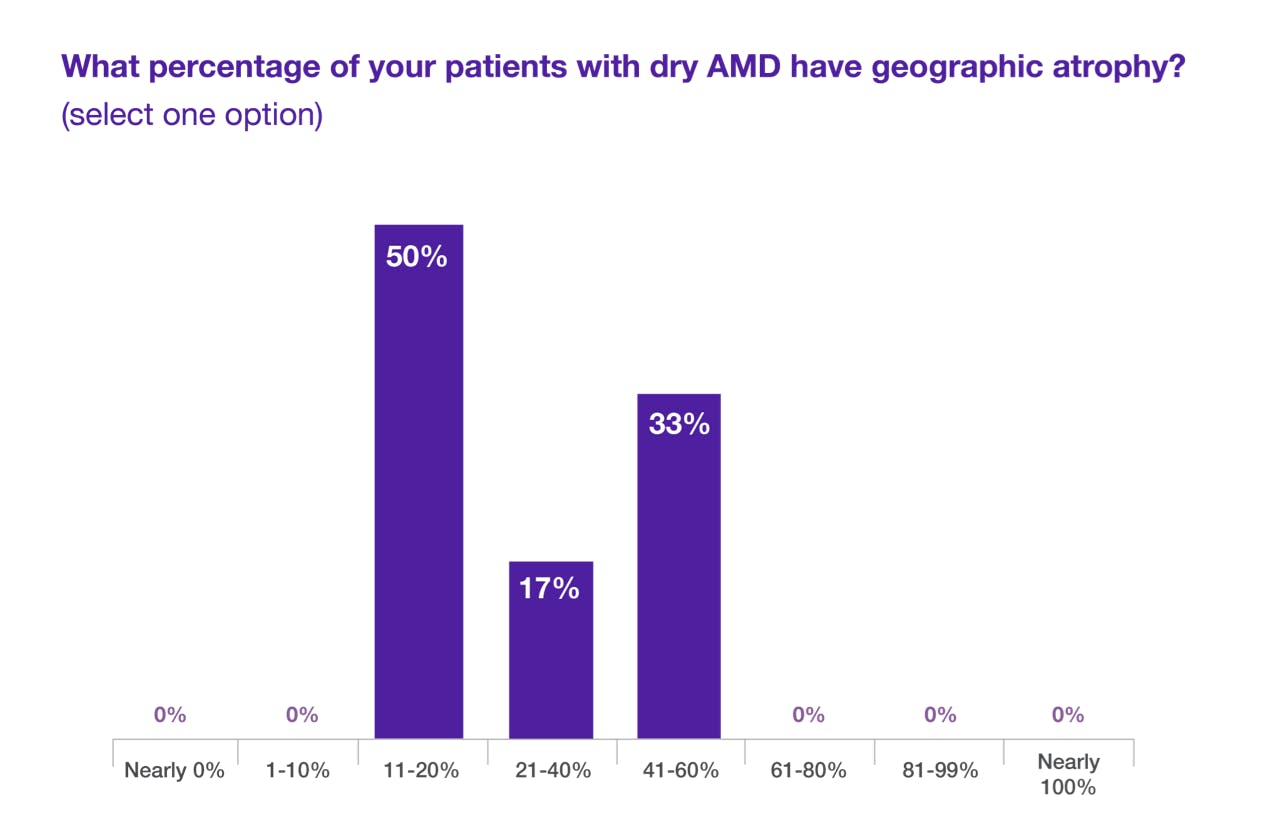
Figure 1. The panel of experts estimated that 11-60% (average 29%) of their patients had GA, with the higher proportions being related to a tertiary clinic setting.
In practice, half of the expert group typically saw GA in 11–20% of their patients with dry AMD, with the rest reporting GA in up to 60% of patients (Figure 1). However, the members of this consensus group primarily work in tertiary and specialist centers and are likely to see patients with more advanced disease states. In general ophthalmology clinics, a larger proportion of patients will have early-to-intermediate stage dry AMD. Dr Udaondo noted that if all severities of dry AMD were seen by a retinal specialist, the incidence of GA might be higher, but that this is not practical in routine care.

Prof Kaiser suggested that reporting of GA in dry AMD may increase with the availability of treatment options, which could encourage ophthalmologists to ‘look closer’ and perhaps recognize GA earlier.
1. Fleckenstein M, Mitchell P, Freund KB, et al. The Progression of Geographic Atrophy Secondary to Age-Related Macular Degeneration. Ophthalmology. Mar 2018;125(3):369-390. doi:10.1016/j.ophtha.2017.08.038
2. Age-Related Eye Disease Study Research G. Risk factors associated with age-related macular degeneration. A case-control study in the age-related eye disease study: Age-Related Eye Disease Study Report Number
3. Ophthalmology. Dec 2000;107(12):2224-32. doi:10.1016/s0161-6420(00)00409-7 3. Clemons TE, Milton RC, Klein R, Seddon JM, Ferris FL, 3rd, Age-Related Eye Disease Study Research G. Risk factors for the incidence of Advanced Age-Related Macular Degeneration in the Age-Related Eye Disease Study (AREDS) AREDS report no. 19. Ophthalmology. Apr 2005;112(4):533-9. doi:10.1016/j.ophtha. 2004.10.047
4. Wong WL, Su X, Li X, et al. Global prevalence of age-related macular degeneration and disease burden projection for 2020 and 2040: a systematic review and meta-analysis. Lancet Glob Health. Feb 2014;2(2):e106- 16. doi:10.1016/S2214-109X(13)70145-1
5. Klein R, Chou CF, Klein BE, Zhang X, Meuer SM, Saaddine JB. Prevalence of age-related macular degeneration in the US population. Arch Ophthalmol. Jan 2011;129(1):75-80. doi:10.1001/archophthalmol.2010.318
6. Boyer DS, Schmidt-Erfurth U, van Lookeren Campagne M, Henry EC, Brittain C. The Pathophysiology of Geographic Atrophy Secondary to Age-Related Macular Degeneration and the Complement Pathway as a Therapeutic Target. Retina. May 2017;37(5):819-835. doi:10.1097/IAE.0000000000001392
7. World Health Organization. Fact sheets: Ageing and health. 2022. Available from: https://www.who.int/ news-room/fact-sheets/detail/ageing-and-health#:~:text=People%20 worldwide%20are%20living%20longer, aged%2060%20years%20or%20over. [Accessed Oct 2023].
