

An 89-year-old woman with dry AMD presented to the clinic with BCVA 20/25 OU. OCT imaging revealed GA lesions in the extrafoveal regions OU, with slightly more developed lesions OD (Figure 3). Approximately 4 years later, the patient returned with BCVA 20/50-1 OD and 20/40+1 OS; BCVA for this and all follow-up appointments can be viewed in the Table.
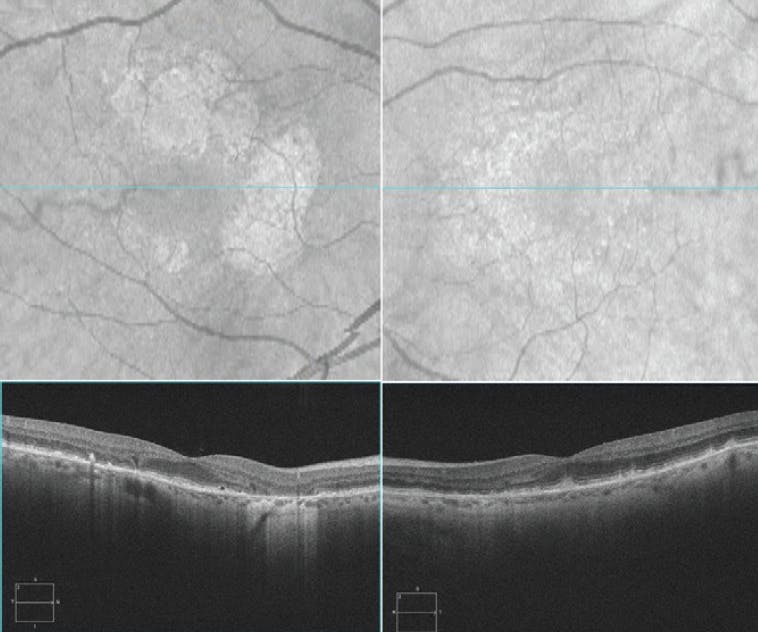
Figure 3. En face and B-scan imaging shows early evidence of atrophy OU, with more pronounced extrafoveal lesion development OD compared with OS.
Approximately 7 years after her initial presentation, BCVA OD had reduced to CF at 3 ft and BCVA OS was 20/50 (Figure 4). Using the ZEISS Retina Workplace, I compared differences in lesion area within 5 mm of the foveal center in both eyes from two timepoints: an appointment in 2012 and an appointment in 2017. A 166% increase in lesion area within 5 mm of the foveal center OD was calculated, and full foveal involvement was observed (Figure 5). A 252% increase in lesion area within 5 mm of the foveal center OS was observed, and the foveal center was spared (Figure 6).
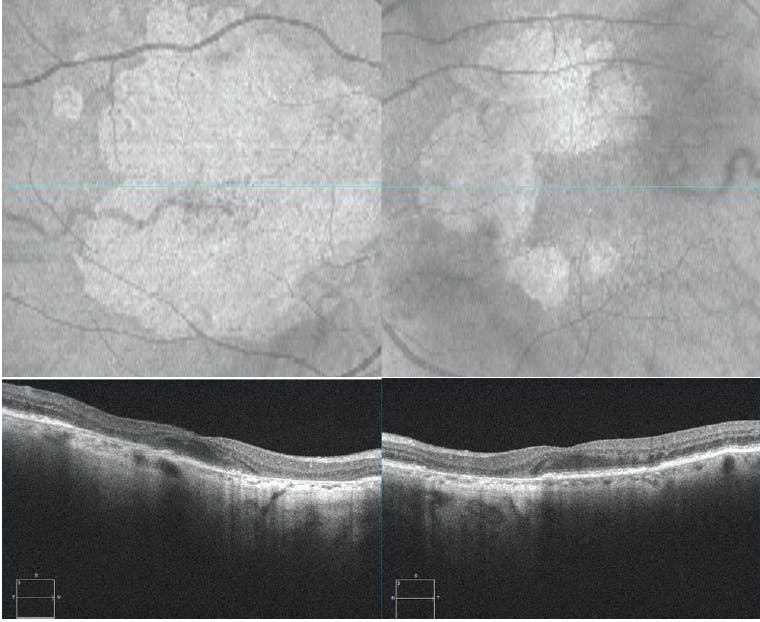
Figure 4. Approximately 7 years after the patient’s initial presentation, BCVA was CF at 3 ft OD and 20/50 OS. A large contiguous lesion has encroached the fovea OD, and lesion area OS has advanced significantly.
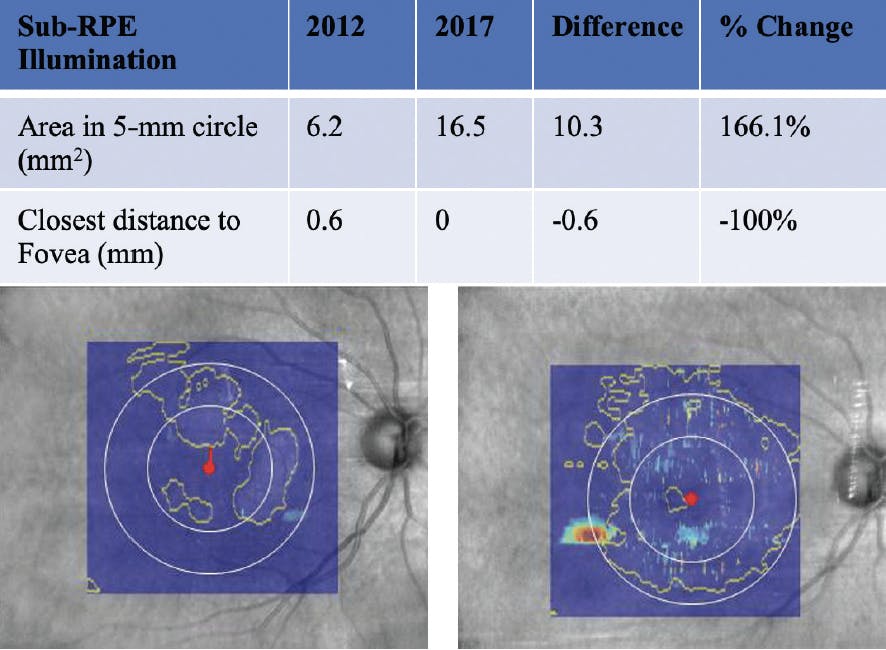
Figure 5. The ZEISS Retina Workplace calculated the change in lesion area within 5 mm of the foveal center and the closest distance to the fovea between two visits (ie, 2012 and 2017). Within that time period, the patient’s lesion OD had reached the foveal center and the lesion area had increased by 166%.
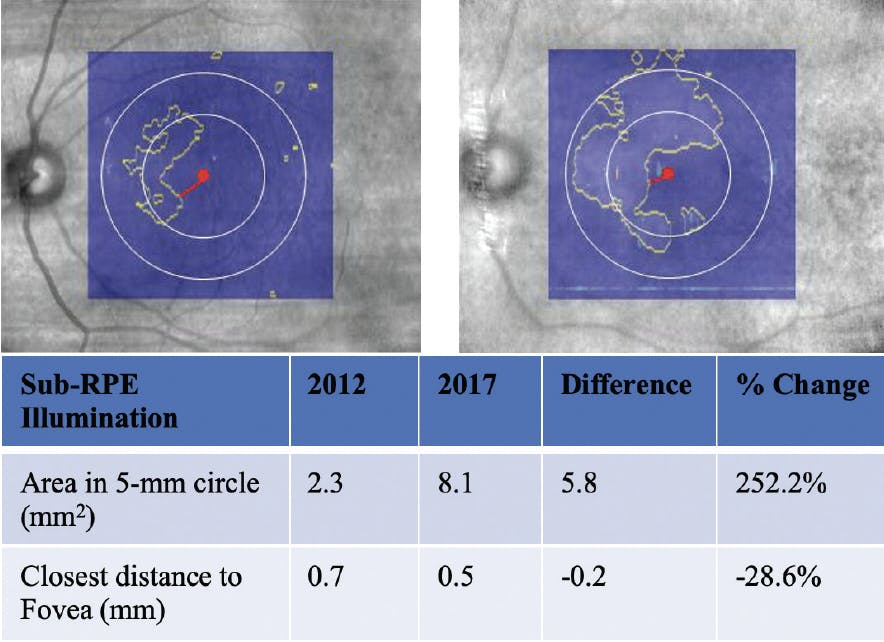
Figure 6. Using the ZEISS Retina Workplace, changes in the patient’s lesion area within 5 mm of the foveal center and closest distance to the fovea were calculated. From 2012 to 2017, lesion area OS increased by 252% and the closest distance to the fovea decreased by 0.2 mm.
The patient was directed to initiate vitamin supplementation at her most recent follow-up visit, as this was before an FDA-approved therapy for GA had been authorized.
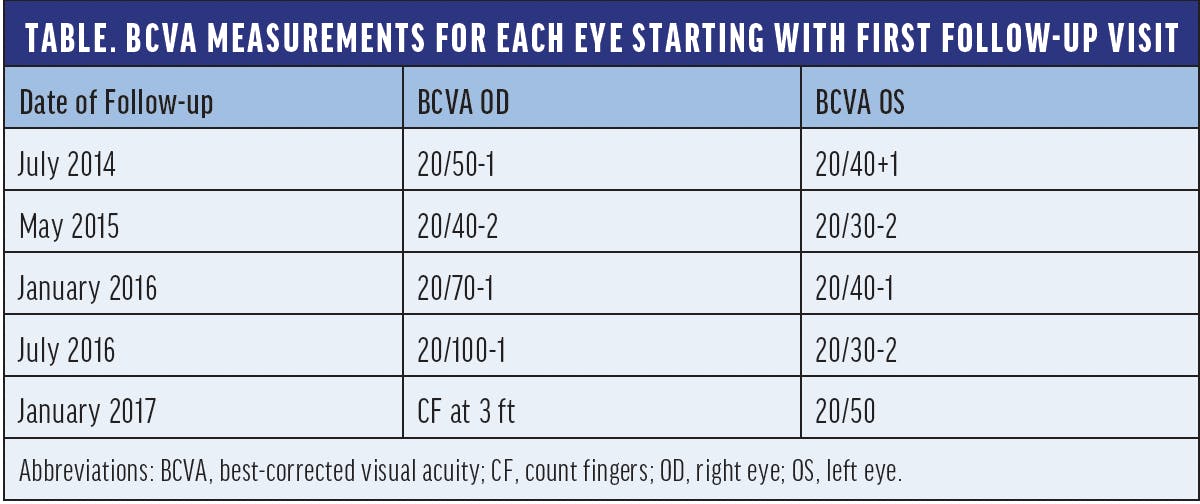
This case is a testament to the link between foveal involvement and functional vision. Despite the fact that overall lesion growth within 5 mm of the foveal center was larger from 2012 to 2017, foveal encroachment was less severe OS than OD. Thus, the patient’s BCVA OS remained significantly higher than her BCVA OD.
