



The Duke Advanced Vitreous Surgery (AVS) Course, initiated by Robert Machemer, MD, boasts a series of excellent lectures and interactive panel discussions with vitreoretinal surgery leaders from all over the world. It takes place every other year in Durham, North Carolina, and is open to all retina specialists. The course places an emphasis on a diverse range of vitreoretinal surgery and medical retina topics, including retinal detachment, novel drugs and devices, trainee presentations, management of intraocular tumors and uveitis, and pediatric retina. Furthermore, the course takes pride in the international diversity of its panel members, this year with faculty from Singapore, Poland, Canada, Brazil, and Croatia. Here, we share key highlights from the meeting, including an update on treatments for retinal vein occlusion (RVO) and intraoperative OCT (iOCT).
RVO UPDATES
Jorge Rocha, MD, PhD, a Retina World Congress board director, traveled from Brazil to present on new concepts in RVO (Figure 1). He started his presentation by highlighting the history of our understanding of RVO and prior treatments, explaining that, in the past, we thought the pathophysiology of RVO was related to either an existing thrombus, an inflammatory process, a structural or anatomic crossing, or some combination of these.
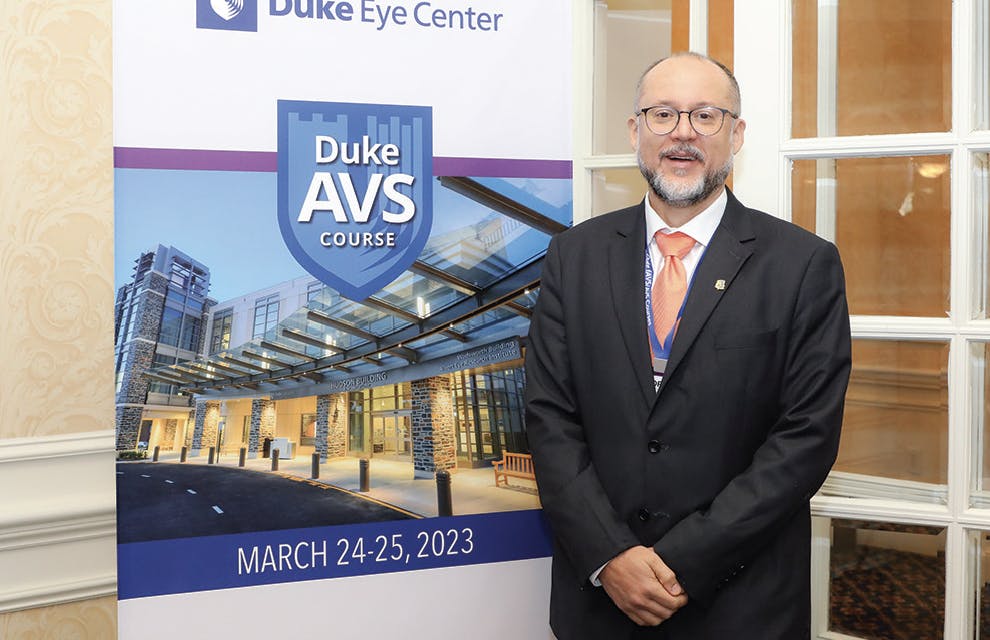
Figure 1. Jorge Rocha, MD, PhD, traveled from Brazil to share his expertise in the treatment of RVOs. Image courtesy of Kevin Caldwell Photography.
Dr. Rocha then shared past surgical management options for RVO, including arteriovenous sheathotomies to decompress branch RVOs (BRVOs) and manually remove pressure on the vein. He discussed past studies of radial optic neurotomies for the management of central RVO, which were incredibly delicate surgeries with initial data suggesting some positive results.
With the invention of intravitreal anti-VEGF agents, many of these surgeries became less popular. However, Dr. Rocha emphasized that in the RETAIN study looking at outcomes of patients with RVO treated with ranibizumab (Lucentis, Genentech/Roche), 56% still required regular injections at 48 months. His point was that there is still an opportunity to better understand the pathophysiology and improve treatment approaches for RVOs. Unanswered questions remain about why a BRVO sometimes self-resolves, how young patients without atherosclerosis or dyslipidemia develop RVO, and why we rarely find a thrombus on histopathology.
Dr. Rocha proposed that endothelin-1 may play a role in vein dysregulation and explain, in part, the pathophysiology of RVOs. Endothelin-1, typically produced by endothelial cells, is a potent vasoconstrictor that induces growth and migration of cells and regulates the blood-retinal barrier. Several studies have suggested that endothelin-1 is a risk factor for RVOs by inducing vein dysregulation; this makes it a potential target for future treatment of RVOs.
The following discussion was lively regarding whether there is any room for the use of endothelin-1 antagonists currently being used as treatment for other medical conditions, such as pulmonary hypertension, to treat RVOs.
DETAILS ON INTRAOPERATIVE OCT
Lejla Vajzovic, MD, an associate professor with tenure at Duke University and the AVS course director, gave a riveting talk on the evolution of iOCT in macular surgery. She also shed light on the next generation of this revolutionary technology (Figure 2).
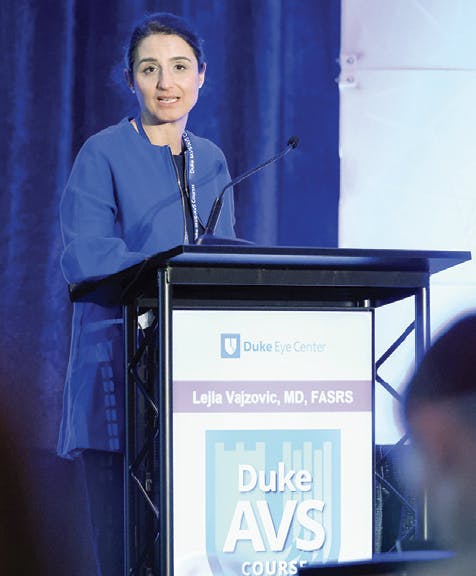
Figure 2. Lejla Vajzovic, MD, discussed the growth of iOCT and where the technology is headed in the future. Image courtesy of Kevin Caldwell Photography.
Dr. Vajzovic first delved into the history of iOCT. She detailed how this technology evolved from a handheld device to technology that is incorporated into surgical microscopes. She gave a special acknowledgment to Cynthia A. Toth, MD, who is a pioneer in developing this technology. Although significant strides have been made in iOCT, Dr. Vajzovic highlighted some of the limitations that persist with current commercially available devices. For example, these systems predominantly use spectral domain technology, which is slower and yields lower-resolution images compared with swept-source technology. Furthermore, the intricacies of using these devices necessitate the assistance of an additional pair of hands.
Researchers at Duke University have developed a prototype microscope-integrated OCT (MIOCT) that uses swept-source technology. The swept-source MIOCT is considerably faster and has deeper penetration, offering valuable insight into our understanding of the surface of the retina and areas underneath the retina. Dr. Vajzovic shared her experience using this technology, particularly for complex cases. She noted that it is particularly useful in gene therapy delivery cases because she can observe where the fluid is being delivered. She is now working on obtaining volumetric data to quantify the amount of fluid being delivered.
Dr. Vajzovic expresses her optimism for the future of iOCT, emphasizing that commercially available devices are evolving to become more efficient and user-friendly for surgeons. Data provided by iOCT can teach the field so much, similar to what we have gained from OCT in the clinical setting, she said.
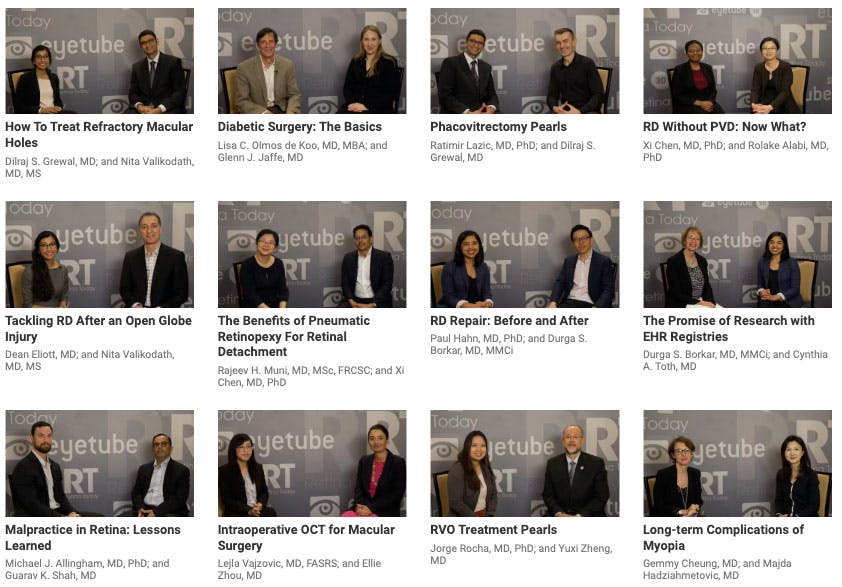
CHECK OUT OUR VIDEO COVERAGE OF Duke AVS COURSE 2023
CASE COMPENDIUM
Finally, Thomas Aaberg Jr, MD, gave an important and insightful talk that consisted of his graveyard of cases and shared lessons that everyone in the audience could implement into their practices (Figure 3). His talk was truly humbling and reminded us that we are human, and errors will happen. Pearls from his talk included the following:
- Focus during surgery without succumbing to distractions.
- Ensure that you are well-rested.
- Have a supportive environment to help you cope with difficult situations.
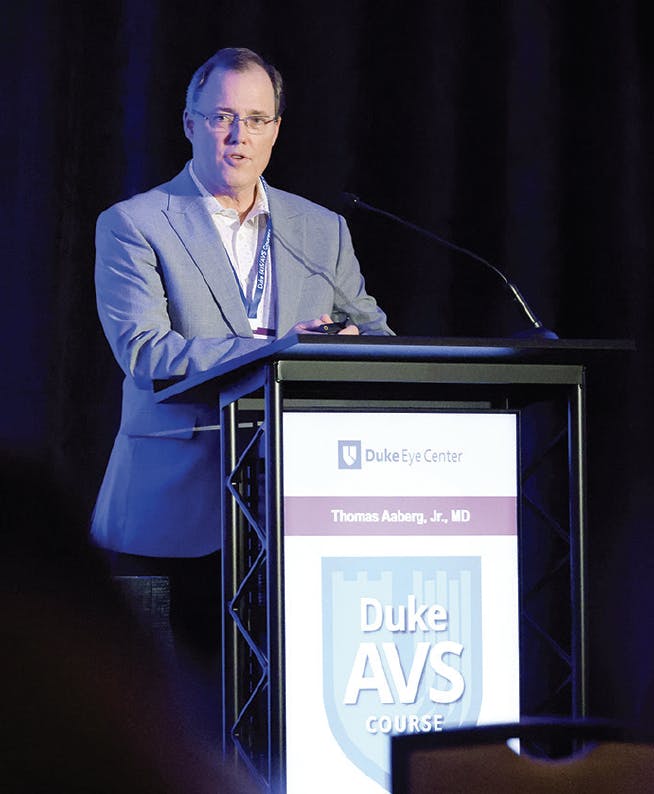
Figure 3. Thomas Aaberg Jr, MD, provided important clinical pearls, while sharing from what he calls his “graveyard of cases.” Image courtesy of Kevin Caldwell Photography.
The AVS is a fantastic meeting with significant learning opportunities for faculty and fellows. Don’t miss the 23rd Duke AVS meeting in 2025!


_1784132761.jpg?auto=compress,format&w=75)





