


AT A GLANCE
- Off-label sutureless flanged intrascleral haptic fixation (ISHF) of three-piece IOLs doesn’t require a large corneal incision or suturing of the conjunctiva.
- Rescuing existing three-piece polymethylmethacrylate IOLs for ISHF lends to a rapid postoperative recovery, but centration and tilt must be optimized.
- A recently available option, the RxSight Light Adjustable Lens can be treated with a UV laser approximately 3 weeks postoperatively to correct any residual astigmatism and sphere.
After graduating from fellowship, I felt well prepared to handle any IOL complication that came through the door. With anterior chamber IOLs and the Bausch + Lomb AO60 and MX60 with polytetrafluoroethylene (Gore-Tex, W.L. Gore) suture fixation on hand, what else could a vitreoretinal surgeon need to manage eyes without capsular support?
In my first few months of practice, however, I met Bill Richheimer, MD, a talented and thoughtful cornea surgeon who walked me through his approach to off-label sutureless flanged intrascleral haptic fixation (ISHF) of three-piece IOLs—an approach based on the Yamane technique.1 It doesn’t require a large incision to accommodate an anterior-chamber IOL, and I don’t have to suture the conjunctiva or worry about the tension on my Gore-Tex sutures. Since adopting this technique, I haven’t looked back and now perform three to six ISHF cases each week.
When it comes to ISHF, most retina specialists prefer a 27-gauge trocar-assisted technique to capture and externalize their IOL haptics. I prefer a needle-assisted technique with thin-walled 30-gauge needles (TSK) because it costs significantly less, and the reduced diameter of the 30-gauge scleral tunnels may lend to improved long-term IOL stability (Figure 1).2
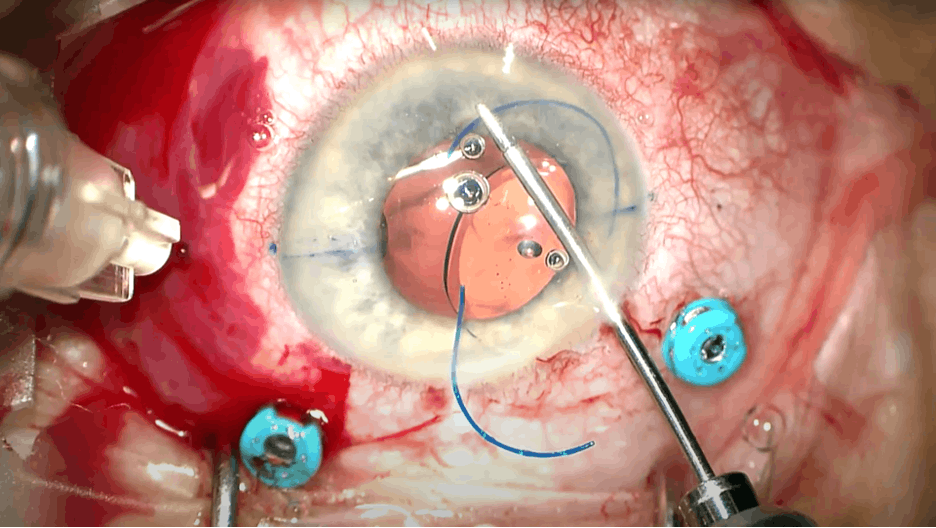
Figure 1. This surgical image depicts the docking of the leading haptic of a CT Lucia 602 into a 30-gauge thin-walled TSK needle.
In addition, recent advancements in ISHF have led to many new lens options. Depending on availability, refractive goals, surgical history, and axial length, certain lens choices may be better than others. In this article, I review some of the IOL options available for aphakic eyes without capsular support and provide my personal experience with these IOLs while working along their expected learning curves.
APHAKIC PATIENTS
The adage that nobody ever went blind from aphakia can be a very reasonable option for patients with high axial length and biometry results within approximately 1.00 D to 3.00 D of plano. In limited cases of aphakic patients without a dislocated IOL, a referral for aphakic correction with PRK or LASIK is a reasonable option for patients who have the means and desire to avoid intraocular surgery while minimizing the need for spectacle correction.
REUSE AND RECYLCE
Explanting a subluxed three-piece polymethylmethacrylate (PMMA) IOL requires a 6 mm scleral tunnel or corneal incision and increases the risk of wound leakage and postoperative astigmatism. As such, rescue of a previously placed IOL may be prudent. My recently published series of 25 eyes highlights the technique and outcomes of rescuing three-piece PMMA IOLs for ISHF.3 This technique works quite well and lends to a rapid postoperative recovery, but centration and tilt must be optimized to reduce the risk of significant optical aberrations in these IOLs with spheric optics.
PLACING A NEW IOL
When the clinical scenario calls for a new IOL (eg, if rescue is not an option due to IOL type or damaged/weak haptics), the following are the currently available options for ISHF, and my personal thoughts on each.
In my limited experience with Alcon’s MA60AC (6 mm acrylic optic; +6.00 D to +30.00 D; A-constant, 118.4), ISHF has been difficult. The PMMA haptics are quite brittle and are more curved than other three-piece IOLs, lending to an increased risk of haptic kinking or breakage during ISHF.2 It is a reasonable option in a pinch but is not my first choice for scleral fixation.
The Carl Zeiss Meditec CT Lucia 602 (6 mm acrylic optic; +4.00 D to +34.00 D; A-constant, 118.4) has been a staple for many surgeons employing ISHF. The polyvinylidene fluoride haptics are well suited for scleral fixation because they have a unique combination of mechanical resilience and flexibility that minimizes the risk of haptic kinking and breakage. Additionally, the aspheric optics of this monofocal IOL minimizes aberrations even with mild to moderate IOL tilt or decentration. Unfortunately, I and others have noticed unexpected and visually significant postoperative IOL tilt in several cases over the past 2 years. A multicenter, retrospective series of 45 cases from 20 surgeons suggests that this tilt issue relates to instability at the haptic-optic junction.4 Although the exact rate of severe IOL tilt following ISHF with the CT Lucia is unknown, authors have recommended use of the “laser lock” technique—in which laser retinopexy is applied to the haptic-optic junction to minimize rotation of the haptic—to reorient a tilted IOL and avoid a lens exchange.5 The unpredictability and visual impact of this complication has led me to avoid using the Lucia.
Bausch + Lomb’s LI61AO (6 mm silicone optic; +0.00 D to +34.00 D; A-constant, 118.7) has pliable PMMA haptics that resist kinking and breakage; however, the silicone optic is potentially problematic in patients with a history of vitreoretinal disease who may require oil tamponade in the future. This lens comes with a decent range of IOL powers for eyes with both short and long axial length, and I’ve found it to work well in both these axial length situations.
The AMO Tecnis ZA9003 (6 mm acrylic optic; +10.00 D to +30.00 D; A-constant, 119.1) for ISHF is an excellent option that I use often. The PMMA haptics are less pliable and more resistant to kinking than polyvinylidene fluoride haptics; however, the difference is not great enough to lend to significant haptic-related issues. Some surgeons advocate for heating the haptics in warm water to make them more pliable, but I have not found this necessary. The haptic-optic junction appears to be well constructed, and I have not seen any delayed cases of IOL tilt. Although this lens has been easy to obtain, the company discontinued it at the end of 2023.
The AMO AR40 (6 mm acrylic optic; -10.00 D to +30.00 D; A-constant, 118.4) is a three-piece IOL suitable for scleral fixation with a rare trait of providing minus powers. I found this lens when treating a monocular patient with a 32 mm eye and a biometry that called for a -5.00 D IOL. The patient did not want to undergo hyperopic LASIK as an alternative to an IOL exchange. With some luck, the lens centered well and has remained stable with excellent uncorrected vision. I have found this IOL to behave similarly to the AMO ZA9003, and it has now become my most-used IOL for ISHF. In addition, the aspheric optic of the AR40 is quite forgiving when it comes to mild postoperative tilt and centration issues.
There is a small caveat, however: The diameter of the haptics does not appear to be as uniform as other IOLs, in my experience. If you are using a double-needle technique with 30-gauge TSK needles, test the fit of the haptics into the needle before loading the IOL. I have occasionally cut the end of the trailing haptic at an angle to allow for intraocular needle docking. This issue should not cause a problem for surgeons using a modified 27-gauge trocar approach.
A LIGHT ADJUSTABLE IOL
Adjustable IOLs offer the opportunity to change refractive outcomes after surgery, which is a welcome addition to refractive technology for surgeons performing secondary IOL surgery. Now available on the market, the RxSight Light Adjustable Lens (6 mm silicone optic; +10.00 D to +30.00 D; A-constant, 118.7) is an option for ISHF. With this IOL, a UV laser can be applied to the IOL optic approximately 3 weeks postoperatively. The laser effectively changes the lens shape to correct any residual astigmatism (-2.00 D to -0.50 D) and sphere (-2.00 D to +2.00 D) after the IOL has settled within the capsular bag or scleral tunnels.
There are myriad issues that surgeons must consider with the light adjustable lens, including adequate dilation (7 mm minimum), potential weakness at the haptic-optic junction,6 centration, tilt (Figure 2), and the need for UV protective glasses in the immediate postoperative period. As with the LI61AO, this silicone lens can be problematic in patients who may require oil tamponade in the future. In addition, an appropriate financial model should be considered for out-of-pocket billing of this premium IOL. Of the many patients who are candidates for this IOL in my retina practice, most find that the out-of-pocket costs of a premium IOL are a barrier to adoption. However, this IOL may be a game changer for the right patient looking for an option that could achieve the most desired refractive outcomes.
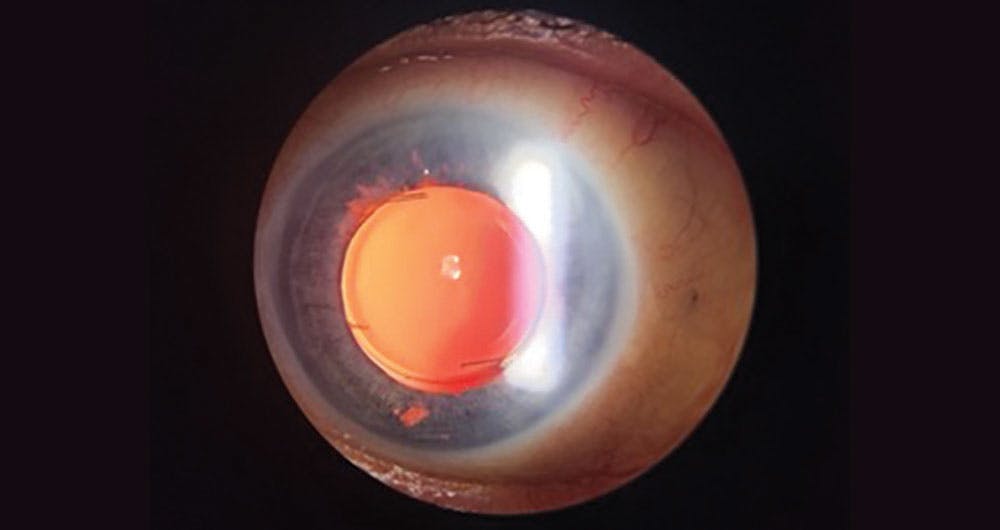
Figure 2. The key to success with scleral fixation of the light adjustable lens is maximizing centration and minimizing tilt.
Early Experience
I first used this lens for ISHF in October of 2022 in a patient with a dislocated multifocal toric IOL. I performed the surgery, and Matthew Kruger, MD, a cornea colleague, applied the postoperative laser treatment. We were able to correct residual -1.00 D sphere and +2.00 D astigmatism after ISHF, and the patient’s manifest refraction was plano at 1 month postoperative. Since then, I have performed three more scleral fixation cases using the light adjustable lens, with a plan to publish a case series in 2024. Currently, there is a single case report of using the light adjustable lens for ISHF, which reported excellent results.7
CONCLUSIONS
Many lens options exist for ISHF of a secondary IOL. Personal preference, experience, and refractive goals all factor into the decision making regarding IOL choice. Integrity of the haptics within scleral tunnels and within the haptic-optic junction remains a critical consideration for this technique. With new technology, including light adjustable IOLs and more anticipated in the future, vitreoretinal surgeons will continue to evolve with improved IOL options and techniques to treat patients with dislocated IOLs and aphakia.
1. Yamane S, Sato S, Maruyama-Inoue M, Kadonosono K. Flanged intrascleral intraocular lens fixation with double-needle technique. Ophthalmology. 2017;124(8):1136-1142.
2. Ma KK, Yuan A, Sharifi S, Pineda R. A biomechanical study of flanged intrascleral haptic fixation of three-piece intraocular lenses. Am J Ophthalmol. 2021;227:45-52.
3. Curran C, Adam MK. Clinical and anatomic outcomes of 3-piece poly(methyl methacrylate) intraocular lens rescue and needle-assisted transconjunctival intrascleral lens fixation. J Vitreoretin Dis. 2023;7(5):404-411.
4. Zhang A, Dipen K, Tan J, Adam MK. Axial instability of the Zeiss CT Lucia 602 intraocular lens with transconjunctival intrascleral haptic fixation. American Society of Retina Specialists Annual Meeting; Seattle, WA; July 31, 2023.
5. Scoles D, Wolfe J. Laser to the rescue. AAO. December 15, 2022. Accessed December 6, 2023. www.aao.org/education/1-minute-video/laser-to-rescue-2
6. LoBue S, Catapano T, Shelby C, Coleman W III. Is the light adjustable lens strong enough for scleral fixation? Invest Ophthalmol Vis Sci. 2023;64(8):2527.
7. Ma CJ, Schallhorn CC, Stewart JM, Schallhorn JM. Modified intrascleral haptic fixation of the light adjustable lens in a case of spontaneous adult-onset bilateral lens subluxation. Am J Ophthalmol Case Rep. 2023;31:101864.


_1784132761.jpg?auto=compress,format&w=75)





