



The 10th anniversary of the Duke fellows Advanced Vitreous Surgery (fAVS) Course, held March 22-23, 2024, in Durham, North Carolina, started off with a warm welcome from the course director, Lejla Vajzovic, MD, who commemorated Duke University’s rich heritage of vitreoretinal surgery and the institution’s dedication to education and innovation (Figure 1). This year, the Duke fAVS Course included 112 residents and retina fellows, 11 of whom traveled from outside the United States to participate.
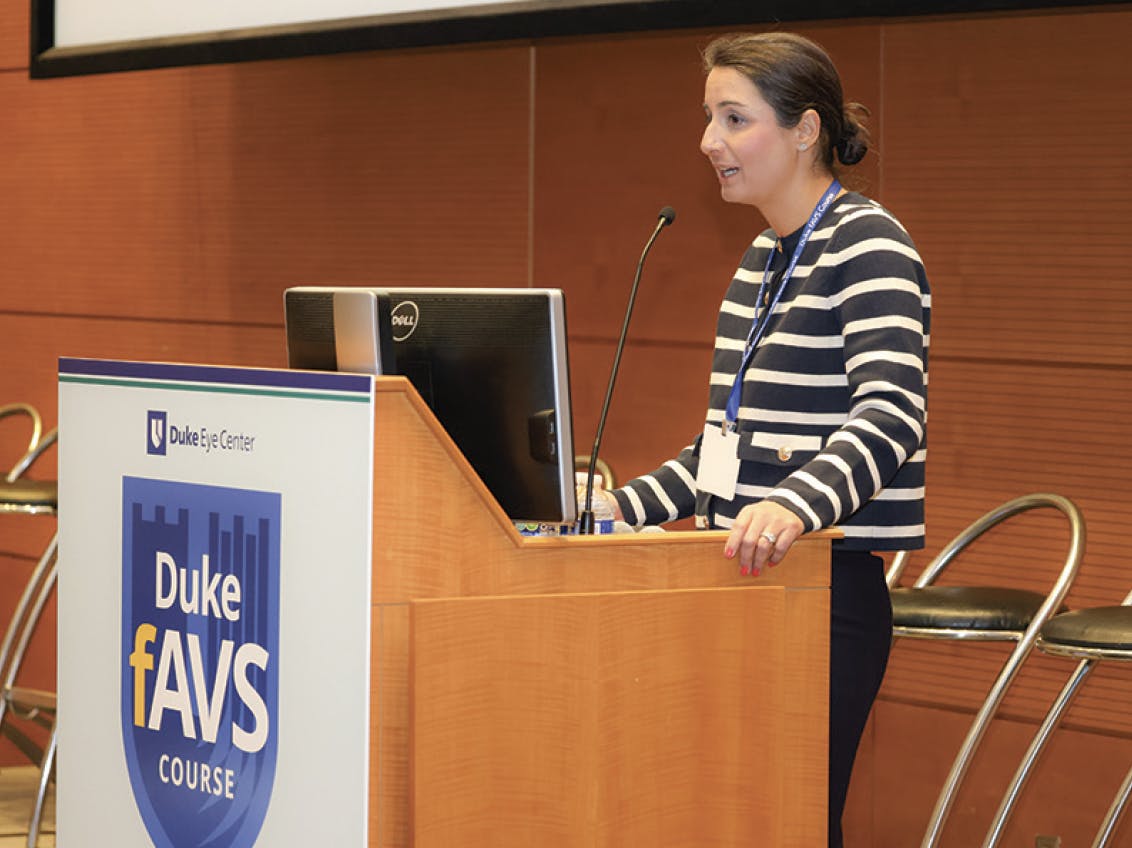
Figure 1. Dr. Vajzovic opened with a brief history of Duke’s long-standing commitment to the field of retina and a glimpse at how the fAVS Course has grown over the years. Image courtesy of Kevin Caldwell Photography.
DAY 1 EDUCATION
The conference commenced with a session on the recent advances in pharmacotherapies. Prithu S. Mettu, MD, and Michael J. Allingham, MD, PhD, discussed the treatment landscape for wet AMD and diabetic eye disease, including newer agents in the pipeline. Eleanora G. Lad, MD, PhD, then educated attendees on the emerging use of complement inhibitors for geographic atrophy, such as pegcetacoplan (Syfovre, Apellis) and avacincaptad pegol (Izervay, Iveric Bio/Astellas). She also gave attendees a peek at promising therapeutics under investigation.
Judy E. Kim, MD, FARVO, FASRS, led an informative talk on the role of biosimilars and the challenges retina specialists face with their use, such as navigating step-therapy requirements. Dr. Vajzovic provided a comprehensive update on gene therapies for retinal diseases, touching on everything from various delivery methods to target diseases, promising viral vectors, and more.
This was followed by two enlightening lectures on AI presented by Glenn J. Jaffe, MD, and Daniel S.W. Ting, MD, PhD. They talked about the current and expanding role of AI in ophthalmology—for both clinical practice and research applications.
Yannek I. Leiderman, MD, PhD, shared invaluable insights on how to prepare for the OR, optimize surgical performance, and handle complications and challenging situations as they arise. This was complemented by a talk by Caroline R. Baumal, MD, on best practices for office-based procedures, such as intravitreal injections.
The second half of the morning focused on advances in retinal subspecialties, including uveitis, ocular oncology, and inherited retinal diseases, with lectures by Ramiro S. Maldonado, MD; Prithvi Mruthyunjaya, MD, MHS; Miguel A. Materin, MD; and Sumit Sharma, MD.
The morning concluded with an expert panel that offered wisdom and pearls regarding medical retina cases and best clinical practices. Moderated by Dr. Allingham, the panel—including Drs. Mruthyunjaya, Maldonado, Lad, Sharma, and Ting; Stefanie G. Schuman, MD; John B. Miller, MD; Frank Brodie, MD, MBA; and Sharon Fekrat, MD, FASRS—explored several cases and offered insights into the various treatment options (Figure 2).
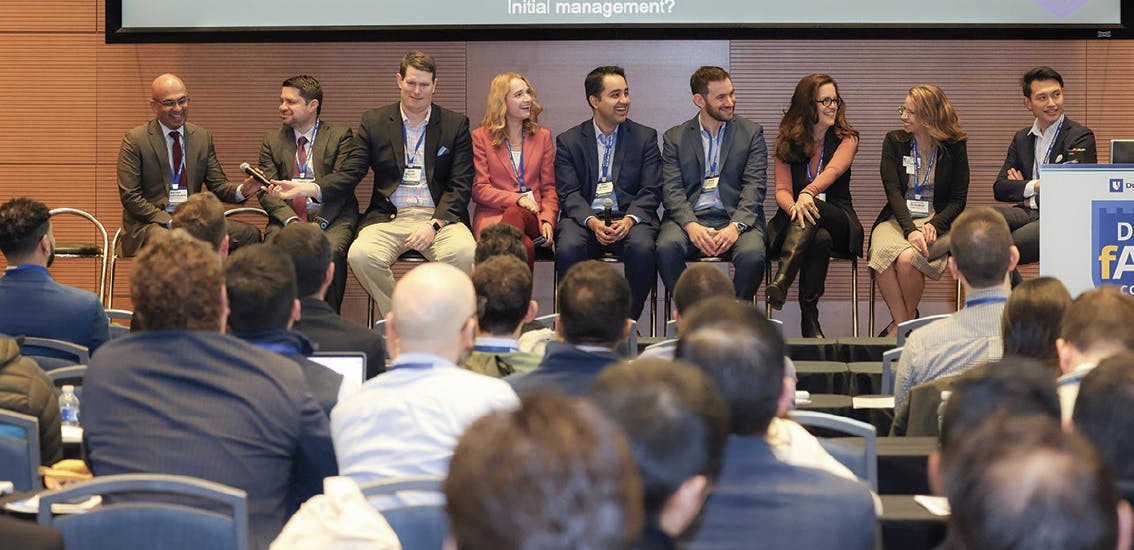
Figure 2. The medical retina case panel was a collegial discussion between (left to right) Drs. Mruthyunjaya, Maldonado, Miller, Lad, Sharma, Brodie, Fekrat, Schuman, and Ting. Image courtesy of Kevin Caldwell Photography.
Before breaking for lunch, the audience heard from the 2023 Robert Machemer, MD, and International Retinal Research Foundation Fellowship winner, Charles DeBoer, MD, PhD. He discussed the process of inventing an extended drug delivery device that uses the lens capsule.
The afternoon sessions began with Kourtney H. Houser, MD, describing secondary IOL fixation techniques. She prefers the AR40 lens (Johnson & Johnson) when using scleral fixation, and she highlighted the importance of fixating the haptics 180° apart to reduce the risk of lens tilt.
Xi Chen, MD, PhD, then described approaches to tackle the pediatric hyaloid. Often, there is another layer in younger patients, even if you think the hyaloid has already been lifted. In pediatric retinal detachments (RDs), more than one surgery may be necessary, and it is important to discuss this with the patient and their family preoperatively. In pediatric tractional RDs (ie, secondary to retinopathy or familial exudative vitreoretinopathy), the goal of the surgery is to relieve the traction, although the hyaloid may not be able to be lifted.
Durga S. Borkar, MD, MMCi, then discussed the role of early vitrectomy for diabetic retinopathy-related vitreous hemorrhage, followed by Dr. Miller providing tips for optimizing 3D heads-up display during vitreoretinal surgery. Dr. Sharma then discussed pearls for addressing uveitic RDs, emphasizing the importance of pre- and postoperative inflammation control and supplementation with a scleral buckle if the break cannot be visualized. In patients with outer retinal and choroidal inflammation, subretinal membranes should be identified and carefully removed.
Leo Kim, MD, PhD, and Carl D. Regillo, MD, discussed the mechanisms of proliferative vitreoretinopathy formation and its management. Dr. Regillo’s current approach involves vitrectomy, membrane peeling, endolaser, and silicone oil with oil removal within 3 to 4 months. Dr. Regillo and Cynthia A. Toth, MD, then moderated a surgical rounds panel that walked attendees through the various surgical approaches to many interesting cases.
The day ended with real-world discussions of transitioning from trainee to teacher (by Dr. Baumal) and how to navigate the path after fellowship (by Dr. Mruthyunjaya). High-yield tips were shared to secure your dream job, such as preparing a plan to share with future employers that ties back to your prior clinical and research experiences.
SATURDAY WET LAB EXPERIENCE
One of the staples of the Duke fAVS Course is the wet lab, which provides the opportunity to learn from faculty and try out new techniques. This year, the lab was divided into five rooms and included 16 different stations, allowing fellows and trainees to experience various vitrectomy systems on both model eyes and pig eyes (Figure 3).
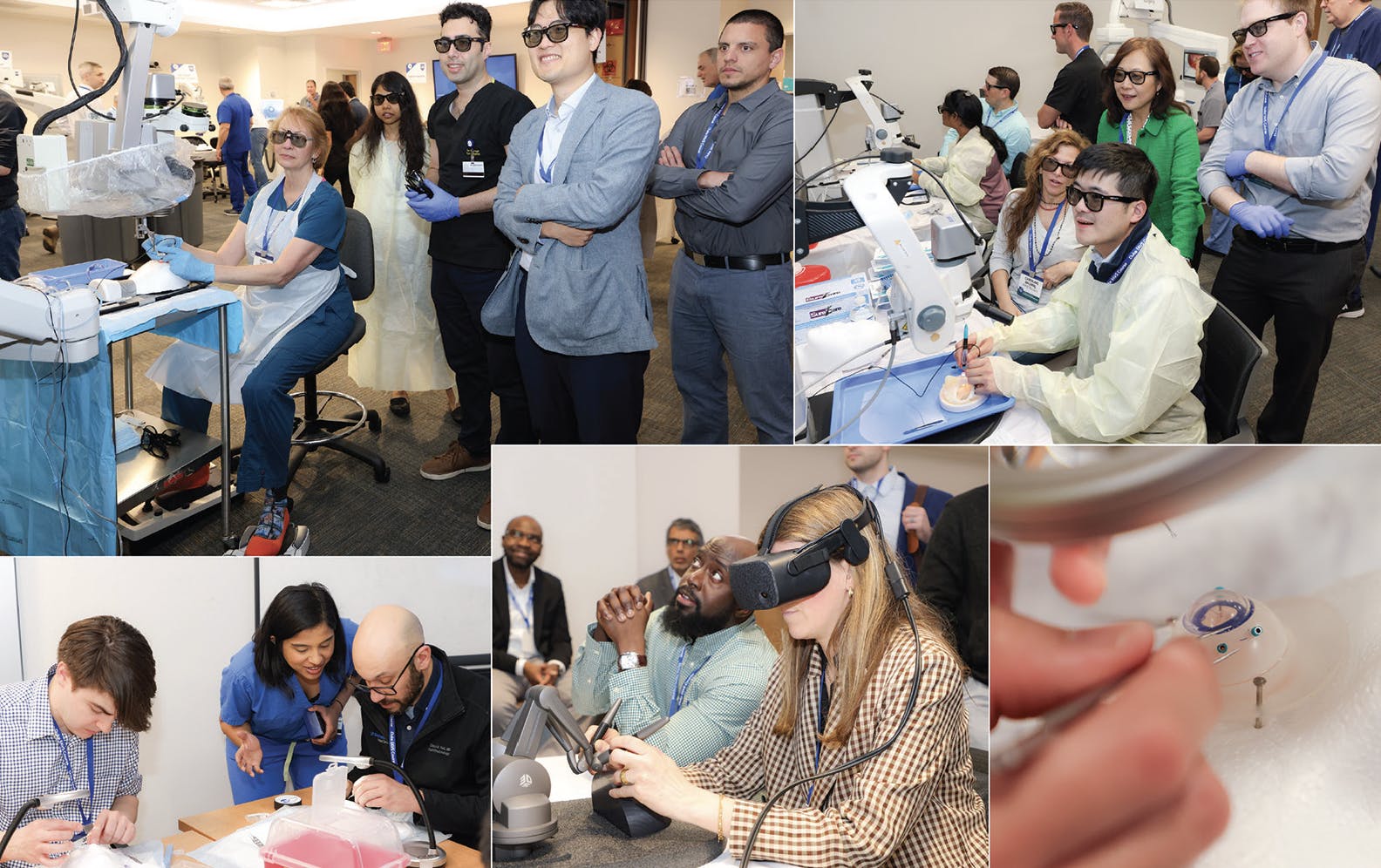
Figure 3. The wet lab was packed with advanced technology, one-on-one instruction, hands-on learning, and a lot of fun. Images courtesy of Kevin Caldwell Photography.
Dr. Borkar and Ellie Zhou, MD, led a secondary IOL implant station where trainees could practice their Yamane and scleral-suturing techniques. The next room housed Drs. Chen and Leo Kim teaching PFO-silicone oil exchange. Drs. Baumal, Judy Kim, and Miller provided trainees tips for epiretinal membrane peeling using model eyes. Fellows were encouraged to try various forceps when performing the peeling. In another room, Dr. Jaffe assisted trainees in performing subretinal biopsies, while close by, Dr. Toth showcased Duke’s intraoperative OCT and hand-held OCT systems. Drs. Mruthyunjaya and Ting demonstrated the Zeiss intraoperative OCT and 3D visualization system, and Drs. Regillo and Sharma manned the solo-surgery station, using the lighted scleral depressor to perform surgery without an assistant. Drs. Leiderman and Brodie taught at the subretinal injection station. A different room housed a virtual reality surgical simulation for the implantation of the port delivery system (Susvimo, Genentech/Roche) led by Dr. Fekrat, and the last room included the Navilas computer-guided laser and an in-home OCT system.
In addition to these stations, others included models for performing suprachoroidal injections, the Beyonics One virtual reality exoscope (BVI), and various intravitreal implants. This year’s lineup of amazing guest faculty, many industry partners, and the latest and greatest technology made the wet lab a huge success.
SATURDAY SESSIONS
Saturday was also brimming with medical retina education. While half of the attendees checked out the wet lab, the other half dove into distinct aspects of the field.
Oleg Alekseev, MD, PhD, delivered a primer on the utility of genetic testing in diagnosing inherited retinal diseases. He discussed various testing methods, illustrating their relevance with compelling differential diagnoses spanning conditions such as pseudoxanthoma elasticum versus Stargardt disease, Bardet-Biedl syndrome versus retinitis pigmentosa, and Batten disease versus Leber congenital amaurosis.
Dr. Allingham then discussed the intricacies of managing retinal vein occlusion, offering guidance on treatment modalities and strategies for cases resistant to standard anti-VEGF therapies. The engaging lectures continued, covering topics ranging from the contentious domain of biosimilars and foundational insights into retinoblastoma, to updates on clinical trials for uveitis, advances in autoimmune retinopathy research, and dry AMD. Esteemed moderators and speakers, including Arpita S. Maniar, MD; Amol A. Sura, MD; and Drs. Maldonado and Schuman graced the stage to lend their expertise.
In the afternoon, participants reconvened for two pivotal segments: a panel discussion on career development and practice insights post-fellowship, followed by a showcase of fellow surgical videos. The career panel, featuring Drs. Fekrat, Judy Kim, Leo Kim, Brodie, and Toth, offered invaluable wisdom gleaned from their professional journeys. The group discussed the realities of clinician-scientist roles, the intricacies of innovation, and career advancement strategies.
The day culminated in fellow video presentions, sparking vibrant discussions among panelists, including Drs. Borkar, Vajzovic, Jaffe, Baumal, Brodie, Judy Kim, Leiderman, Miller, and Ting, reminiscent of the collaborative spirit embodied by the Duke Machemer rounds. The conference concluded with a convivial dinner designed to foster camaraderie among attendees and speakers alike.
Author acknowledgement: Parts of this article were edited using ChatGPT.
SAVE THE DATE: MAY 15-17, 2025
11th Annual Duke fAVS Course and
23rd Annual Duke AVS Course


_1784132761.jpg?auto=compress,format&w=75)





