




Sozinibercept (OPT-302) is a soluble form of VEGFR-3 expressed as an immunoglobulin G1 (IgG1) Fc-fusion protein. It binds and neutralizes the activity of VEGF-C and VEGF-D on their endogenous receptors, VEGFR-2 and VEGFR-3. Research indicates that targeted inhibition of VEGF-C and VEGF-D can inhibit blood vessel growth and vascular leakage which contribute to the pathophysiology of retinal diseases including neovascular (wet) AMD.1
Sozinibercept has the potential to redefine the treatment landscape for wet AMD. Currently being studied in combination with anti-VEGF-A therapy in Phase 3 trials, this innovative treatment aims to address the still unmet medical need of improved visual outcomes.2-5
During a recent interview, Opthea CEO, Frederic Guerard, PharmD, MS; Opthea Chief Medical Advisor, Arshad M. Khanani, MD, MA, FASRS; Charles C. Wykoff, MD, PhD, FASRS, FACS; and Veeral S. Sheth, MD, MBA, FASRS, FACS, discussed the transformative potential of sozinibercept in reshaping the landscape of wet AMD treatment and emphasized its capacity to revolutionize the standard of care for this condition.
Tell us about Opthea and your vision for the company.
Dr. Frederic Guerard: As the new CEO of Opthea, I am excited by the opportunity to lead the organization into its next phase of growth. The company’s vision is to reshape the future treatment of retinal diseases, such as wet AMD, by advancing bold therapeutic innovation and inspiring transformation within the global retinal community. Sozinibercept is a proprietary VEGF-C and VEGF-D ‘trap’ inhibitor intended to be used in combination with standard of care anti-VEGF-A therapy. Sozinibercept has the potential to be the first drug in over 15 years to improve visual outcomes in patients with wet AMD.
Recently, we’ve strengthened our team with key appointments including Dr. Arshad Khanani as Chief Medical Advisor, as well as key medical affairs, clinical and regulatory hires to help drive our Phase 3 clinical program to bring sozinibercept to wet AMD patients.
What unmet medical needs in wet AMD treatment does sozinibercept address?
Dr. Arshad M. Khanani: The unmet medical needs in wet AMD treatment are significant, with many patients failing to achieve optimal vision outcomes despite treatment with anti-VEGF-A therapies. A recent survey by the American Society of Retina Specialists revealed that over 50% of retina specialists emphasize the importance of improved visual acuity.6
That aligns with what I see in clinical practice. Patients, regardless of age, place a priority on vision improvement. Sozinibercept stands out as the only late-stage drug addressing these needs while seamlessly integrating into the current treatment paradigm. It offers patients the potential for superior visual outcomes, addressing one of the retina specialists’ main concerns.
Sozinibercept addresses these limitations by blocking VEGF-C and VEGF-D-mediated receptor activation and when used in combination with any VEGF-A inhibitor, sozinibercept is a potent inhibitor of VEGFR-2 and VEGFR-3 signaling (Figure 1).1,7 VEGF-C and VEGF-D independently stimulate retinal angiogenesis and vascular leakage and permeability,8-16 while VEGF-A inhibition can also lead to the upregulation of VEGF-C and VEGF-D.17-21
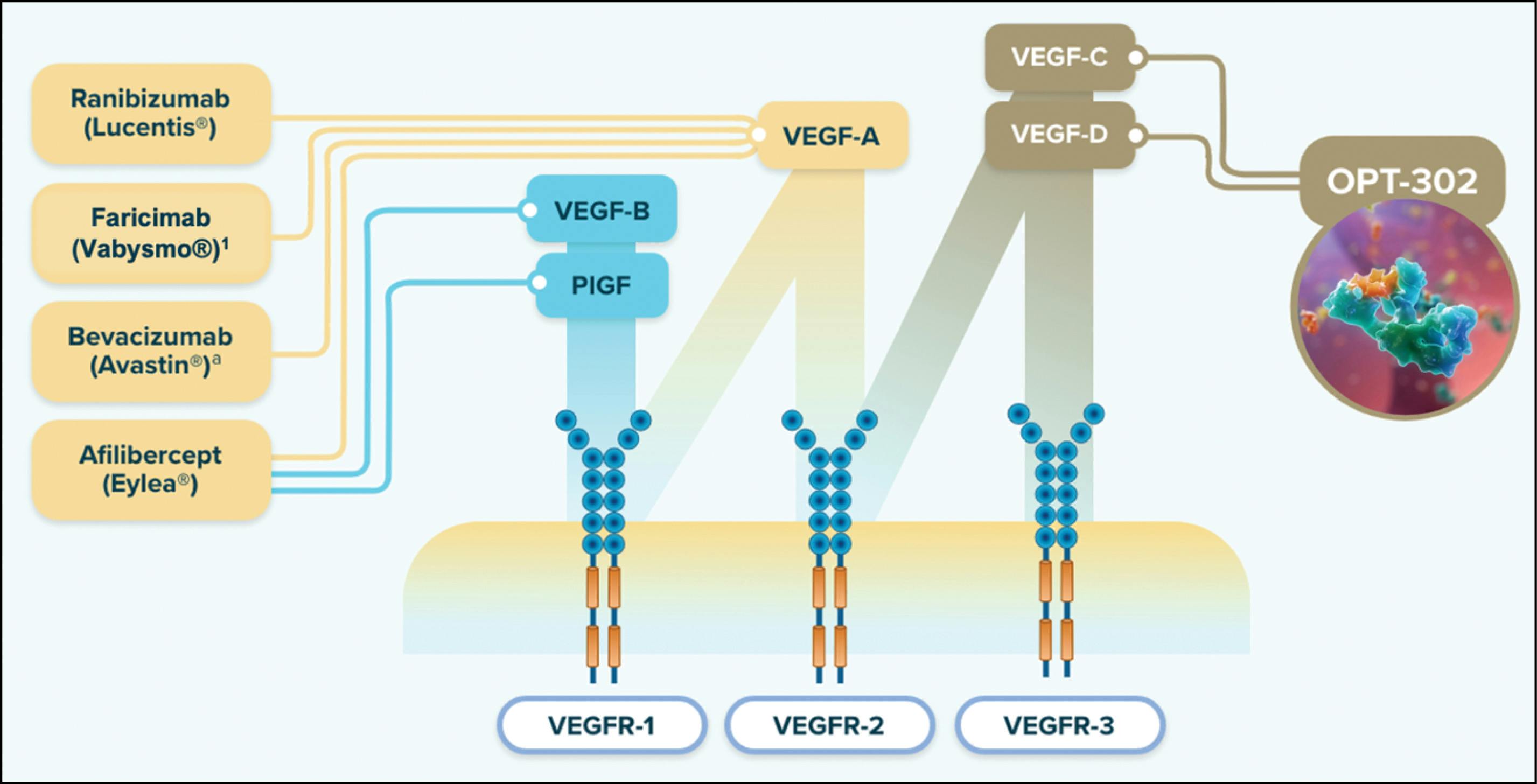
Figure 1. When used in combination with any VEGF-A inhibitor, sozinibercept completely blocks VEGFR-2 and VEGFR-3 signaling.
What were the primary and secondary endpoint outcomes in the Phase 2b trial of sozinibercept?
Dr. Charles C. Wykoff: Treatment-naïve wet AMD patients were randomly assigned to one of three trial arms: sham plus 0.5 mg ranibizumab (Lucentis, Genentech), or either 0.5 mg or 2.0 mg sozinibercept (formerly OPT-302) plus 0.5 mg ranibizumab.7 The majority of patients enrolled (~87%) had occult or minimally classic wet AMD at baseline. The primary endpoint of the trial was the mean change in BCVA from baseline at week 24. Key secondary endpoints included the proportion of patients gaining 15 letters or more in visual acuity, along with anatomic endpoints. The Phase 2b trial successfully met its primary endpoint. Notably, the combination therapy with 2.0 mg sozinibercept yielded a mean increase in BCVA of 3.4 letters compared to monotherapy with ranibizumab in the total patient population (Figure 2).
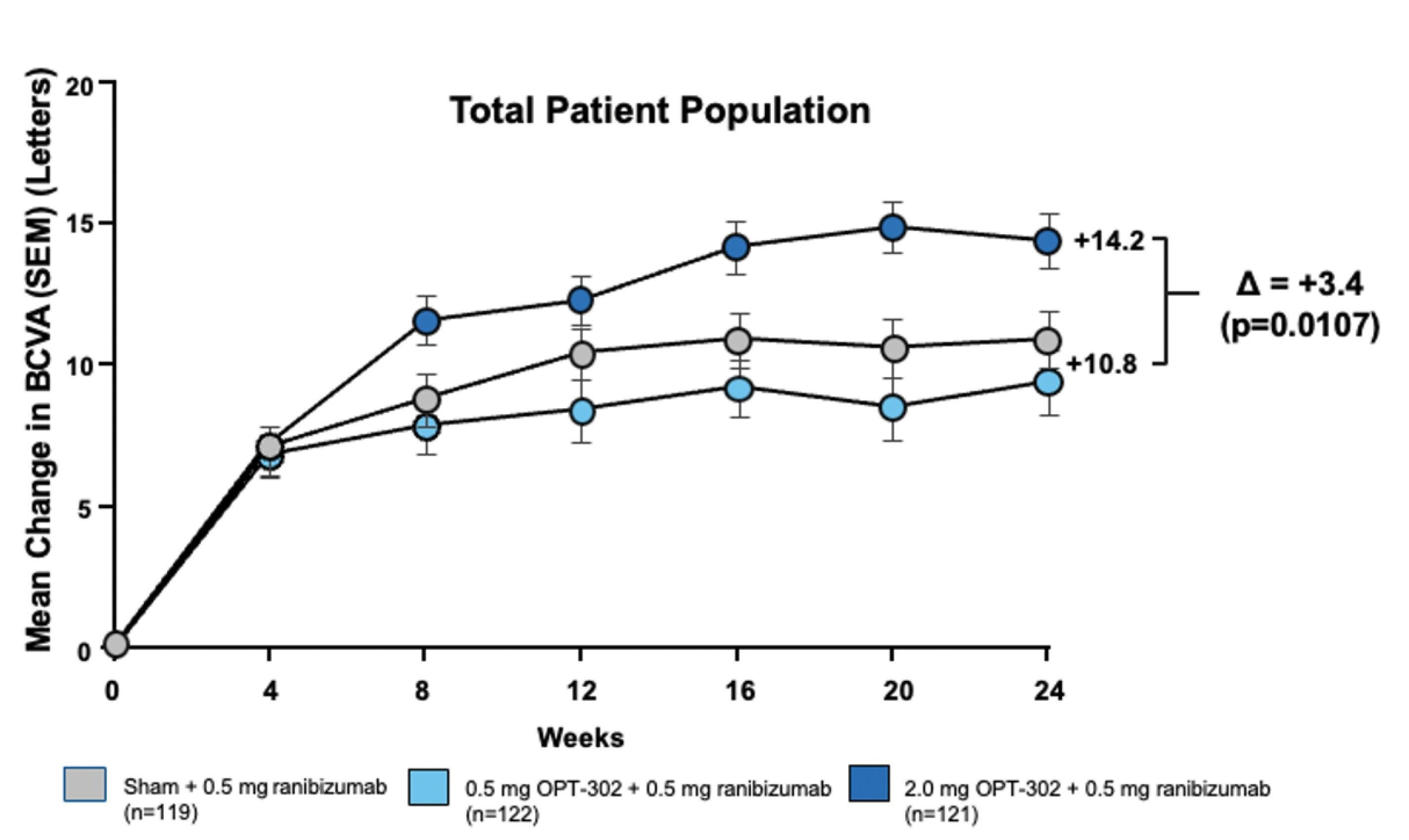
Figure 2. Sozinibercept (OPT-302) 2.0 mg combination therapy demonstrated superiority in visual acuity over ranibizumab monotherapy in a Phase 2b trial.
What else was notable in the Phase 2b data?
Dr. Wykoff: Wet AMD lesion types vary in response to treatments; while predominantly classic lesions often respond well to VEGF-A inhibition, occult and minimally classic lesions may have a less favorable response. In the trial, patients with occult or minimally classic lesions who received 2 mg of sozinibercept in combination with ranibizumab gained an average of 16.1 letters, compared to 10.3 letters in the control group (Figure 3). The control arm achieved visual gains consistent with results observed in the MARINA trial, thus providing a historical benchmark for evaluating the efficacy of sozinibercept.
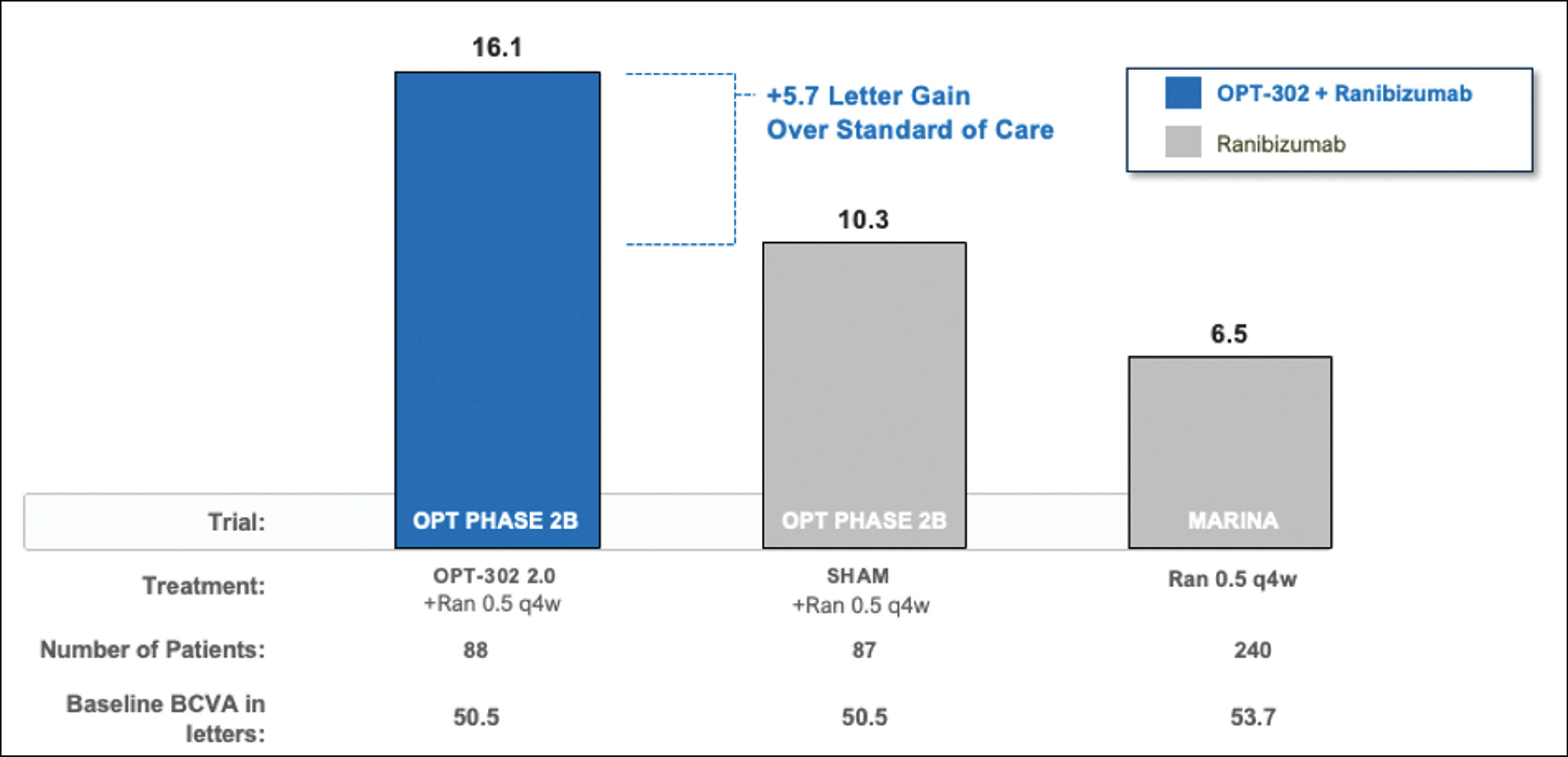
Figure 3. Mean change in BCVA from baseline at week 24 for patients with occult and minimally classic lesions in the sozinibercept (OPT-302) Phase 2b trial. Data from the MARINA Trial are shown for historical comparison.
Were there any anatomical benefits for patients treated with sozinibercept?
Dr. Wykoff: Sozinibercept combined with standard of care showed consistent anatomic benefits, including reduced central subfield thickness, subretinal fluid, and intraretinal cysts. We also observed an increased regression of choroidal neovascularization and lesion area compared to ranibizumab monotherapy.
What did you learn about the safety profile of sozinibercept?
Dr. Wykoff: Across all completed trials of sozinibercept, we observed that combination therapy was well tolerated and comparable to standard of care monotherapy. Additionally, the low rates of intraocular inflammation events, consistent across the control and high-dose sozinibercept populations, underscore the safety profile of the treatment (Figure 4).
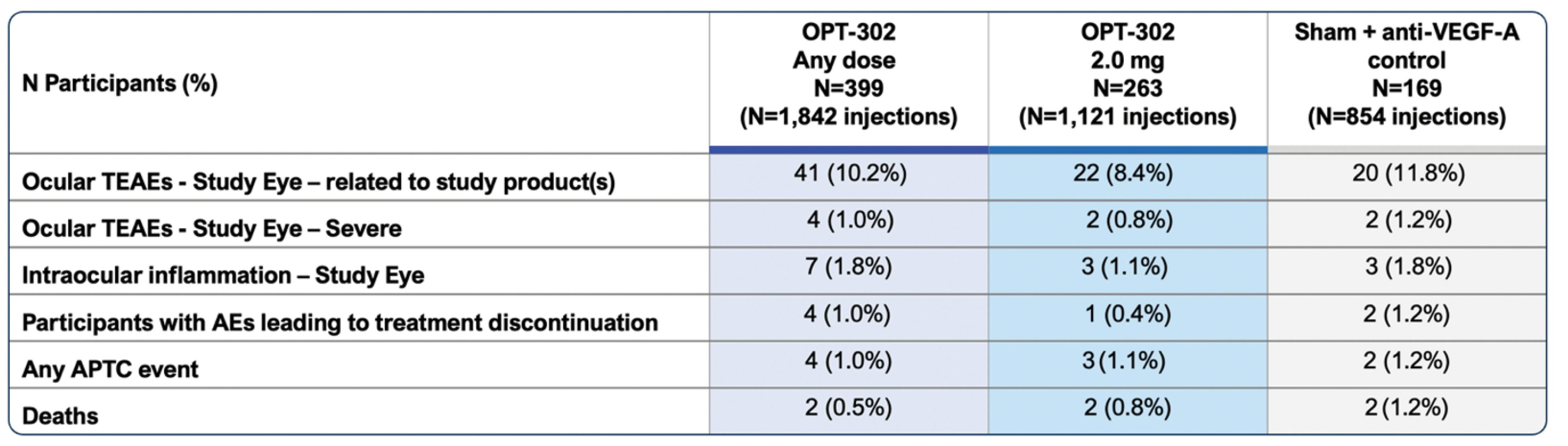
How was your experience with sozinibercept in the clinical trials, and what were patients’ reactions to needing two intravitreal injections?
Dr. Khanani: In the sozinibercept clinical trials, we did two injections in the study eye during one visit, and patients tolerated this regimen well without any issues. Patients were generally receptive to receiving two injections because of their desire to improve their vision.
What is the design of the Phase 3 trial program, and what are the endpoints?
Dr. Veeral Sheth: The pivotal program consists of two multicenter, double-masked, randomized, sham-controlled trials (COAST & ShORe), enrolling approximately 1,980 treatment-naïve wet AMD patients in total—making it one of the largest trials in wet AMD. These trials are designed to support the broad-label use of sozinibercept in combination with any VEGF-A inhibitor for all wet AMD patients, irrespective of prior treatment status. The primary endpoints are the mean change in BCVA from baseline to week 52, with key secondary endpoints including the proportion of patients gaining 15 letters or more as well as anatomic outcomes.
What is the market opportunity for sozinibercept?
Dr. Guerard: Sozinibercept has received FDA fast-track designation, allowing for a rolling submission and potentially accelerated approval. With our drug being used in combination with any anti-VEGF-A treatment, we are not directly competing with existing therapies, positioning Opthea to help millions of patients affected by wet AMD. Sozinibercept has the potential to become the first therapy approved with a novel mechanism of action targeting superior efficacy compared to standard of care in over 15 years. Opthea is the only company with a near- or long-term asset in the pipeline that could disrupt current wet AMD treatment practices based on efficacy.
Apart from wet AMD, there are long-term value opportunities for sozinibercept in diabetic macular edema, and we are exploring the feasibility of co-formulating sozinibercept with an anti-VEGF-A drug for easier administration.
Visit this link if you want to learn about Opthea Limited and sozinibercept.
1. Dugel PU, Boyer DS, Antoszyk AN, Steinle NC, et al. Phase 1 study of OPT-302 inhibition of vascular endothelial growth factors C and S for neovascular age-related macular degeneration. Ophthalmol Retina. 2020;4(3):250-263.
2. Mehta H, Tufail A, Daien V, Lee AY, et al. Real-world outcomes in patients with neovascular age-related macular degeneration treated with intravitreal vascular endothelial growth factor inhibitors. Prog Retin Eye Res. 2018;65:127e146.
3. Ciulla TA, Huang F, Westby K, Williams DF, et al. Real-world outcomes of antivascular endothelial growth factor therapy in neovascular age-related macular degeneration in the United States. Ophthalmol Retina. 2018;2:645e653.
4. Kiss S, Campbell J, Almony A, Shih V, et al. Management and outcomes for neovascular age-related macular degeneration: analysis of United States electronic health records. Ophthalmology. 2020;127:1179e1188.
5. Holz FG, Tadayoni R, Beatty S, Berger A, et al. Multi-country real-life experience of anti-vascular endothelial growth factor therapy for wet age-related macular degeneration. Br J Ophthalmol. 2015;99:220e226.
6. Hahn P. ASRS 2023 Preferences and Trend Membership Survey. Chicago, IL. American Society of Retina Specialists; 2023
7. Jackson TL, Slakter J, Buyse M, Wang K, et al., Opthea study group investigators. A randomized controlled trial of OPT-302, a VEGF-C/D inhibitor for neovascular age-related macular degeneration. Ophthalmology. 2023;130(6):588-597.
8. Tammela T, Zarkada G, Nurmi H, Jakobsson L, et al. VEGFR-3 controls tip to stalk conversion at vessel fusion sites by reinforcing Notch signalling. Nat Cell Biol. 2011;13(10):1202-1213.
9. Heinolainen K, Karaman S, D’Amico G, Tammela T, et al. VEGFR3 modulates vascular permeability by controlling VEGF/VEGFR2 signaling. Circ Res. 2017;120(9):1414-1425.
10. Nakao S, Zandi S, Kohno R, Sun D, et al. Lack of lymphatics and lymph node-mediated immunity in choroidal neovascularization. Invest Ophthalmol Vis Sci. 2013;54(6):3830-3836.
11. Cao R, Eriksson A, Kubo H, Alitalo K, et al. Comparative evaluation of FGF-2-, VEGF-A-, and VEGF-C-induced angiogenesis, lymphangiogenesis, vascular fenestrations, and permeability. Circ Res. 2004;94(5):664-670.
12. Witzenbichler B, Asahara T, Murohara T, Spyridopoulos I, et al. Vascular endothelial growth factor-C (VEGF-C/VEGF-2) promotes angiogenesis in the setting of tissue ischemia. Am J Pathol. 1998;153(2):381-394.
13. Chung ES, Chauhan SK, Jin Y, Nakao S, et al. Contribution of macrophages to angiogenesis induced by vascular endothelial growth factor receptor-3-specific ligands. Am J Pathol. 2009;175(5):1984-1992.
14. Stacker SA, Caesar C, Baldwin ME, Thornton GE, et al. VEGF-D promotes the metastatic spread of tumor cells via the lymphatics. Nat Med. 2001;7(2):186-191
15. Nagineni CN, Kommineni VK, William A, Detrick B, et al. Regulation of VEGF expression in human retinal cells by cytokines: implications for the role of inflammation in age-related macular degeneration. J Cell Physiol. 2012;227(1):116-126.
16. Teague GC, Johnson W, Shatos M, Baldwin ME, et al. Plasma levels of VEGF-C and soluble VEGF receptor-3 are elevated in neovascular AMD. Invest Ophthalmol Vis Sci. 2017;58(8):2327.
17. Cabral T, Lima LH, Mello LGM, Polido J et al. Bevacizumab injection in patients with neovascular age-related macular degeneration increases angiogenic biomarkers. Ophthalmol Retina. 2018;2(1):31-37.
18. Li D, Xie K, Ding G, Li J et al. Tumor resistance to anti-VEGF therapy through up-regulation of VEGF-C expression. Cancer Lett. 2014;346(1):45-52.
19. Rose SD, Aghi MK. Mechanisms of evasion to antiangiogenic therapy in glioblastoma. Clin Neurosurg. 2010;57:123-128.
20. Grau S, Thorsteinsdottir J, von Baumgarten L, Winkler F, et al. Bevacizumab can induce reactivity to VEGF-C and -D in human brain and tumour derived endothelial cells. J Neurooncol. 2011;104(1):103-112.
21. Fan F, Samuel S, Gaur P, Lu J et al. Chronic exposure of colorectal cancer cells to bevacizumab promotes compensatory pathways that mediate tumour cell migration. Br J Cancer. 2011;104(8):1270-1277.
