


A modified technique to implant a Carlevale IOL (FIL-SSF, Soleko) eliminates the need for scleral flaps by incorporating the T-shaped IOL haptics into the scleral wall and using the same sclerotomies to place the vitrectomy ports. This modification limits the risk of postoperative hypotony, reduces operative time, avoids iatrogenic damage to the sclera, and does not require scleral sutures. Here, we describe the modified intrascleral fixation technique (Video).
ABOUT THE CARLEVALE IOL
The Carlevale IOL is a secondary IOL specifically designed for intrascleral fixation characterized by a T-shaped haptic connector that serves as the primary source of stability.1 It is a one-piece hydrophilic IOL with a wide range of powers from +5 D to +35 D and a 118.5 A constant. It is the only scleral-fixated lens that can be customized for astigmatic correction with a range of up to 10 D. The lens is placed from 0° to 180°, but its optic is designed to integrate the proper astigmatic axis correction for the cornea. It is also easily foldable to allow intraocular injection through a 2.2 mm corneal incision using a dedicated injector. The haptics have an anterior tilt of 10° with respect to the 6.5 mm optic plate, with a total IOL length of 13.2 mm. Its flexible, elastic design helps to maintain the IOL in the proper physiological position even in highly myopic or hyperopic eyes. This lens is approved for use in Europe, but not yet in the United States.
The original implantation technique involved opening 4 mm x 4 mm scleral flaps at 0° to 180° after a peritomy and diathermy and then creating a sclerotomy, from which the T-shape haptic was externalized1; however, this process is time-consuming, and at least four scleral sutures are needed to close the flaps. We are not aware of any description of using the same sclerotomies as ports for vitrectomy, but another two sclerotomies are commonly placed superiorly during vitrectomy, adding possible leakage wounds and hypotony complications. In other approaches, such as the Yamane technique, using the same sclerotomies as vitrectomy ports has proven to be an effective way to externalize the haptics, minimizing both scleral wounds and induced astigmatism.2 We have incorporated this practice into the technique with great results.
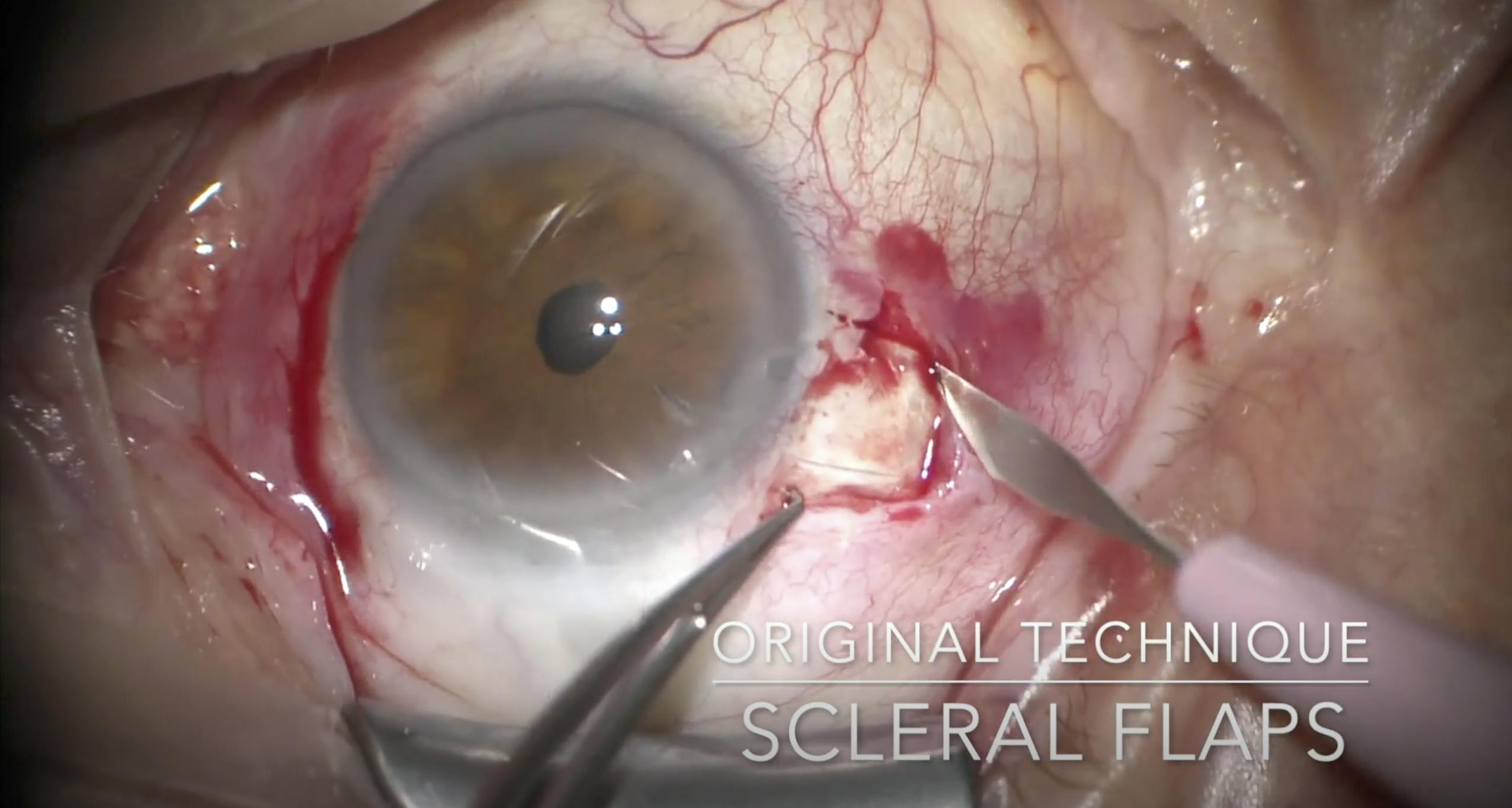
Video. Modified Carlevale Technique: No Flaps, No Extra Sclerotomies, No Scleral Sutures
STEP-BY-STEP APPROACH
1. Place the vitrectomy port for the infusion inferiorly and away from the peritomy sites.
2. Perform 1 to 2 clock hours of conjunctival peritomy from 0° to 180°.
3. Perform external diathermy to minimize bleeding and prepare the scleral bed for the groove and pockets.
4. Create a scleral groove of 2 mm to 3 mm at 0° to 180° using a 15° blade or a crescent blade.
5. Create scleral pockets above and below the scleral groove at the same two-thirds scleral thickness, where the haptic will rest intrasclerally (Figure 1).
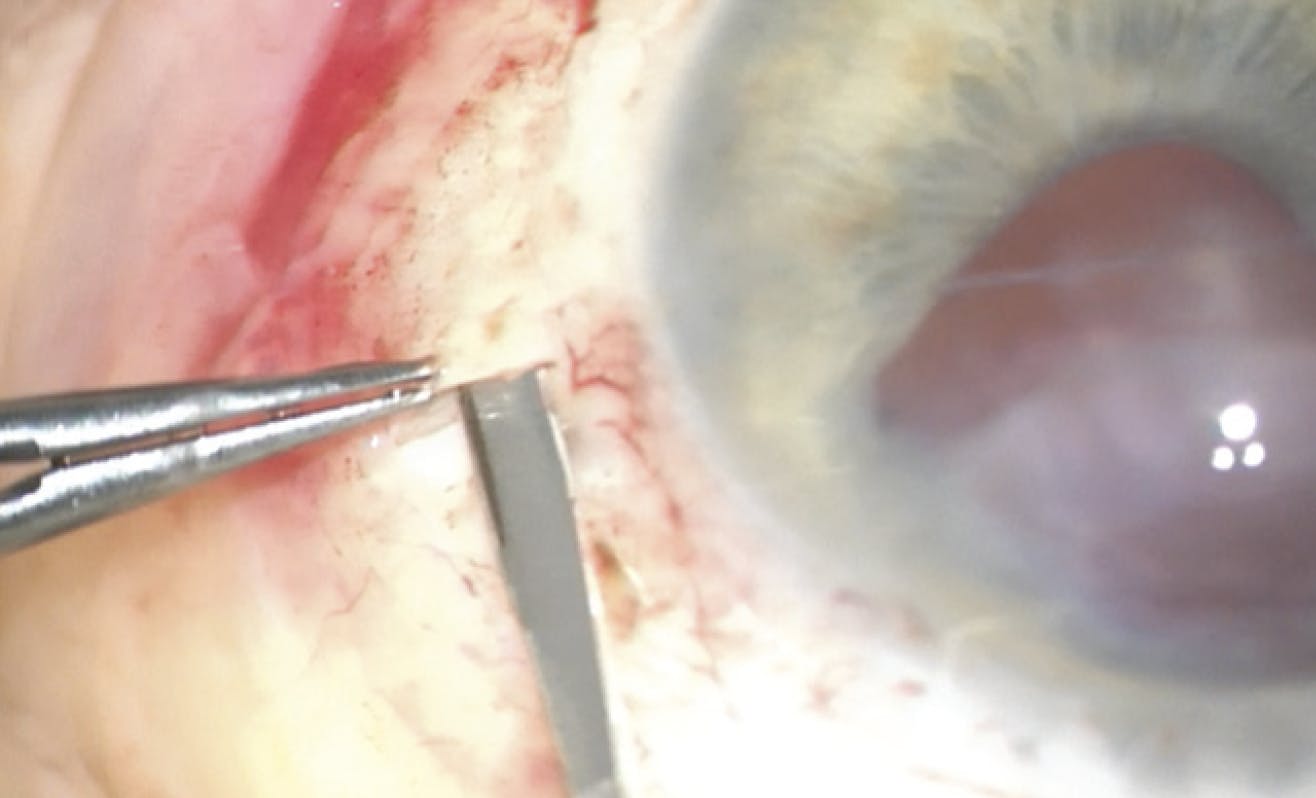
6. Place the vitrectomy trocar and port between 2 mm and 2.5 mm posterior to the limbus; the vitrectomy trocar should be inserted following the architecture of the wound, rotating it after passing the vertical flat component of the blade. Take care to have the correct orientation parallel to the iris and not to the optic nerve, as this will become the tunnel where the haptic will rest intrasclerally (Figure 2A).
7. Perform pars plana vitrectomy along with any special surgical considerations, such as epiretinal membrane peeling or panretinal photocoagulation (Figure 2B).
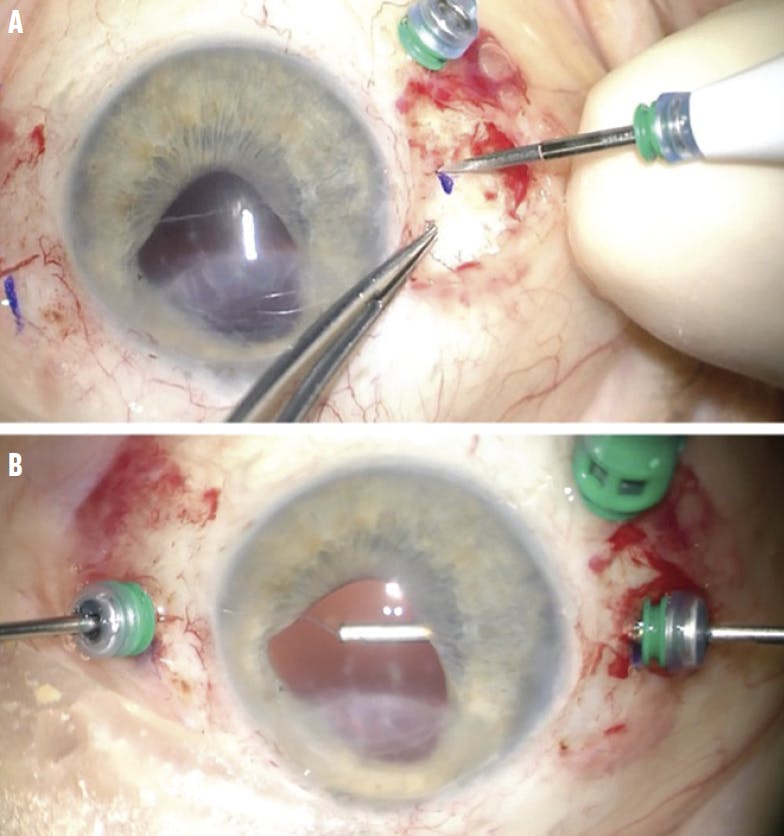
Figure 2. Place the vitrectomy ports at the same location as the future IOL plugs. Ensure the orientation is parallel to the iris (A) before proceeding with vitrectomy (B).
8. Create a 2.2 mm corneal wound with a corneal blade and fill the anterior chamber with OVD.
9. Place the lens in the injector and carefully inject it into the posterior chamber using forceps to hold the leading haptic, taking care to grasp the vertical component of the “T” parallel to it so that it can easily pass through the sclerotomy without damaging the haptic. Remember to completely remove the vitrectomy port or push it through the forceps before attempting to externalize the haptic.
10. Once the leading haptic is externalized, fully inject the IOL and grasp it with the forceps using the opposite sclerotomy.
11. After both haptics are externalized, carefully place the horizontal component of the “T” into the scleral pockets (Figure 3A).
12. Remove the OVD from the anterior chamber, and confirm the absence of leakage at both the scleral groove and the corneal wound (Figure 3B and C).
13. Close the conjunctiva with one absorbable 8-0 Vicryl suture on each side. Remove the infusion port.
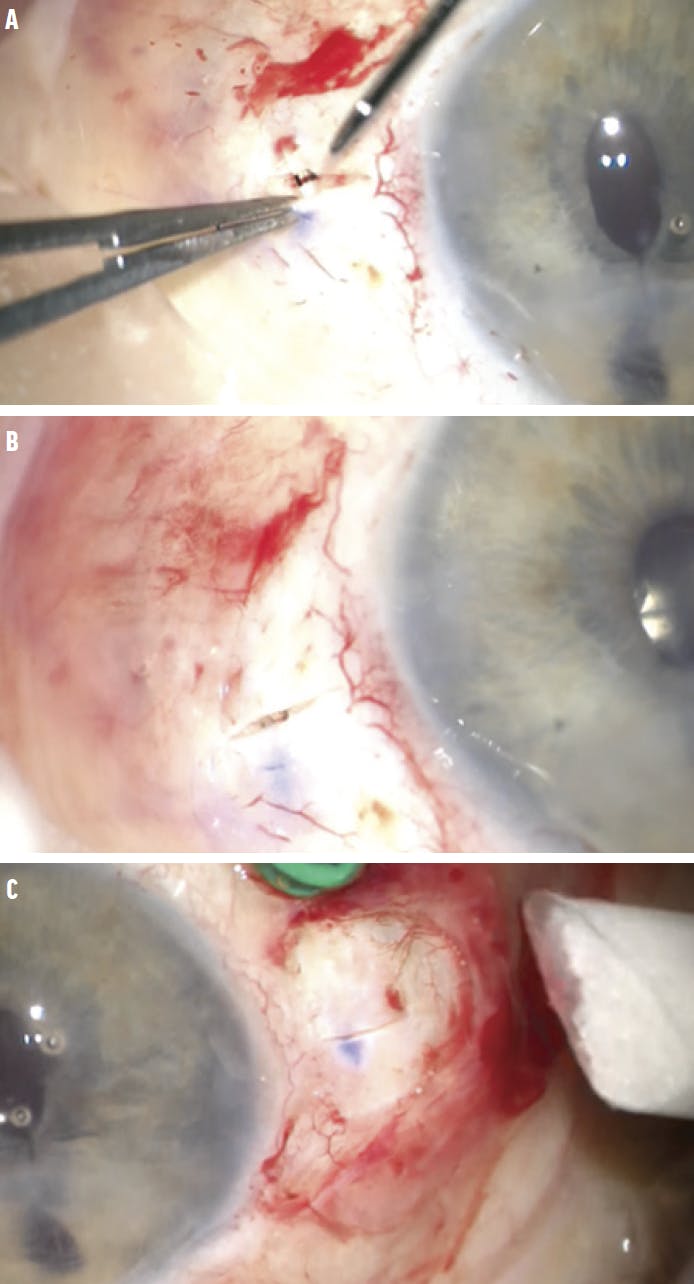
Figure 3. The T-shaped haptic should be internalized intrasclerally (A). In this example, both haptics are well-placed, with no leakage (B, C).
ADVANTAGES
Often, secondary IOLs require either large corneal incisions or many scleral and corneal accessory incisions; this technique requires only three 23- or 25-guage sclerotomies, as in a simple vitrectomy; the lens can also be implanted through a 2.2 mm main incision with other corneal incisions required. In addition, as only three sclerotomies are required, this technique may reduce hypotony, although this has not yet been confirmed in a controlled study.
By using the same incisions to place the vitrectomy ports, any posterior segment procedure can be performed, such as epiretinal membrane peeling or panretinal photocoagulation. Moreover, creating scleral flaps is time-consuming and requires multiple sutures to close. This technique requires only a small scleral pocket dissection for the haptic plug legs, which can be performed quickly and easily without the need for sutures.
Finally, this technique uses a custom lens design that can be regularly placed in the sclera at 0° to 180° to correct any corneal astigmatism through the toric optical axis built into the lens. Another option would be scleral fixation of a standard toric lens with eyelets, but the lens must be sutured along the meridian of the astigmatic axis, which is not always an ideal surgical location due to comorbidities (ie, glaucoma), filtering surgery, or surgical ergonomics.
DISADVANTAGES
The Carlevale IOL is still not FDA-approved, limiting its availability; moreover, few centers in Europe or elsewhere have the full range of dioptric powers in stock, so pre-ordering is required, reducing its usefulness in emergency or unexpected cases.
Another disadvantage is that peritomy is required for this technique. Although using a transconjunctival approach, such as the Yamene technique, shortens the surgical recovery time and is minimally invasive, this IOL was not designed to be covered by the conjunctiva alone. A modified transconjunctival surgical technique using the Carlevale IOL has been described with good results,3,4 but long-term follow-up of these techniques hasn’t been described, and the risks include erosion and exposure. Two-point fixation is another potential issue associated with this technique. However, the IOL is very stable, and IOL rotation and subsequent induced astigmatism are rare.
1. Barca F, Caporossi T, de Angelis L, et al. Trans-scleral plugs fixated IOL: a new paradigm for sutureless scleral fixation. J Cataract Refract Surg. 2020;46(5):716-720.
2. Suzuki Y, Tando T, Adachi K, Kudo T, Nakazawa M. Modified intraocular lens intrascleral fixation technique using two vitrectomy ports as lens haptic fixation sites. Clin Ophthalmol. 2020;14:1223-1228.
3. Veronese C, Maiolo C, Armstrong GW, et al. New surgical approach for sutureless scleral fixation. Eur J Ophthalmol. 2020;30(3):612-615.
4. Danese C, Di Bin F, Lanzetta P. A mini-invasive surgical technique for Carlevale IOL implantation: case series study and description of concomitant surgery. Graefes Arch Clin Exp Ophthalmol. 2024;(2):487-494.


_1784132761.jpg?auto=compress,format&w=75)





