


There are circumstances in surgical retina that give rise to the utility of performing concurrent cataract surgery at the time of vitrectomy. According to the 2023 PAT survey, only 3.2% of US-based retina specialists consider cataract extraction at the time of vitrectomy in the management of trace nuclear sclerosis in a patient requiring vitrectomy for macula-involving tractional retinal detachment (RD); compare that with 37.4% of international respondents.1
Simultaneous anterior and posterior segment intervention requires the careful consideration of numerous patient- and disease-specific factors; recent research has found similar results between combined and sequential surgery. For example, one study of 120 patients with proliferative diabetic retinopathy showed similar long-term visual acuity results, with equal rates of postoperative inflammation, ocular hypertension, corneal edema, neovascular glaucoma, and tractional RD between patients who underwent vitrectomy and those who had phacovitrectomy.2 In addition, electing to perform the procedures sequentially may render cataract surgery more challenging in a vitrectomized eye, where zonular dehiscence or stretching from tamponade agents and increased anterior chamber depth are more likely.3 Here, we offer pre-, intra-, and postoperative considerations.
PREOPERATIVE FACTORS
During an eye examination, the surgeon should document any coexisting ocular conditions that could affect the timing of surgery, intraoperative decision making, and final visual outcome (eg, guttae, scleral thinning, pupillary dilation degree, anterior chamber depth, zonular weakness, cataract severity, red reflex, and posterior vitreous detachment). Corneal pathology may lead to corneal decompensation during long surgeries, rendering fine macular work more challenging. Patients with multiple medical comorbidities or mental disability or who require general anesthesia may benefit from combined procedures to reduce the risk of morbidity.
When selecting a lens, optical biometry may be influenced by vitreoretinal pathology, such as vitreous hemorrhage or posterior staphyloma, or a history of scleral buckling. Ultrasound may help obtain an accurate axial length.
In eyes that may require silicone oil tamponade, caution should be exercised with silicone IOLs, given the possibility of silicone oil droplet deposition with subsequent reduction in visual quality.4 If future zonular or capsular stability is a concern, electing to implant a three-piece lens that can be fixated to the sclera will eliminate the need for lens exchange later, should it dislocate. However, the risk of tilt and decentration does exist with scleral fixation of these lenses (Figure 1).5
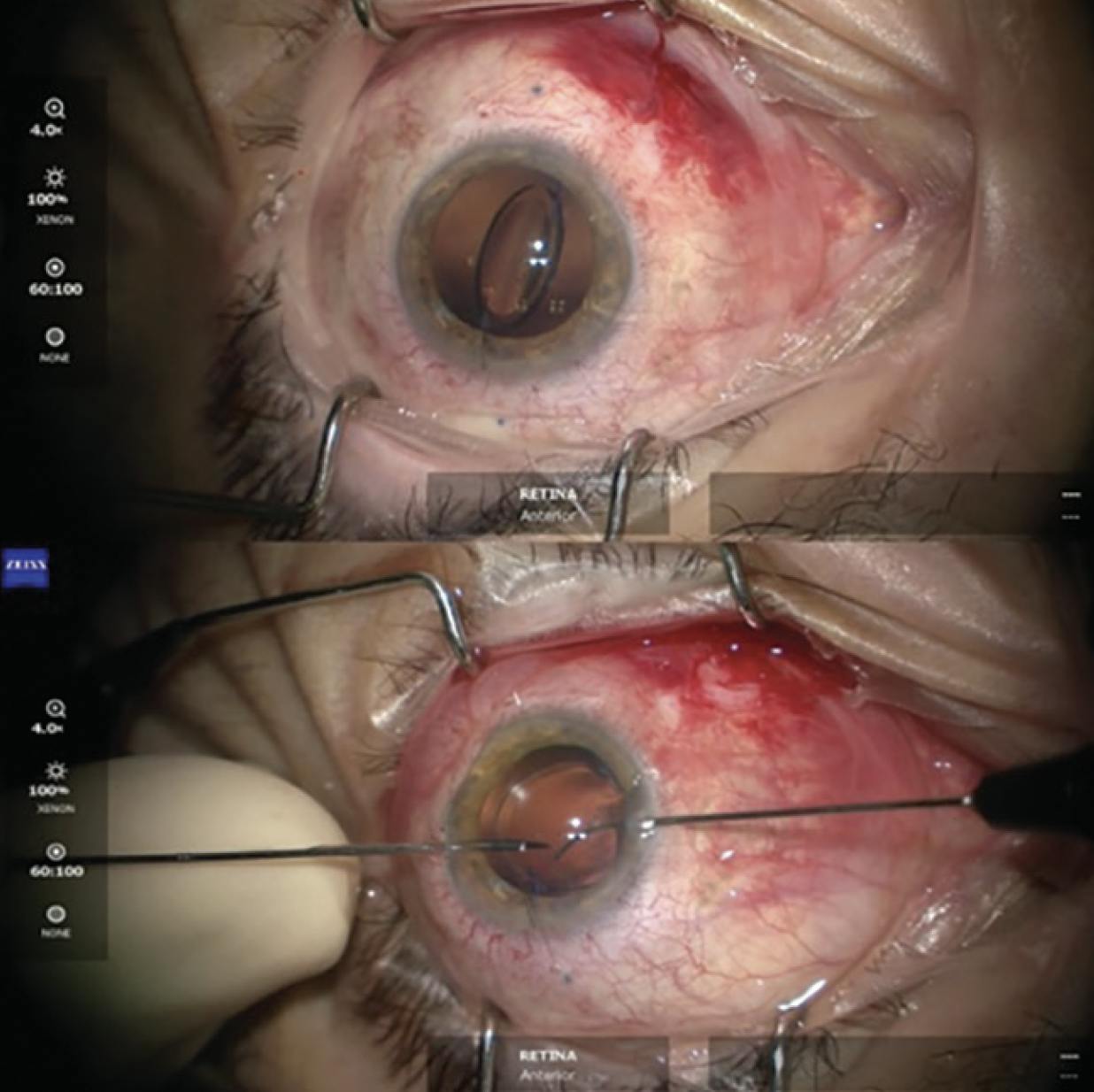
Figure 1. Implanting IOLs amenable to scleral fixation can be beneficial if there are concerns about long-term capsular stability. Lens tilt after scleral fixation has been reported, as in this case. The tilt was corrected with laser, eliminating the need for an IOL exchange.
Vitreoretinal pathology is not necessarily a contraindication for premium multifocal IOLs, with limited data assessing visual outcomes for these lenses in patients with coexisting retinal diseases.6 However, these lenses are generally avoided in eyes with severe macular pathology, such as geographic atrophy or large macular holes. Vitreoretinal surgeons should discuss the visual prognosis with patients after cataract surgery when retinal disease is present.
INTRAOPERATIVE FACTORS
We prefer to perform phacoemulsification and IOL implantation prior to vitrectomy. When an anterior segment surgeon is present, the sequence of surgical steps should be discussed thoroughly between the two surgeons. Typically, we initiate combined cases with a sub-Tenon block (Figure 2). The resulting mild proptosis can be beneficial in cases with enophthalmos but counterproductive in cases with a shallow anterior chamber and high IOP, such as in eyes with a complete silicone oil fill. It is especially important in these cases to ensure you have dissected fully into the sub-Tenon space to minimize conjunctival chemosis prior to cataract extraction. Flexibility in wound placement is important in cases where there is underlying retinal pathology requiring scleral depression to minimize anterior chamber shallowing; the primary surgeon should be comfortable operating both temporally and at the head of the bed.
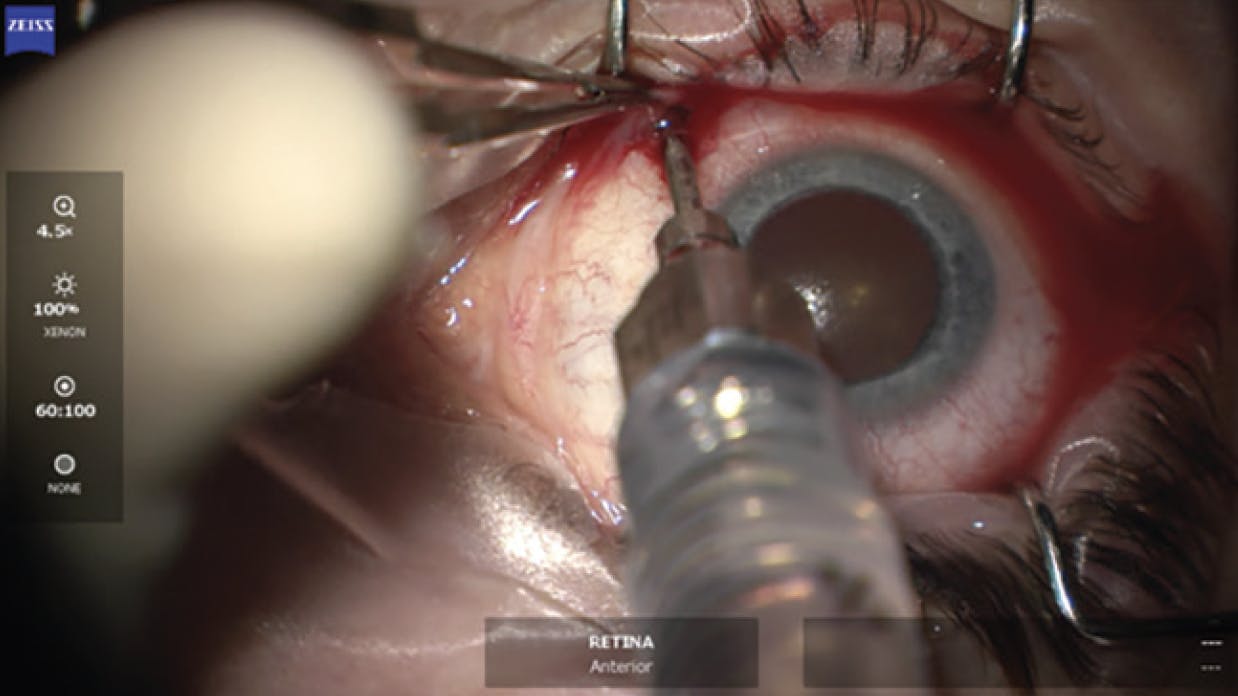
Figure 2. In cases not performed under general anesthesia, a conjunctival cutdown is performed in the inferonasal quadrant, and a sub-Tenon block is administered.
In cases where silicone oil removal is planned in addition to cataract surgery, we typically perform cataract surgery prior to oil removal to maintain anterior chamber depth and allow for more stable fluidics (Figure 3). However, in cases of zonular compromise with anterior migration of silicone oil, it may be preferable to remove the oil first. In cases of a hypermature cataract, it may be helpful to partially remove the oil first to reduce posterior pressure and minimize the risk of an Argentinian flag sign. If the infusion line is in the eye while phacoemulsification is being performed with a Centurion machine (Alcon), surgeons should clamp the infusion to prevent aberrant fluidics between the machines.
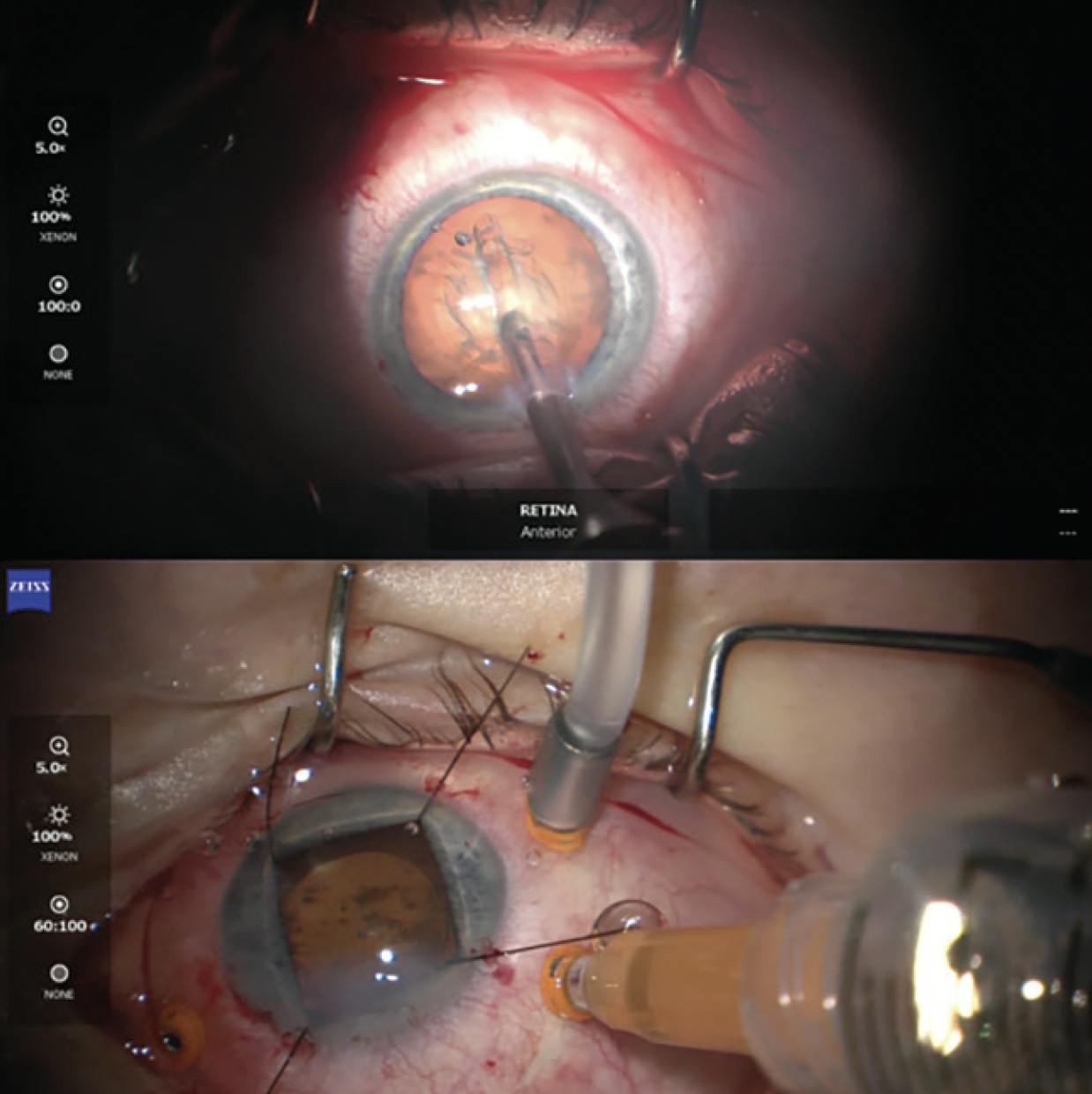
Figure 3. Cataract extraction and IOL implantation prior to silicone oil removal in a patient with a history of macula-involving RD who underwent vitrectomy and complex RD repair 3 months prior.
In cases of macular hole or RD repair where gas tamponade is anticipated, a smaller capsulorhexis (4.5 mm – 5 mm) will reduce the likelihood of IOL prolapse into the anterior chamber (Figure 4). Care should be taken to not perform an overly aggressive hydrodissection that may unintentionally prolapse the cataract into the anterior chamber; keeping it in the capsular bag will minimize contact with the corneal endothelium, reducing the likelihood of corneal edema.
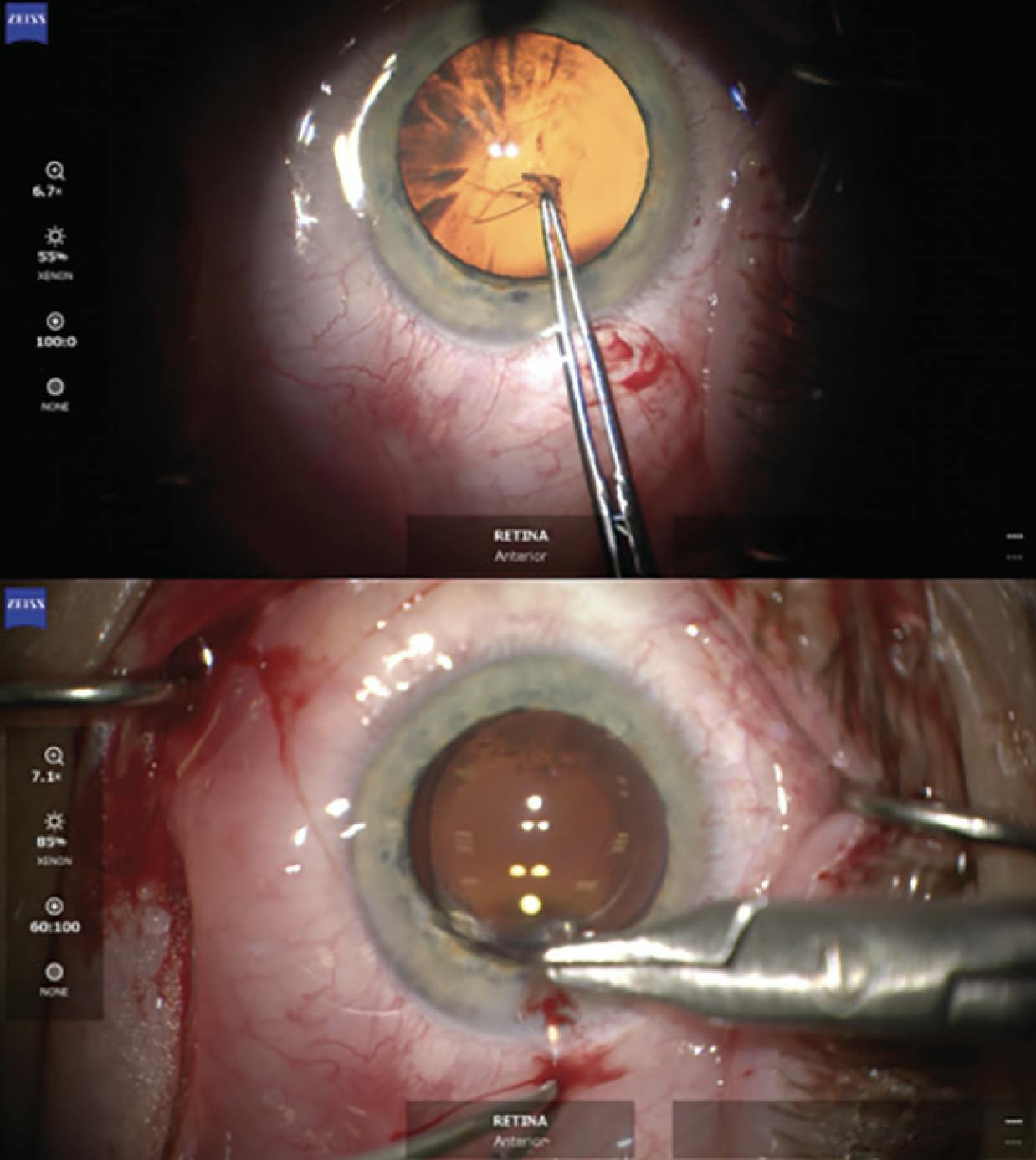
Figure 4. A smaller capsulorhexis during phacovitrectomy in a patient with a history of tractional RD and epiretinal membrane. A partial fluid-air exchange was performed, and a 10-0 vicryl suture was used to close the wound to reduce the risk of anterior chamber shallowing during vitrectomy.
Phacoemulsification should be performed using the minimum amount of energy possible. Collaborating with an experienced anterior segment surgeon is advised to maximize corneal clarity and reduce operating time. Care should be taken during cataract extraction to avoid contact with the iris to minimize constriction.
After IOL implantation, we typically place a 10-0 nylon or vicryl suture into the main wound to reduce the likelihood of chamber shallowing during vitrectomy. Avoid wound overhydration, as this may negatively affect visualization; aggressive hydration may also generate small bubbles in the anterior chamber, which can degrade the view. During vitrectomy, posterior capsulotomy can be performed centrally using the cutter, if needed. In situations with capsular compromise requiring sulcus placement or scleral fixation of the IOL, intracameral carbachol may reduce the risk of IOL prolapse or displacement. Reassessing the lens centration (and the axis of alignment in toric cases) after posterior segment surgery is advised, as positioning can shift during vitrectomy.
POSTOPERATIVE FACTORS
Postoperative hypotony is more likely in combined cases given the presence of at least three trocar wounds, a main corneal wound, and paracenteses; thus, we suture all ports at the end of surgery. Prolonged inflammation after phacovitrectomy may also be seen in longer, more complex cases. Postoperative steroid doses may need to be higher with longer tapers. In our practice, when gas is used in phacovitrectomy, we typically forgo the use of postoperative cycloplegic agents and avoid dilation until 1 month after surgery. Ultra-widefield imaging is useful in these circumstances in lieu of dilated examinations.
A recent study comparing vitrectomy with phacovitrectomy in patients with proliferative diabetic retinopathy demonstrated that patients treated with vitrectomy had a lower risk of neovascular glaucoma, iris rubeosis, and iris synechiae to the anterior lens capsule compared with patients undergoing combined surgery.7 Another study used ultrasound biomicroscopy to show that supraciliary effusions are more common after phacovitrectomy (80% of patients) compared with vitrectomy (46%).8 Patients with supraciliary effusions more commonly had abnormal IOP, intraocular fibrin, and formation of posterior synechia in the first 2 months postoperatively; however, visual outcomes were comparable.8
COMBINATION SUCCESS
Phacovitrectomy benefits patients by reducing the number of office visits without compromising visual outcomes.9,10 This is especially important in circumstances where there is limited access to care and follow-ups. Careful planning will help ensure the best possible anatomic and visual outcomes for patients undergoing a combination procedure.
1. Hahn P, ed. ASRS 2023 Preferences and Trends Membership Survey. Chicago, IL: American Society of Retina Specialists; 2023.
2. Idrissi SBA, Bengebara O, Sadouk MF, et al. Comparison of pars plana vitrectomy and combined pars plana vitrectomy with phacoemulsification for proliferative diabetic retinopathy: a retrospective study about 120 eyes. Indian J Ophthalmol. 2024;72(Suppl 2):S287-S292.
3. Braunstein RE, Airiani S. Cataract surgery results after pars plana vitrectomy. Curr Opin Ophthalmol. 2003;14(3):150-154.
4. Senn P, Schmid MK, Schipper I, Hendrickson P. Interaction between silicone oil and silicone intraocular lenses: an in vitro study. Ophthalmic Surg Lasers. 1997;28(9):776-779.
5. Enright JM, Purt B, Bruck B, et al. Severe spontaneous tilt of scleral-fixated intraocular lenses. Am J Ophthalmol. 2024;262:206-212.
6. Grzybowski A, Kanclerz P, Tuuminen R. Multifocal intraocular lenses and retinal diseases. Graefes Arch Clin Exp Ophthalmol. 2020;258(4):805-813.
7. Xiao K, Dong YC, Xiao XG, et al. Effect of pars plana vitrectomy with or without cataract surgery in patients with diabetes: a systematic review and meta-analysis. Diabetes Ther. 2019;10(5):1859-1868.
8. Park SP, Ahn JK, Lee GH. Morphologic changes in the anterior segment after phacovitrectomy for proliferative diabetic retinopathy. J Cataract Refract Surg. 2009;35(5):868-873.
9. Seider MI, Michael Lahey J, Fellenbaum PS. Cost of phacovitrectomy versus vitrectomy and sequential phacoemulsification. Retina. 2014;34(6):1112-1115.
10. Farahvash A, Popovic MM, Eshtiaghi A, Kertes PJ, Muni RH. Combined versus sequential phacoemulsification and pars plana vitrectomy: a meta-analysis. Ophthalmol Retina. 2021;5(11):1125-1138.


_1784132761.jpg?auto=compress,format&w=75)





