


AT A GLANCE
- An annual free diabetes screening event in Philadelphia aims to reduce socioeconomic disparities in diabetic eye care, increase community awareness of and participation in yearly diabetic eye examinations, and connect patients with services.
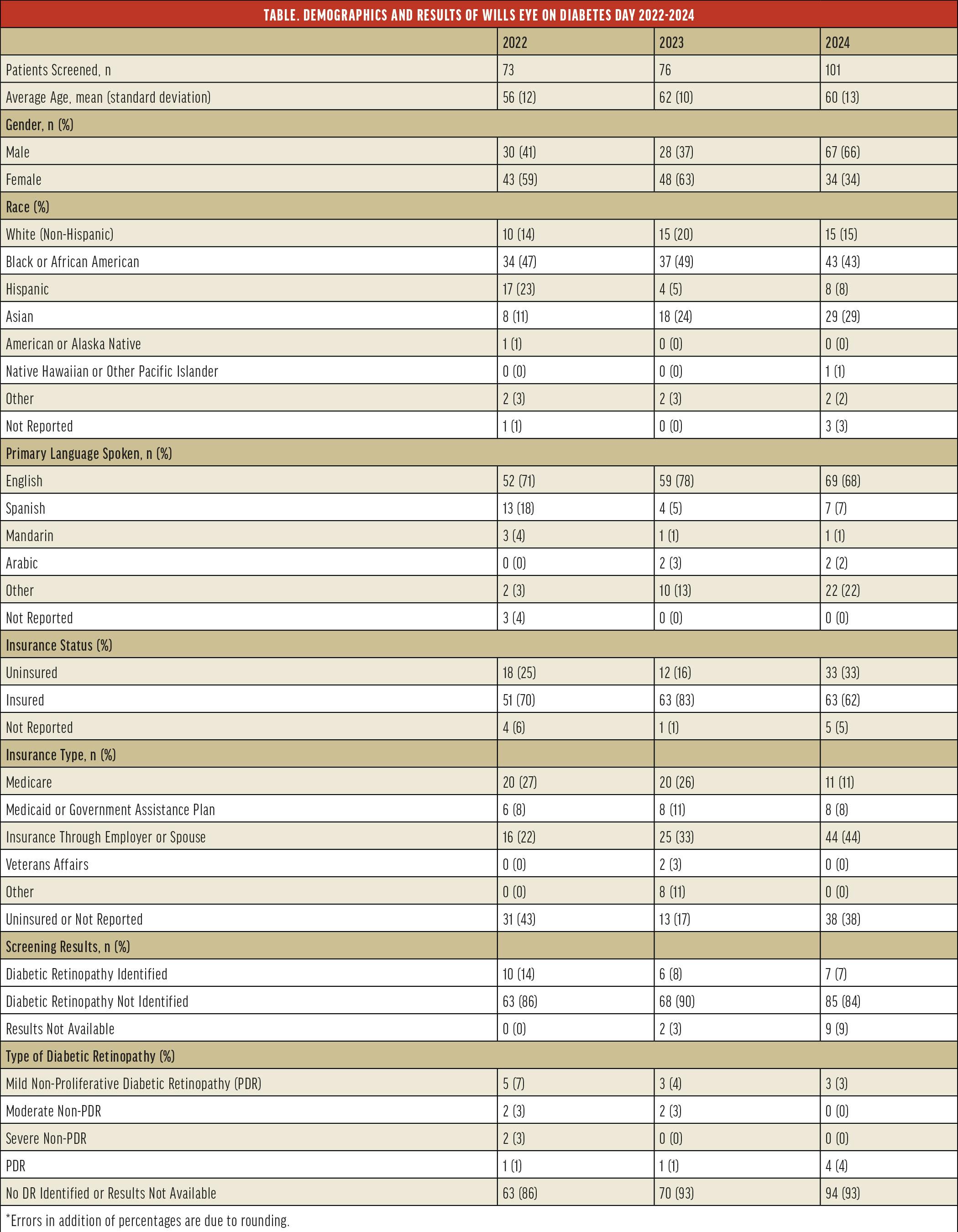
- During the 2024 Philadelphia Diabetes Day, 101 patients were screened, seven of whom had at least mild nonproliferative diabetic retinopathy.
- The authors hope that Diabetes Day and its missions will expand each year to improve access to screening and treatment of diabetic eye disease.
Although efforts to promote public awareness and screening have successfully reduced the number of adults living with undiagnosed diabetes,1 screening for complications, including diabetic retinopathy (DR), continues to be a challenge. Despite established recommendations, 50% of patients with diabetes do not receive annual eye examinations, a statistic that has remained stagnant for decades.2
Patient adherence to DR screening recommendations is affected by many factors that disproportionately affect marginalized racial and ethnic populations, non-English-speaking patients, and those with limited social resources, such as insurance and transportation.2-4 Community events may simplify access to care and ultimately reduce diabetic vision loss.
After seeing patients with severe visual impairment due to delayed diagnoses of DR and lack of adherence, we established the Wills Eye on Diabetes Day in 2022 at Wills Eye Hospital. The event serves as an opportunity for patients with diabetes to receive a free DR screening and other educational and social resources. Wills Eye on Diabetes Day held its third annual event on April 20, with continued growth in patients, volunteers, and services each year.
The primary aim of Diabetes Day is to eliminate preventable diabetic vision loss. Further, we aim to reduce socioeconomic disparities in diabetic eye care in our area, increase community awareness of and participation in yearly diabetic eye examinations, provide patients with high-quality screenings, and connect patients with services. Lastly, we hope that this program serves as a model to promote similar events on a larger scale (Table).
EVENT PLANNING 101
Establishing a city-wide DR screening event in Philadelphia required careful planning to ensure that patients receive the standard of care in diabetes management; this is the priority, as patients participating in this event are disproportionately affected by health disparities and access to care (Figure 1).
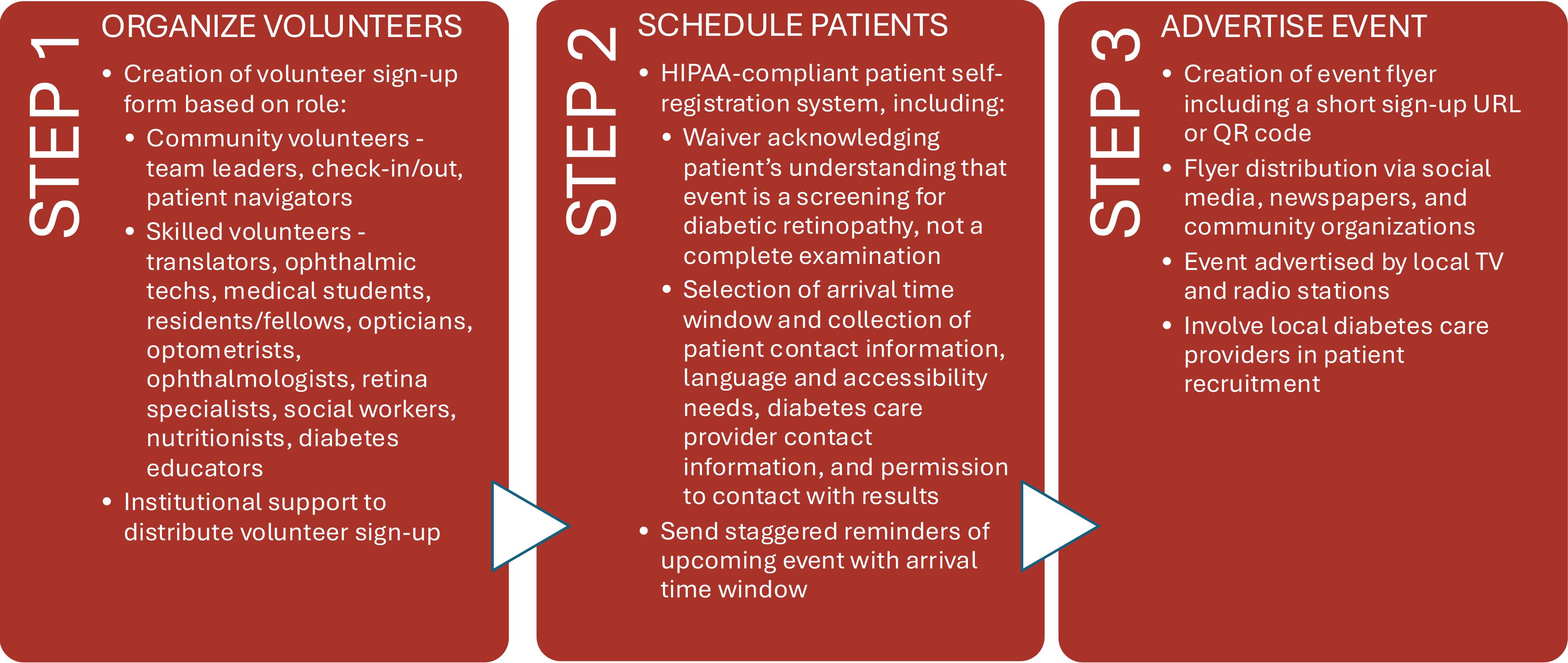
Figure 1. Coordination of this event requires the efforts of volunteers, a system to easily schedule patients, and proper promotion of the event to reach the appropriate patient population. A checklist, such as the one provided here, can guide organizational efforts.
Volunteers may be scheduled through an online scheduling platform, such as SignUpGenius or Qualtrics. While skilled volunteers are necessary to provide patient care during the event, there are numerous roles for motivated community members to support these efforts. For example, community volunteers can help with scheduling and act as patient navigators and interpreters during the event. Depending on the number of volunteers, patient navigators can guide patients 1:1 through the event to ensure they receive each service necessary for a complete diabetic eye disease screening, including ocular vitals, retinal imaging, counseling on results, creation of a follow-up plan, social support services, and diabetes and nutrition education (Figure 2). Interpreters/translators are helpful as patient navigators for non-English-speaking patients. Based on patient feedback, we have learned that patient navigators significantly enhance the event experience for patients by providing conversation and companionship.

Figure 2. During the event, patients proceed through multiple steps to ensure that they understand and consent to the scope of the screening and its limitations, use each applicable service at the event, and receive sufficient education regarding the results, the implication of these results, and the plan for follow-up. Additional event services include a free pair of glasses (if necessary), access to a free healthy lunch, and on-site social support and educational services.
Scheduling patients must be done through a HIPAA-compliant platform and should include information regarding the purpose, scope, and limitations of the event. We schedule patients for an arrival time window, rather than an exact appointment time, to provide patients more flexibility and to encourage attendance, even if they are delayed by transportation or other social factors. Reminders are sent to patients via email by team leaders in the weeks leading up to the event.
Airing a televised news segment has been the most successful form of advertisement, in addition to distributing flyers through social media or posted in locations throughout the city. We strategically place these to target individuals who may have difficulty accessing care (ie, community centers, shelters, etc.). We also Involve community programs that support patients with diabetes, diabetes educators, primary care providers, and endocrinologists to help identify individuals who may benefit from the event.
The third annual event expanded into Philadelphia Diabetes Day, a one-day city-wide event with Wills Eye Hospital, Temple Ophthalmology, and Scheie Eye Institute. We held a live planning meeting of volunteers to generate enthusiasm and facilitate a successful expansion. This meeting included skilled and community volunteers from each institution, allowing everyone to share ideas and hopes for future growth of the event. The meeting promoted unity and generated solutions to challenges each institution faced. Volunteers were comprised of medical students, ophthalmology trainees, clinic staff and technicians, and other interested individuals.
ONGOING CARE
Available resources vary by institution, affecting patient capacity and services. At Wills Eye, we offer refractions and a free pair of glasses to patients who have a visual acuity worse than 20/40—helping to address another cause of visual impairment for our patients.5 The physical token also reminds patients to continue with follow-up and encourages their return to the screening event each year.
In addition to returning to the event center at a future date for glasses pick-up, some patients are instructed to follow through with additional ophthalmic care based on their screening results. The physician creates this care plan with the patient during the event and tailors the plan to the patient’s specific needs. If there is a financial, insurance, or transportation burden, an on-site social worker steps in to assist. If patients choose to continue receiving care at our institution, treatment for conditions identified during the screening event may be provided to uninsured patients free of charge, thanks to the generous support of a donor fund and volunteer doctors.
Screening for and treatment of diabetic eye disease is only one piece of patient care; prevention of diabetic complications through proper diabetes management is crucial. Following the event, each patient’s results are communicated to their identified provider (with patient consent). All patients are encouraged to follow up with their primary eye care provider, if available.
To encourage adherence, patients are followed by event staff through email and phone communications to inquire about their ability to access recommended follow-up care.
GROW AND SAVE VISION
The expansion into Philadelphia Diabetes Day, with simultaneous events held at three institutions, is only the start of our plan to propagate similar diabetic eye screening events on a larger scale. Planning for the next Diabetes Day, slated for April 26, 2025, is already underway. We have engaged with the Pennsylvania Academy of Ophthalmology and Retina Associates of Western NY, which is an auspicious sign that Diabetes Day and its missions will expand each year to improve access to screening for and treatment of diabetic eye disease and, therefore, prevention of vision loss.
1. National Diabetes Statistics Report. Diabetes. CDC. Accessed July 12, 2024. bit.ly/46FAVkP
2. Lundeen EA, Burke-Conte Z, Rein DB, et al. Prevalence of diabetic retinopathy in the US in 2021. JAMA Ophthalmol. 2023;141(8):747-754.
3. Fang M, Wang D, Coresh J, Selvin E. Undiagnosed diabetes in U.S. adults: prevalence and trends. Diabetes Care. 2022;45(9):1994-2002.
4. Eppley SE, Mansberger SL, Ramanathan S, Lowry EA. Characteristics associated with adherence to annual dilated eye examinations among US patients with diagnosed diabetes. Ophthalmology. 2019;126(11):1492-1499.
5. GBD 2019 Blindness and Vision Impairment Collaborators. Global estimates on the number of people blind or visually impaired by uncorrected refractive error: a meta-analysis from 2000 to 2020 [published online ahead of print July 4, 2024]. Eye.


_1784132761.jpg?auto=compress,format&w=75)





