


There were many demogorgons and strange things afoot at the 12th Annual Vit-Buckle Society (VBS) meeting, held in Miami, April 4-6, 2024. And while the theme of this year’s meeting was inspired by the popular Netflix TV show Stranger Things, no one was a stranger to the VBS trainee-focused programs, Lifetime Achievement Award, and Mentorship Award. New this year was the VBS Silver program.
FELLOWS AND FOCUS
The Fellows Program and the FOstering Careers for Underrepresented Stars (FOCUS) Program are designed to provide tips and tricks to trainees who attend the Thursday lineup of sessions and events.
Student Loans and Financial Considerations
Jayanth Sridhar, MD, and Nikisha Kothari, MD, started the day by discussing the necessity of disability insurance to protect a trainee’s sizable educational and time investment. Dr. Sridhar recommended trainees obtain disability insurance as early as possible to lock in a lower rate.
They also discussed weekly or monthly automatic investments, periodic lump-sum investing, index funds, and other stock investment strategies.
As for student loans, they explored consolidation, private refinancing, public service loan forgiveness, repayment programs, and repayment clauses in job contracts.

Check out Retina Today's Video Coverage of the 12th Annual VBS Meeting on Eyetube.
Practice Settings
During a panel on navigating different practice settings, Gordon Crabtree, MD, discussed the pros and cons of private equity (PE) and how to protect yourself when negotiating your first job contract. Including a “fractional buy-in” allows for a guarantee of some financial benefit if your practice sells to PE, he said.
Brandon Johnson, MD, urged attendees to recognize red flags in contracts, such as the absence of a definitive partnership guarantee. He also noted that opening his own solo practice took about 6 months.
Alex L. Ringeisen, MD, explained that multispecialty group practices have built-in referral bases that minimize the time demand of networking with local eye care specialists and hospital systems.&
Regardless of practice type, fellows should consider enlisting a lawyer to assist with contract negotiations, the panelists agreed. Doing so can increase earnings, address loan forgiveness, avoid noncompete clauses, include fractional buy-ins, protect research time, secure research support, and guarantee teaching engagements.
Burnout
During the next session, Laurel S. Mayer, MD, a psychiatrist at Columbia University, discussed burnout in ophthalmology, noting that more than half of PGY-2 ophthalmology residents reported burnout, compared with less than one-third of ophthalmology attendings.
Burnout was more prevalent among women, those who are underrepresented in medicine, and those who identify as LGBTQIA+. She also noted that 71% of trainees with low well-being scores significantly overestimated their well-being score, suggesting severe distress tends to be normalized.
Dr. Mayer then touched on the concept of physician self-sacrifice but emphasized that altruism should not come at the expense of a trainee’s physical or mental well-being.
Ergonomics
The last session of the morning focused on ergonomics by Joshua Curie, DPT, a physical therapist at the University of Miami. While treating a retina specialist, he became interested in the many postural challenges in ophthalmology. He cited a study that found that the prevalence of neck and back pain was 68% after specializing in vitreoretinal surgery, compared with 34% prior. Attendees voiced obstacles to maintaining good posture at the slit lamp, operating with attendings with significant height differences, using indirect ophthalmoscopes, and multitasking in clinic. Core exercises, yoga, strength training, and even putting an ice pack on the neck after laser treatments are a few strategies to combat occupational musculoskeletal pain and morbidity, he said.
Dr. Curie noted that even a few seconds of rest between extreme postures is helpful in preventing neck and back pain. He provided practical advice on good posture in and out of the OR before leading a group exercise.
Research Options During Training
The first afternoon session focused on incorporating research into training and a career. Matthew A. Cunningham, MD, who started a clinical research program at the Florida Retina Institute, discussed obstacles during his journey, including increasing office space, arranging finances, and forming new relationships with industry.
Tina Felfeli, MD, PhD, a prior FOCUS participant, shared her experience performing research as a trainee. She touched on the need for selectivity and recommended only saying “yes” to projects you are passionate about.
Kristen Nwanyanwu, MD, MBA, MHS, shared her inspirational journey to becoming a health equity researcher and forming the community-based Sight-Saving Engagement and Evaluation in New Haven (SEEN) research program at Yale University. She encouraged trainees to ask questions that haven’t been asked before and relentlessly pursue their answers, as patients depend on scientific research.
VBS SILVER
The inaugural VBS Silver meeting convened to address the challenges that mid- to late-career retina specialists face, with a focus on navigating issues like PE in the retina space and transitioning into industry roles. The event provided a platform for experienced professionals to share insights, strategies, and best practices to effectively manage these unique challenges.
Attendees engaged in robust discussions regarding the evolving landscape of retina practices, beginning with PE-backed acquisitions and consolidation; many of these discussions emphasized the importance of preserving the quality of patient care and professional autonomy.
The highlight of the meeting was the keynote lecture by Jerry Bovino, MD, one of the founding members of the Vitreous Society (which would later become the American Society of Retina Specialists), who recounted his colorful, bold, and inspiring path since retiring from clinical practice.
Through collaborative dialogue and open exchanges, the VBS Silver meeting empowered attendees with the knowledge and resources necessary to navigate mid- to late-career challenges and thrive.
VBS plans to continue conversations at future Silver meetings regarding the intimate challenges all retina specialists face with family, aging, and the search for meaning in our lives.
LIFETIME ACHIEVEMENT AWARD – TAREK S. HASSAN, MD
This year’s Lifetime Achievement Award was presented by Aristomenis Thanos, MD, and Margaret M. Runner, MD, who provided a deeper look into the impressive life and career of Tarek S. Hassan, MD (Figure 1).
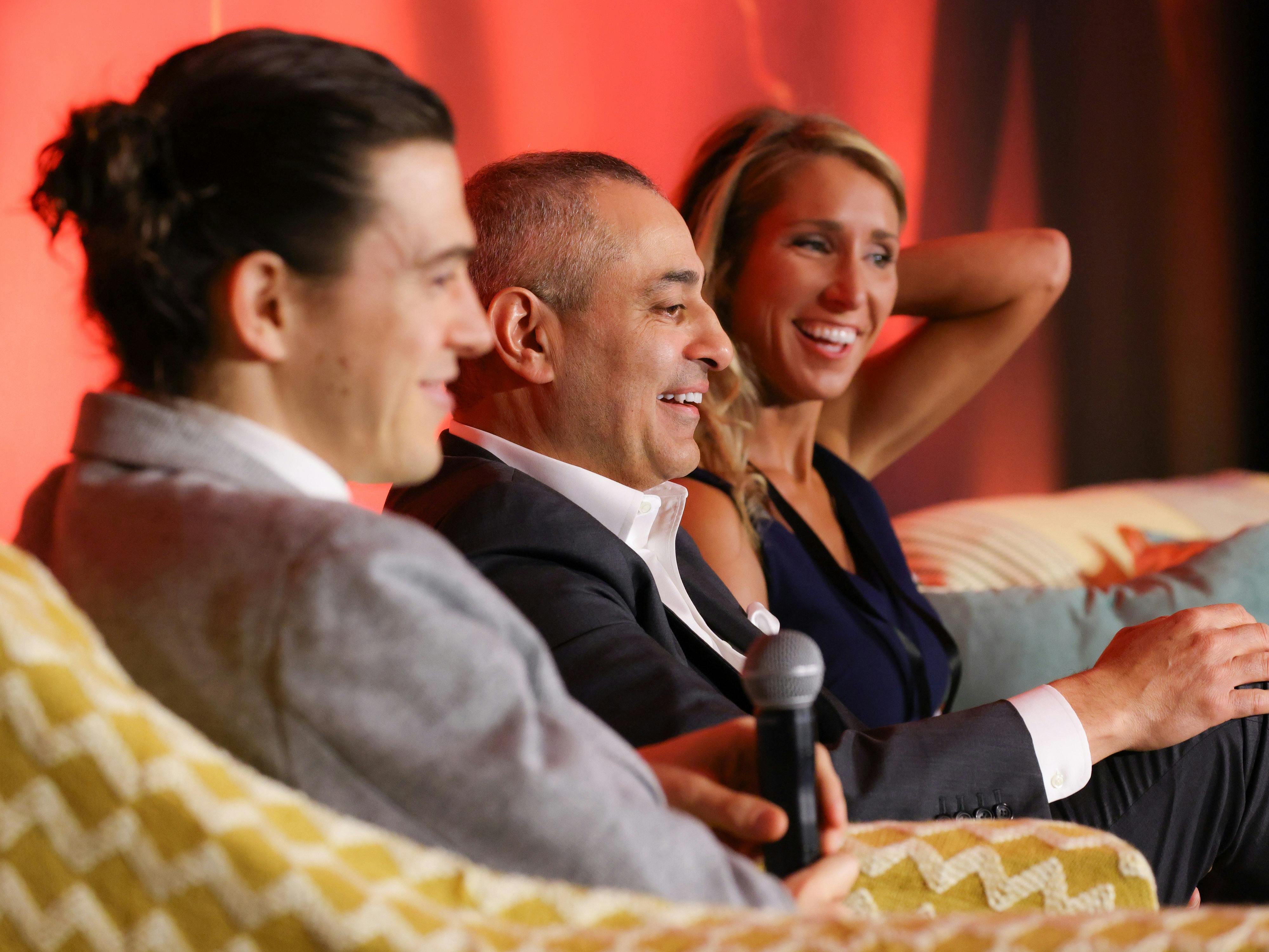
Figure 1. Dr. Thanos (left) and Dr. Runner (right) interviewed Dr. Hassan (center), the 2024 VBS Lifetime Achievement Award honoree. Image courtesy of Kevin Caldwell Photography.
Although Dr. Hassan began medical school at the University of Michigan leaning toward a career in cardiothoracic surgery, he realized that path would clash with his desire to be active in his children’s lives. Once he chose ophthalmology, he knew retina was right for him.
Dr. Hassan spoke fondly of his fellowship mentors at Associated Retina Consultants/Beaumont, remembering being “taught by giants in the field with a desire to contribute at a higher level.”
As a mentor, Dr. Hassan has trained 60 clinical fellows (and counting), and he shared his three most important tips on mentoring: 1) Don’t treat everyone the same, 2) provide specific instructions, and 3) practice like you play.
Dr. Hassan founded Club Vit in 1996 and the Retina Fellows Forum in 2001 and has served as president of the American Society of Retina Specialists (2016 – 2018), Retina World Congress (2019 – 2022), and Retina Hall of Fame (2020 – 2024). When asked about his motivation for participating in these societies, he reflected that “there is so much potential to be great, but the opportunity to access information and collaborate was weak when I was finishing fellowship.” He wanted to fill that unmet need by gathering people together to learn from each other.
Dr. Hassan is now the chief development officer at Aviceda Therapeutics. He took this role because he no longer felt challenged in his day-to-day work and wanted to keep growing; the new career trajectory has been refreshing, he said, noting that he enjoys seeing patients now more than ever. This role has given Dr. Hassan an opportunity to “help people in a bigger way and on a larger scale,” he emphasized.
MENTORSHIP AWARD – LEJLA VAJZOVIC, MD
The VBS Mentorship Award was presented to Lejla Vajzovic, MD. Interviewed by her former fellows Avni P. Finn, MD, MBA, and Akshay S. Thomas, MD, MS, Dr. Vajzovic shared her inspiring journey from her early life in Bosnia to her esteemed career in the United States (Figure 2).
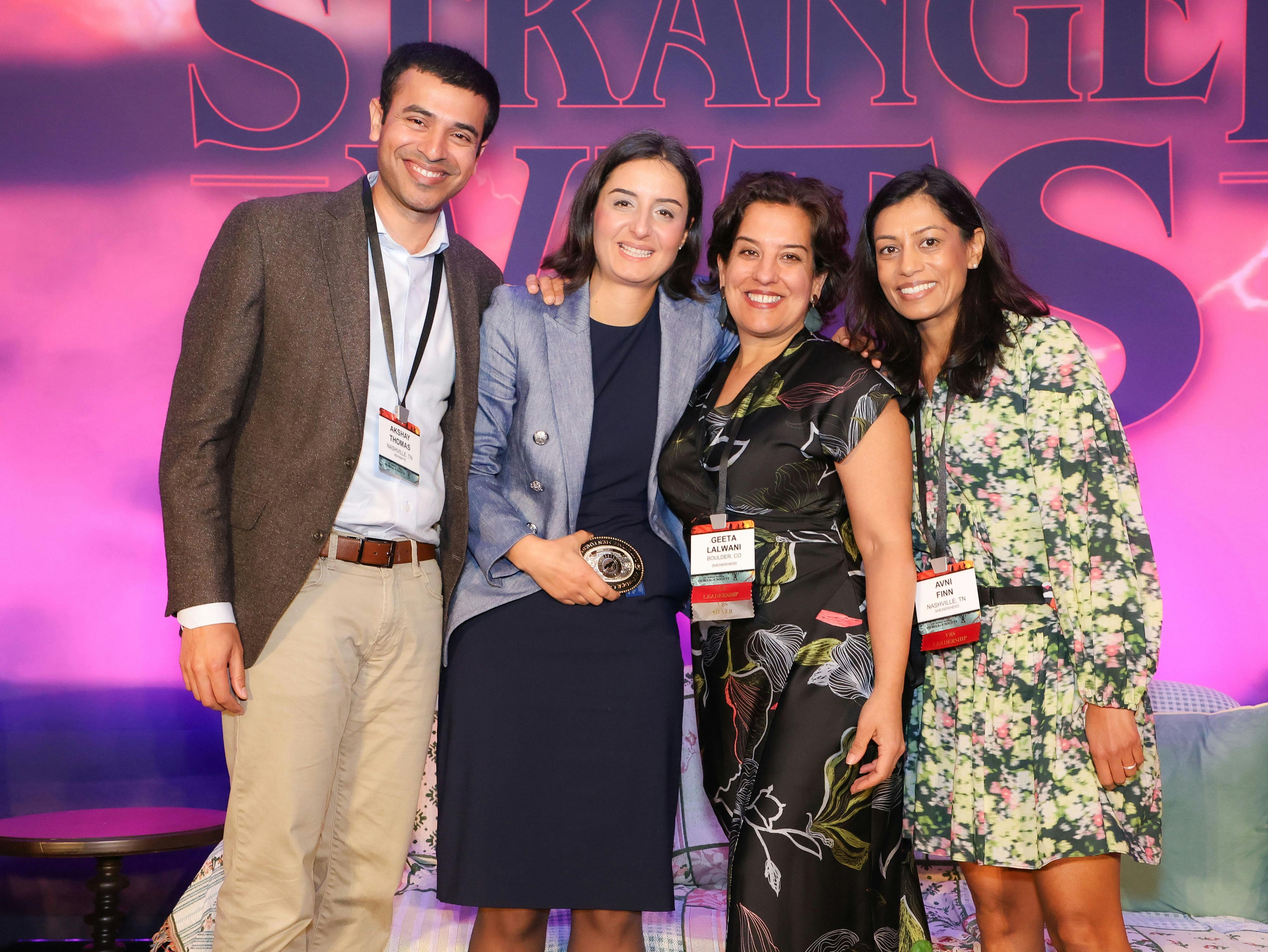
Figure 2. The 2024 Mentorship Award honoree, Dr. Vajzovic (second from left), is joined on stage by Dr. Thomas (left), Dr. Lalwani (second from right) and Dr. Finn (right). Image courtesy of Kevin Caldwell Photography.
Dr. Vajzovic’s path to excellence in vitreoretinal surgery was paved with both challenges and triumphs. As a teenager, Dr. Vajzovic left Bosnia to join her brother in the United States as a refugee. Despite the culture shock, she graduated summa cum laude from the Honors College at the University of Missouri, with a full scholarship to the Mayo Clinic School of Medicine. Dr. Vajzovic attributes much of her success to the unconditional support from her brother, American family, and parents in Bosnia.
Dr. Vajzovic completed an ophthalmic pathology fellowship and her residency at the Bascom Palmer Eye Institute, followed by a vitreoretinal surgery fellowship at the Duke Eye Center. The mentorship of retina luminaries such as Sander R. Dubovy, MD, and Cynthia A. Toth, MD, set Dr. Vajzovic on a career path toward pediatric retina.
Dr. Vajzovic expressed her passion for learning new surgical techniques and nurturing the next generation of vitreoretinal surgeons, remarking, “I am excited by new advancements […] they keep [surgery] entertaining.”
Throughout her journey, Dr. Vajzovic has been supported by her husband Edin and daughters Lamia and Alma, who joined her at VBS this year to celebrate the award.
Dr. Vajzovic concluded her interview by imparting the following wisdom: “There’s really no balance […] there are just priorities.” For her, family, work, mentees, and patients top the list of priorities. The Mentorship Award is a recognition of Dr. Vajzovic’s professional excellence and a testament to the effect of mentorship, family support, and resilience in achieving greatness in the field of vitreoretinal surgery.


_1784132761.jpg?auto=compress,format&w=75)





