

The 2023 EURETINA Clinical Trends Survey,* an annual initiative running now in its seventh year, was conducted during the EURETINA Congress held in Amsterdam in the fall of 2023. A total of 3,237 delegates participated and shared valuable insights in response to 99 questions covering key areas of retina care, which included the diagnosis and management of dry age-related macular degeneration (AMD) and geographic atrophy (GA).
Survey findings indicated that respondents saw an average of approximately 42 dry AMD patients per month. Among these, around 18% were believed to have GA, consistent with known rates of disease prevalence.
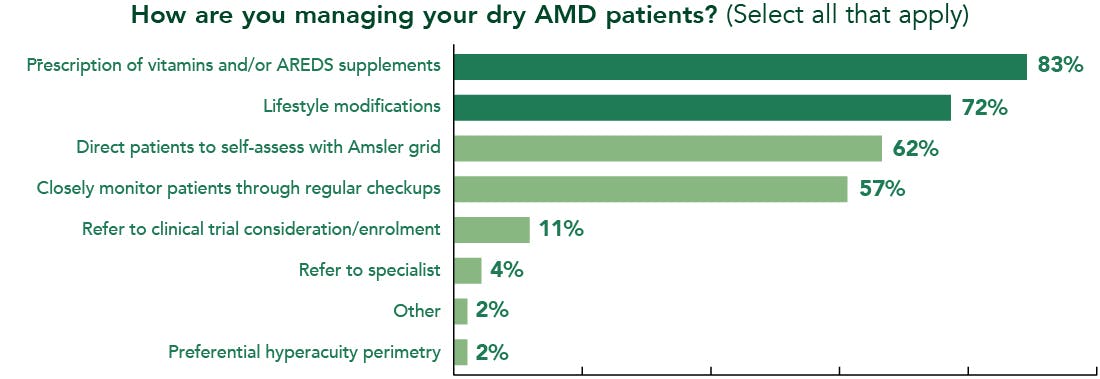
Figure 1. The 2023 EURETINA Clinical Trends Survey results indicate that prescription of vitamins and/or AREDS supplements and lifestyle modifications are the most used approaches among respondents to manage their dry AMD patients.
In terms of diagnostic techniques for suspected dry AMD, the top three modalities selected were optical coherence tomography (OCT), fundus photos, and fundus autofluorescence (FAF) reported by 95%, 63%, and 54% of respondents, respectively. Less commonly utilized imaging techniques included optical coherence tomography angiography (OCT-A; 46%), fluorescein angiography (FA; 25%), as well as patient-reported quality of life impacts/loss of autonomy (14%), functional questionnaires (8%), and microperimetry (7%).

Most respondents (76%) indicated that they typically saw their dry AMD patients every 3-6 months. Over 80% monitored disease progression by tracking both atrophic lesion growth and visual acuity loss, representing structural and functional hallmarks, respectively. For managing these patients, 83% of respondents prescribed vitamins and/or AREDS supplements, while 72% emphasized lifestyle modifications as part of their care plan.
*European Society of Retina Specialists (EURETINA) Clinical Trends Survey 2023.
