

Adherence to intravitreal injections
Currently, C3 and C5 complement inhibition therapies are not available in Europe, but data on adherence with intravitreal injections is available from the treatment of wet AMD patients. Non-adherence is defined as any deviation from the prescribed treatment schedule, such as missed appointments, receiving fewer injections than recommended, treatment gaps that exceed eight weeks, or visits outside the prescribed window.

Studies show that non-adherence to intravitreal injections can vary widely, with rates ranging from 15% to 95.6%.1 According to the 2023 EURETINA Clinical Trends survey, only 54% of AMD patients requiring regular injections adhere to their prescribed treatment schedules. The most common barriers to adherence include the frequency of visits (67%) and transportation challenges (50%). Adherence is influenced by a variety of factors, including disease-related, treatment-related, and human factors (Figure 1).2-4
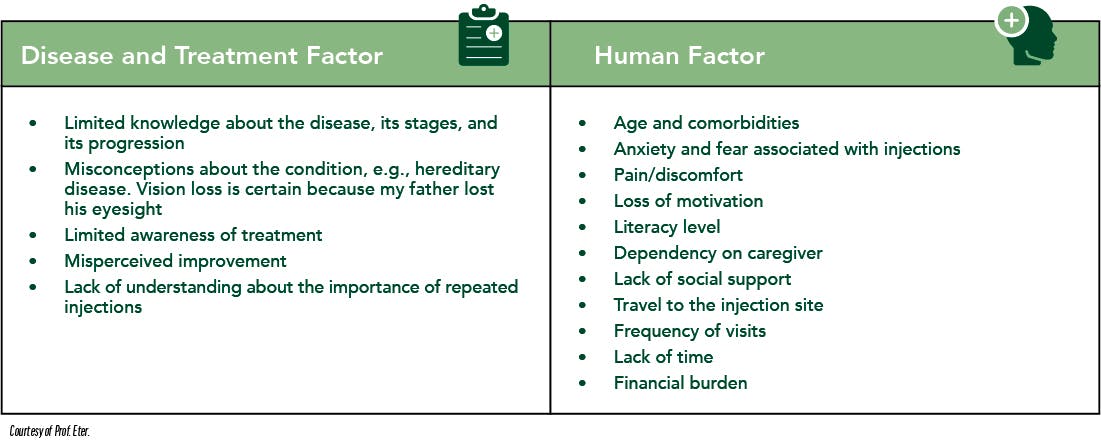
Figure 1. Barriers to adherence to injection therapies from the perspectives of both patients and doctors.
Effective communication
Optimizing adherence to treatment plans requires a deep understanding of patients’ needs and preferences. Patients value strong, trusting relationships with their doctors, where they feel comfortable asking questions, and receiving personalized, attentive care. Education should be tailored to each patient’s specific disease stage and treatment plan, while also considering lifestyle factors that are important to them.
From the doctor’s perspective, time constraints can be challenging due to the high volume of patients. Nevertheless, setting clear expectations early is essential. Doctors should take the time to explain the rationale for the injections, outline the treatment plan and procedure, and stress the importance of follow-up visits. By proactively engaging in these discussions, doctors can help patients gain a better understanding of their care, which may improve adherence to the treatment plan.
Do’s and Don’ts
Doctors should give their full attention to patients, maintaining eye contact to foster genuine engagement. Active listening is crucial for building trust and understanding, and repeating the patient’s statements ensures clarity. When discussing complex concepts, it is important to use clear, simple language that the patient can easily understand. Visual aids, such as brochures, pamphlets, informational videos, or online resources, can be used to reinforce key points effectively.
To confirm the patient’s comprehension, employing the teach-back technique is very effective. Doctors should also create opportunities for patients to ask questions and address their fears and concerns with empathy.
Dismissive language, such as saying, “it's just an injection,” should be avoided. Instead, provide a thorough explanation of the treatment’s purpose, significance, and context.4-6
Effective communication requires considering the patient’s literacy level, cultural background, and language preferences. Avoid complex language that may confuse the patient and ensure that information is conveyed clearly and concisely, without overwhelming them. Conversations should not be rushed or cut short due to time constraints. Neglecting these considerations can greatly impact the patient’s adherence to the treatment plan.4,6
Empowering the Patient
Empower patients by actively involving them in the decision-making process, listening to their concerns, and understanding their treatment goals. Clearly explain the available treatment options, outlining their benefits, potential risks, and side effects. Collaborate with the patient to develop a personalized care plan that aligns with their values and preferences. Regularly monitor and assess progress toward treatment goals to ensure the patient remains well-informed and actively engaged throughout the process.
Home monitoring offers a valuable opportunity to enhance patient care. By self-testing their vision, patients can take a more proactive role in managing their condition. The regular use of hyperacuity apps for vision monitoring has been shown to reduce the frequency of injection visits and extend the intervals between follow-up appointments.7 In some countries, home-based OCT is already available, providing a more personalized treatment experience while saving time for both patients and healthcare providers.
Conclusion
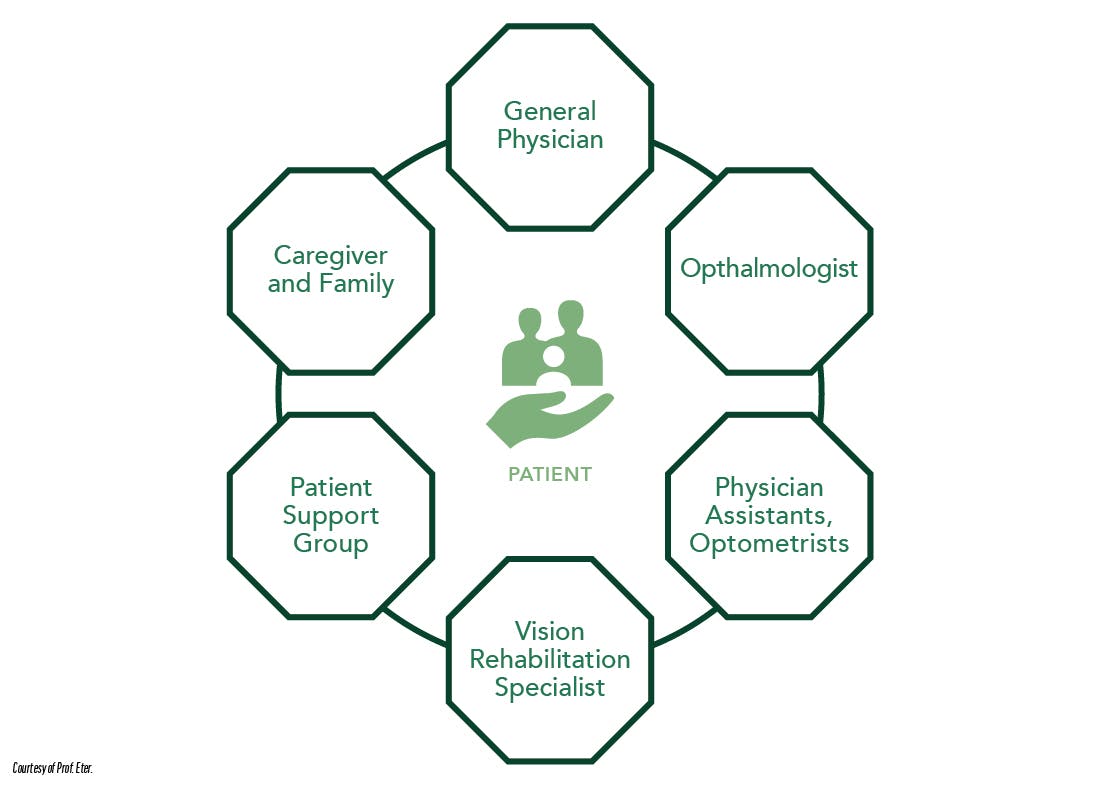
It is important to recognize that the ophthalmologist is not the sole provider of care. Patient management requires a collaborative, team-based approach (Figure 2). Alongside the ophthalmologist, optometrists, visual rehabilitation specialists, patient support groups, caregivers, family members, and the general practitioner all play critical roles in the care process. A team-based approach ensures comprehensive support, addresses the patient’s needs from multiple perspectives, and fosters holistic care.
1. Okada, M. et al. Nonadherence or Nonpersistence to Intravitreal Injection Therapy for Neovascular Age-Related Macular Degeneration: A Mixed-Methods Systematic Review. Ophthalmology 128, 234–247 (2021).
2. Giocanti-Aurégan, A. et al. Drivers of and Barriers to Adherence to Neovascular Age-Related Macular Degeneration and Diabetic Macular Edema Treatment Management Plans: A Multi-National Qualitative Study. Patient Prefer Adherence 16, 587–604 (2022).
3. Shahzad, H. et al. Non-adherence and non-persistence to intravitreal anti-vascular endothelial growth factor (anti-VEGF) therapy: a systematic review and meta-analysis. Syst Rev 12, (2023).
4. Wang, E., Kalloniatis, M. & Ly, A. Effective health communication for age-related macular degeneration: An exploratory qualitative study. Ophthalmic Physiol Opt 43, 1278–1293 (2023).
5. Why and How to Enhance Physician-Patient Communication - American Academy of Ophthalmology. https://www.aao.org/eyenet/article/why-how-to-enhance-physician-patient-communication.
6. Scheffer, M., Menting, J., Rausch-Koster, P., van Nispen, R. & van Dulmen, S. Looking beyond the eyes of the patient: The importance of effective communication in the treatment of age-related macular degeneration. Acta Ophthalmol (2024) doi:10.1111/AOS.16777.
7. Gross, N. et al. Visual outcomes and treatment adherence of patients with macular pathology using a mobile hyperacuity home-monitoring app: a matched-pair analysis. BMJ Open 11, e056940 (2021).
