





KEY TAKEAWAYS
- 3D heads-up display systems provide anatomic and visual outcomes comparable to conventional microscopes, while requiring lower levels of endoillumination and offering better ergonomics.
- Digital image processing and local-dimming 3D monitors improve field clarity and contrast across common steps in vitreoretinal procedures.
- Intraoperative AI can now perform real-time instrument and landmark detection on the surgical video feed, and robotic platforms are achieving autonomous, motion-compensated subretinal injections guided by intraoperative OCT.
The clinical integration of 3D digital visualization, AI, and robotics is reshaping the surgical experience for both patients and surgeons, from preoperative forecasting models that guide patient counseling to technologies that enhance precision and efficiency in the OR. Together, these innovations are redefining the modern ophthalmic workflow, linking data-driven prediction with real-time intraoperative performance. Here, we review the current evidence supporting the use of heads-up display systems (HUDS) in the OR, intraoperative AI, and robotic-assisted surgical techniques.
VISUALIZATION IN THE RETINA OR
HUDS—such as the Artevo 800 (Carl Zeiss Meditec) and Ngenuity (Alcon)—have emerged as an important alternative to standard operating microscopes (SOMs), offering surgeons a customizable 3D digital view of the operative field with superior ergonomics and enhanced depth perception (Figure). Moreover, their shared-screen capability enables real-time telementoring, supporting the growing evidence for remote proctoring and 3D telesurgery as effective tools for ophthalmic education.1
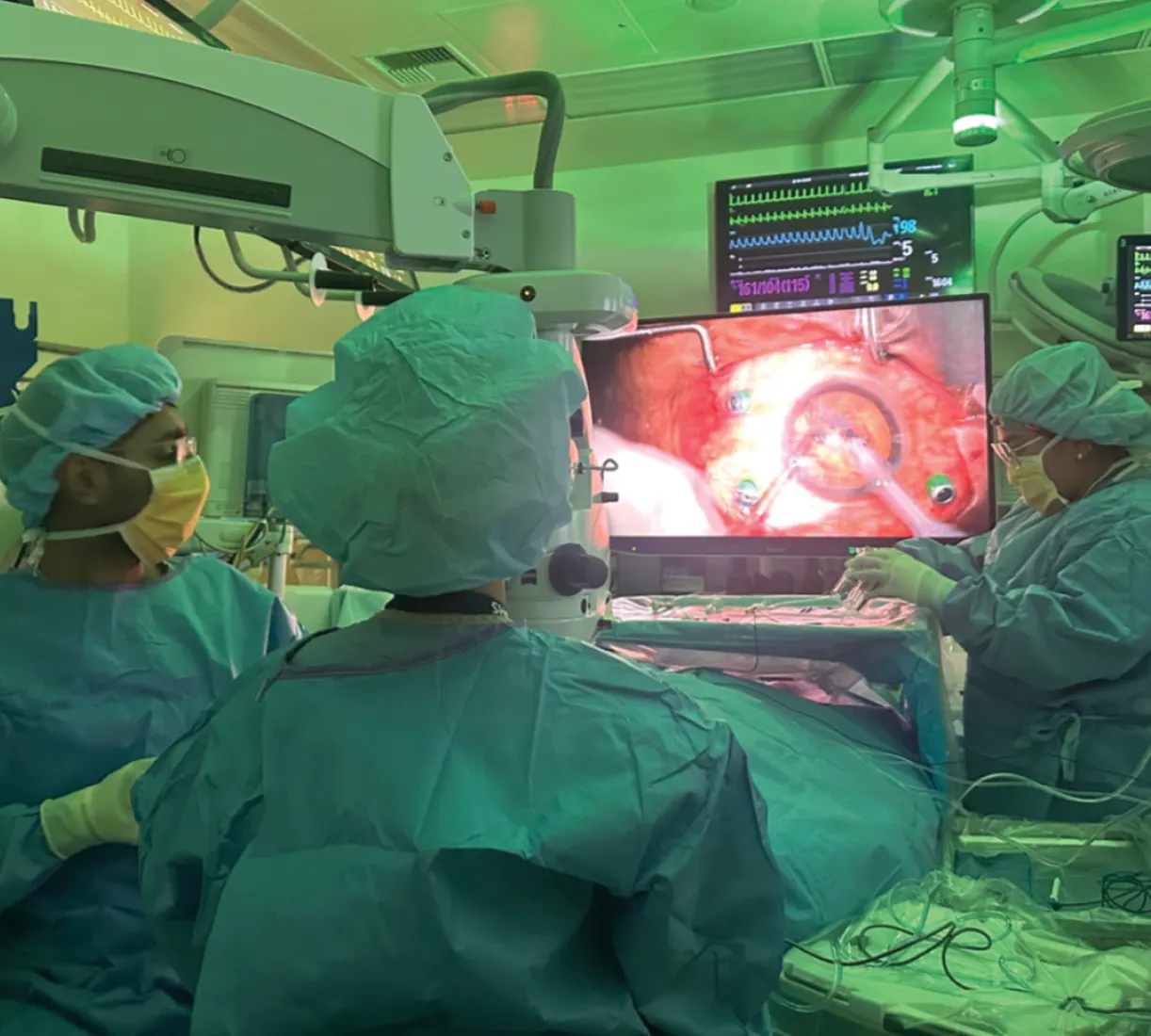
Figure. 3D HUDS enable shared viewing for the surgical team while enhancing depth perception, precision, and ergonomics.
Performance and Learning Curve
Comparative studies suggest that HUDS can deliver surgical outcomes comparable to those of SOMs, but with distinct differences in ergonomics, visualization, and learning curves.2-4 In a prospective comparative cohort, Kelkar et al evaluated 342 phacoemulsification cases performed with the Artevo 800 (n = 100) and the OPMI Lumera 700 SOM (n = 242). Surgical times were significantly longer with the HUDS than the SOM (8.4 ± 2.1 min vs 6.5 ± 1.8 min), but complication rates remained low and similar (2% vs 2.5%).4 Importantly, all complications in the HUDS group occurred during the first 50% of cases,4 illustrating the learning curve with these systems.
In a vitreoretinal surgery study of 241 consecutive cases, surgical duration was similar between HUDS and conventional microscopy (45.5 ± 20.1 vs 46.0 ± 19.8 minutes), with comparable complication and anatomic outcomes, including 3-month retinal detachment recurrence (10% vs 18%) and macular hole closure rates (82% vs 88%).5
Thus, the learning curve associated with HUDS may differ between anterior and posterior segment surgery, as demonstrated by differences in operative times. Inefficiencies may be mitigated by initially performing simpler cases, optimizing system presets, and incorporating ergonomic training during the adoption phase.
Ergonomics And Wellbeing
A consistent advantage of HUDS is improved surgeon comfort and ergonomics. In a comparative analysis of 80 cataract surgeons, those using the Artevo 800 maintained a more neutral neck posture, with less flexion during capsulorhexis, phacoemulsification, and IOL placement. Postoperative musculoskeletal discomfort was also lower.6
Similarly, ophthalmologists using HUDS for simulated minimally invasive glaucoma surgery rated HUDS superior to conventional microscopy for ergonomics, depth of field, and educational training value.7 Early clinical experience in vitreoretinal surgery further support these findings, with 91.7% of surgeons from a cohort of 20 volunteers preferring the ergonomics of heads-up visualization during standardized microsurgical tasks, alongside retrospective validation in more than 400 routine vitrectomies over 8 months.8 In a prospective study of retina fellows using the Ngenuity 3D system, early ergonomic and comfort advantages compared with analog microscopes were observed, although these differences leveled over time as training progressed.9
Beyond immediate comfort, improved posture with HUDS may have long-term implications for surgeon health and career longevity, as sustained neck flexion and musculoskeletal strain are well-documented contributors to early retirement from the OR.10
Visualization, Safety, and Procedural Tradeoffs
In vitreoretinal surgery, HUDS may enhance visualization in ways that translate to clinically meaningful outcomes. For example, in a trainee series of macular hole repairs, closure rates were significantly higher with the use of HUDS compared with SOMs (86.3% vs 60.3%).11
In a randomized controlled trial at Wills Eye Hospital comparing the Artevo 800 with SOM for macular surgery, procedures were performed at substantially lower endoillumination levels (22.7% vs 39.1%) while maintaining comparable safety and postoperative visual outcomes.12 Because lower light intensity lessens cumulative phototoxic risk,13 the ability of HUDS to achieve optimal endoillumination at lower light intensities may play a protective role in mitigating retinal phototoxic damage.
Despite the advantages of HUDS, certain tradeoffs remain. Notably, macular peel times were longer with HUDS (14.8 vs 11.9 minutes), underscoring that, despite improved visualization, efficiency still depends on surgeon familiarity and workflow optimization. Thus, structured training is necessary to fully realize HUDS’ ergonomic and visualization advantages without prolonging operative time.
Software and Hardware Advances for HUDS
Digital image processing has become a key contributor to optimizing HUDS. The real-time application of local contrast and edge-definition sharpening and color adjustment algorithms can enhance intraoperative contrast while reducing objective measures of image clarity (skewness and kurtosis).
In clinical studies, mean visibility scores increased markedly on a 10-point scale, rising from 5.0 at baseline to 7.5 at 50% sharpening levels, and color adjustments significantly improved visualization during delicate steps such as internal limiting membrane (ILM) peeling.14,15
In practice, surgeons may begin with moderate contrast sharpening intensities (25% to 50%), as supported by Nakajima et al, who found that visibility improved proportionally with sharpening within this range. Real-time color balance adjustments, though not yet standardized, were shown to further enhance ILM contrast without loss of image clarity.14-16
Complementary advances in display technology are producing comparable gains, with next-generation monitors optimizing brightness to improve visualization of the operative field. Nakajima et al evaluated the performance of the Sony LMD-XH550MT 3D monitor with local dimming technology against the conventional Sony monitor. The study demonstrated that the monitor with local dimming technology achieved higher visibility scores and reduced skewness during cataract and vitreous surgery compared with the conventional monitor.17
While HUDS offer ergonomic and educational advantages, their high capital cost, OR layout requirements (to maintain clear sightlines to the 55” monitor), and the need for staff to wear polarized 3D glasses can pose barriers to adoption.1
AI AND ROBOTICS
AI has emerged as a key tool for surgical workflow analysis and intraoperative decision support in ophthalmic surgery. By leveraging deep learning (DL) models trained on surgical video and imaging data, AI can identify procedural phases, recognize instrument use, and provide structured feedback for training and quality control.
Surgical Workflow and Intraoperative Guidance
Mueller et al evaluated the use of a DL model for surgical phase recognition in cataract surgery. Using the SICS-105 dataset (105 prospectively collected videos of small-incision cataract surgery), the model achieved 85.6% accuracy for SICS and 89.9% for phacoemulsification, confirming that AI can reliably segment complex surgeries into distinct steps.18
In a study focused on vitreoretinal surgery, Nespolo et al evaluated a DL model designed to analyze the intraoperative field and detect surgical instruments, classify their tips, and segment key retinal landmarks in real time. Their model was trained on 606 annotated surgical frames and demonstrated strong performance.19
By achieving both high precision and real-time speed, DL models show the potential to support intraoperative tasks such as collision avoidance, automated instrument tracking, and surgical data analysis.
Robotic Systems and Motion Compensation
AI-integrated robotic platforms are being developed to achieve the motion and positional stability needed for safe and reproducible subretinal therapies. Wu et al introduced a fully autonomous robotic system for subretinal injection delivery designed to compensate for human hand tremor, retinal movement from respiration, and cardiac pulsation. The system achieved insertion error of approximately 9-µm root mean squared error and 22-µm MaxAE in simulation. In ex vivo porcine eyes, biological variability introduced greater uncertainty, although five of eight trials still achieved successful retinal bleb formation.20
Similarly, Arikan et al tested the Steady-Hand Eye Robot with OCT-based motion feedback to stabilize injections during simulated retinal motion. At low simulated retinal-motion amplitudes (25 µm), tracking was stable, while larger amplitudes (100 µm) introduced drift and phase lag, and four of seven porcine injections achieved successful subretinal bleb formation.21
Recently, Horizon Surgical Systems completed the world’s first robotic-assisted cataract surgery using its Polaris platform, marking a major milestone in advancing ophthalmic innovation through robotics and AI.22
Predictive Models and Outcome Forecasting
AI models have been deployed to predict surgical outcomes and can potentially serve as a valuable tool in preoperative patient counseling and prognostication. Guo et al trained a multimodal DL model to evaluate whether it could accurately predict postoperative visual outcomes following rhegmatogenous retinal detachment (RRD) repair and compared it to OCT-only and fundus-only AI models. Analyzing OCT, ultra-widefield fundus images, and clinical parameters from 184 RRD repairs, the multimodal model provided the strongest predictive performance. In contrast, OCT-only and fundus-only models performed less well.23
Godani et al showed that a regression model could predict postoperative visual acuity after macular hole surgery within 0.1 to 0.3 logMAR in 61% to 87% of cases.24 In a similar study on idiopathic epiretinal membrane surgery, Lin et al found that a DL model trained on OCT scans from 696 eyes with epiretinal membrane slightly outperformed retina specialists when predicting postoperative visual outcomes.25
WHAT’S TO COME IN THE RETINA OR
The convergence of digital HUDS, intraoperative AI, and robotics heralds a transformative era in ophthalmic surgery. Together, these technologies can enhance visualization, ergonomics, and microsurgical precision, while emerging AI and motion-compensated robotic platforms are redefining the boundaries of intraoperative safety and outcome predictability. As adoption accelerates, structured training, workflow optimization, and evidence-based validation will be essential to ensure these innovations fulfill their potential in advancing surgical precision, protecting surgeon well-being, and improving patient outcomes.
1. Razavi P, Cakir B, Baldwin G, et al. Heads-up three-dimensional viewing systems in vitreoretinal surgery: an updated perspective. Clin Ophthalmol. 2023:17:2539-2552.
2. Wang Y, Zhao X, Zhang W, et al. Three-dimensional head-up display versus standard operating microscope for vitrectomy surgery: a systematic review and meta-analysis. Retina. 2022;42(6):1151-1160.
3. Zhao XY, Zhao Q, Li NN, et al. Surgery-related characteristics, efficacy, safety and surgical team satisfaction of three-dimensional heads-up system versus traditional microscopic equipment for various vitreoretinal diseases. Graefes Arch Clin Exp Ophthalmol. 2023;261(3):669-679.
4. Kelkar JA, Kelkar AS, Bolisetty M. Initial experience with three-dimensional heads-up display system for cataract surgery - a comparative study. Indian J Ophthalmol. 2021;69(9):2304-2309.
5. Kantor P, Matonti F, Varenne F, Sentis V, Pagot-Mathis V, Fournié P, Soler V. Use of the heads-up Ngenuity 3D visualization system for vitreoretinal surgery: a retrospective evaluation of outcomes in a French tertiary center. Scientific reports. 2021;11(1):10031.
6. Suh Y, Shin S, Kim BY, et al. Comparison of neck angle and musculoskeletal discomfort of surgeon in cataract surgery between three-dimensional heads-up display system and conventional microscope. Sci Rep. 2024;14(1):22681.
7. Huang JJ, Waldner D, Huang JJ, et al. Comparison of 3D heads-up display system with conventional surgical microscopy for minimally invasive glaucoma surgery on an artificial eye model. Can J Ophthalmol. 2024;59(4):e338-e342.
8. Eckardt C, Paulo EB. Heads-up surgery for vitreoretinal procedures: an experimental and clinical study. Retina. 2016;36(1):137-147.
9. Iglicki M, Zur D, Khoury M, Muiños R, Melamud JI, Loewenstein A. Technological influence on retina fellows’ learning curves: a prospective study of digital versus analog microscopes (The BRAVE Study). Ophthalmologica. 2025;248(5-6):337-345.
10. Xie JS, Kaur H, Lusterio A, et al. A scoping review of ergonomics in ophthalmology: working smarter. Am J Ophtahlmol. 2026;281:249-269.
11. Reddy S, Mallikarjun K, Mohamed A, et al. Comparing clinical outcomes of macular hole surgeries performed by trainee surgeons using a 3D heads-up display viewing system versus a standard operating microscope. Int Ophthalmol. 2021;41(8):2649-2655.
12. Talcott KE, Adam MK, Sioufi K, et al. Comparison of a three-dimensional heads-up display surgical platform with a standard operating microscope for macular surgery. Ophthalmol Retina. 2019;3(3):244-251.
13. Van den Biesen PR, Berenschot T, Verdaasdonk RM, et al. Endoillumination during vitrectomy and phototoxicity thresholds. Br J Ophthalmol. 2000;84(12):1372-1375.
14. Nakajima K, Inoue M, Mizuno M, et al. Effects of image-sharpening algorithm on surgical field visibility during 3D heads-up surgery for vitreoretinal diseases. Sci Rep. 2023;13(1):2758.
15. Nakajima K, Inoue M, Takahashi A, et al. Image sharpening algorithms improve clarity of surgical field during 3D heads-up surgery. Int J Retina Vitreous. 2023;9(1):21.
16. Castillo GF, Franklin A, Yin L. White paper on the advantages of color optimization for retinal surgery. Accessed February 17, 2026. us.alconscience.com/sites/g/files/rbvwei1736/files/pdf/The-Advantages-of-Color-Optimization-For-Retinal-Surgery-US-NGU-2000178.pdf
17. Nakajima K, Takeuchi J, Yokoi T, et al. Clarity of surgical field displayed on 3D monitor with local dimming technology during heads-up surgery. Jpn J Ophthalmol. 2025;69:633-638.
18. Mueller S, Sachdeva B, Prasad SN, et al. Phase recognition in manual small-incision cataract surgery with MS-TCN + + on the novel SICS-105 dataset. Sci Rep. 2025;15(1):16886.
19. Nespolo RG, Yi D, Cole E, et al. Feature tracking and segmentation in real time via deep learning in vitreoretinal surgery: a platform for artificial intelligence-mediated surgical guidance. Ophthalmol Retina. 2023;7(3):236-242.
20. Wu T, Esfandiari M, Zhang P, et al. Deep learning-enhanced robotic subretinal injection with real-time retinal motion compensation. Paper presented at: the IEEE 21st International Conference on Automation Science and Engineering (CASE). August 17-21, 2025; Los Angeles.
21. Arikan D, Esfandiari M, Zhang P, et al. Towards motion compensation in autonomous robotic subretinal injections. Paper presented at: the International Symposium on Medical Robotics. May 14-16 2025; Atlanta.
22. Horizon Surgical Systems. Horizon Surgical Systems completes world’s first robotic-assisted cataract surgery [press release]. Business Wire. October 8, 2025. Accessed February 17, 2026. www.businesswire.com/news/home/20251008151572/en/Horizon-Surgical-Systems-Completes-Worlds-First-Robotic-Assisted-Cataract-Surgery
23. Guo H, Ou C, Wang G, et al. Prediction of visual outcome after rhegmatogenous retinal detachment surgery using artificial intelligence techniques. Transl Vis Sci Technol. 2024;13(5):17.
24. Godani K, Prabhu V, Gandhi P, et al. Supervised machine learning statistical models for visual outcome prediction in macular hole surgery: a single-surgeon, standardized surgery study. Int J Retin Vitr. 2025;11(1):5.
25. Lin HL, Tseng PC, Hsu MH, et al. Using a deep learning model to predict postoperative visual outcomes of idiopathic epiretinal membrane surgery. Am J Ophthalmol. 2025;272:67-78.


_1784132761.jpg?auto=compress,format&w=75)





