


KEY TAKEAWAYS
- Ophthalmic involvement can affect up to 90% of patients with hematologic malignancies and occur more frequently in the acute or relapse phase of disease.
- Secondary ocular involvement is also common, either from opportunistic infections, drug toxicity, or other adverse effects of therapy.
- A simple screening protocol that can be performed at the patient's bedside may include visual acuity, color vision, Amsler grid, fluorescein staining of the cornea, and fundoscopy.
Hematologic malignancies are neoplasias that occur due to abnormal hematopoietic function in the bone marrow or cells of the immune system, including leukemia, lymphoma, and multiple myeloma.1 They are usually classified according to disease course (ie, acute vs chronic) and cell lineage (ie, myeloid vs lymphoid).1,2 The eye provides a unique opportunity to study these hematologic malignancies due to the direct visibility of blood vessels.
Ophthalmic involvement can affect up to 90% of patients with hematologic malignancies.2 They may either be the first manifestation of an underlying hematologic neoplasm or arise during the disease course.3 Ocular manifestations are more common in the acute or relapse phase, rather than the chronic phase of disease. They can result from direct neoplastic infiltration of ocular tissues or indirect ocular involvement due to hematologic abnormalities, opportunistic infections, or therapy-related complications.3
LEUKEMIA
Direct cellular invasion can involve the orbit (1%), leading to proptosis, visible mass, cranial nerve palsy, or Horner syndrome. Retinal infiltration (3%) can present as creamy-white lesions associated with perivascular sheathing or retinal detachment.4 In subclinical retinal involvement with no visible infiltrates, OCT can aid the diagnosis by depicting hyperreflective intraretinal lesions.5 Choroidal involvement (0.3%) can be silent or present as a subretinal mass with shallow serous neurosensory detachment.4 Optic nerve infiltration (0.3%) is associated with a higher risk of bone marrow relapse and central nervous system (CNS) involvement (Figure 1).3,4,6,7 In addition to direct optic nerve involvement, retrolaminar invasion and papilledema due to increased intracranial pressure can also occur.8 Nerve infiltration can be differentiated from edema by retinal perivascular infiltration.8 Researchers have reported cases with iris infiltration that usually present with a change in iris color, anterior chamber reaction, and pseudohypopyon.2,8 Rarely, conjunctival infiltration can present as a subconjunctival mass.8
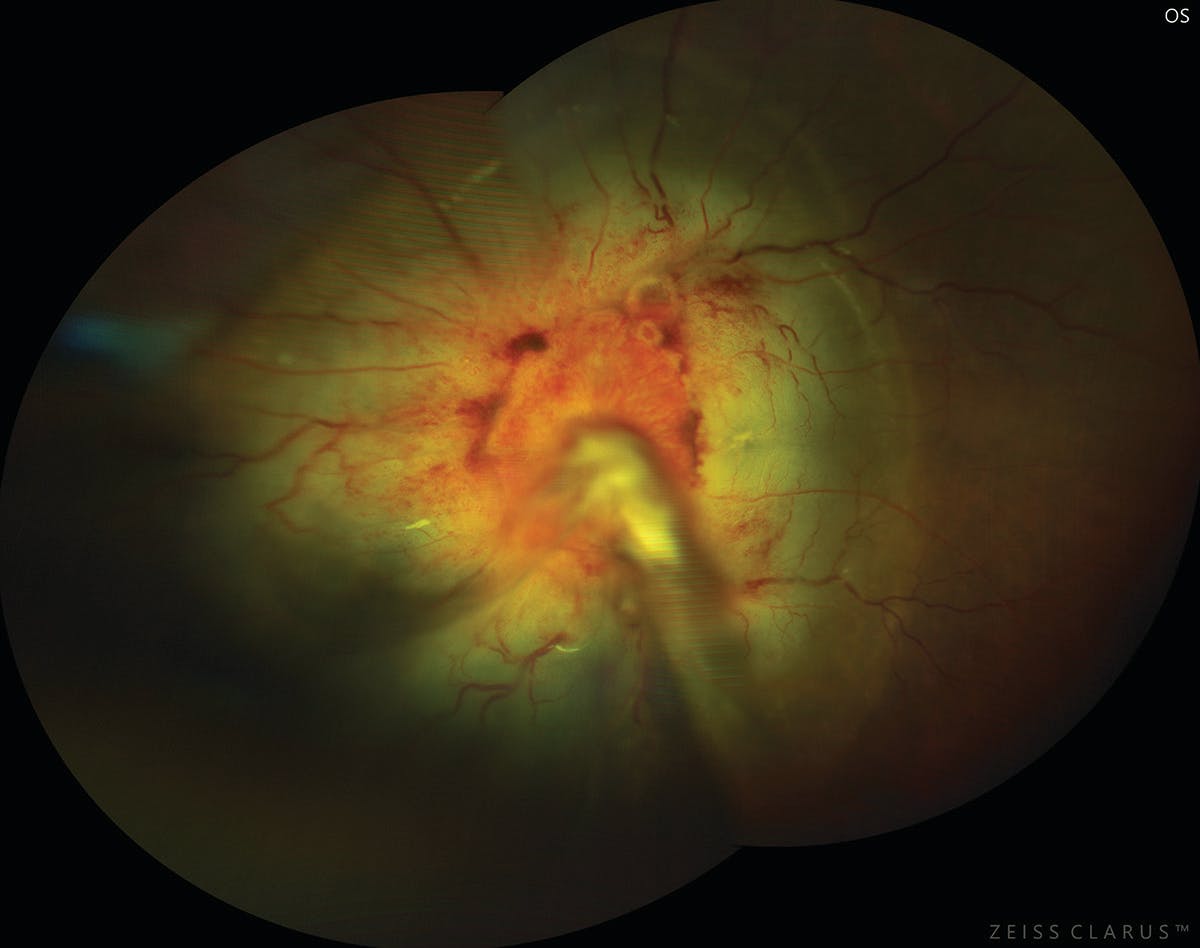
Figure 1. Fundus imaging shows direct optic nerve infiltration with adjacent retinal detachment in a 13-year-old boy with leukemic relapse.
Leukemic retinopathy is an indirect involvement of the retina as a consequence of hematologic abnormalities, such as anemia, thrombocytopenia, or hyperviscosity.8 Retinal sequelae due to anemia and thrombocytopenia are more frequent in acute leukemia, while those due to hyperviscosity are prevalent in chronic leukemia.8 Characteristic features include retinal hemorrhages, which are reported in up to 65% of patients, cotton-wool spots, and Roth spots.3,4 These hemorrhagic manifestations have been related to hematologic parameters, and some clinicians recommend maintaining an adequately high platelet count and hemoglobin level to prevent bleeding.3,9
Chronic leukemia can lead to venous stasis from hyperviscosity (ie, leukostasis), potentially causing peripheral microaneurysms, vascular occlusions, retinal ischemia, proliferative vitreoretinopathy, seafan neovascularization, and tractional retinal detachment or neovascular glaucoma in untreated cases.4,8
Leukemic retinopathy can be the first manifestation of leukemia and is associated with a more aggressive disease course, a worse prognosis, and a shorter mean survival rate, necessitating prompt recognition by ophthalmologists.4 Ocular manifestations, especially those involving the vitreous, retina, or optic nerve, are more prevalent and occur earlier in patients with acute myelogenous leukemia compared with acute lymphocytic leukemia.9
LYMPHOMA
Ocular lymphomas can be adnexal or intraocular, and 95% are B-cell type. Only 10% to 30% of cases occur due to secondary involvement of the eye from diffuse systemic disease; the remaining majority are primary lymphomas.2
Conjunctival lymphoma can present with a characteristic salmon patch, while adnexal lymphoma usually manifests as a palpable mass causing proptosis, ptosis, restricted ocular movement, or diplopia; diagnostic confirmation requires an incisional biopsy.2
Intraocular lymphoma or vitreoretinal lymphoma usually presents with bilateral (65% to 80%) blurred vision and floaters. Often, it poses a diagnostic challenge, masquerading as posterior uveitis with an initial response to steroid therapy.2,10
Up to 34% of patients can have synchronous CNS disease at presentation, while 40% to 90% eventually go on to develop CNS lymphoma.10,11 Clinical features include vitritis with cellular clumps or sheets (ie, “aurora borealis” or “string of pearls” appearance); creamy subretinal or sub-retinal pigment epithelium (RPE) lesions giving rise to a “leopard skin” pattern; and, rarely, anterior segment involvement, such as keratic precipitates, angle or iris infiltration, and pseudohypopyon (Figure 2).2,10,11 A high degree of suspicion supplemented by immunocytochemistry, molecular analyses (eg, polymerase chain reaction, flow cytometry), and biochemistry (eg, interleukin 10:interleukin 6 ratio > 1) is required for diagnosis.10
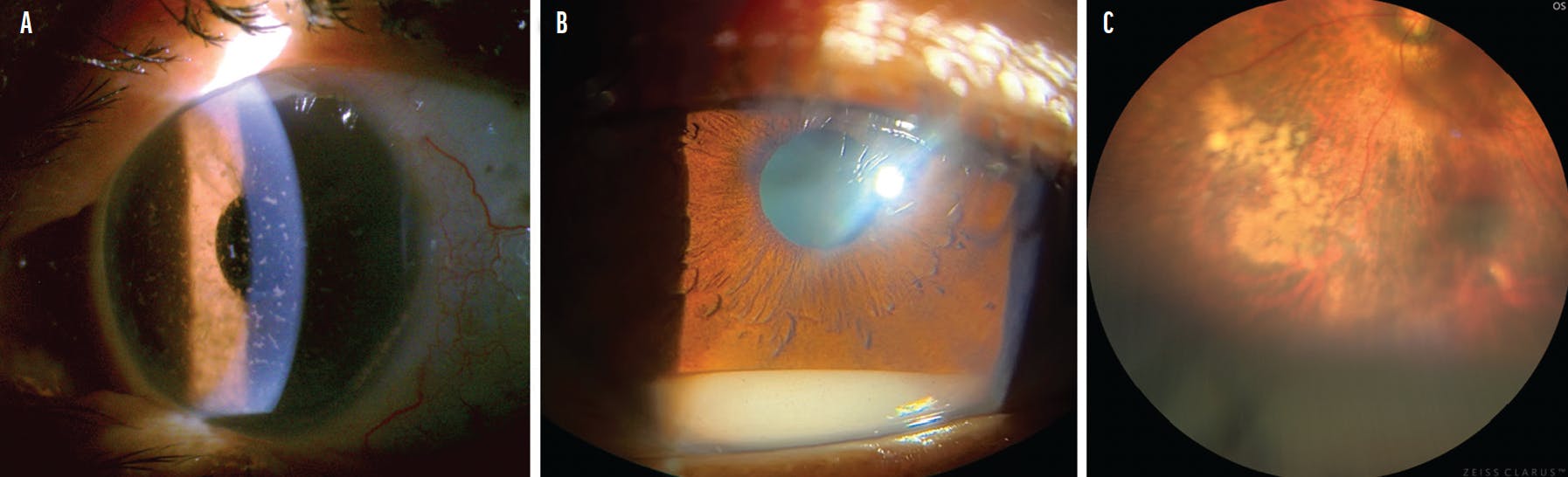
Figure 2. Anterior segment involvement in intraocular lymphoma can be in the form of keratic precipitates (A) or pseudohypopyon (B). Posterior segment involvement in lymphoma can include creamy sub-RPE infiltrates and floaters (C).
Therapeutic options include systemic and/or intravitreal chemotherapy with methotrexate or rituximab, ocular irradiation, or a combination of both.10
Primary uveal lymphoma is less common and typically presents as a choroidal mass with a relatively indolent course. It generally has a good prognosis.10
OTHER HEMATOLOGIC MALIGNANCIES
Waldenstrom macroglobulinemia-associated retinopathy has various presentations due to hyperviscosity, such as vascular dilation and tortuosity, venous sausaging, microaneurysms, retinal hemorrhages, papilledema, and, rarely, “angiographically silent” serous macular detachment.12,13 It can be diagnosed with serum protein electrophoresis; treatment options include plasmapheresis and chemotherapy.12
Uncontrolled proliferation of plasma cells in multiple myeloma can cause direct infiltration of ocular structures by neoplastic cells, leading to proptosis, lid xanthomatosis, epibulbar deposits, or iridociliary plasmacytomas with secondary glaucoma.14,15 Posterior segment manifestations usually occur due to hyperviscosity from elevated immunoglobulin and include hyperviscosity retinopathy, similar to that seen in Waldenstrom macroglobulinemia, and retinal vein occlusion.14 Standard treatment involves chemotherapy, targeted therapy, immunomodulators, and stem cell transplant.
SECONDARY OCULAR MANIFESTATIONS
Secondary ocular involvement in hematologic malignancies is common, either from opportunistic infections, drug toxicity, or other adverse effects of therapy.
Opportunistic Infections
Opportunistic infections include bacterial, fungal (eg, Candida, Aspergillus), viral (eg, cytomegalovirus, varicella-zoster virus, herpes simplex virus, mumps), and protozoal (eg, Toxoplasma).8 Common anterior segment findings include mild to moderate dry eye disease and meibomian gland dysfunction; these are frequently noted in patients treated with chemotherapy, radiation, or allogeneic hematopoietic stem cell transplant.3
Ocular graft versus host disease (GVHD) has been reported in 40% to 60% of patients undergoing allogeneic hematopoietic stem cell transplantation and is more likely in patients with systemic GVHD.2 Features of GVHD include conjunctival hyperemia and cicatrization, which can lead to fibrosis, symblepharon, and ankyloblepharon.2
Drug Toxicity
Drug toxicity can occur due to systemic chemotherapy or targeted therapy. Subconjunctival hemorrhages and posterior subcapsular cataracts (eg, with busulfan or dexamethasone) are frequently noted.2 Rare side effects such as optic atrophy with vincristine and retinal toxicity with fludarabine have also been reported.2
Targeted agents such as imatinib, used in chronic myelogenous leukemia, can cause a wide spectrum of ocular side effects ranging from periorbital edema, epiphora, and subconjunctival hemorrhage to vision-threatening optic neuropathy and macular edema.16
Immune checkpoint inhibitors, including nivolumab and pembrolizumab, can cause immune-related adverse events, such as uveitis.2,17 Intravitreal chemotherapy, such as methotrexate, can cause corneal epithelial keratopathy and elevated IOP.2
Radiotherapy Side Effects
Ocular radiotherapy can cause side effects such as periorbital erythema, watery eyes, loss of eyelashes, conjunctival congestion, dry eye, keratitis, cataract, radiation neuropathy, and radiation retinopathy.2 Most patients with secondary ocular involvement require lubrication along with treating the underlying condition (eg, steroids for optic neuritis); in some cases, an alternate oncologic agent may be required.
WATCH FOR THE MASQUERADERS
Despite their prevalence, ocular manifestations remain underrecognized, as they often masquerade as uveitis or other retinal vascular diseases, especially if the patient has comorbidities such as diabetes or hypertension. Increased awareness among ophthalmologists, coupled with multidisciplinary collaboration between ocular oncology and hematology-oncology departments, is essential for a holistic treatment approach.
DON’T MISS THE SIGNS
Many patients with ocular manifestations are asymptomatic (eg, 60% to 70% of those with leukemia)9; as such, all patients with hematologic malignancies should undergo periodic ophthalmic examination to screen for ocular involvement. A simple screening protocol that can be performed at the patient's bedside may include visual acuity, color vision, Amsler grid, fluorescein staining of the cornea, and fundoscopy.16 As ocular involvement can be the first sign of relapse, prompt identification may facilitate earlier treatment and, consequently, better systemic outcomes.8
1. Zhang N, Wu J, Wang Q, et al. Global burden of hematologic malignancies and evolution patterns over the past 30 years. Blood Cancer J. 2023;13(1):82.
2. Rossi C, Buizza A, Alessio G, et al. Ophthalmic manifestations in patients with blood malignancies. Hematol Rep. 2024;16(2):193-203.
3. Bouazza M, Youssefi H, Bouanani N. Ocular manifestations in hematological disorders. Cureus. 2022;14(8):e27941.
4. Hui VWK, Szeto SKH, Hui VWK, Szeto SKH. Clinical and imaging features of leukemic retinopathy. In: Leukemia: From Biology to Clinic. IntechOpen; 2022.
5. Talcott KE, Garg RJ, Garg SJ. Ophthalmic manifestations of leukemia. Curr Opin Ophthalmol. 2016;27(6):545-551.
6. Yee C, Scruggs BA, Flaxel CJ. Retinal infiltration in a case of chronic myeloid leukemia. Retin Cases Brief Rep. 2023;17(6):690-693.
7. Russo V, Scott IU, Querques G, Stella A, Barone A, Delle Noci N. Orbital and ocular manifestations of acute childhood leukemia: clinical and statistical analysis of 180 Patients. Eur J Ophthalmol. 2008;18(4):619-623.
8. Orhan B, Malbora B, Akça Bayar S, Avcı Z, Alioğlu B, Özbek N. Ophthalmologic findings in children with leukemia: a single-center study. Turk J Ophthalmol. 2016;46(2):62-67.
9. Bukhari ZM, Alzahrani A, Alqarni MS, et al. Ophthalmic manifestations in acute leukemia patients and their relation with hematological parameters in a tertiary care center. Cureus. 2021;13(11):e19384.
10. Sagoo MS, Mehta H, Swampillai AJ, et al. Primary intraocular lymphoma. Surv Ophthalmol. 2014;59(5):503-516.
11. Tang LJ, Gu CL, Zhang P. Intraocular lymphoma. Int J Ophthalmol. 2017;10(8):1301-1307.
12. Watson JA, Olson DJ, Zhang AY. Hyperviscosity retinopathy due to Waldenström macroglobulinemia: a case report and literature review. J Vitreoretin Dis. 2021;5(6):520-524.
13. Dammacco R, Lisch W, Kivelä TT, et al. The spectrum of ocular manifestations in patients with Waldenström’s macroglobulinemia. Ocul Immunol Inflamm. 2022;30(7-8):1659-1668.
14. Omoti AE, Omoti CE. Ophthalmic manifestations of multiple myeloma. West Afr J Med. 2007;26(4):265-268.
15. Chin KJ, Kempin S, Milman T, Finger PT. Ocular manifestations of multiple myeloma: three cases and a review of the literature. Optometry. 2011;82(4):224-230.
16. Ho WL, Wong H, Yau T. The ophthalmological complications of targeted agents in cancer therapy: what do we need to know as ophthalmologists? Acta Ophthalmologica. 2013;91(7):604-609.
17. Zhang H, Houadj L, Wu KY, Tran SD. Diagnosing and managing uveitis associated with immune checkpoint inhibitors: A review. Diagnostics (Basel). 2024;14(3):336.


_1773249222.png?auto=compress,format&w=70)


_1784132761.jpg?auto=compress,format&w=75)





