


KEY TAKEAWAYS
- Management strategies for submacular hemorrhage (SMH) secondary to wet AMD may include combinations of intravitreal anti-VEGF monotherapy, pneumatic displacement, intravitreal or subretinal tPA, and vitrectomy with intravitreal anti-VEGF therapy and subretinal tPA.
- Good candidates for surgical intervention include patients with a large SMH and without a significant sub-RPE hemorrhage.
- This case describes the use of pars plana vitrectomy and subretinal tPA for the management of SMH from wet AMD.
Submacular hemorrhage (SMH) is a rare, acute, and devastating complication of wet AMD. It is defined as a hemorrhage between the neurosensory retina and the retinal pigment epithelium (RPE) greater than 1 disc diameter. Patients typically present with severe vision loss, often worse than 20/200. Treatment options vary, but the primary objectives are to clear the hemorrhage from the macula and treat the cause of the hemorrhage to prevent repeat bleeding.
Many techniques have been described to remove the hemorrhage from the submacular space, with most including a combination of intravitreal anti-VEGF injection, use of tissue plasminogen activator (tPA), and pneumatic displacement using gas tamponade. This case highlights the use of pars plana vitrectomy and subretinal tPA for the management of SMH from wet AMD.
CASE REPORT
A 73-year-old man with a history of wet AMD in his right eye presented with blurry vision for approximately 1 to 2 weeks. His VA was 20/100 OD and 20/30 OS; his left eye had remained dry. Dilated fundus examination of the right eye revealed an SMH extending from the superior arcade to the inferior arcade with modest elevation of the retina. Dilated fundus examination of the left eye showed macular drusen and a normal periphery. OCT of the right eye showed a hemorrhage in the subretinal space without any significant sub-RPE hemorrhage, while OCT of the left eye showed drusen with no subretinal or intraretinal fluid.
At his last routine retinal examination 3 months prior to this presentation, the patient’s VA was 20/25 OD and 20/20 OS, and OCT imaging showed only drusen without subretinal or intraretinal fluid in either eye. He was observed with routine examination and OCT every 3 months, and his last intravitreal anti-VEGF injection was 1.5 years prior to presentation.
Given the patient’s significant vision loss from baseline and relatively prompt arrival to the clinic, he was treated with intravitreal anti-VEGF injection on the day of initial presentation and was offered surgery (Figure 1).
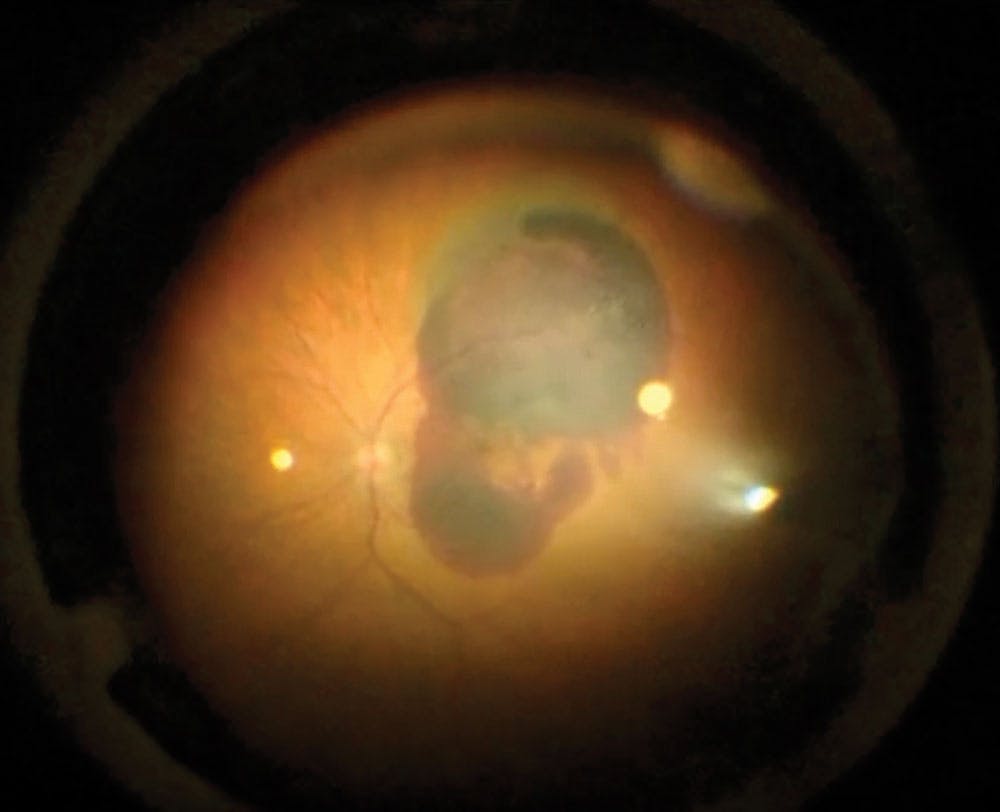
Figure 1. The patient's SMH was treated with an anti-VEGF injection at presentation and surgery was scheduled.
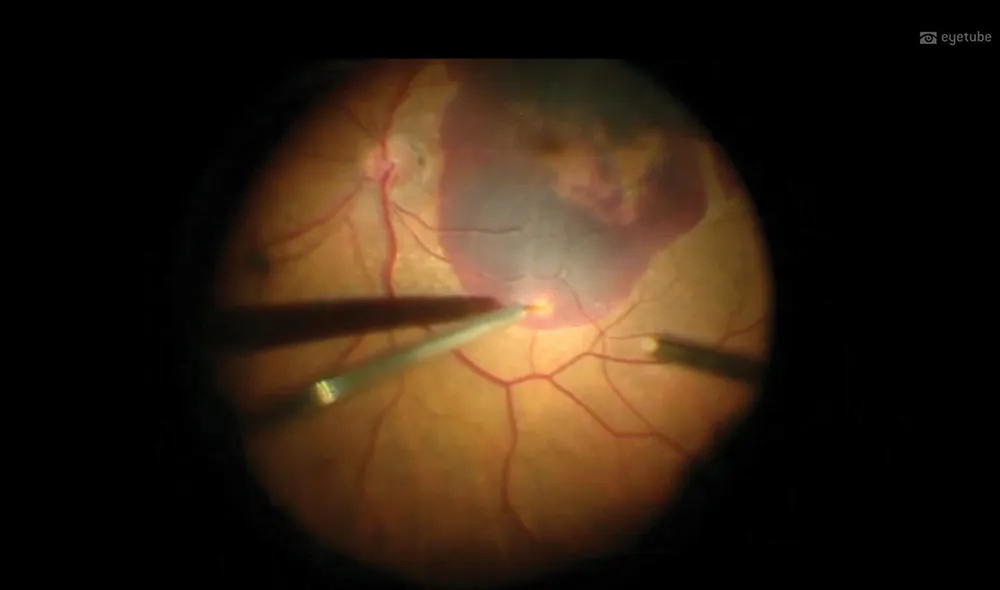
Video. Subretinal tPA for Hemorrhage.
SURGICAL STEPS AND RESULTS
A 25-gauge vitrectomy was performed, and a posterior vitreous detachment was confirmed (Video). A 38-gauge cannula was connected to the viscous fluid control infusion port to administer alteplase (10 mcg/0.1 mL). The cannula was directed toward the SMH largely superior and nasal to the fovea. A subtle “dimple” of the retina was seen as the cannula was advanced into the subretinal space. The medication was carefully injected, as evidenced by a slow expansion of the subretinal space. A fluid-air exchange was performed with 20% SF6. The patient was instructed to maintain an upright position.
At postoperative month 1, the patient’s VA improved to 20/40 OD (Figure 2), and at postoperative year 1, his VA had improved to 20/25 OD. He continues to undergo treat-and-extend intravitreal anti-VEGF therapy for his wet AMD.
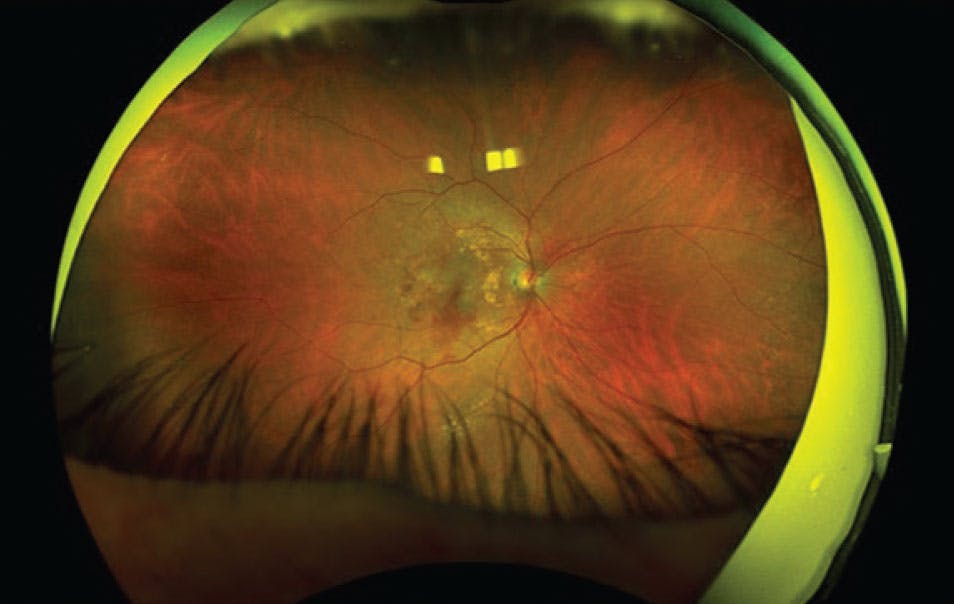
Figure 2. The patient's color fundus photograph shows 1-month postoperative results of vitrectomy, subretinal tPA, and SF6 gas infusion for the management of an SMH secondary to wet AMD. His VA improved from 20/100 OD at presentation to 20/40 OD.
FACTORS TO CONSIDER BEFORE OPERATING
Management of SMH secondary to wet AMD requires individualized patient consideration. Treatments include, among others, combinations of intravitreal anti-VEGF monotherapy, pneumatic displacement, intravitreal or subretinal tPA, and vitrectomy with intravitreal anti-VEGF therapy and subretinal tPA.
Good candidates for surgical intervention include those with a large SMH and without a significant sub-RPE hemorrhage.1 The patient’s baseline vision, ability to perform activities of daily living, and overall medical health should also factor into the surgical decision making. There is significant heterogeneity among patients with SMH undergoing surgical management.1 Other individual factors to consider may include the age of the hemorrhage, systemic use of anticoagulation, and intravitreal injection history, among others.1
A review by Stanescu-Segall et al reported the best visual outcomes in patients who underwent vitrectomy with subretinal tPA, gas infusion, and intravitreal anti-VEGF injection, but surgical technique and patient baseline characteristics varied.2 Shaheen et al conducted a systematic review and found that surgery was effective, but approaches were varied, as were baseline patient characteristics.3 In addition, there were inconsistent methods of measuring and describing SMH size, and most of the studies in the review used subretinal tPA alone, while others also used subretinal air to achieve pneumatic displacement.
TAILOR YOUR STRATEGY
Determining the best management approach for SMH secondary to wet AMD relies on careful patient evaluation with an individualized approach. The size and age of the SMH and the patient’s ability and motivation to undergo surgery are important considerations.
1. Garg SJ, Regillo CD. Management of large submacular hemorrhage secondary to neovascular age-related macular degeneration. Ophthalmol Retina. 2025;9(1):1-3.
2. Stanescu-Segall D, Balta F, Jackson TL. Submacular hemorrhage in neovascular age-related macular degeneration: A synthesis of the literature. Surv Ophthalmol. 2016;61(1):18-32.
3. Shaheen A, Mehra D, Ghalibafan S, et al. Efficacy and safety of anti-VEGF injections and surgery for age-related macular degeneration-related submacular hemorrhage: a systematic review and meta-analysis. Ophthalmol Retina. 2025;9(1):4-12.


_1773249222.png?auto=compress,format&w=70)


_1784132761.jpg?auto=compress,format&w=75)





