


Key Takeaways
- Approximately 40% of patients with diabetes do not receive the minimum recommended examinations, which is yearly for patients with type 2 diabetes.
- A telehealth program in health centers improved DR screening rates by approximately 7% when comparing the intervention sites with sites that didn’t participate in the screening program.
- Not only are these programs great for patients, but they also help clinics and hospitals. They broaden access for patients while also freeing up clinic time for patients who have an acute problem.
As the incidence of diabetes continues to rise, so too does the global prevalence of diabetic retinopathy (DR).1,2 Current screening guidelines call for annual dilated fundus examinations beginning 5 years after the diagnosis of type 1 diabetes, and at the time of diagnosis and every year thereafter for those with type 2 diabetes.3
Despite these recommendations—designed to detect asymptomatic DR early to preserve vision—approximately 40% of patients with diabetes do not receive the minimum recommended examinations.3 Traditionally, distance from an ophthalmic care center has been the main identifiable barrier to care, yet even patients residing close to Mass Eye and Ear are not getting screened in a timely manner.4,5 Patients in an urban setting still struggle with a lack of transportation, inability to take time off work, childcare responsibilities, and limited health literacy, and this is particularly true in neighborhoods with limited access to medical care, lower socioeconomic rates, and more racial and ethnic diversity.
Once our team at Mass Eye and Ear realized this unmet need, we initiated a pilot telehealth program aimed at improving access to DR screening. The program involved installing ultra-widefield fundus imaging in three community health centers in the Boston area. Here’s how it helped to improve our system’s DR screening rates—and why a similar program might be helpful in your community.6
WHY COMMUNITY HEALTH CENTERS?
To start, we wanted to target patients who needed screening the most. Looking at data for patients with diabetes in the Mass General Brigham Health System (approximately 250,000 patients), we identified areas with the lowest levels of screening and the highest number of underserved patients. Using that data, we identified three community health centers in which to initiate a DR screening program.
Community health centers are a unique location for DR screening programs because they have a more holistic approach to health care for patients and their families. The primary care providers are thinking about access to food and shelter and screening people who are at a higher risk for a multitude of diseases. They are already engaged in health care from a public health perspective, and a DR screening program was certainly of interest to them.
THE SETUP
The program used a staged initiation, with screening beginning at Site B in June 2021, Site C in February 2022, and Site A in January 2023. An ultra-widefield fundus camera (Optos) was stationed, and non-expert imagers in the primary care clinics were trained to handle the imaging process. The device was integrated into the electronic health record to streamline workflow and data management. Ophthalmologists at Mass Eye and Ear interpreted the image and sent the results back to the primary care practice, which then managed the patient interaction and scheduled any necessary follow-up.
We analyzed screening data from six health centers from January 2020 to January 2024: three sites before and after implementation of the screening program and three comparison sites where the program was not implemented.
THE FINDINGS
In our study, recently published in BMC Health Services Research, the baseline screening rate was between 25% and 40%.6 Once we put an ultra-widefield fundus camera in a health care center, we were able to improve the DR screening rate by approximately 7% compared with community health centers that were equivalent in terms of demographics, medical comorbidities, other characteristics.
The program required significant patient education and community health provider education to ensure everyone was knowledgeable about the program and the gaps it addresses. The health centers have many competing priorities that can take precedence over DR screening, such as making sure patients are housed, have food, or are vaccinated. In addition, patients can be reluctant to participate in the screening, often because they don’t know what it’s for, or they don’t want to find out if they have a problem.
When we initiated this program, we were concerned that patients already getting their eyes screened with in-person examination—those who were knowledgeable and were already proactive—would switch over to the telehealth screenings, but that did not occur. Most patients stayed with their care provider if they were already receiving timely screening. We found that most patients being imaged at the community health centers were new patients who previously hadn’t been getting screened. We were pleased to see that we weren’t just shifting care from one modality to another; rather, we were adding a segment of patients who previously wouldn’t have otherwise been screened.
In our DR screening program, patients who screen positive for DR are called to set up follow-up care. We follow our own hospital protocols by reaching out three times by phone and sending a letter if we are unable to make contact. Unfortunately, the program has a high no-show rate for these patients, despite robust communication. Still, we have a cohort of patients with DR who were identified through the telehealth screening program and have since received care, such as injections and lasers, to prevent vision loss.
TIME FOR EXPANSION
We piloted this program in Boston and local urban centers. While urban access issues are unique in some ways, many issues are also universal and also apply in rural settings. If a patient can’t access eye care due to a variety of logistical or psychological barriers, sometimes we can provide this service in their primary care setting.
Adopting a screening program has challenges. Space, which is always a concern, is often creatively solved. In each of the community centers, we found a closet, hallway, or nook for the camera (Figure 1). Workflow in busy primary care clinics is another significant hurdle to adoption. Health care is increasingly limited in resources and support staff, and at many of our centers staffing concerns make it challenging to add a DR telehealth screening program. A program like this takes leadership and prioritization. We meet with the medical leadership at each site before starting to demonstrate efficacy at other locations and discuss their local needs.
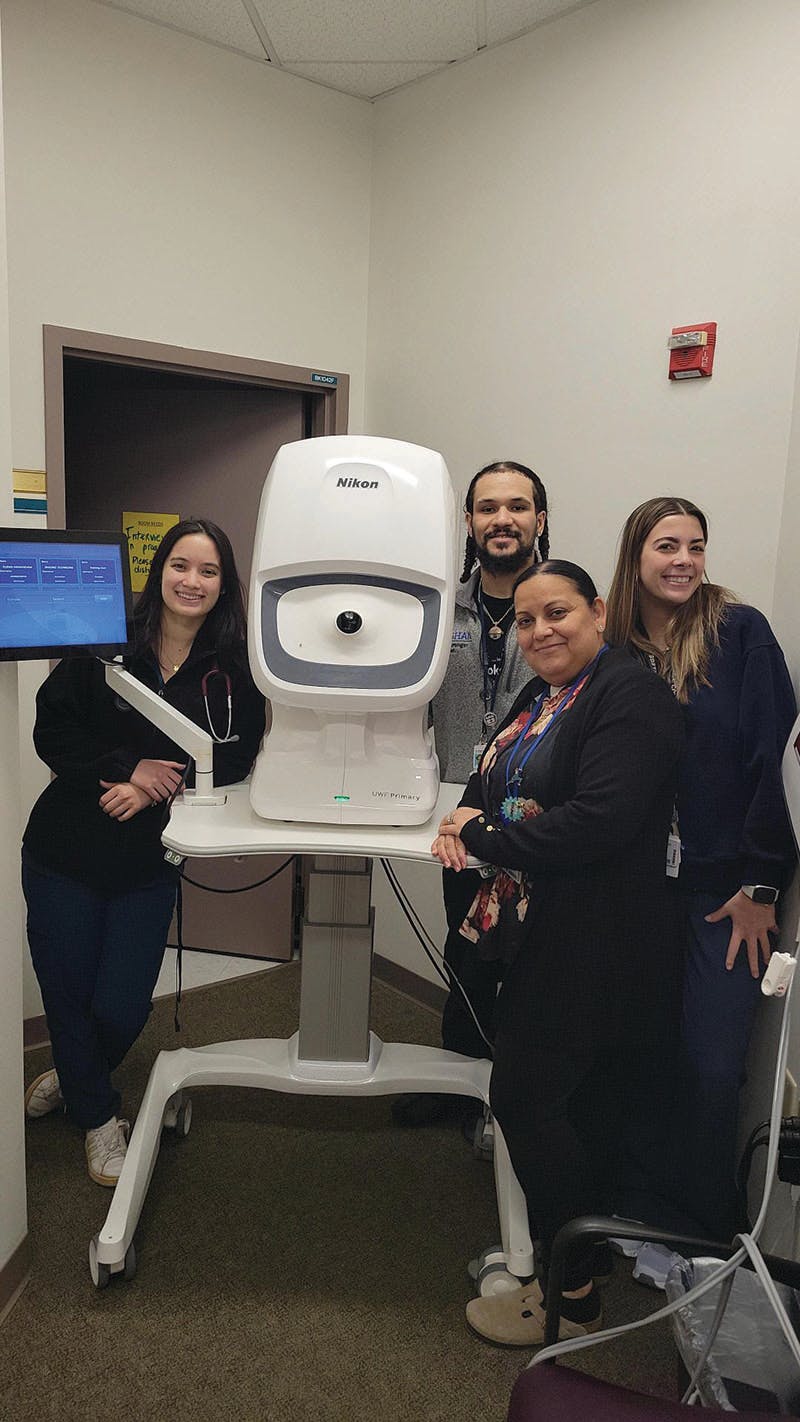
Figure 1. Staff at a community health center demonstrate the setup for the telehealth program with the fundus camera stationed in a hallway.
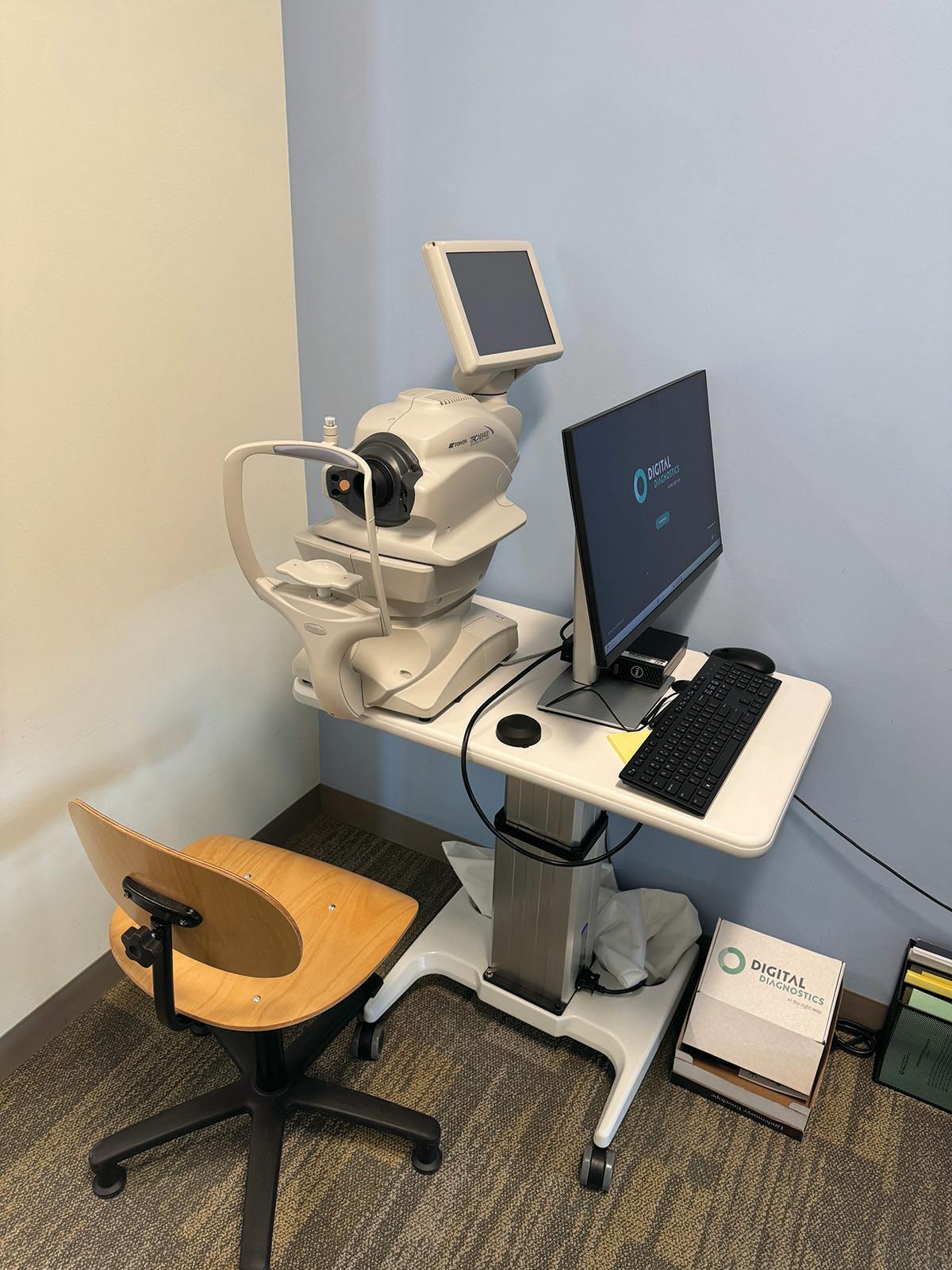
Figure 2. Although space is often a concern, these fundus cameras don’t take up much room and can be tucked into an unused corner.
IMPLEMENTING THE DATA
When implementing a DR screening program, institutions must identify disparities within the patient population and focus on that area. Our study showed that adding fundus imaging to community health centers led to an improvement in screening rates in our underserved patient populations. Given this data, we have since expanded to more than 20 locations, many of which now use Topcon cameras with Digital Diagnostics’ LumineticsCore AI (Figure 2). With this AI technology, the patient receives real-time results without burdening specialists with constant data analysis.
By conducting studies and expanding programs such as this, we can decrease disparities in a clinically meaningful and cost-effective way.
1. Cheung N, Mitchell P, Wong TY. Diabetic retinopathy. Lancet. 2010;376(9735):124-136.
2. Lundeen EA, Burke-Conte Z, Rein DB, et al. Prevalence of diabetic retinopathy in the US in 2021. JAMA Ophthalmol. 2023;141(8):747-754.
3. Flaxel CJ, Adelman RA, Bailey ST, et al. Diabetic retinopathy preferred practice Pattern®. Ophthalmology. 2020;127(1):P66-P145.
4. Diamond JP, McKinnon M, Barry C, et al. Non-mydriatic fundus photography: a viable alternative to fundoscopy for identification of diabetic retinopathy in an aboriginal population in rural Western Australia? Aust N Z J Ophthalmol. 1998;26(2):109-115.
5. Maberley D, Walker H, Koushik A, Cruess A. Screening for diabetic retinopathy in James Bay, Ontario: a cost-effectiveness analysis. CMAJ. 2003;168(2):160-164.
6. Ha SK, Gilbert JB, Le E, Ross C, Lorch A. Impact of teleretinal screening program on diabetic retinopathy screening compliance rates in community health centers: a quasi-experimental study. BMC Health Serv Res. 2025;25(1):318.
_1773249222.png?auto=compress,format&w=70)


_1784132761.jpg?auto=compress,format&w=75)





