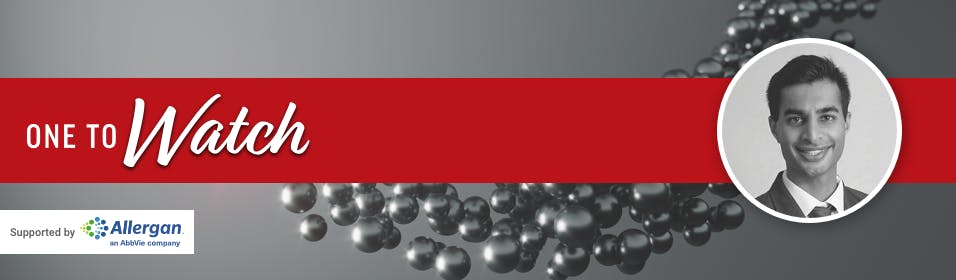

Please share with us your background.
I was born in New Zealand and was mostly interested in becoming a professional rugby player for the national team. After realizing that I lacked the physical attributes for this career, and my family moving to United States, I pursued science and biomedical engineering at the University of Connecticut. I enjoyed the rationality of physics, problem solving, and the creativity associated with design. The missing elements were seeing the final application of devices and the human component. This is why medicine was a better fit for me, having all these factors in combination.
When did you know that you wanted to be a retina specialist?
The Bascom Palmer Eye Institute, where I trained for residency, has a deep history in retinal surgery. My interest was sparked when visiting the lab of Jean-Marie Parel, Ing.ETS-G, PhD, FARVO, during my first year and hearing a first-hand account of the vitrectomy origin story. Throughout training, Basil K. Williams Jr, MD, reinforced my curiosity by often pointing out that retina specialists can handle most parts of the eye and the complications. I liked the thought of being as comprehensive as possible in an already specialized field. Staying at Bascom Palmer for my fellowship allowed me to become a chief resident, teach others, and gain experience in a leadership role while still in training.
Who are your mentors?
My father and older sister guided me, as they are both in medicine. It was clear from watching them that if you enjoy what you do, you are never quite working. In terms of ophthalmology and retina, there are too many important influences to name. Audina M. Berrocal, MD, steered me towards pediatric retina and showed me the potential effect I could have due to the significant need coupled with the quantity of unanswered research questions. Watching her tackle testing surgeries and mystery cases made it clear that there would be few dull moments if I chose to follow in her footsteps. We are still in touch, mainly when I call in a panic about cases, but also with ongoing collaborative projects. On a personal level, she also demonstrated how to act with exceptional kindness and honesty with trainees and staff. She treated us to dinners and sent gifts for the holidays, to name a few things. I work to emulate this approach in my own career, and she has now become one of my closest friends.
Describe your current position.
I am an adult and pediatric retinal specialist at Massachusetts Eye and Ear and Boston Children’s Hospital, which are affiliated with Harvard Medical school. I see a variety of pathology, including some oncology and uveitis. The practice is approximately 80% adult patients, and I spend nearly 80% of my time in the clinic. I appreciate working with very intelligent residents and fellows, as well as a group of distinguished faculty who motivate and guide me. I mentor a research fellow, Sandra Hoyek, MD, who helps on research projects on retinopathy of prematurity and Coats disease.
What has been a memorable experience in your career?
We are lucky in ophthalmology to have daily chances to help patients, which creates many memorable moments. The one that comes to mind first is when Anne Kunkler, MD, saw a patient in the emergency department with long-standing vision loss and found a worm accompanying unilateral retinal atrophy. Laser was unsuccessful due to the mobility of the target. During surgery, I staffed Nathan Scott, MD, while he removed the villainous nematode from underneath the hyaloid. After extracting, we could visualize the parasite alive in the syringe. It was likely a once-in-a-lifetime experience. I still watch the surgical video like a rerun of a favorite sitcom.
What advice can you offer to individuals who are just now choosing their career paths after finishing fellowship?
Ask for help! Almost everything good that has happened to me has been based on advice from others. There are many difficult subjects that are not broached in training, including contract negotiation, managing complications, optimizing clinical templates, attaining research funding, and collaborating with industry. Those who have already been through it are the best resources. It is okay if some advice is conflicting; all that usually means is that there is no clear correct answer. We have a great community willing to assist if called upon.
