


Macular telangiectasia type 2 (MacTel) is a bilateral, neurodegenerative retinal condition that causes progressive photoreceptor dysfunction.1 On optical coherence tomography (OCT), this manifests as attenuation and loss of the ellipsoid zone (EZ), a hyperreflective band which represents the outer portion of photoreceptor inner segments (Figure 1).1-3
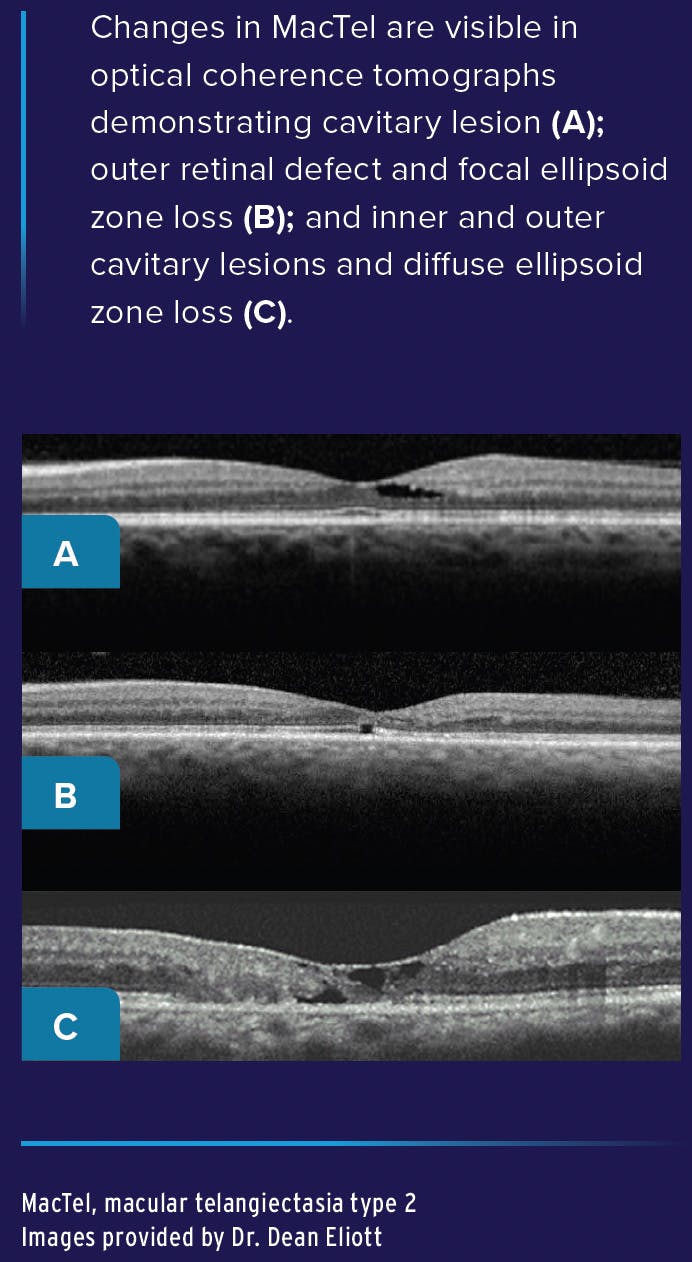
Other clinical findings associated with MacTel include retinal capillary alterations, outer retinal atrophy, pigment migration, and possible subretinal neovascularization in patients with the proliferative stage of the disease.4,5
While the mechanism of disease is not completely understood, Müller glial cell dysfunction is hypothesized to play a major role.4 The normal function of these cells is to provide structural, neuroprotective, and regulatory support to retinal neurons and the retinal vasculature, and their dysfunction results in glial cell and photoreceptor apoptosis.6,7 Visual impairment among patients with MacTel increases as the structural changes associated with the disease encroach on the foveal center, most commonly in the fifth to seventh decades of life.5,8,9
MACTEL’S IMPACT ON PATIENTS
MacTel can impair both near and distance vision and may result in parafoveal scotomas.5,10 Common visual disturbances include metamorphopsia, impaired stereoscopic vision, and worsened dark adaptation.11-13 Largely due to the central vision impairment in MacTel, patients commonly demonstrate poorer reading acuity than normal controls.5,10
Consistent with this, reading performance has been strongly linked with vision-related daily life, and patients with MacTel have been found to report poorer general health, mental health, and societal functioning than their age-matched peers.5,14,15
Treatment for MacTel has been limited to the use of anti-vascular endothelial growth factor agents to control neovascularization in the proliferative stage of the disease. Prior to the recent approval of ENCELTO by the United States Food and Drug Administration (FDA), there were no approved pharmaceutical therapies for MacTel.10,16,17 Approaches including focal laser photocoagulation, photodynamic therapy, intravitreal triamcinolone acetonide, or posterior juxtascleral anecortave acetate have been explored but have not provided clear benefits.18
The First Available Treatment for MacTel
ENCELTO is an innovative intraocular implant approved for the treatment of adults with macular telangiectasia type 2. ENCELTO is a form of encapsulated cell therapy (ECT), in which genetically engineered cells that express therapeutic proteins are contained within a semipermeable polymer capsule for ongoing delivery to target tissues.16,17 ENCELTO delivers ciliary neurotrophic factor (CNTF), which has been shown to reduce the loss of photoreceptors.17,19 The use of CNTF has historically been limited by its extremely short intraocular half-life of 1 to 3 minutes, but synthesizing the protein in situ enables its sustained delivery into the vitreous.19,20
SELECTED IMPORTANT SAFETY INFORMATION
CONTRAINDICATIONS
ENCELTO is contraindicated in patients with active or suspected ocular or periocular infections, and in patients with known hypersensitivity to Endothelial Serum Free Media (Endo-SFM).
The ENCELTO implant consists of a hollow-fiber, semipermeable membrane containing genetically modified retinal pigment epithelial (RPE) cells that are nourished by the patient’s vitreous (Figure 2).17,21,22
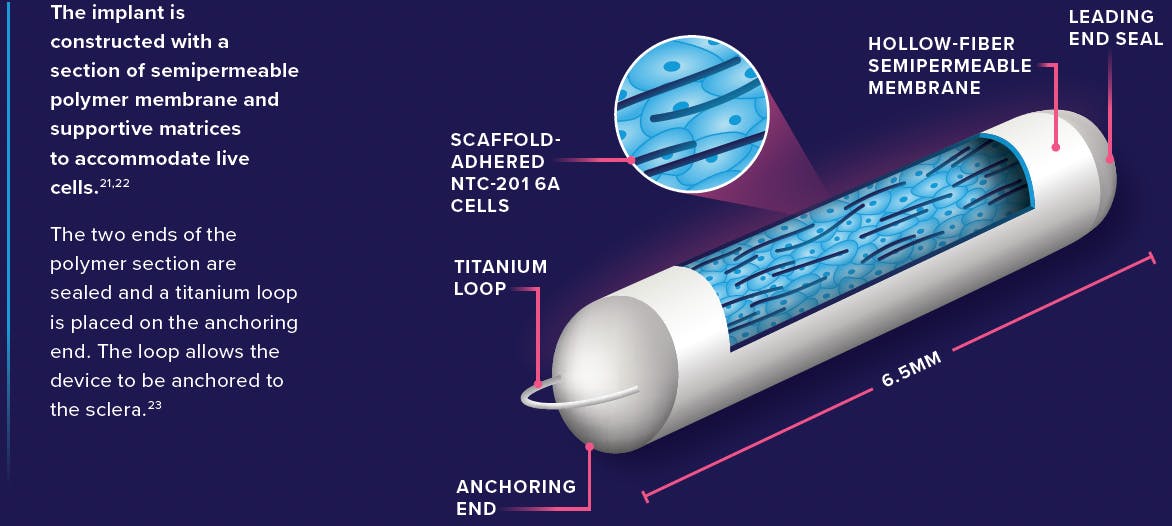
The membrane prevents antibodies and host immune cells from entering the implant, limiting the likelihood of an immune reaction to the foreign cells.
The titanium fixation loop of the implant is sutured to the sclera to prevent migration.23 If necessary, the suturing allows the implant to be surgically removed through the original incision, immediately terminating the treatment. With a profile of approximately 6.5 mm in length and 1.3 mm in diameter, the implant remains outside of the visual axis and does not alter the conjunctival profile externally.
Demonstrated Clinical Efficacy
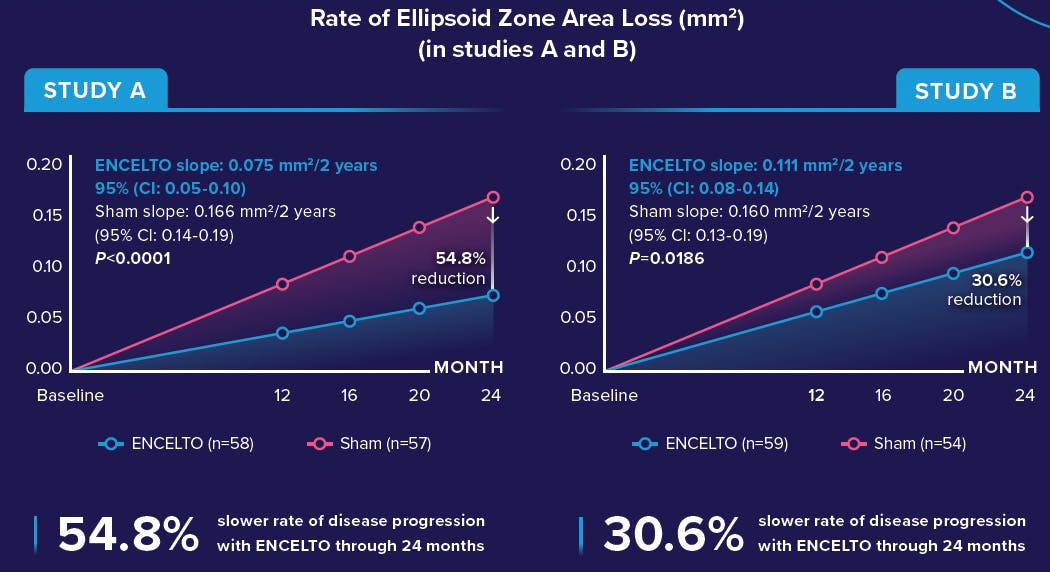
In two multicenter, randomized, sham-controlled, phase 3 clinical trials (Studies A and B), a total of 228 participants with MacTel type 2 were randomized to receive ENCELTO or a sham procedure.16,17 The primary endpoint was rate of change in area of EZ loss through 24 months.
There was a statistically significant and clinically relevant difference in rate of change in EZ area loss from baseline in patients treated with ENCELTO compared to sham through 24 months: a 54.8% rate of reduction in Study A (P<0.0001) and a 30.6% rate of reduction in Study B (P=0.0186) (Figure 3). Thus, both studies met the primary endpoint.
SELECTED IMPORTANT SAFETY INFORMATION
WARNINGS AND PRECAUTIONS
ENCELTO implantation surgery and/or implantation related procedures have been associated with the following:
Severe Vision Loss
Severe vision loss defined as three or more lines of visual acuity loss [≥15 Early Treatment Diabetic Retinopathy Study (ETDRS) letters] has occurred following ENCELTO implantation. Monitor patients for signs and symptoms of vision loss and manage as clinically indicated.
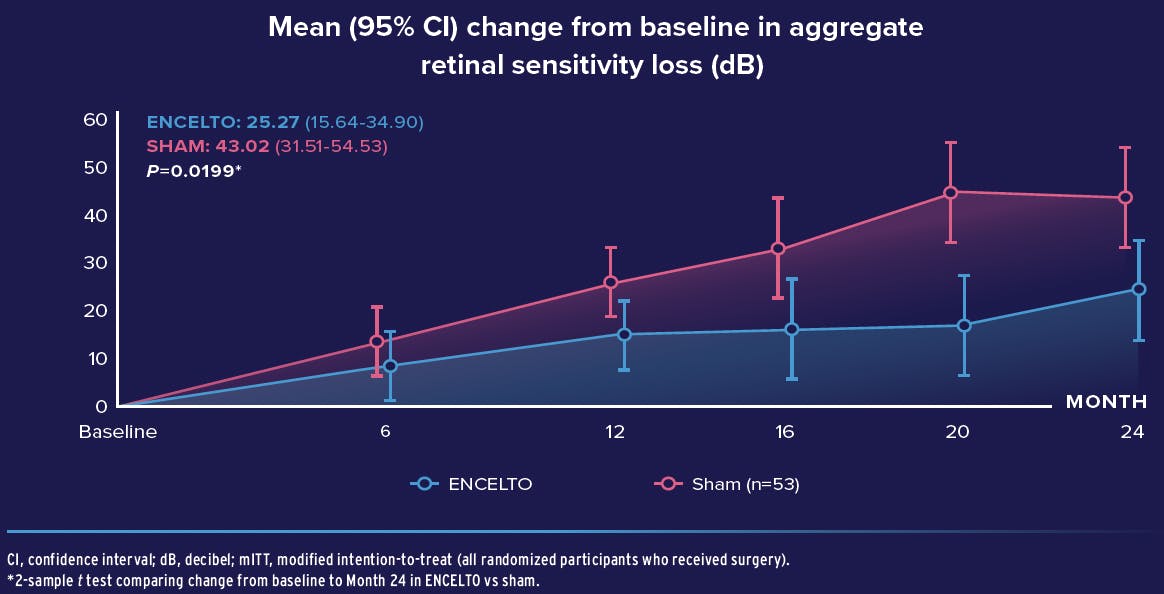
In Study A, but not Study B, patients who received ENCELTO also had significantly greater preservation of retinal sensitivity than those who underwent a sham procedure (Figure 4).16
ENCELTO was generally well tolerated, with mild to moderate ocular adverse reactions.16,17 Ocular treatment-emergent adverse events (TEAEs) were mild and transient, with no incidences of intraocular inflammation or clinically significant retinal vasculitis. The most common adverse reactions (incidence ≥ 2%) were conjunctival hemorrhage, delayed dark adaptation, foreign body sensation, eye pain, suture-related complications, miosis, conjunctival hyperemia, eye pruritus, ocular discomfort, vitreous hemorrhage, blurred vision, headache, dry eye, eye irriation, cataract progression or formation, vitreous floaters, severe vision loss, eye discharge, anterior chamber cell, and iridocyclitis. Few serious ocular TEAEs occurred, and most were expected and related to surgery. Most nonocular TEAEs were mild to moderate, and no serious related nonocular TEAEs were reported. No explants were required in either clinical study.
SELECTED IMPORTANT SAFETY INFORMATION
WARNINGS AND PRECAUTIONS (CONT'D)
Infectious Endophthalmitis
Infectious endophthalmitis may occur following ENCELTO implantation. Signs and symptoms of infectious endophthalmitis include progressively worsening eye pain, vision loss, or scleral and conjunctival injection. To mitigate the risk of endophthalmitis, use proper aseptic surgical technique for ENCELTO implantation. Monitor patients for signs or symptoms of infectious endophthalmitis. Remove ENCELTO implant if infectious endophthalmitis occurs and manage symptoms according to clinical practice.
CLINICAL BENEFITS OF ENCELTO
These results demonstrate that intraocular delivery of CNTF using ENCELTO is effective at slowing disease progression. ENCELTO was generally well tolerated, with mild to moderate ocular adverse reactions. Harnessing a living cell line allows the production of a consistent, long-term concentration of CNTF, which would otherwise be limited for intraocular delivery by its short half-life. ENCELTO offers a unique opportunity to slow disease progression in the management of adult patients with MacTel, a previously untreatable condition.
ENCELTO is the only approved device that contains genetically engineered cells that provide sustained delivery of a neuroprotective protein. For the first time, patients with MacTel can experience a slowing of disease progression, as demonstrated in clinical trials. With the FDA's approval of ENCELTO, retina specialists now have a treatment option for patients living with MacTel.
INDICATIONS AND USAGE
ENCELTO is an allogeneic encapsulated cell-based gene therapy indicated for the treatment of adults with idiopathic macular telangiectasia type 2 (MacTel).
IMPORTANT SAFETY INFORMATION
CONTRAINDICATIONS
ENCELTO is contraindicated in patients with active or suspected ocular or periocular infections, and in patients with known hypersensitivity to Endothelial Serum Free Media (Endo-SFM).
WARNINGS AND PRECAUTIONS
ENCELTO implantation surgery and/or implantation related procedures have been associated with the following:
Severe Vision Loss
Severe vision loss defined as three or more lines of visual acuity loss [≥15 Early Treatment Diabetic Retinopathy Study (ETDRS) letters] has occurred following ENCELTO implantation. Monitor patients for signs and symptoms of vision loss and manage as clinically indicated.
Infectious Endophthalmitis
Infectious endophthalmitis may occur following ENCELTO implantation. Signs and symptoms of infectious endophthalmitis include progressively worsening eye pain, vision loss, or scleral and conjunctival injection. To mitigate the risk of endophthalmitis, use proper aseptic surgical technique for ENCELTO implantation. Monitor patients for signs or symptoms of infectious endophthalmitis. Remove ENCELTO implant if infectious endophthalmitis occurs and manage symptoms according to clinical practice.
Retinal Tear and Detachment
Retinal tears and retinal detachment may occur following ENCELTO implantation. Signs and symptoms of retinal tears include acute onset of flashing lights, floaters, and/or loss of visual acuity. Signs and symptoms of retinal detachment may include progressive visual field loss and/or loss of visual acuity. Use standard vitreoretinal surgical techniques during ENCELTO implantation to minimize the risk of retinal tears and retinal detachment. Monitor for any signs or symptoms of retinal tear and/or retinal detachment. Treat rhegmatogenous retinal detachment and retinal tears promptly. Remove ENCELTO implant, if vitrectomy with a complete gas fill or silicone oil fill is required.
Vitreous Hemorrhage
Vitreous hemorrhage, which may result in temporary vision loss, has occurred following ENCELTO implantation. Patients receiving antithrombotic medication (e.g., oral anticoagulants, aspirin, nonsteroidal anti-inflammatory drugs) may be at increased risk of vitreous hemorrhage. To reduce the risk of vitreous hemorrhage, interrupt antithrombotic medications prior to the ENCELTO implantation. Vitrectomy surgery may be necessary to clear severe, recurrent, or non-clearing vitreous hemorrhage. If the patient has a late onset vitreous hemorrhage (greater than one year following ENCELTO implantation surgery), examine the ENCELTO implantation site for possible implant extrusion. If implant extrusion has occurred, surgically reposition ENCELTO.
Implant Extrusion
Implant extrusion through the initial scleral wound has occurred following ENCELTO implantation. Signs and symptoms of implant extrusion include recurrent uveitis, vitreous hemorrhage, eye pain more than one year after implantation, or visibility of titanium fixation loop under the conjunctiva. To reduce the risk of implant extrusion, carefully follow the specific surgical steps for ENCELTO implantation. Evaluate patients after 6 months to confirm proper positioning of ENCELTO and then annually. If ENCELTO begins to extrude, surgically reposition ENCELTO to a proper scleral wound depth either in the same site or in the opposing inferior quadrant of the vitreous cavity.
Cataract Formation
Cataract formation, including cataract cortical, cataract nuclear, cataract subcapsular, cataract traumatic, and lenticular opacities, has occurred following ENCELTO implantation. To reduce the risk of ENCELTO-related cataract formation or progression, carefully follow the specific surgical steps for ENCELTO implantation.
Suture Related Complications
Suture related complications, including conjunctival erosions due to suture tips and suture knots, have occurred following ENCELTO implantation. To mitigate the risk of suture related complications, carefully follow the specific surgical steps for ENCELTO implantation and manage suture-related complications as clinically indicated.
Delayed Dark Adaptation
Delayed Dark Adaptation, a delay in the ability to adjust vision from a bright lighting condition to a dim lighting, has occurred following ENCELTO administration which remained unchanged for the duration of study follow up. Advise patients to take caution while driving and navigating in the dark.
ADVERSE REACTIONS
The most common adverse reactions (≥2%) reported with ENCELTO were conjunctival hemorrhage, delayed dark adaptation, foreign body sensation, eye pain, suture related complications, miosis, conjunctival hyperemia, eye pruritus, ocular discomfort, vitreous hemorrhage, blurred vision, headache, dry eye, eye irritation, cataract progression or formation, vitreous floaters, severe vision loss, eye discharge, anterior chamber cell, iridocyclitis.
Please see the full Prescribing Information.
