


“You may be wondering, ‘Why the red suit?’ Well, that’s so bad guys can’t see me bleed.”
– Deadpool
There were many red super suits at the 11th annual Vit-Buckle Society (VBS) meeting with its superhero theme. For the second year, VBS held a trainee-specific program that addressed early career concerns and stressors, such as contract negotiations, the role of private equity, managing debt, establishing clinical trials, maintaining work-life balance, and even OR neck pain. The morning included sessions for all attendees, while the afternoon added a separate track for the FOstering Careers for Underrepresented Stars (FOCUS) participants. The goal was to help attendees build a protective super suit of their own.
FELLOWS PROGRAM
The Thursday before the main VBS meeting was dedicated to trainees, and it began with a session on “Finance for the Retinal Specialist” led by Sabin Dang, MD, and Jayanth Sridhar, MD. The pair encouraged fellows to “pay the ‘future you’ first,” by setting financial goals early, following a monthly budget, automating a personal allowance, picking a target age for financial independence, and maximizing tax-deferred contributions. Dr. Sridhar urged second-year fellows to allow themselves a single stress-free splurge, post-graduation. “Get it out of your system,” he said. “It may be the last time you’ll be able to take time off with little to no responsibility.”
This segued into a panel discussion during which panelists shared personal stories of their own struggles surrounding mental health and imposter syndrome. Maria Berrocal, MD, and Vivienne S. Hau, MD, PhD, helped to demystify the phenomenon of imposter syndrome, a condition that is not specific to early career physicians but remains a near-constant afterthought. Fellows were encouraged to maintain perspective by sticking to the evidence, focusing on their values, reframing around growth, practicing self-compassion, and seeking feedback from a trusted network.
Trainees then enjoyed a session on “Ergonomics and Physical Wellness” led by Joshua Currie, DPT. Prolonged positioning and stress in the OR, suboptimal posture during slit lamp examinations, and extended procedures using the laser indirect ophthalmoscope are all potential contributors to the increased prevalence of neck and back pain in vitreoretinal surgeons, he said. Dr. Currie encouraged trainees to take preventative measures by using lumbar support chairs and bringing the patient to you at the slit lamp. In addition, he noted that surgeons who engage in regular exercise of any type are less likely to have pain while operating and provided examples of several neck and back strengthening exercises that can reduce the risk of cervical problems and kyphosis.
During the next session on “Leadership in Clinical Trials,” Royce Chen, MD, interviewed Tanja Powers, vice president of Ophthalmology Sales and Marketing at Genentech, on her career trajectory and her thoughts on leadership. Ms. Powers described her servant-led style of leadership, which allows her to focus on empowering employees and getting to know them holistically. She shared what she looks for when recruiting physicians for her team: collaborative, patient-centric, and curious individuals who are willing to speak their minds and maintain an open dialogue.
Afterward, esteemed panelists discussed being at the forefront of advanced retina care, including the difficulty in gaining recognition and establishing clinical trials as a solo practitioner. Manuel Amador, MD, shared his industry focus on well-established clinic networks that can provide immediate high-quality imaging and patient volumes. Fellows interested in clinical trials were encouraged to consider practices with an established clinical trials arm.
Next, Dr. Sridhar; Alex L. Ringeisen, MD; and Nika Bagheri, MD, discussed the pros and cons of private practice versus academic career settings. Retina is unique in that most large industry led trials are performed within the private practice setting, they said. While academia can provide a better work-life balance, scheduled administrative time, and teaching opportunities, it can also be marred by red tape, inefficiency, and a pay ceiling. The panel explained that being a private practice partner may offer higher pay and greater efficiency, but it requires a business owner mentality.
One of the most useful sessions was on contract negotiation, led by Claire Kalia, JD, a contract lawyer with vast experience in the health care sector. She dissected excerpts from real contracts and highlighted verbiage and restrictions that are unfavorable to a naïve applicant. “Ask for nine things, when you only want four,” was her sage advice. Even if the salary is inflexible, practices are likely to acquiesce on additional education, paid time off (including parental leave), moving reimbursement, or loan repayment. In some instances, the tax implications can be advantageous for both parties. Ms. Kalia discussed the dangers and enforceability of non-compete clauses and the importance of adding protections against a private equity buyout. She emphasized that the partnership track should also be outlined in every associate contract. Fellows were advised to remember that they are in the driver’s seat. “I have never seen an offer pulled because someone asked for more,” she explained.
CHECK OUT OUR VIDEO COVERAGE OF VBS 2023
In the final session of the Fellows Program, panelists provided tips and tricks for successfully navigating early career challenges. They urged fellows to lean on their communities and families and to remember that things often balance out over time. Other topics included the tricky reality of how parental leave is handled by different practices, how to build a reputation in the community (give out your cellphone number!), and how to establish an appropriate patient volume. John B. Miller, MD, encouraged fellows to mentally prepare with a detailed plan for surgical cases the night before, and all panelists agreed that it is important to embrace seeing patients with complications, rather than trying to steer clear of your mistakes.
The detail and honesty of the program left a lasting impression on attendees. From personal stories of an unexpected private equity buyout to traumatizing complications in the OR, we learned that not all heroes wear capes. Many wear indirects.
FOCUS PROGRAM
The second half of the day included special programming for the invite-only FOCUS participants. This year, the program included 32 trainees—nine residents, 22 medical students, and one vitreoretinal fellow. The first discussion centered on maximizing mentorship relationships with pointers from some of the best in retina: R.V. Paul Chan, MD, MSc, MBA; Hong-Uyen Hua, MD; Jessica Randolph, MD; and Adrienne W. Scott, MD (Figure 1). Trainees also had an opportunity to learn the top tips and tricks for standing out and navigating meetings from Jordan D. Deaner, MD; Dr. Berrocal; and Dr. Hau. The agenda wrapped up with one of the most moving sessions of the day—a discussion of some of the difficulties and pitfalls we all may experience throughout our training. This conversation, led by Basil K. Williams Jr, MD, and Maria Paula Fernandez, MD, emphasized that our vulnerabilities might prove to be our strongest tools for encouraging and relating to the next generation of ophthalmologists.
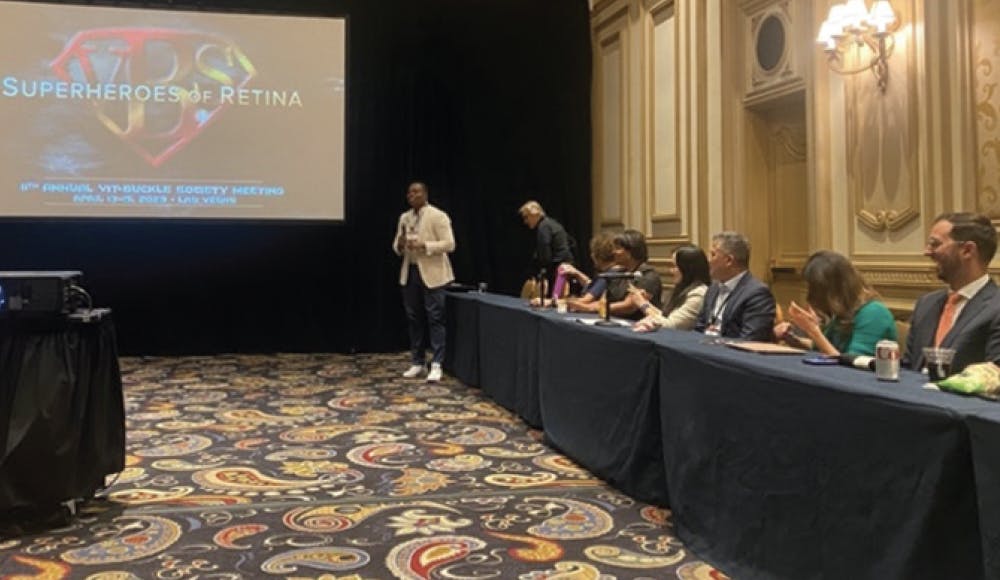
Figure 1. Basil K. Williams Jr, MD, founder of the FOCUS program, introduced the event’s first panel of speakers.
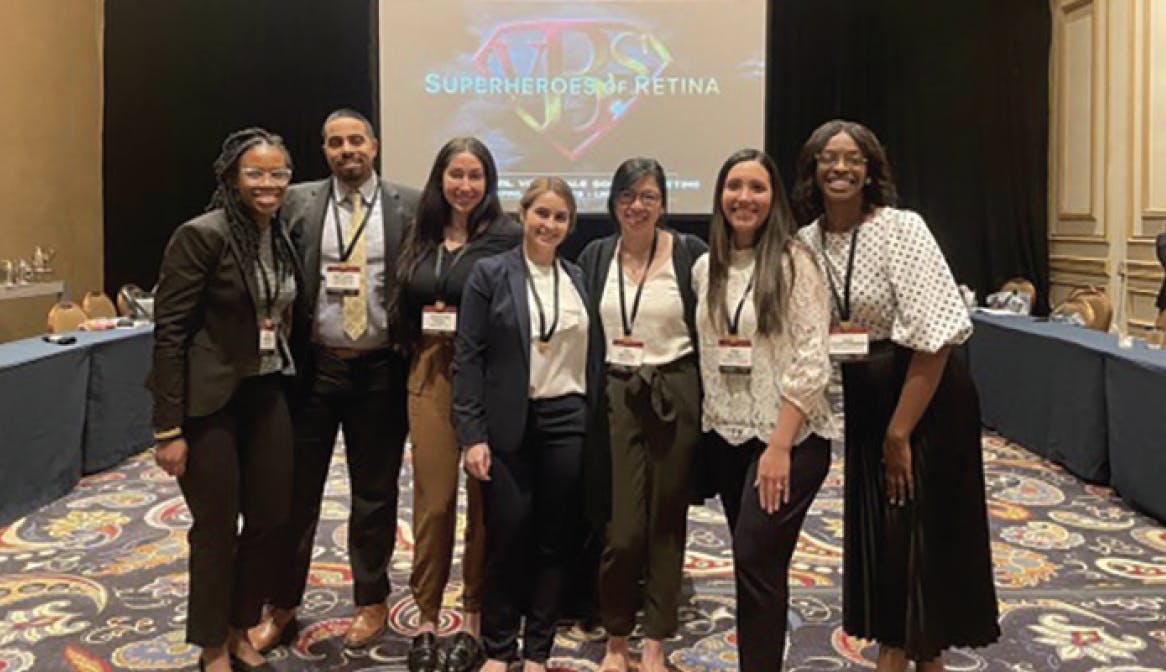
Later that evening, the FOCUS participants met and conversed with VBS leadership in a private happy hour (Figure 2). Moving forward, trainees will maintain these connections throughout the year by participating in online “office hours,” during which VBS faculty will be available to field questions or concerns.


_1784132761.jpg?auto=compress,format&w=75)





