


The main treatment for aphakia is the implantation of an IOL; however, therapeutic challenges may arise in the of absence of capsular support. The absence of capsular support is often secondary to trauma or congenital or metabolic conditions (eg, Marfan syndrome, homocystinuria, pseudoexfoliation syndrome).
Surgical alternatives in cases of absent capsular support include use of anterior chamber IOLs (ACIOLs), iris-fixated IOLs (IFIOLs), or scleral-fixated IOLs (SFIOLs).1-5 There are advantages and disadvantages to each of these lens types, and the decision depends on the individual patient.1,2 Implanting an ACIOL tends to be easier compared with the implantation of other IOLs,3 and implantation of either an ACIOL or IFIOL increases the risk of glaucoma, hyphema, intraocular inflammation, cystoid macular edema, and corneal decompensation, as they are implanted closer to the iridocorneal angle and the corneal endothelium.2,4-6 For this reason, use of an SFIOL may often be the most appropriate for certain patients.
Herein, we describe our study of 20 patients (20 eyes) who underwent SFIOL implantation, including an overview of the technique, complications, and visual outcomes.
REVIEW OF SFIOLS
SFIOLs are the most widely used option globally for IOL implantation in the absence of capsular support, especially in young patients with a history of trauma or those with diabetes, guttate cornea, narrow anterior chamber, or post-penetrating keratoplasty.4-6 SFIOLs are also more often considered in patients whose life expectancy is more than 10 years.5
However, SFIOL implantation can be challenging and can lead to postoperative complications, such as exposure of the suture and knot, lens decentration, high IOP, secondary open-angle glaucoma, endophthalmitis, vitreous hemorrhage, retinal detachment (RD), choroidal effusion, and hemorrhage.1,5,7,8-10
An SFIOL may be idea for patients with a subluxed or dislocated IOL that can be repositioned, patients with an IOL that must be exchanged, or an aphakic patient who requires secondary IOL placement.3
OUR SURGICAL TECHNIQUE
In our study, complete 25-gauge vitrectomy was performed. Some patients with a history of RD or trauma had already undergone this procedure. The 10 steps we used were as follows:
Step 1. Perform a superior and inferior conjunctival peritomy, and use a caliper to measure a 7.5 mm superior scleral incision (Figure 1A).
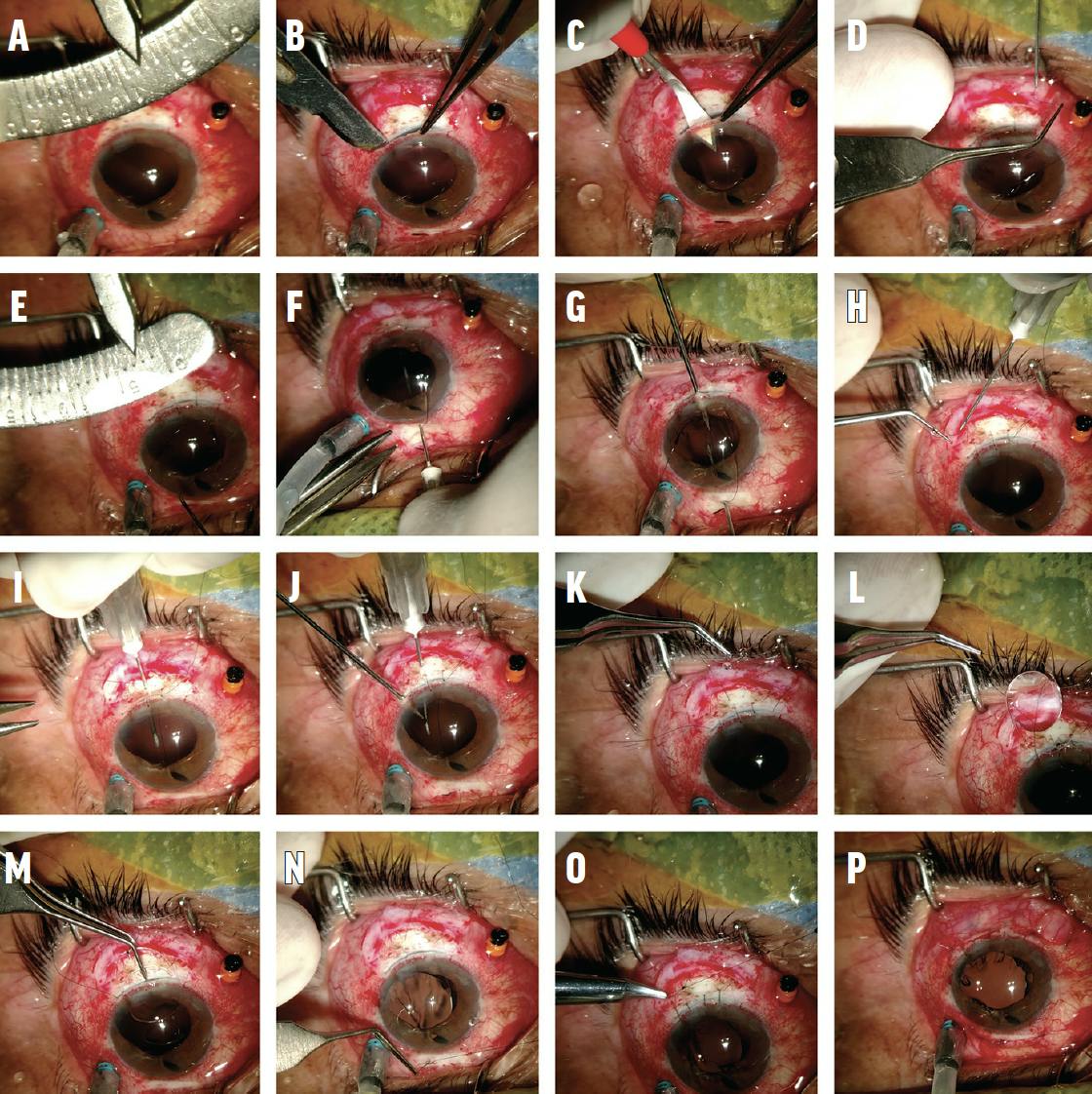
Figure 1. This patient had a history of RD that required management with vitrectomy, endolaser photocoagulation, and silicone oil tamponade. Afterward, the patient underwent silicone oil removal and SFIOL implantation with a two-point fixation technique.
Step 2. Use a No. 15 scalpel blade to create a 7.5 mm superior scleral tunnel (Figure 1B).
Step 3. Use a 2.75 mm diamond blade to enter the anterior chamber at the 12 clock hour through the scleral tunnel and extend to all principal wounds (Figure 1C). Temporarily close the scleral wound with a 10-0 nylon suture.
Step 4. Load a 27-gauge straight needle with a 10-0 nylon suture (Figure 1D) and pass it through the inferior scleral 2.5 mm posterior to the limbus (Figure 1E and 1F).
Step 5. Using an ab externo technique, visualize through the pupil and capture the suture with end-gripping forceps through the superior scleral wound (Figure 1G).
Step 6. Repeat steps 4 and 5 (Figure 1H, 1I, and 1J).
Step 7. Using the CZ70BD IOL (Alcon), the haptic of which contains a single eyelet, insert the two segments of 10-0 nylon through the superior and inferior eyelet separately (Figure 1K and 1L).
Step 8. Insert the lens into the eye posterior to the pupil (Figure 1M).
Step 9. Tie the superior and inferior knots to the sclera (Figure 1N and 1O).
Step 10. Close the upper incision with 10-0 nylon, and close the incisions from Tenon’s and conjunctiva peritomy with 6-0 vicryl to cover the scleral knots (Figure 1P).
If there are remnants of the posterior capsule, they can be used as partial lens support, and the secondary IOL only requires one point of fixation to the sclera (Figure 2).
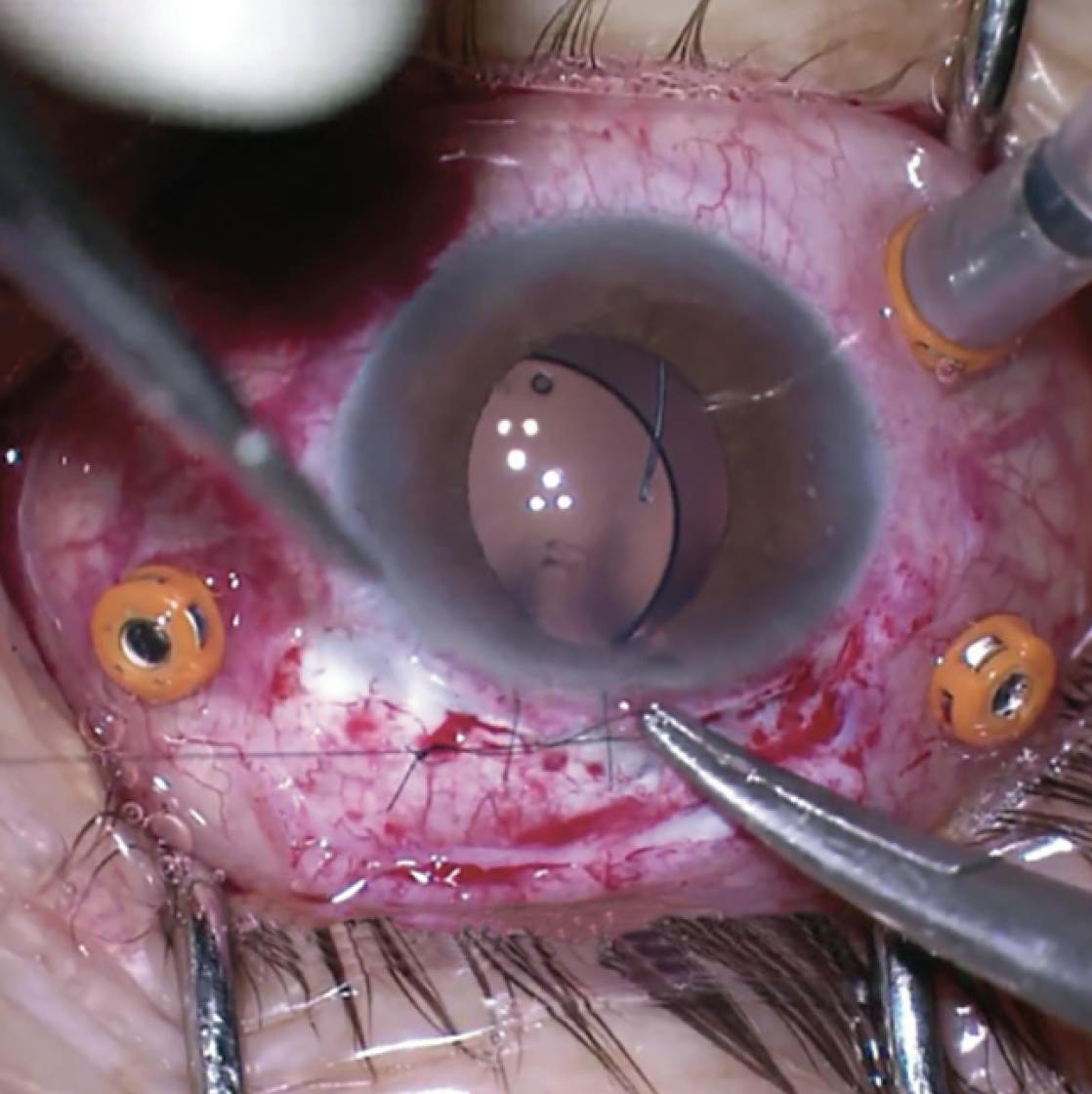
Figure 2. After cataract surgery and IOL implantation, this patient experienced inferior subluxation secondary to zonular dialysis. The lens was repositioned with a one-point fixation technique because of partial capsular support.
RESULTS
Our study included 20 eyes of 20 patients with an average age of 60.75 years (range 3–85 years). The median follow-up after surgery was 6 months (range 1–65 months). The preoperative BCVA ranged from 20/100 to light perception. Preoperative ocular history of the patients included RD, trauma, leukoma, iridodonesis, vitreous hemorrhage, choroidal detachment, pterygium, corectopia/dyscoria, posterior synechiae, aniridia, AMD, vitreous prolapse, intraocular foreign body, iris atrophy, pigment dispersion syndrome, and corneal decompensation.
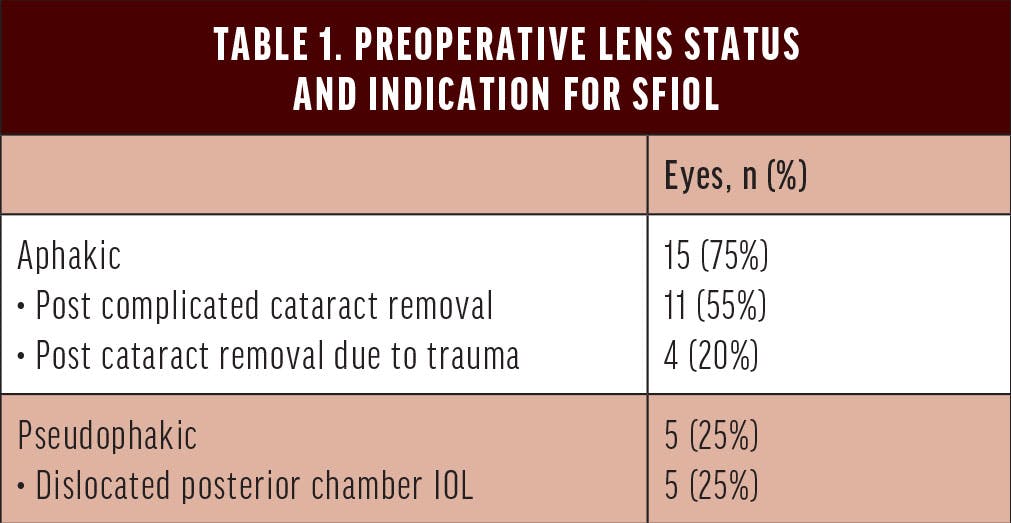
Of the 15 aphakic patients (75%), 11 had a previous complicated cataract surgery and four underwent cataract removal due to trauma. Each of the five pseudophakic patients had been previously implanted with a posterior chamber IOL that had become dislocated (Table 1).
Mean BCVA at follow-up was 20/160; 20% (four eyes) had a follow-up BCVA of 20/40 or better; 55% (11 eyes) had VA < 20/40 ≥ 20/400; and 25% (five eyes) had a VA of counting fingers or light perception.
Five patients had their lenses reposition, and 15 underwent a secondary SFIOL implantation.
Nine eyes (45%) did not experience any complications following the SFIOL technique. Postoperative complications are summarized in Table 2. Of note, posterior dislocation occurred in one eye (Figure 3), and another eye experienced decentration. Other authors have found similar decentration rates.7,11
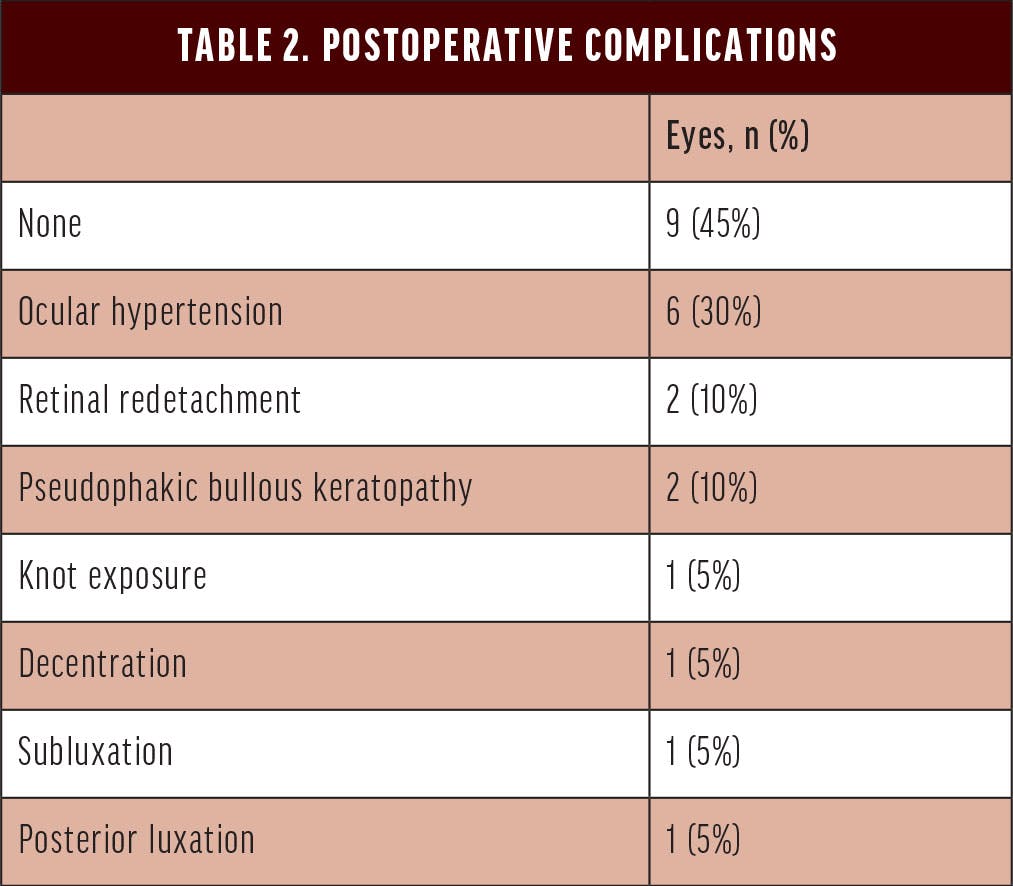
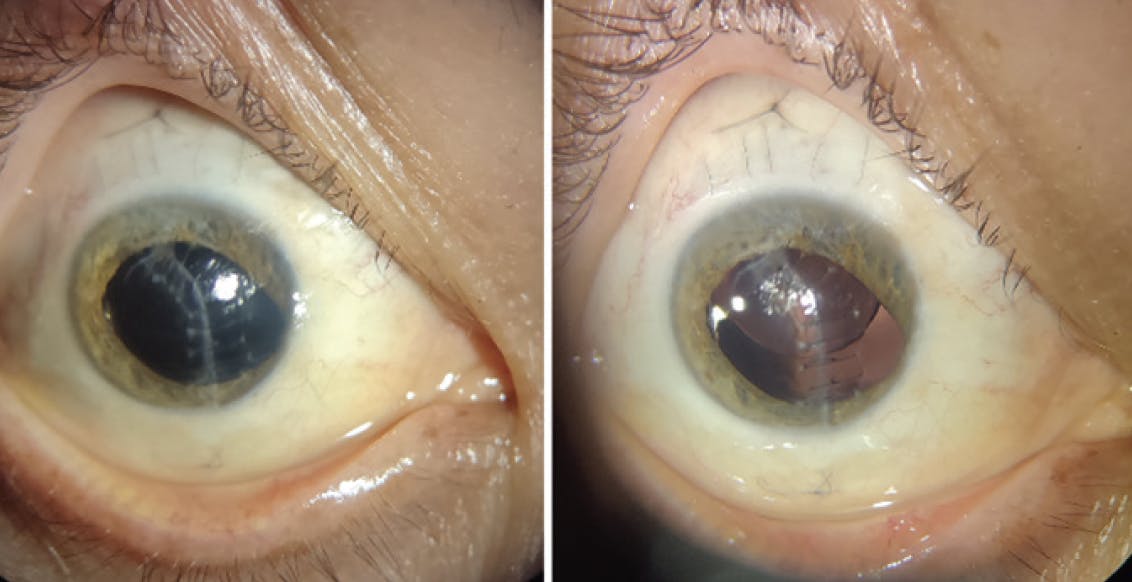
Figure 3. A patient with a history of open-globe trauma and RD underwent a secondary SFIOL implantation. The lens is seen decentered postoperatively with the superior and inferior fixation points in position. Postoperative BCVA was 20/100.
DISCUSSION
SFIOLs continue to be a challenge for ophthalmologists in the management of patients with postsurgical aphakia and IOL dislocation.5 The prevalence of poor capsular support is higher than may be supposed, especially in patients with traumatic open-globe injuries because of damage to the lens capsule or iris.3
Varying haptic designs facilitate the suture of the lens to the sclera, including holes or eyelets that allow the passage of a suture through it, thus reducing its movement.1
There has been controversy around the stability of 10-0 polypropylene, as the incidence of suture breakage in the literature is variable—from as low as 0.5% to as high as 27.9% after 6 years of follow-up.4,8,10,12 With our technique, 10-0 nylon sutures were used with no breakage reported.
Higher risk of RD has been associated with SFIOLs, ranging in the literature from as low as 3.2% to as high as 8.2%.5,7,8,11 In our study, none of the patients developed a primary RD, although two eyes (10%) developed retinal redetachment in the postoperative term.
LONG-TERM STUDIES ARE NEEDED
This SFIOL technique may be of benefit for select aphakic and pseudophakic patients. It is important to consider that most of the patients included in this study had a history of ocular pathology that could compromise their visual outcomes.
Limitations of this study include a short period of follow-up and a small sample size. For this reason, larger studies with a longer follow-up will be necessary to determine the benefits of this surgical technique.
1. Por YM, Lavin MJ. Techniques of intraocular lens suspension in the absence of capsular/zonular support. Surv Ophthalmol. 2005;50(5):429-462.
2. Prenner JL, Feiner L, Wheatley HM, Connors D. A novel approach for posterior chamber intraocular lens placement or rescue via a sutureless scleral fixation technique. Retina. 2012;32(4):853-855.
3. Stem MS, Todorich B, Woodward MA, Hsu J, Wolfe JD. Scleral-fixated intraocular lenses: past and present. J Vitreoretin Dis. 2017;1(2):144-152.
4. Kokame GT, Yanagihara RT, Shantha JG, Kaneko KN. Long-term outcome of pars plana vitrectomy and sutured scleral-fixated posterior chamber intraocular lens implantation or repositioning. Am J Ophthalmol. 2018;189:10-16.
5. McAllister AS, Hirst LW. Visual outcomes and complications of scleral-fixated posterior chamber intraocular lenses. J Cataract Refract Surg. 2011;37(7):1263-1269.
6. Matsuda M, Miyake K, Inaba M. Long-term corneal endothelial changes after intraocular lens implantation. Am J Ophthalmol. 1988;105(3):248-252.
7. Kim SS, Smiddy WE, Feuer W, Shi W. Management of dislocated intraocular lenses. Ophthalmology. 2008;115(10):1699-1704.
8. Morkin MI, Patterson M. Scleral-sutured intraocular lenses: Single-surgeon technique for suture-preloaded intraocular lens insertion through a small-incision corneal wound. J Cataract Refract Surg. 2019;45(2):121-124.
9. Epley KD, Shainberg MJ, Lueder GT, Tychsen L. Pediatric secondary lens implantation in the absence of capsular support. J AAPOS. 2001;5(5):301-306.
10. Vote BJ, Tranos P, Bunce C, Charteris DG, Da Cruz L. Long-term outcome of combined pars plana vitrectomy and scleral fixated sutured posterior chamber intraocular lens implantation. Am J Ophthalmol. 2005;141(2):308-312.
11. Wagoner MD, Cox TA, Ariyasu RG, Jacobs DS, Karp CL; American Academy of Ophthalmology. Intraocular lens implantation in the absence of capsular support: a report by the American Academy of Ophthalmology. Ophthalmology. 2003;110(4):840-859.
12. Bading G, Hillenkamp J, Sachs HG, Gabel VP, Framme C. Long-term safety and functional outcome of combined pars plana vitrectomy and scleral-fixated sutured posterior chamber lens implantation. Am J Ophthalmol. 2007;144(3):371-377.


_1784132761.jpg?auto=compress,format&w=75)





