


AT A GLANCE
- OCT angiography (OCTA) has several advantages over traditional imaging techniques, including being noninvasive, depth resolved, and rapid.
- OCTA can distinguish the various vascular networks without obscuration by leakage, making it helpful for characterizing neovascularization and nonperfusion.
- OCTA is particularly useful in cases of type 1 neovascularization, where sub-retinal pigment epithelium neovascularization can develop without active exudation.
- En face OCTA and OCT B-scans are complementary and, together, can provide the clinician with a wealth of knowledge.
- There are several conditions for which OCTA can provide detailed information that would otherwise be time-consuming or impossible to find with traditional techniques.
OCT angiography (OCTA) is a noninvasive imaging technique that uses the principles of motion detection to reveal depth-resolved images of the retinal and choroidal vasculature, down to the capillary level.1 OCTA has several advantages over traditional imaging techniques, including being noninvasive (no dye injection), depth resolved, and rapid. A key benefit of OCTA is its ability to distinguish the various vascular networks without obscuration by leakage, making it very helpful for characterizing retinal neovascularization and nonperfusion with precision beyond dye-based angiography.
Here, we detail several clinical scenarios in which OCTA can be a useful diagnostic tool and illustrate key imaging features. In general, absence of flow (nonperfusion) is best appreciated with en face images. The presence of abnormal flow is most accurately detected using a combination of en face imaging assisted by the OCT B-scan with flow overlay to pinpoint abnormal flow related to structural pathological changes.
The OCT B-scan with flow overlay is particularly useful in situations where the quality of the en face image is equivocal. These tools are complementary and, together, can provide the clinician with a wealth of knowledge. Although beyond the scope of this discussion, it is also important to be cognizant of the artifactual errors that can occur and influence image interpretation.2,3 Examples include segmentation errors with en face images and projection artifacts with both en face images and B-scan flow overlay.2,3
DIABETIC RETINOPATHY
OCTA can be useful in evaluating nonperfusion and neovascularization, giving the clinician insight into the degree of ischemia and severity of retinopathy. Nonperfusion is more easily detectable on the en face images than the cross-sectional OCT B-scan (Figures 1-3).
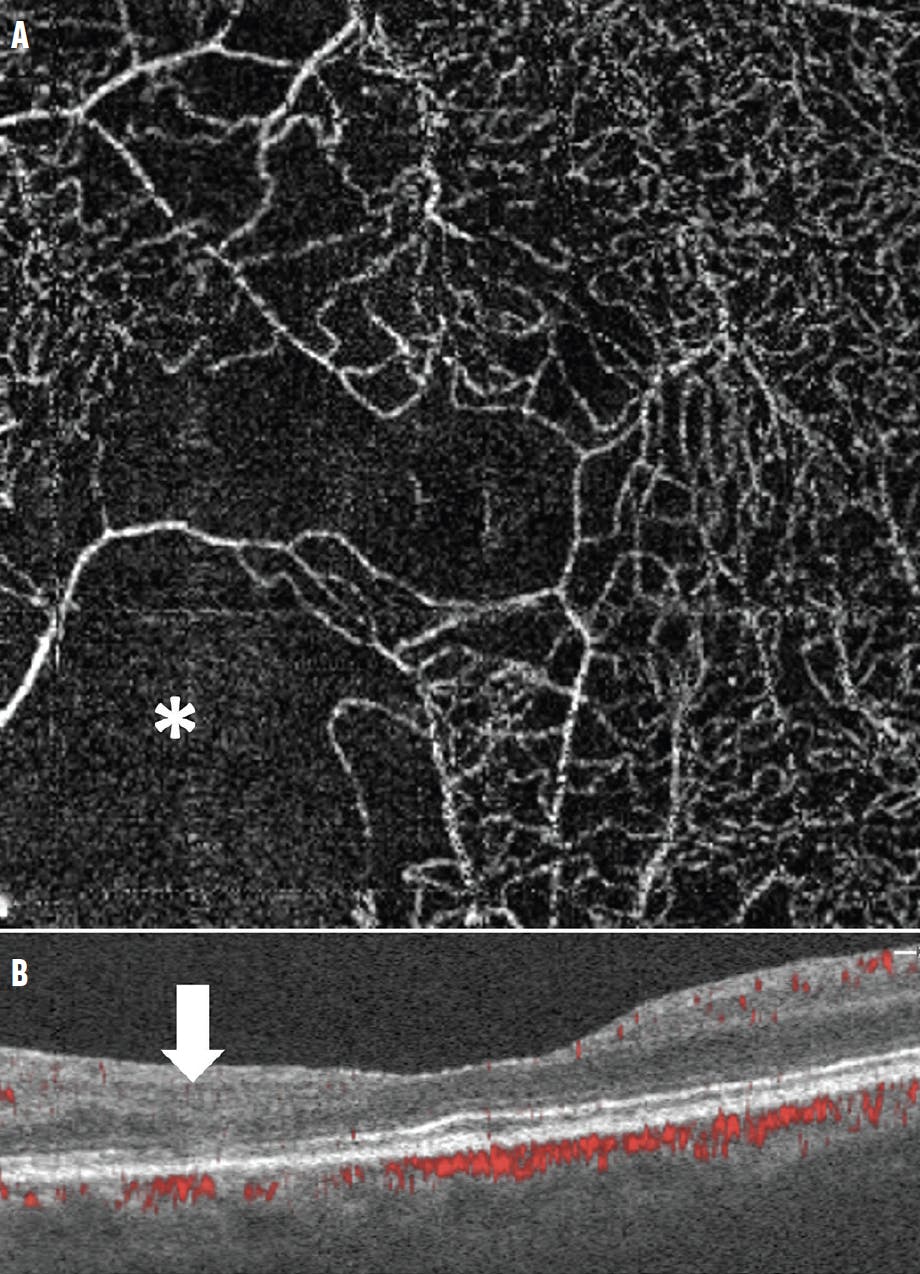
Figure 1. The en face OCTA deep capillary plexus slab of an eye of a 30-year-old woman with type 1 diabetes revealed significant areas of nonperfusion and capillary dropout (A, asterisk). The area of nonperfusion corresponds to a lack of flow seen on the OCT B-scan flow overlay (B, arrow). Note the asymmetry in flow between the temporal and nasal retina. There is also significant thinning of the fovea and temporal retina, including photoreceptor disruption, and disorganization of the retinal inner layers with distortion of the retinal layers on the OCT B-scan.
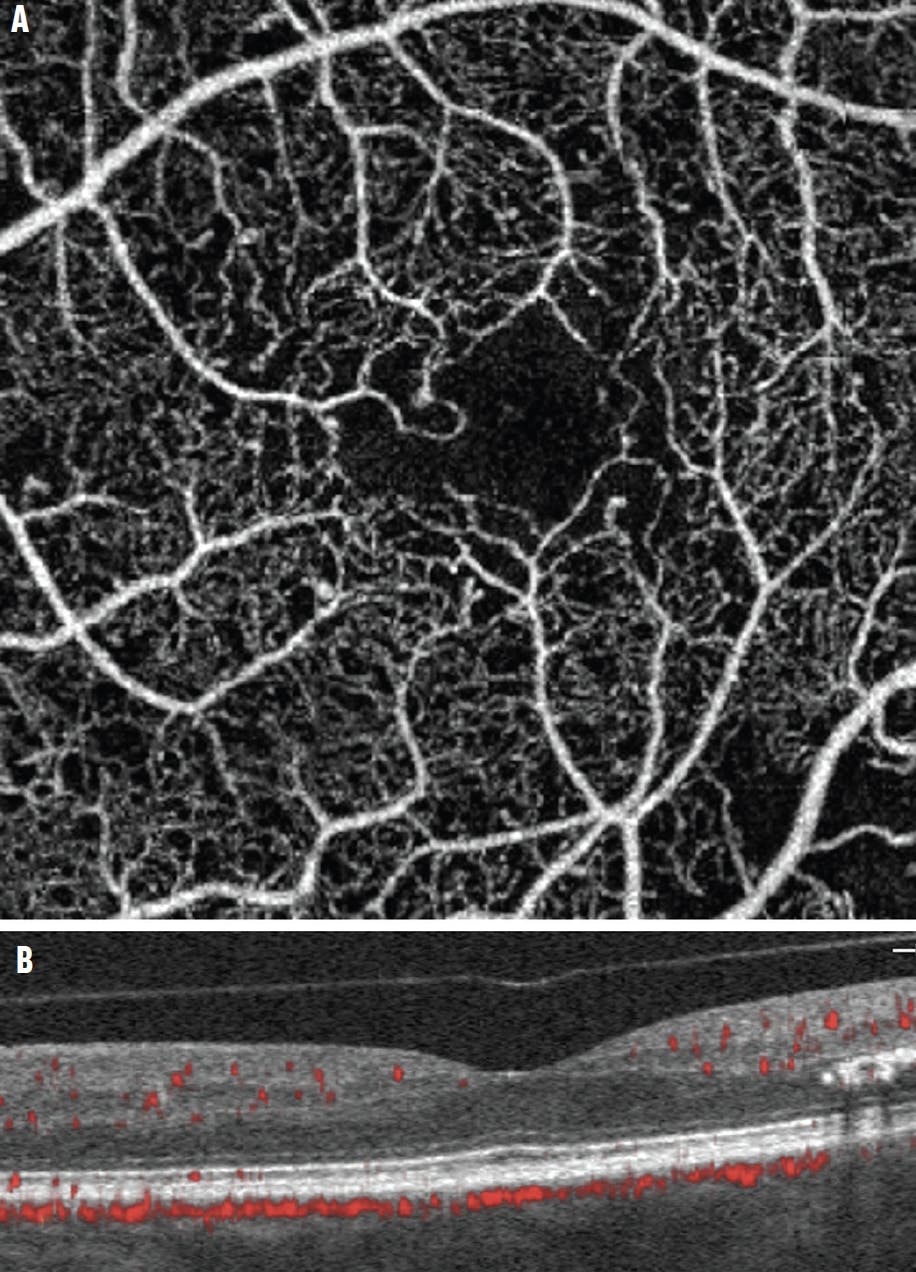
Figure 2. The full-thickness en face OCTA of the eye of a 36-year-old woman with type 1 diabetes showed an irregular, enlarged foveal avascular zone (FAZ) due to nonperfusion (A). Note the relatively normal retinal appearance on the OCT B-scan with flow overlay (B). In general, the full-thickness OCTA slab is the best approach for outlining the entire FAZ.
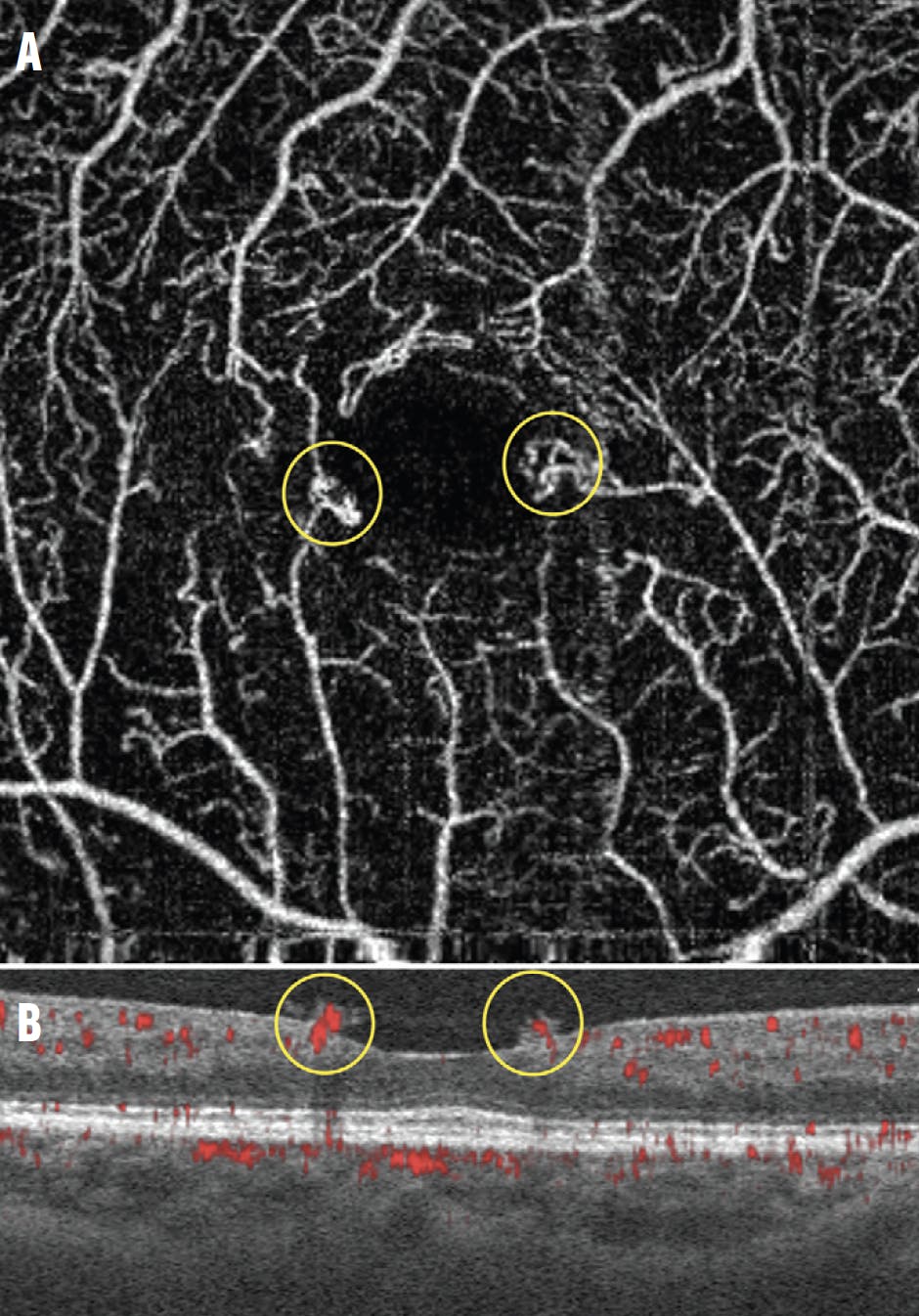
Figure 3. The en face superficial capillary plexus slab of an eye of a 48-year-old woman with type 2 diabetes illustrated abnormal blood vessels in the juxtafoveal region (A, circles). These abnormal vessels correspond to hyperreflective foci that project anterior to the internal limiting membrane on each side of the FAZ, with flow (B, circles, red overlay), consistent with neovascularization elsewhere, rather than intraretinal microvascular abnormalities.
Further Reading
For more on using OCT angiography to capture retinal findings in diabetic retinopathy, see The Utility of En Face OCT For Detecting Neovascularization in DR, by Mizuki Hamada, MD, and Kotaro Tsuboi, MD, PhD.
AMD
OCTA is typically used in the setting of AMD to confirm the presence of neovascularization prior to treatment. It is particularly useful in cases of type 1 neovascularization, where sub-retinal pigment epithelium (RPE) neovascularization (also known as subclinical or nonexudative AMD) can develop without active exudation (Figure 4). OCTA can also be used to pinpoint the exact location of new blood vessel growth in cases of type 3 neovascularization (Figure 5).
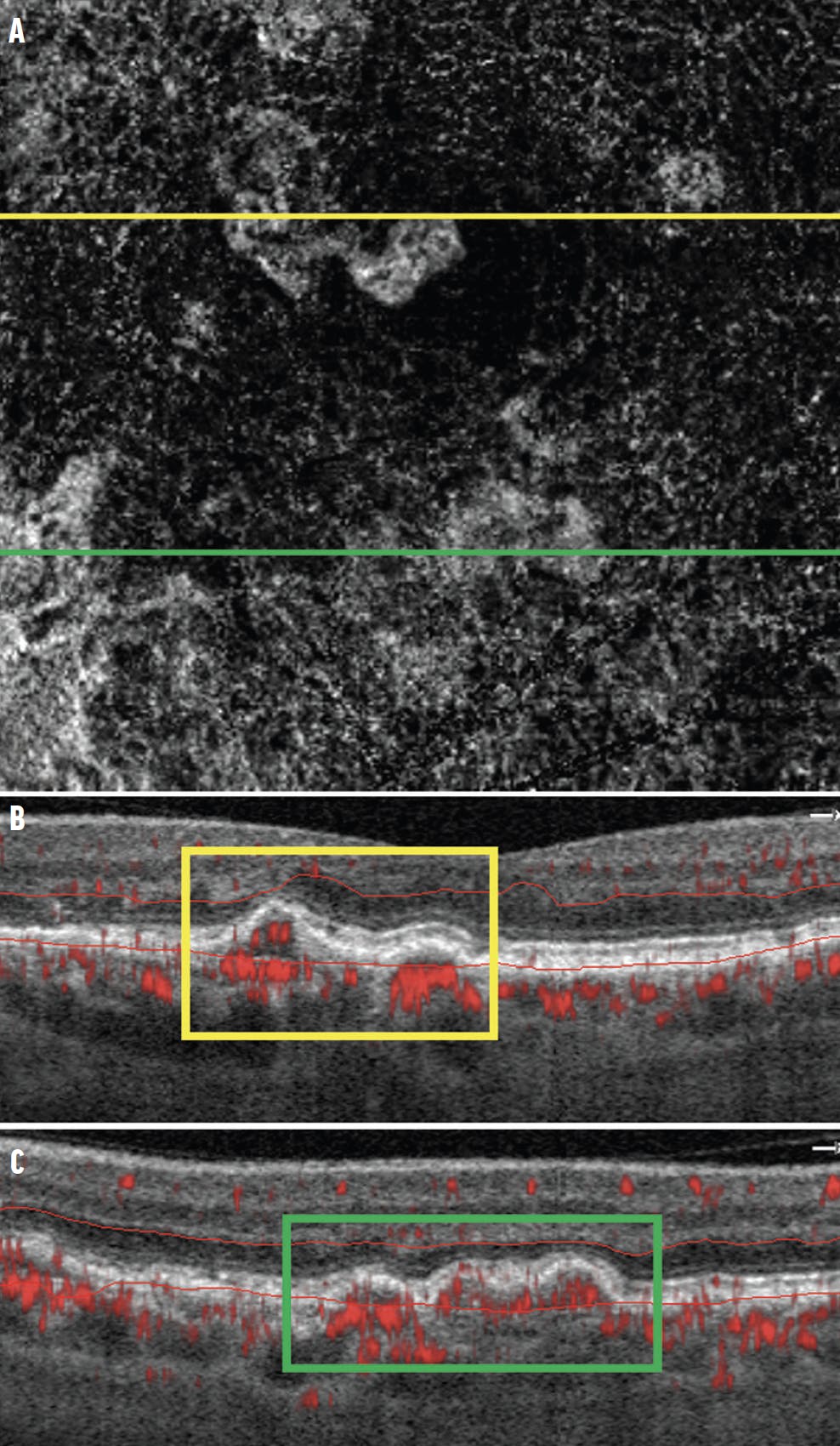
Figure 4. The en face outer retina slab of an eye of a 64-year-old woman with a history of nonexudative AMD showed several areas suspicious for neovascular networks (A). The colored lines correspond to the colored boxes in the OCT B-scans with flow overlay (B and C), where multiple areas of flow are present within the shallow pigment epithelial detachment and above Bruch membrane, consistent with a type 1 neovascular membrane. In these situations, the OCTA distinguishes drusen or drusenoid pigment epithelial detachments from subclinical neovascularization.
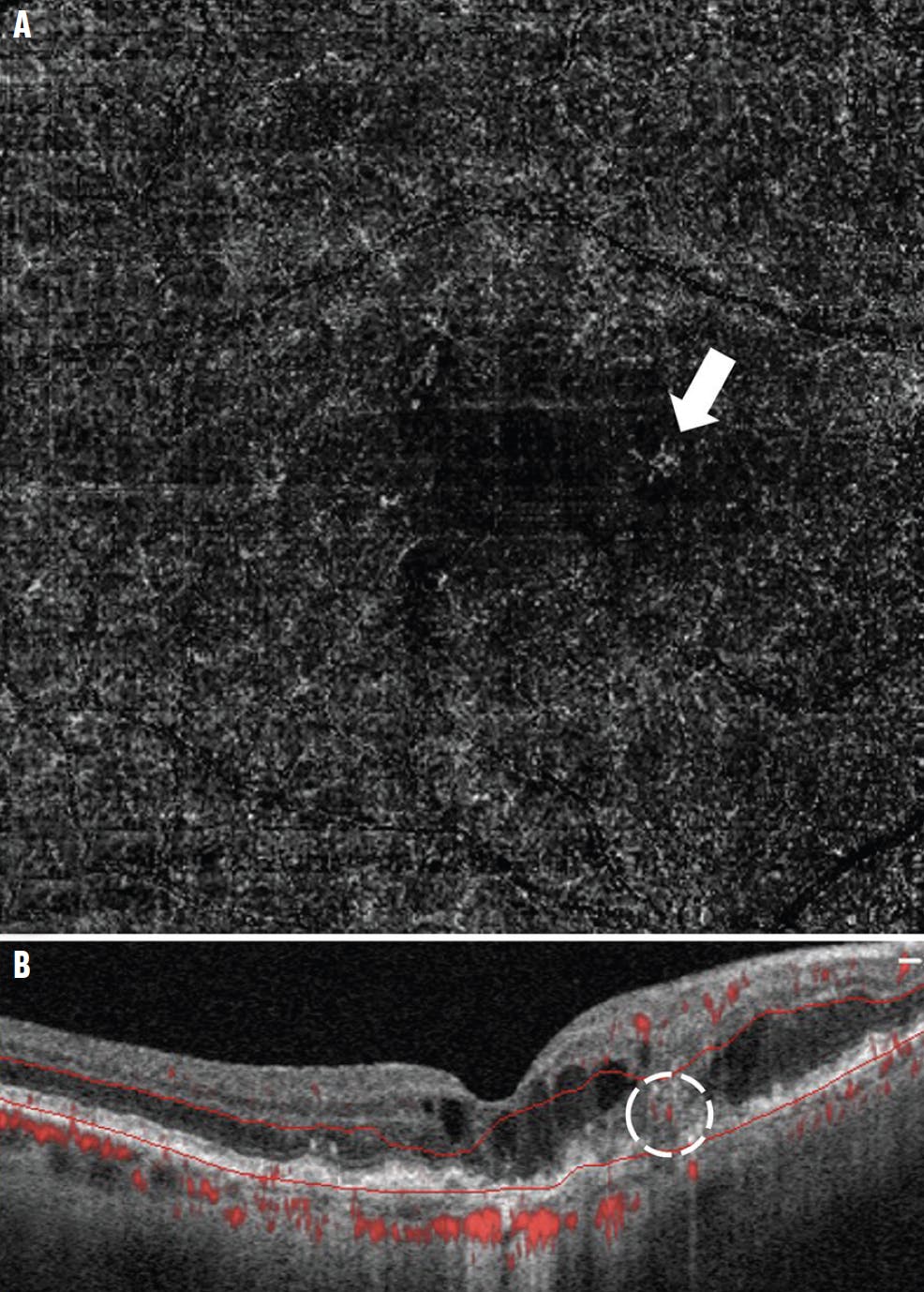
Figure 5. The en face deep capillary plexus slab of the eye of a 77-year-old man with AMD showed a subtle area of possible neovascularization in the outer retinal slab, consistent with possible type 3 neovascularization in AMD (A, arrow). By looking at the cross-section with flow overlay (B), an area of definite abnormal flow with surrounding outer retinal hyperreflectivity confirms the neovascular lesion (circle). The OCT B-scan with flow overlay was useful to confirm the presence of neovascularization due to the poor quality of the en face image. The B-scan can also be helpful in situations where the area of neovascularization may be too small or inconclusive on the en face slab.
POLYPOIDAL CHOROIDAL VASCULOPATHY (PCV)
PCV is traditionally diagnosed via the identification of polyps or branching vascular networks using ICG angiography, which can be time-consuming and difficult to obtain.4 However, OCTA in combination with structural OCT can be used to identify flow features consistent with PCV (Figure 6). In polyps, flow is present at the top of the pigment epithelial detachment and seen in the outer retina slabs, while branching vascular networks show flow between the RPE and Bruch membrane.5 Cross-sectional OCTA may be sensitive in detecting polyps on en face segmentation.6 Occasionally, the flow within a polyp may be too slow to detect using OCTA.
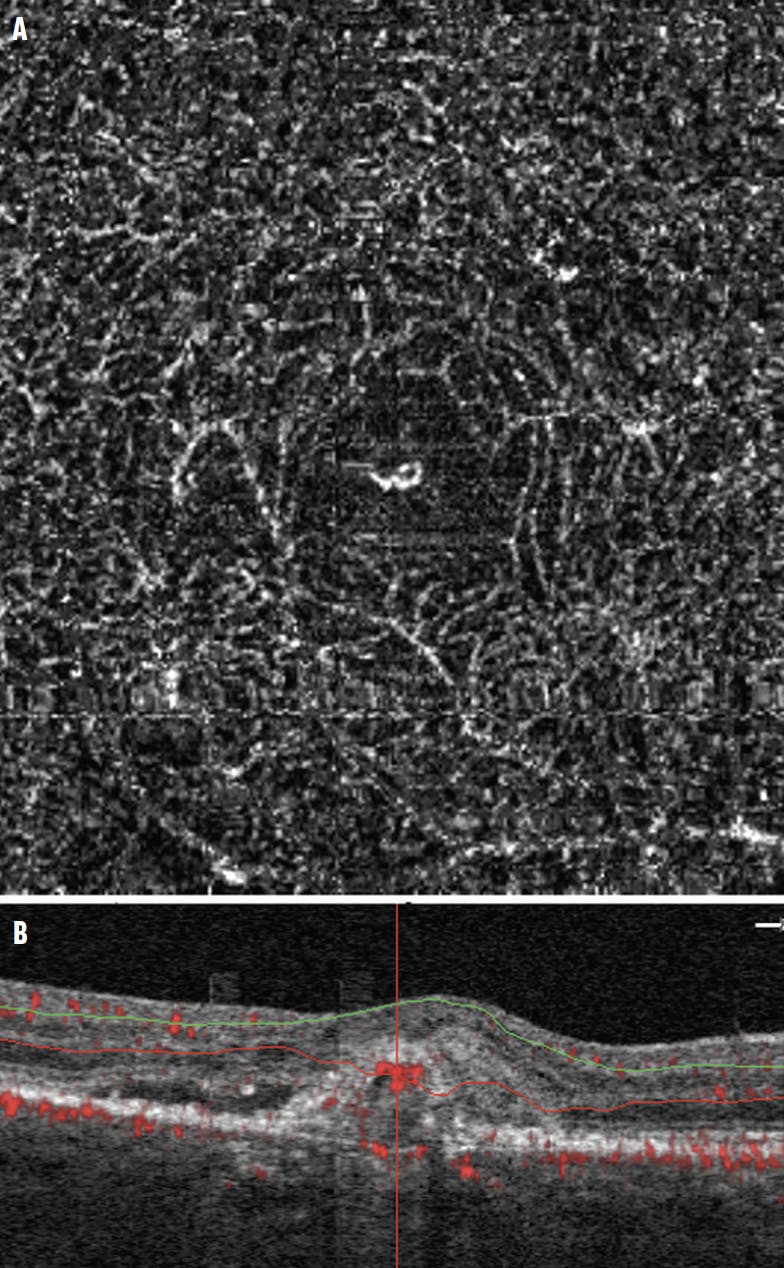
Figure 6. In the eye of a 67-year-old man with PCV, the en face deep capillary plexus slab showed the anterior projection of a central polyp within the FAZ (A). The OCT B-scan with flow overlay confirmed the presence of flow within a hyporeflective ring-like lesion between the RPE and Bruch membrane, consistent with a polyp (B).6
NEOVASCULARIZATION IN MULTIFOCAL CHOROIDITIS
The use of OCTA in inflammatory conditions, such as neovascularization in multifocal choroiditis or punctate inflammatory choroidopathy, can help clinicians distinguish choroidal neovascular membranes from inflammatory lesions (Figure 7).
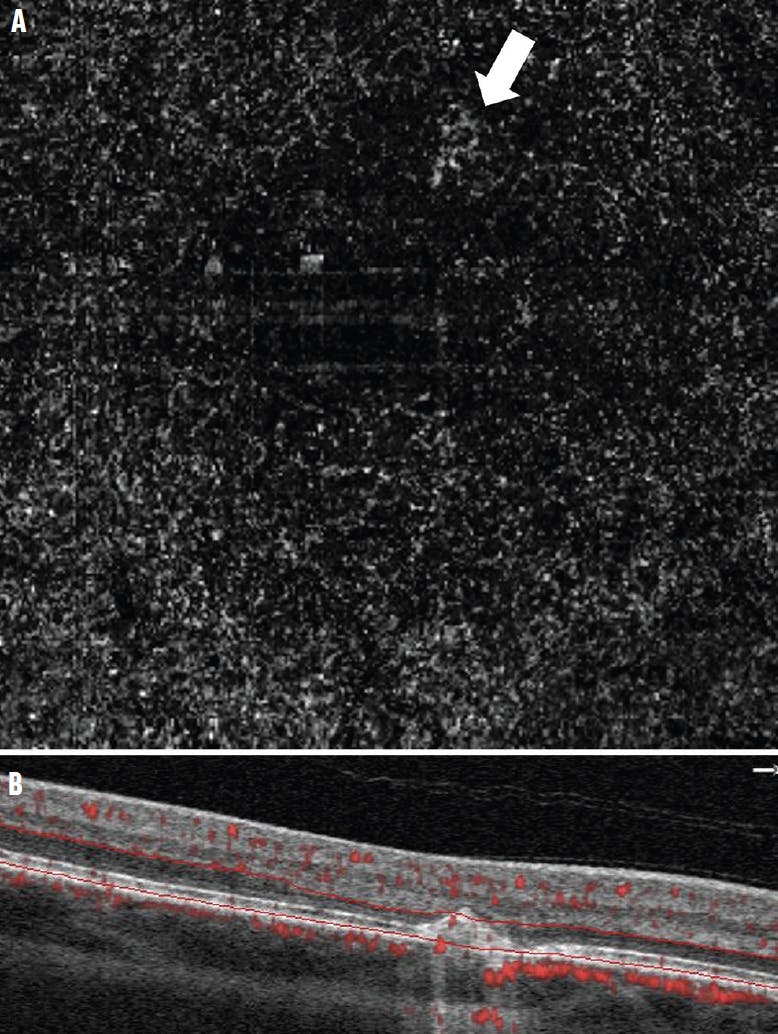
Figure 7. The en face OCTA outer retina slab of the eye of a 34-year-old woman with myopia and a history of multifocal choroiditis showed a neovascular network (A, arrow) that corresponds with several areas of flow under the RPE and above Bruch membrane on the OCT B-scan (B). In this case, OCTA was helpful in distinguishing choroidal neovascular membranes from a new inflammatory lesion, which ultimately favored treatment with injections of anti-VEGF over steroid. This patient responded well to a limited series of anti-VEGF injections.
PRACTICE MAKES PROGRESS
OCTA is a powerful tool that can be used in the diagnosis and surveillance of a variety of retinal conditions. However, it can be challenging for the inexperienced user to identify the appropriate clinical scenarios that would benefit from OCTA imaging and to interpret the results. Here, we illustrated several conditions for which OCTA provided detailed information that would otherwise have been time-consuming or impossible to find with traditional techniques. In these cases, targeting the appropriate retinal layer with the en face slab and correlating structural changes seen on the en face slab with functional abnormalities on the OCT B-scan flow overlay was key to correctly detecting the presence or absence of flow.
1. Jia Y, Tan O, Tokayer J, et al. Split-spectrum amplitude-decorrelation angiography with optical coherence tomography. Opt Express. 2012;20(4):4710-4725.
2. Spaide RF, Waheed NK, Fujimoto JG. Image artifacts in optical coherence tomography angiography. Retina. 2015;35(11):2163-2180.
3. Holmen IC, Konda SM, Pak JW, et al. Prevalence and severity of artifacts in optical coherence tomographic angiograms. JAMA Ophthalmol. 2020;138(2):119-126.
4. Cheung CMG, Lai TYY, Teo K, et al. Polypoidal choroidal vasculopathy: consensus nomenclature and non-indocyanine green angiograph diagnostic criteria from the Asia-Pacific Ocular Imaging Society PCV Workgroup. Ophthalmology. 2021;128(3):443-452.
5. Wang M, Zhou Y, Gao SS, et al. Evaluating polypoidal choroidal vasculopathy with optical coherence tomography angiography. Invest Ophthalmol Vis Sci. 2016;57(9):OCT526-OCT532.
6. Cheung CMG, Yanagi Y, Akiba M, et al. Improved detection and diagnosis of polypoidal choroidal vasculopathy using a combination of optical coherence tomography and optical coherence tomography angiography. Retina. 2019;39(9):1655-1663.


_1784132761.jpg?auto=compress,format&w=75)





