


_1615312717.png)
AT A GLANCE
- Multimodal imaging can be critical in confirming a diagnosis of uveitis or deciding to initiate treatment, as it can uncover findings that would have otherwise been missed on routine examination.
- With OCT imaging, characterization of the layers affected in retinitis may suggest specific etiologies, such as inner retinal infiltrates, outer retinal layers involved in white-dot syndromes, and full-thickness involvement classically seen with viral retinitis or toxoplasmosis.
- B-scan ultrasound biomicroscopy is highly useful in revealing vitreous opacities and can be compared with the fellow eye and interval follow-up for patients with vitritis.
For many physicians, evaluating a patient with uveitis can be a daunting task. Despite a thorough history and examination, a diagnosis often remains elusive. Thankfully, several imaging modalities in the clinic can help us make better-informed decisions when caring for these patients. These technologies can be critical in confirming a diagnosis or deciding to initiate treatment, as they can uncover findings that would have otherwise been missed on routine examination. Additionally, imaging allows us to objectively monitor the response to treatment. Here, we highlight ways in which specific imaging modalities have proven useful in our approach to patients with uveitis.
SLIT-LAMP PHOTOGRAPHY
While a thorough examination is obligatory, imaging can help reduce the subjective element of an examiner’s assessment. For certain patients, external and slit-lamp photos can document their initial presentation to compare with future examinations and gauge response to treatment. Ocular findings such as endothelial keratoprecipitates, iris nodules, conjunctival injection, and scleral thinning are difficult to quantify in an objective manner, and your future self (or uveitis colleague) will thank you for having a literal snapshot in time (Figure 1).
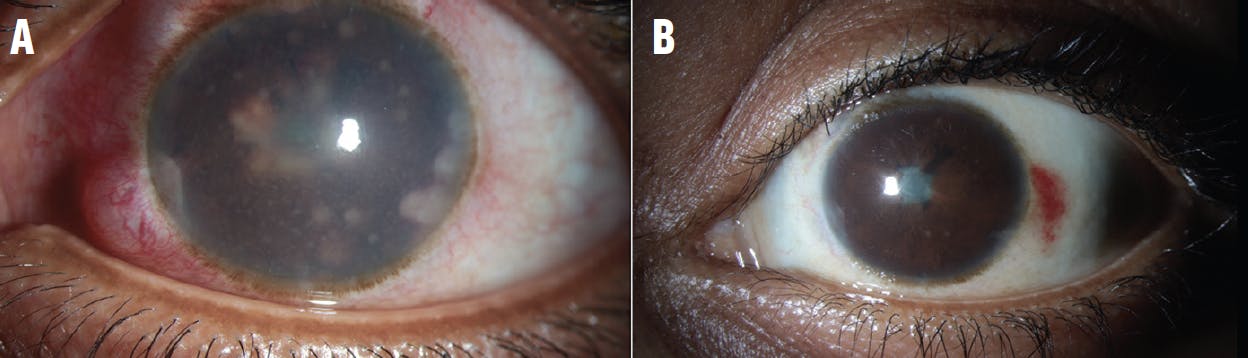
Figure 1. Slit-lamp photos of a patient with presumed sarcoidosis before (A) and 1 month after (B) treatment with oral prednisone.
ULTRA-WIDEFIELD IMAGING
Ultra-widefield (UWF) imaging with a confocal scanning laser ophthalmoscope allows up to a 200° digital view of the retina. Just as with slit-lamp photos, UWF pseudocolor images can be critical in documenting the examination for comparison (Figure 2). Occasionally, these images can better highlight subtle examination findings, such as white dots, areas of early retinitis, and choroidal lesions. Furthermore, UWF pseudocolor images provide views of the peripheral retina in patients who would otherwise be challenging to examine due to a secluded pupil, significant photophobia, or age. When the pupil is very small, we find it helpful to get a view of the retina that is otherwise impossible at the slit lamp.
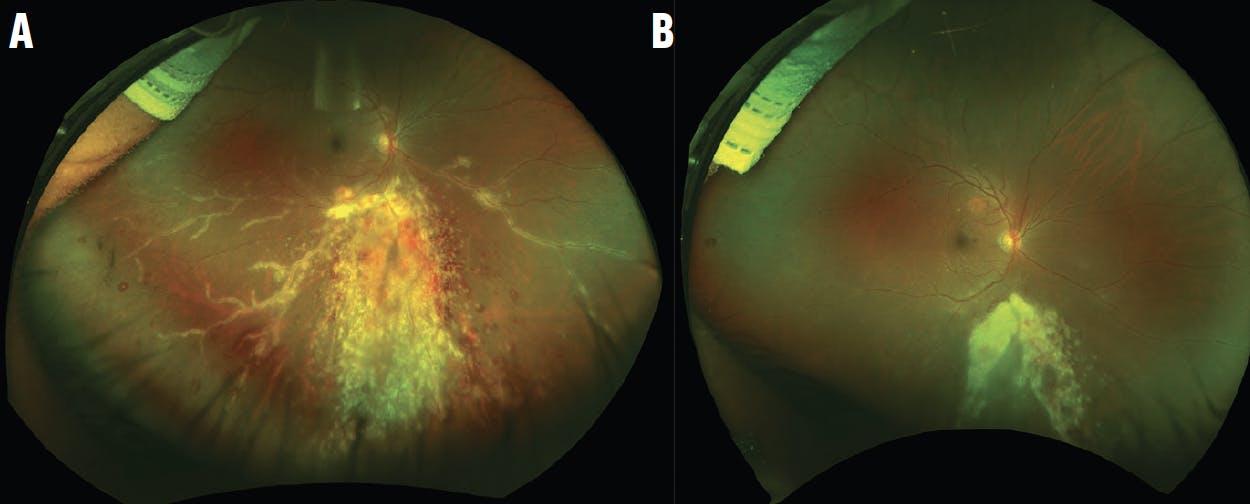
Figure 2. UWF pseudocolor images of a patient with cytomegalovirus retinitis before (A) and 3 weeks into (B) treatment.
The Optos UWF system has conventionally used red and green laser spectrums to provide a pseudocolor image of the fundus. Recently, an update to Optos California added a third spectrum blue laser to provide a more real-to-life depiction of the fundus,1 which may allow for an enhanced ability to discern and follow lesions.
Short-wave fundus autofluorescence (FAF) uses specific excitation wavelengths of light (green or blue) and generates images showing the emission signals of lipofuscin pigments primarily located in the retinal pigment epithelium (RPE) and photoreceptor outer segments. Thus, FAF can highlight areas of photoreceptor or RPE damage and inflammation of the choriocapillaris. In general, hyperautofluorescent lesions represent disease activity in most inflammatory maculopathies.2 FAF may also highlight areas of pathology that may have been missed on fundoscopy, such as in subtle outer retinal or choroidal lesions (Figure 3). Often, active infection shows up on FAF prior to being readily apparent on examination. However, sometimes the hyperautofluorescent lesions do not resolve even when the disease is inactive, so FAF images must be interpreted with care.
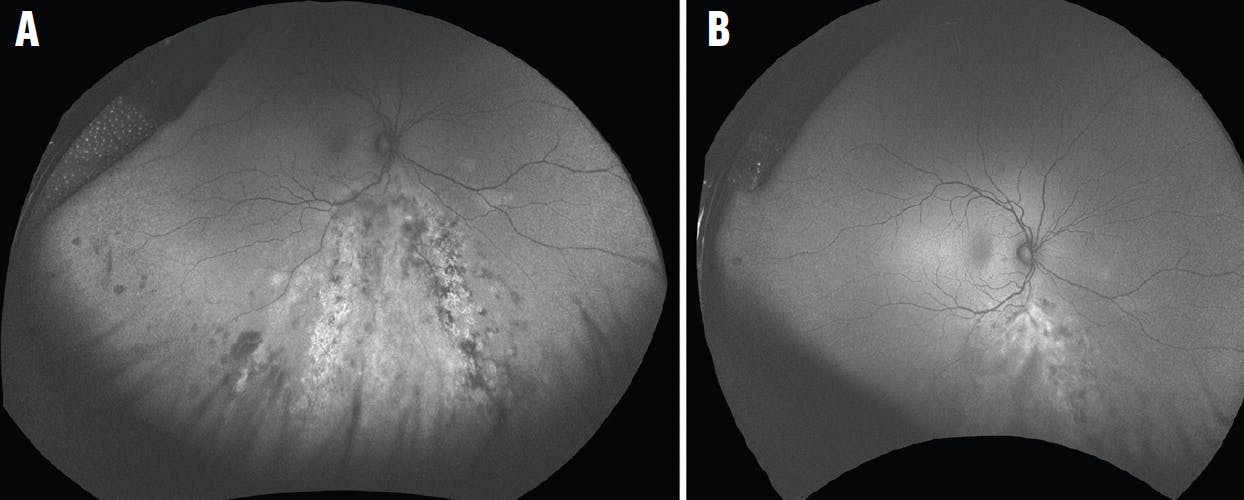
Figure 3. UWF green FAF image of a patient with cytomegalovirus retinitis before (A) and during (B) treatment.
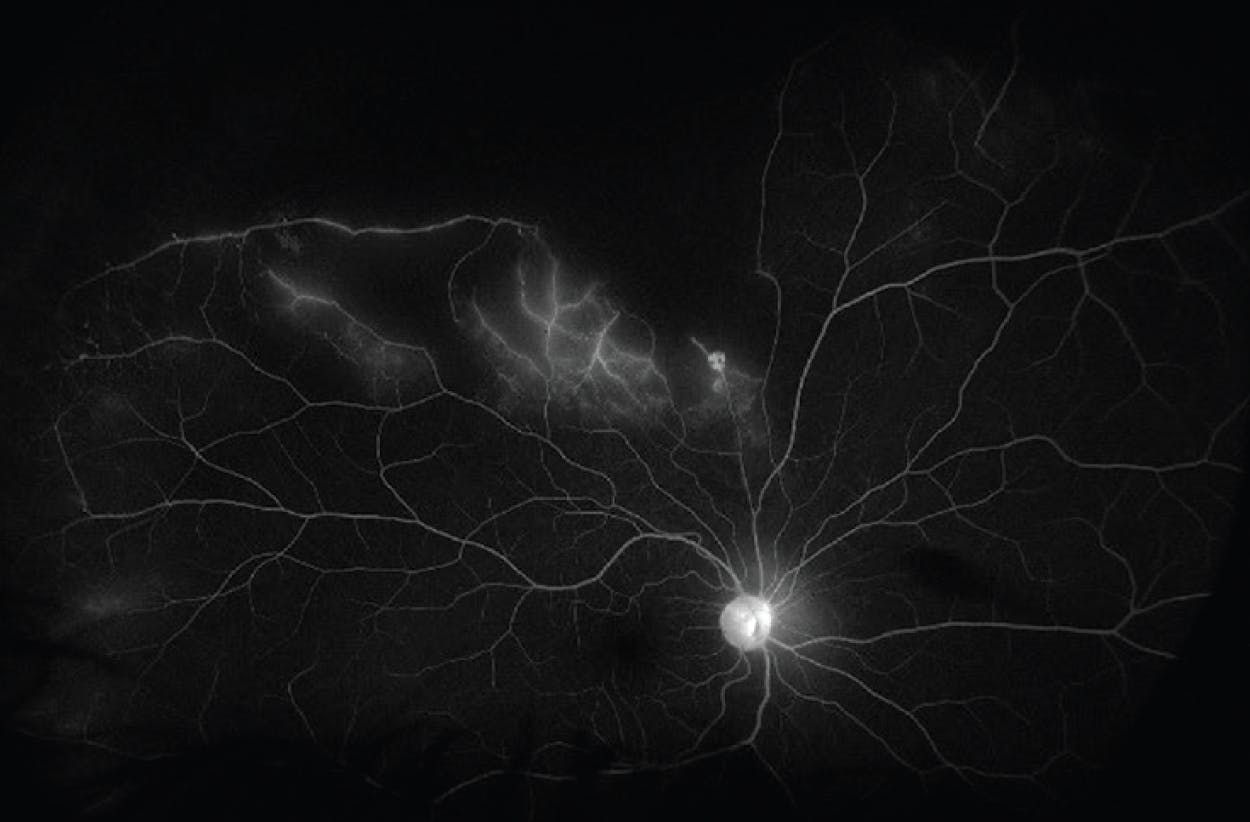
Fluorescein angiography (FA) remains the standard for determining active retinal leakage and can provide supporting information about the presence of any concomitant vessel occlusion, optic disc leakage, capillary nonperfusion, and neovascularization (Figure 4). Using UWF FA allows for the identification of areas of leakage, which are increasingly being used in practice to influence the grading of active disease and the decision to treat.3,4 FA can also permit a basic assessment of the retinal vasculature in eyes with significant media opacities and otherwise difficult views. We often use FA in patients with uveitis to gauge disease activity and treatment response. For some patients with uveitis, we get an FA at nearly every visit because it best highlights their disease activity.
ICG angiography (ICGA) can highlight choroidal lesions that are not easily discernible on examination. Active choroidal inflammation presents as hypocyanescent spots on ICGA (Figure 5). Often, these areas correspond with lesions seen on FAF. UWF ICGA allows the capture of the full peripheral extent of these lesions, which proves particularly useful when monitoring for treatment response. Not all hypocyanescent lesions will resolve; those associated with scar or chorioretinal atrophy will remain, while active inflammatory granulomas often will resolve with treatment.
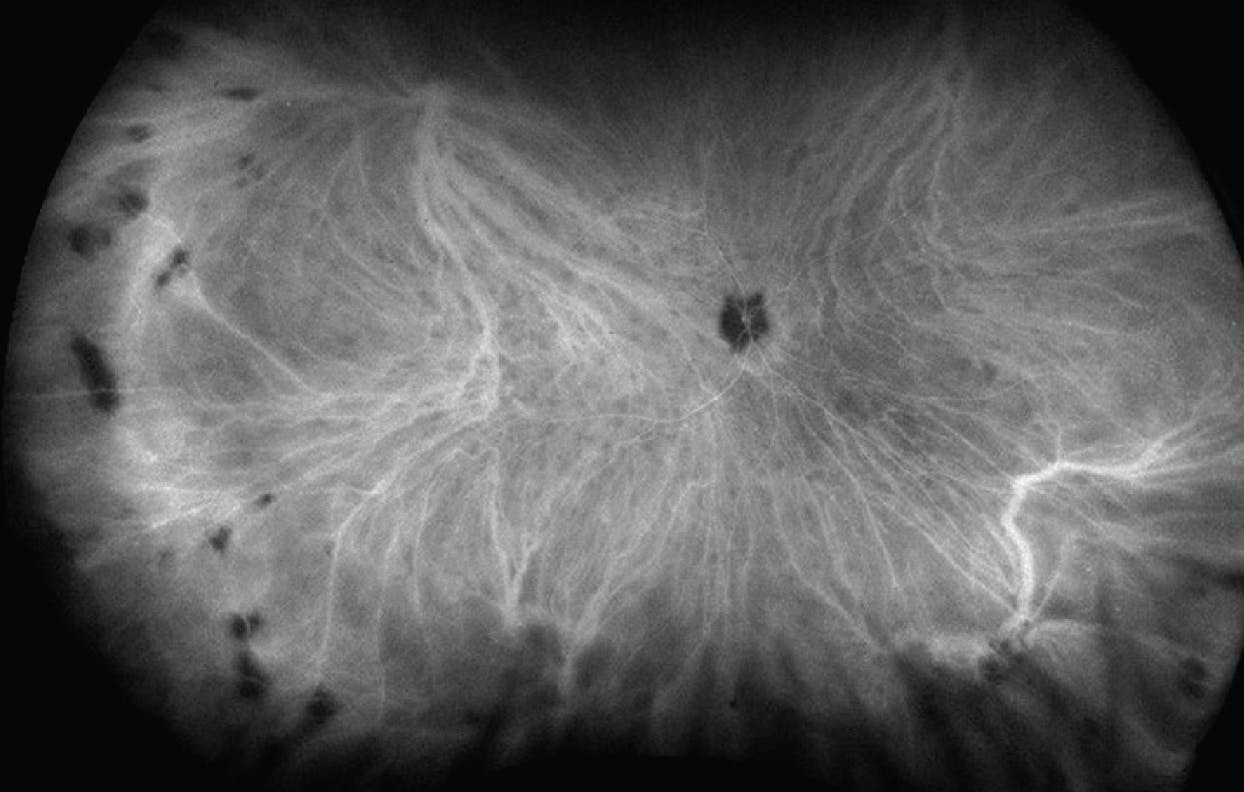
Figure 5. UWF ICGA of a patient with birdshot chorioretinopathy and multiple hypocyanescent lesions.
OCT FINDINGS
Anterior-segment OCT may allow for an objective measure of anterior chamber (AC) inflammation that correlates well with examination grading.5 In certain cases, OCT may identify trace AC cell that was missed on examination,6 although their clinical significance remains unclear. In any case, anterior-segment OCT allows for a more objective and repeatable method of grading AC inflammation, which can be especially pertinent in the research setting.
Conventional spectral-domain OCT can be quite valuable in the evaluation of posterior uveitis. Characterization of the layers affected in retinitis may suggest specific etiologies, such as the inner retinal infiltrates typically seen in Behcet disease and bartonella-associated neuroretinitis,7,8 outer retinal layers involved in white-dot syndromes,9 and full-thickness involvement classically seen with viral retinitis or toxoplasmosis (Figure 6).10
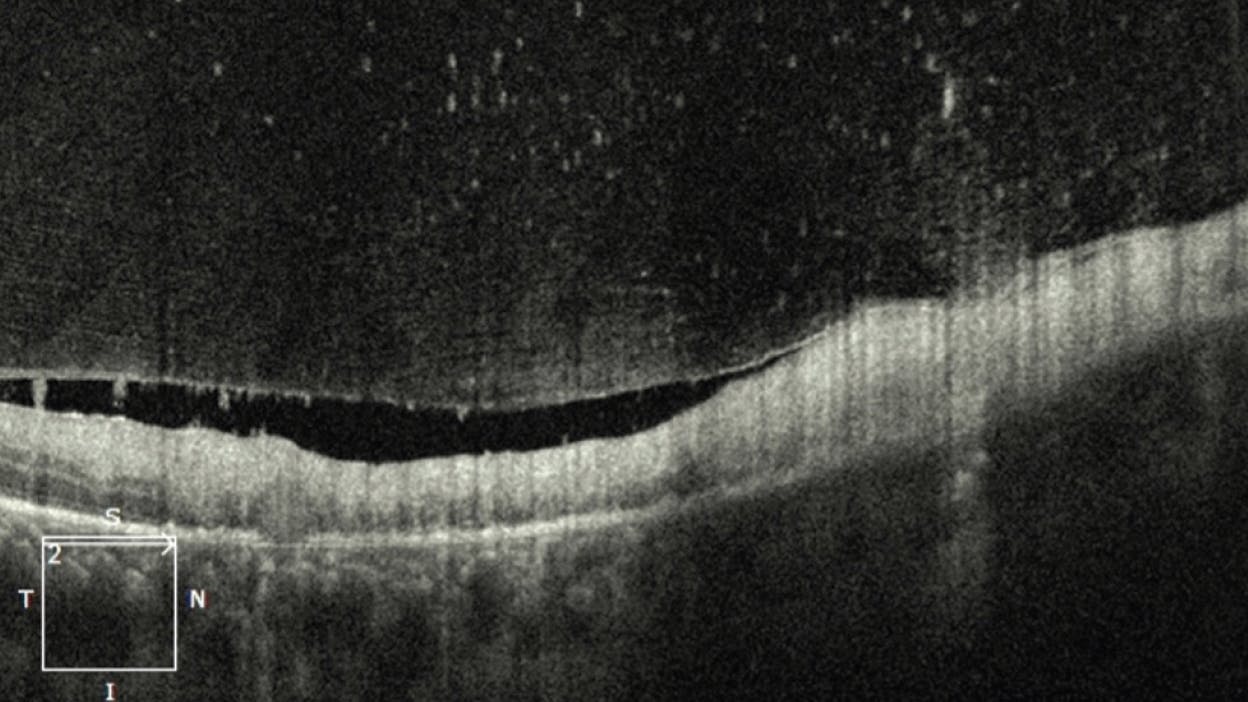
OCT can also reveal overlying vitreous cell or underlying choroidal granulomas. Serous retinal detachments and bacillary detachments can be found on OCT in conditions such as Vogt-Koyanagi Harada (VKH) syndrome and can be monitored for treatment response.
In the absence of discrete areas of intraretinal fluid, diffuse macular edema can be measured and followed quantitatively by macular thickness measurements on OCT. This allows for an objective method to evaluate disease activity and treatment response in cases of uveitis associated with macular edema. Additionally, OCT can help reveal the presence of any uveitis-associated sequelae, including epiretinal membranes and vitreomacular traction.
Enhanced depth imaging OCT allows for improved imaging of the underlying choroid and sclera compared with conventional spectral-domain platforms.11 Choroidal thickening seen in conditions such as acute VKH, sarcoidosis, and tuberculosis can be helpful for both the initial diagnosis and subsequent monitoring. Swept-source OCT uses a tunable laser, increased scan speed, and deeper penetration to simultaneously achieve detailed visualization of the vitreous, retina, and choroid. Now, UWF-guided OCT systems can image the retinal and choroidal layers through the far periphery, such as the Silverstone platform (Optos), HRA-OCT (Heidelberg Engineering), Plex Elite 9000 (Zeiss), and Xephilio OCT-S1 (Canon).
OCT angiography (OCTA) is a noninvasive imaging method that can be useful in identifying associated inflammatory choroidal neovascular membrane development, as well as choriocapillaris flow voids that may correspond to areas of ischemia. OCTA use remains limited by the smaller field of view, but its role in uveitis may evolve as we characterize the various vascular layers of the retina affected in different uveitic conditions. We often use OCTA in uveitis to characterize secondary choroidal neovascularization and its response to treatment. If widefield OCTA becomes readily available and validated, it may one day allow us to rely less on FA and ICGA.
ULTRASOUND
B-scan ultrasound biomicroscopy (UBM) is highly useful in revealing vitreous opacities and can be compared with the fellow eye and interval follow-up for patients with vitritis. B-scan can also highlight associated retinal pathology when there is no view. Fluid in the sub-tenon space (posterior scleritis T-sign), granulomas, and choroidal thickening can be identified on B-scan UBM. Extraocular lesions of MALT lymphoma hugging the globe can also best be seen on B-scan UBM. This imaging modality allows for the evaluation of the ciliary processes (Figure 7), and it can help clinicians investigate for rare causes of ocular inflammation, such as uveitis-glaucoma-hyphema syndrome, ciliary body malignancy, and even hidden intraocular foreign bodies.
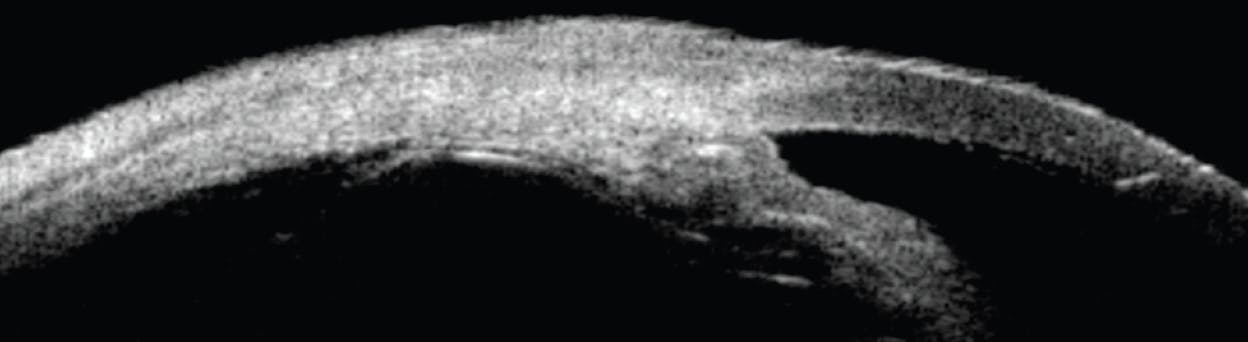
Figure 7. UBM showing atrophy of the ciliary processes in a patient with hypotony receiving CAR-NK infusions.
WHY IMAGING MATTERS
With uveitis, a picture is truly worth a thousand words. A multimodal imaging approach may aid in earlier diagnosis, treatment response and recurrence detection, and improved outcomes for patients with uveitis. Recent imaging modalities, such as widefield OCT and OCTA, may hold promise for future imaging of uveitis and the retina.
1. Optos announces new ultra-widefield color image modality, providing additional retinal visualization to eyecare professionals [press release]. Optos. 30 May 30, 2023. Accessed March 4, 2024. bit.ly/4cbrLPh
2. Lee CS, Lee AY, Forooghian F, Bergstrom CS, Yan J, Yeh S. Fundus autofluorescence features in the inflammatory maculopathies. Clin Ophthalmol. 2014;8:2001-2012.
3. Pecen PE, Petro KF, Baynes K, Ehlers JP, Lowder CY, Srivastava SK. Peripheral findings and retinal vascular leakage on ultra-widefield fluorescein angiography in patients with uveitis. Ophthalmol Retina. 2017;1(5):428-434.
4. Campbell JP, Beardsley RM, Palejwala NV, et al. Peripheral vascular leakage in uveitis: clinical and angiographic findings. Ophthalmology. 2015;122(6):1269-1270.
5. Sharma S, Lowder CY, Vasanji A, Baynes K, Kaiser PK, Srivastava SK. Automated analysis of anterior chamber inflammation by spectral-domain optical coherence tomography. Ophthalmology. 2015;122(7):1464-1470.
6. Li Y, Lowder C, Zhang X, Huang D. Anterior chamber cell grading by optical coherence tomography. Invest Ophthalmol Vis Sci. 2013;54(1):258-265.
7. Tugal-Tutkun I, Ozdal PC, Oray M, Onal S. Review for diagnostics of the year: multimodal imaging in Behçet uveitis. Ocul Immunol Inflamm. 2017;25(1):7-19.
8. Oray M, Önal S, Koç Akbay A, Tuğal Tutkun İ. Diverse clinical signs of ocular involvement in cat scratch disease. Turk J Ophthalmol. 2017;47(1):9-17.
9. Onal S, Tugal-Tutkun I, Neri P, Herbort CP. Optical coherence tomography imaging in uveitis. Int Ophthalmol. 2014;34(2):401-435.
10. Invernizzi A, Agarwal AK, Ravera V, et al. Comparing optical coherence tomography findings in different aetiologies of infectious necrotising retinitis. Br J Ophthalmol. 2018;102(4):433-437.
11. Spaide RF, Koizumi H, Pozzoni MC. Enhanced depth imaging spectral-domain optical coherence tomography. Am J Ophthalmol. 2008;146(4):496-500.


_1784132761.jpg?auto=compress,format&w=75)





