


The 48th Annual Atlantic Coast Retina Club (ACRC) and 24th Macula Conference, held on January 4-6, 2024, in New York City, was an exceptional 3-day meeting organized by K. Bailey Freund, MD. The first 2 days involved mystery cases presented by residents, fellows, and experts in the field of retina. The last day included an array of topics, such as surgical and medical management, uveitis, oncology, retinal imaging, and AI. The event was further enriched by the presentation of the Founder’s Awards and a notable interview with Wiley A. Chambers, MD, former director of the Division of Ophthalmology at the FDA.
TRAINEE CASE PRESENTATIONS
The first day focused on cases presented by residents and fellows. These presentations featured mystery cases that were discussed with a panel of moderators. A few interesting highlights include the following:
- a case of pseudoxanthoma elasticum (by Suveera Dang, MD),
- choroidal metastasis from breast cancer treated with targeted immunotherapy (by Rolika Bansal, MD),
- idiopathic unilateral choroidals in a young hypertensive patient (by William Foulsham, MD, PhD), and
- an orbital perforation secondary to a MIRAgel scleral buckle (by Rusdeep S. Mundae, MD).
These cases stimulated a great deal of dialogue among the moderators and the audience, who discussed the differential diagnoses and various management approaches.
The day concluded with a moment of recognition for four exceptional presentations. Congratulations are extended to Eugene Kang, MD, for his compelling case on inherited optic neuropathy; Luis A. Martinez-Velazquez, MD, PhD, for an intriguing case of chorioretinitis with secondary multiple evanescent white-dot syndrome in the context of Lyme disease; Apoorv P. Chebolu, MD, for his presentation on ocular sarcoidosis; and Laura A. Jenny, AB, for her presentation on ocular enhanced S-cone syndrome (Figure 1).
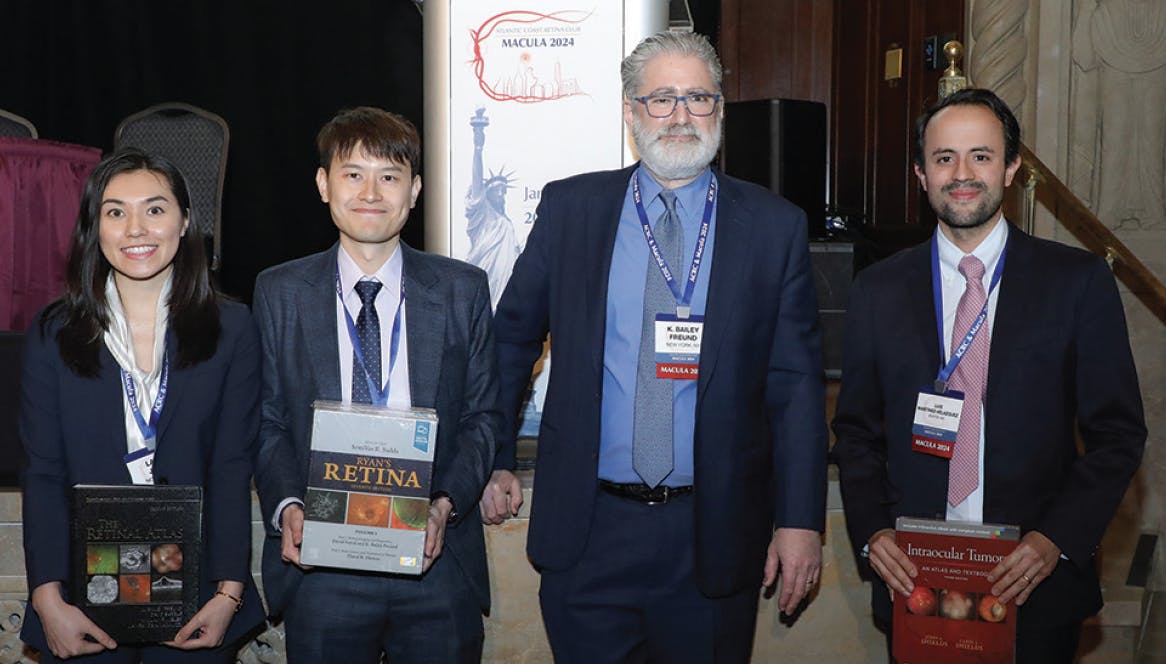
Figure 1. Four trainees were awarded for their top-notch case presentations. Pictured here (left to right) are Laura A. Jenny, AB; Eugene Kang, MD; K. Bailey Freund, MD; and Luis A. Martinez-Velazquez, MD, PhD. The final honoree not pictured here is Apoorv P. Chebolu, MD.
(Images courtesy Kevin Caldwell Photography)
FACULTY CASES
The second day featured cases presented by leading experts in medical retina, vitreoretinal surgery, tumors and oncology, uveitis, and inherited retinal diseases. The cases involved unique clinical manifestations of retinal pathologies and techniques in imaging and disease management that generated interesting discussions. Notable takeaways include:
- the use of cell-free DNA to diagnose an amelanotic choroidal mass (by Jasmine H. Francis, MD, FACS),
- scleral glue adhesions for plaque radiotherapy in patients with a thin or weak sclera (by Carol L. Shields, MD),
- management of a tractional membrane secondary to Coats disease (by Yoshihiro Yonekawa, MD),
- thickened retinal nerve fiber layer to identify early preclinical vasculitis (by David M. Brown, MD, FACS), and
- the interpretation of hypointense bands in OCT angiography in the setting of retinal occlusive disease (by Diogo Cabral, MD).
MACULA 2024
The last day began with new findings in retinal histology and pathology and imaging innovations. Interesting topics included imaging mass spectrometry of subretinal drusenoid deposits (by Andreas Pollreisz, MD), mineral components in Bruch membrane in the setting of pseudoxanthoma elasticum (by Imre Lengyel, PhD), and a new understanding of lipofuscin and the implications for autofluorescence findings in the retinal pigment epithelium (by Christine A. Curcio, PhD). These talks provided a research perspective on retinal diseases that helps to inform diagnosis and treatment.
This session was followed by retinal imaging. Notable highlights include recognition of subclinical macular neovascularization via double-layer signs in AMD (by Amani A. Fawzi, MD) and the trizonal distribution of drusen and subretinal drusenoid deposits (by David Sarraf, MD), as revealed by en face OCT, corresponding to the density and types of photoreceptor cells.
VITREORETINAL SURGERY PEARLS
Saturday also featured surgical panels that tackled difficult cases and various management techniques. Topics included epiretinal and internal limiting membrane peeling, diabetic tractional retinal detachments, and complex proliferative vitreoretinopathy. The panelists—Gaetano R. Barile, MD; Talia R. Kaden, MD; James Klancnik, MD; Kyle D. Kovacs, MD; and Kenneth J. Wald, MD—shared their surgical approaches and preferred instrumentation, dyes, and tamponades. This was moderated by Audina M. Berrocal, MD, who provided her own challenging cases for discussion.
RETINAL DISEASES, AMD, AND MANAGEMENT
A session on other macular diseases emphasized novel techniques, including new guidelines for central serous chorioretinopathy (by Camiel J.F. Boon, MD, PhD, FEBO) and an update on a ciliary neurotrophic factor implant for macular telangiectasia type 2 (by Emily Y. Chew, MD).
This led into a review of new anti-VEGF drugs and delivery methods, as well as a discussion on complement inhibitors for geographic atrophy. The latter discussion was structured around clinical cases, and panelists Irene A. Barbazetto, MD; Philip J. Ferrone, MD; Lee M. Jampol, MD; and Philip J. Rosenfeld, MD, PhD, shared whether they would treat each patient. Finally, Peter K. Kaiser, MD, gave a thorough and informed update on emerging treatments for dry AMD.
The afternoon included a session on AI and its role in the clinic. For example, SriniVas R. Sadda, MD, presented on the use of deep-learning approaches for the assessment of AMD biomarkers and how this can facilitate the identification of patients for trials. The day ended with engaging panels exploring the diagnosis and management of inherited retinal diseases, pediatric retinal diseases, and uveitis.
MEMORABLE MOMENTS
It was fitting that the last day of the conference involved emotional and touching tributes to leaders in retina. These individuals have not only pushed the field forward through research and clinical innovation, but also have inspired and supported colleagues and generations of students. In a personal interview conducted by Dr. Brown, Dr. Chambers shared professional and personal accomplishments over his long career (Figure 2). He discussed his own values and judgments regarding the clinical trials he had a hand in. Dr. Chambers concluded his remarks with the announcement that he would be stepping down as director of the Department of Ophthalmology at the FDA. While uncertain about his next steps, Dr. Chambers spoke of the future with excitement and optimism. This unapologetically honest and inspirational interview was met with a standing ovation.
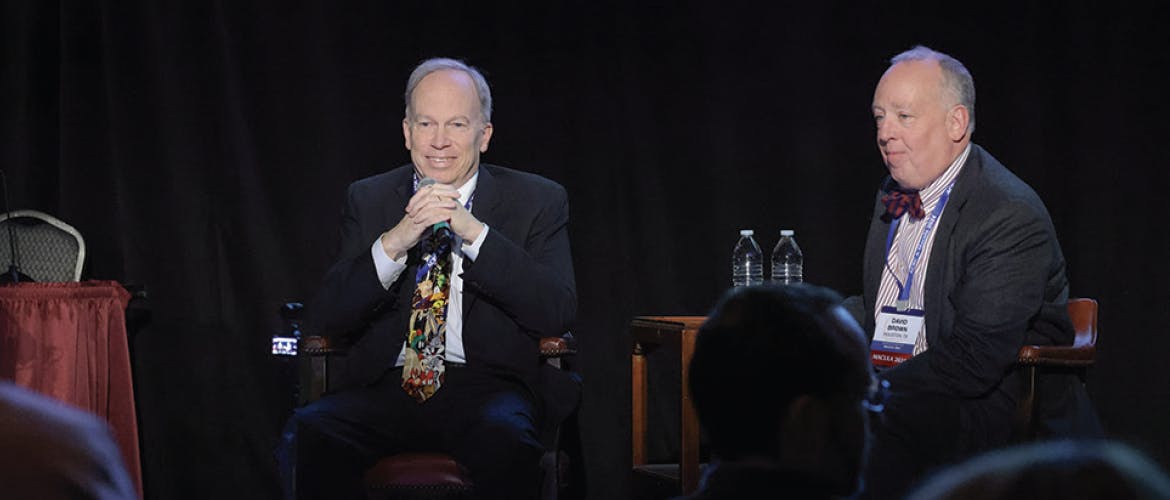
Figure 2. Wiley A. Chambers, MD, (left) shared insights into his career with interviewer David M. Brown, MD, FACS, (right) during a surprisingly personal interview.
Finally, this year’s Founder’s Awards were presented by Dr. Shields and Lawrence A. Yannuzzi, MD. The three recipients were Susan B. Bressler, MD; Alexander J. Brucker, MD; and Richard B. Rosen, MD (Figure 3). Dr. Yannuzzi closed with words of warmth and kindness to his colleague and son-in-law, Dr. Freund, who coordinated this year’s meeting.
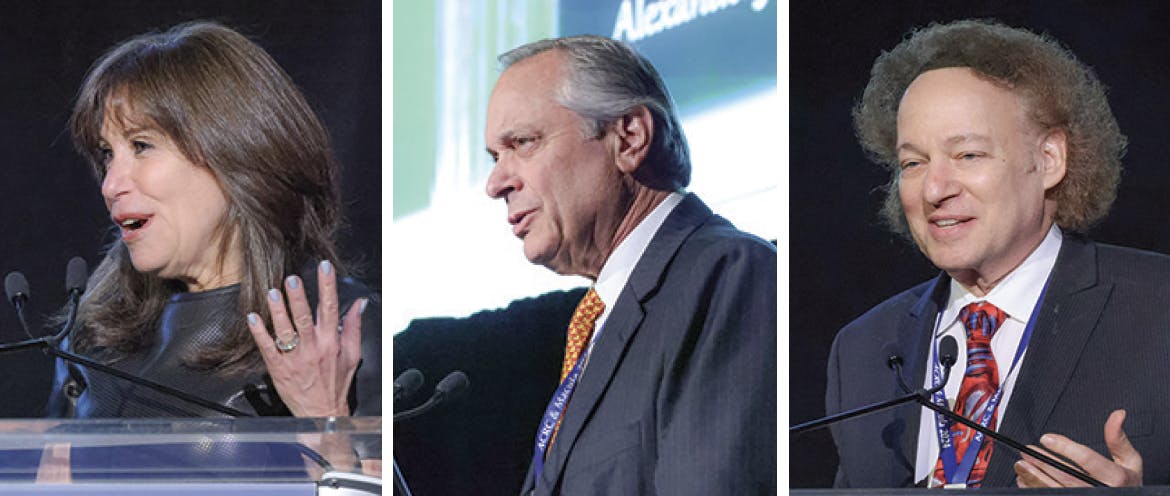
Figure 3. The Founder’s Awards were presented to (left to right) Susan B. Bressler, MD; Alexander J. Brucker, MD; and Richard B. Rosen, MD.
See you in Baltimore for the next ACRC and Macula meeting, planned for January 9-11, 2025!


_1784132761.jpg?auto=compress,format&w=75)





