


AT A GLANCE
- Duration and type of head positioning remain controversial with studies providing contradictory findings regarding its necessity.
- Face-down positioning (FDP) is the most common positioning recommendation after vitrectomy with gas tamponade for retinal detachment repair.
- A recent study found that FDP with side sleeping was the most recommended position at postoperative days 0 and 1. Upright positioning and FDP with side sleeping were recommended at similar frequencies at postoperative week 1.
Face-down positioning (FDP) is the most common post-surgical head positioning after retinal detachment (RD) repair via pars plana vitrectomy (PPV) with gas tamponade to minimize postoperative retinal translocation, retinal displacement, and metamorphopsia.1-3 Since the introduction of FDP in the 1980s,4 optimal type and duration have varied.5
VARIABILITY IN POSITIONING
There are no set guidelines for positioning after RD surgery, with some reports supporting FDP and others questioning the necessity of a specific position depending on the break location. Current literature supports initiation of FDP early in RD repair. Shiragami et al determined that immediately assuming FDP after surgery, compared with waiting 10 minutes, reduced retinal displacement at 6 months postoperatively.2 Casswell et al found that FDP was beneficial compared with the support-the-break method for binocular diplopia and lowered retinal displacement rates at 8 weeks.6 However, the redetachment and displacement rates at 6 months were the same in each group.
Nevertheless, the use of FDP as the standard is controversial. Abdelkader et al believed FDP to be of limited value when it pushed the retina back but did not tamponade breaks. In a prospective study of 32 patients excluding those with posterior breaks, the team found that face-up positioning for at least 10 days allowed 94% of patients to experience successful retinal attachment.3 Otsuka et al found no differences in prone versus supine positioning for anatomical success rates, occurrence of macular pucker and retinal fold, or IOP after transconjunctival sutureless PPV for rhegmatogenous RD (RRD) that was not posterior. They also found no statistical differences in the location of retinal breaks between the groups. Of note, for both groups, Otsuka et al permitted patients with right temporal tears to lay in the left lateral recumbent position and those with inferior tears to lay in the lateral recumbent position on either side.7
Chen et al compared FDP with adjustable positioning and likewise found no difference in anatomical success rates, BCVA, or complication rates.8
Some literature even suggests that no recommended postoperative posture is viable. Martínez-Castillo et al found FDP was not necessary to achieve retinal reattachment in pseudophakic RDs with inferior breaks.9 Similarly, Soliman et al found that PPV for primary RRD repair was associated with good anatomical outcomes without any restricted postoperative head positioning.10
VARIABILITY ON DURATION
Early literature suggested duration from 8 to 12 days.11 A 2022 retrospective study found lower rates of redetachment in patients who were FDP ≥ 7 days compared with ≤ 6 days.12 In contrast, a 2005 prospective interventional case series was the first to report that only 24 hours of postoperative prone positioning was effective in the management of pseudophakic RRD with breaks between the 4 and 8 clock hour positions.11 In 2013, dell’Omo et al found that FDP 2 hours immediately post-PPV for RD in patients older than 60 years of age resulted in a lower rate of retinal displacement compared with 2010 reports of postoperative retinal displacement rates without any positioning.1,13
PATIENT FACTORS
Patients’ quality of life (QoL) is often affected by FDP. Casswell et al found QoL scores to be 89.3 in the face-down group versus 89 in the support-the-break group, with sample size insufficiently powered to determine significance.6 In addition, using the National Eye Institute Visual Function Questionnaire, Lina et al found that QoL after PPV correlated with metamorphopsia but not visual acuity or stereopsis.14
Patient adherence to FDP is a further challenge.15,16 Li et al proposed several approaches to increase compliance, such as enhancing comfort, encouraging doctor-patient communication, providing comprehensive and community-based care, and strengthening family education.17 Schaefer et al determined that compliance improved when patients were given inflatable prone position supports that were comfortable, inexpensive, and user-friendly.16 In addition, Kim et al found reduced musculoskeletal pain after a 3-day structured exercise for patients required to maintain FDP post-PPV.18
MORE RESEARCH
While FDP is the most common post-surgical positioning after RD repair to reduce complications, optimal positioning type and duration remain a debate among retina surgeons. We conducted a retrospective study evaluating postoperative head positioning instructions following RD repair at a single tertiary academic institution from 2020 to 2021. We reviewed patient records for the duration and type of head positioning recommended by retina surgeons on postoperative day 0 (POD0), day 1 (POD1), and week 1 (POW1).
Among the 282 patients in the sample, the most common position at POD0 was FDP sleep left (46.5%) or right (40.1%). At POD1, the most common recommendations were FDP sleep left (32.6%) and FDP sleep right (27.7%), followed by reading position with sleeping on the left (13.5%) or right (11.0%). At POW1, the most common recommendations were upright with sleeping on either side (15.6%) and FDP sleep left (12.1%) or right (7.8%). Consistent with prior literature, FDP was the most recommended position at POD0 and POD1; however, at POW1, upright position and FDP sleeping either right or left were similar (Figure 1).
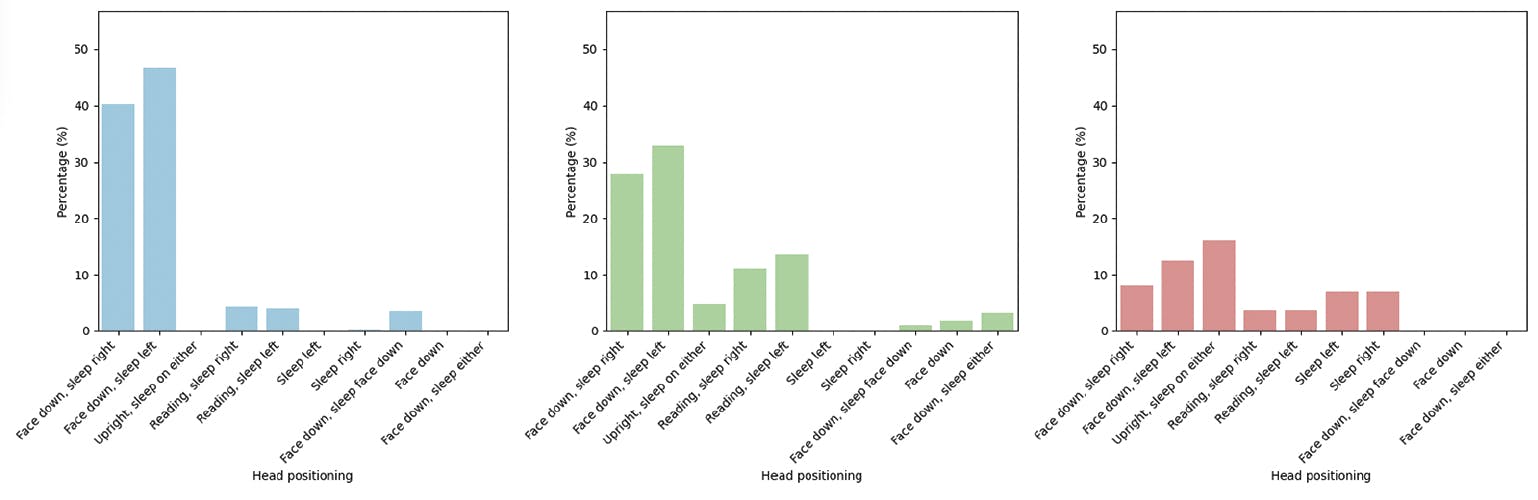
Figure 1. The recommended head positioning on postoperative days 0 (blue) and 1 (green) and postoperative week 1 (red) varied significantly.
The duration of the recommended head positioning was an average of 9.6 days (Figure 2). Documented duration varied between physicians and within individual physicians based on the case (Figure 3). This could be related to patient factors, pathology, intraoperative factors, or postoperative findings
(Figure 4).
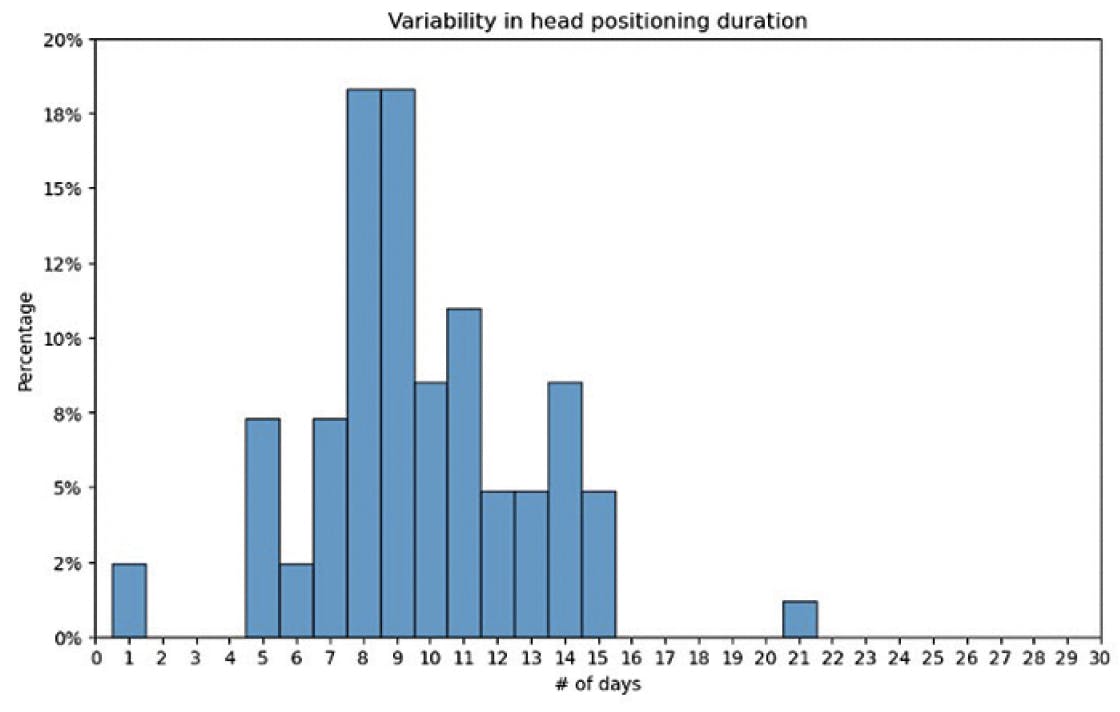
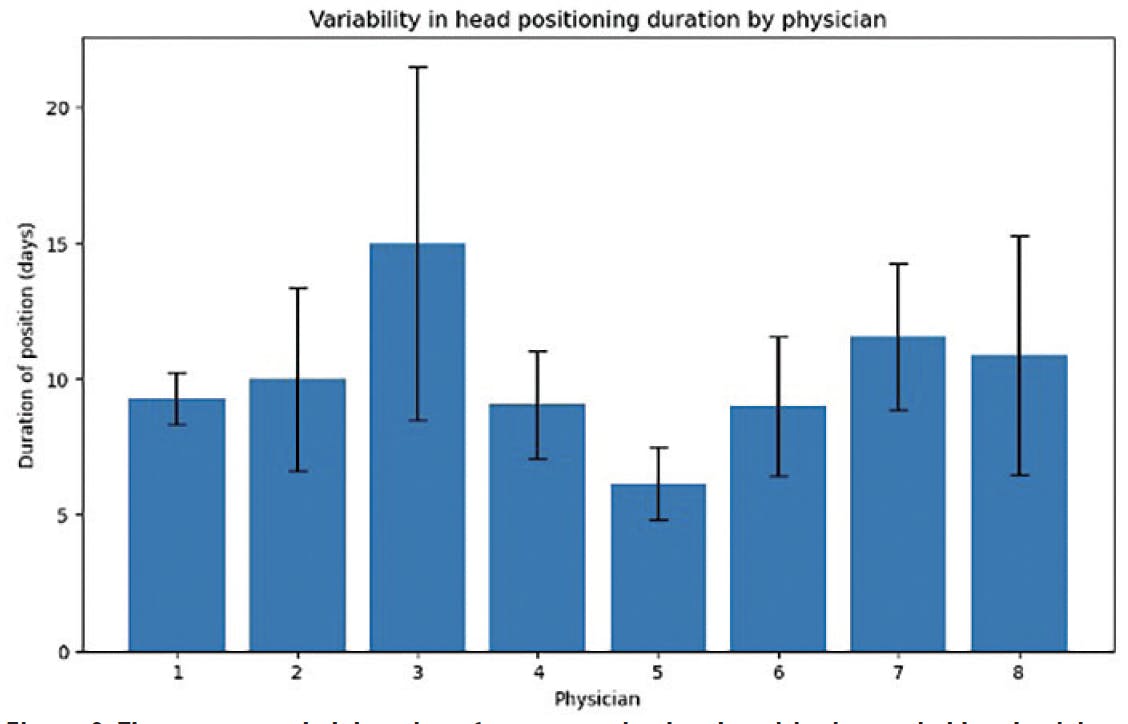

Figure 4. A 69-year-old man presented with a macula-splitting RD in the right eye (A, B) with retinal breaks superiorly, temporally, and nasally. The patient underwent 25-gauge vitrectomy with 14% C3F8. The patient was instructed to position face down and lie on his sides for 7 days. Follow-up at 1 (C) and 3 (D) months postoperatively showed that the retina was reattached.
Prior studies have tried to correlate positioning type and duration with surgical outcomes, but these studies are limited due to the difficulty of ensuring patient compliance and other confounding factors affecting surgical success rates. Randomized controlled trials evaluating positioning type, duration, patient QoL, and adherence can provide further guidance for retina surgeons on optimal recommendations for patients after RD surgery with PPV/gas.
1. Shiragami C, Shiraga F, Yamaji H, et al. Unintentional displacement of the retina after standard vitrectomy for rhegmatogenous retinal detachment. Ophthalmology. 2010;117(1):86-92.e1.
2. Shiragami C, Fukuda K, Yamaji H, Morita M, Shiraga F. A method to decrease the frequency of unintentional slippage after vitrectomy for rhegmatogenous retinal detachment. Retina. 2015;35(4):758-763.
3. Abdelkader AME, Abouelkheir HY. Supine positioning after vitrectomy for rhegmatogenous retinal detachments with inferior retinal breaks. Int J Retina Vitr. 2020;6(1):41.
4. Gonvers M, Machemer R. A new approach to treating retinal detachment with macular hole. Am J Ophthalmol. 1982;94(4):468-472.
5. Chandra A, Charteris DG, Yorston D. Posturing after macular hole surgery: a review. Ophthalmologica. 2011;226(Suppl. 1):3-9.
6. Casswell EJ, Yorston D, Lee E, et al. Effect of face-down positioning vs support-the-break positioning after macula-involving retinal detachment repair: The PostRD Randomized Clinical Trial. JAMA Ophthalmol. 2020;138(6):634-642.
7. Otsuka K, Imai H, Miki A, Nakamura M. Impact of postoperative positioning on the outcome of pars plana vitrectomy with gas tamponade for primary rhegmatogenous retinal detachment: comparison between supine and prone positioning. Acta Ophthalmol (Copenh). 2018;96(2):e189-e194.
8. Chen X, Yan Y, Hong L, Zhu L. A comparison of strict face-down positioning with adjustable positioning after pars plana vitrectomy and gas tamponade for rhegmatogenous retinal detachment. Retina. 2015;35(5):892.
9. Martínez-Castillo VJ, García-Arumí J, Boixadera A. Pars plana vitrectomy alone for the management of pseudophakic rhegmatogenous retinal detachment with only inferior breaks. Ophthalmology. 2016;123(7):1563-1569.
10. Soliman MK, Nithianandan H, McDonald H, Lingley AJ, Tuli R. Outcomes of rhegmatogenous retinal detachment repair with nonrestricted postoperative positioning. J Vitreoretin Dis. 2020;4(2):110-118.
11. Martínez-Castillo V, Verdugo A, Boixadera A, García-Arumí J, Corcóstegui B. Management of inferior breaks in pseudophakic rhegmatogenous retinal detachment with pars plana vitrectomy and air. Arch Ophthalmol Chic Ill 1960. 2005;123(8):1078-1081.
12. Zubricky RD, Platt SM. Comparison of face-down positioning durations following silicone oil tamponade. Ophthalmic Surg Lasers Imaging Retina. 2022;53(5):285-292.
13. dell’Omo R, Semeraro F, Guerra G, et al. Short-time prone posturing is well-tolerated and reduces the rate of unintentional retinal displacement in elderly patients operated on for retinal detachment. BMC Surg. 2013;13(2):S55.
14. Lina G, Xuemin Q, Qinmei W, Lijun S. Vision-related quality of life, metamorphopsia, and stereopsis after successful surgery for rhegmatogenous retinal detachment. Eye Lond Engl. 2016;30(1):40-45.
15. Suzuki K, Shimada Y, Seno Y, Mizuguchi T, Tanikawa A, Horiguchi M. Adherence to the face-down positioning after vitrectomy and gas tamponade: a time series analysis. BMC Res Notes. 2018;11:142.
16. Schaefer H, Koss MJ, Singh P, Koch F. Significant improvement in compliance with the face-down position after vitrectomy and gas tamponade. Klin Monatsblätter Für Augenheilkd. 2012;229(09):928-936.
17. Li Y, Li J, Shao Y, Feng R, Li J, Duan Y. Factors influencing compliance in RRD patients with the face-down position via grounded theory approach. Sci Rep. 2022;12(1):20320.
18. Kim AY, Hwang S, Kang SW, et al. A structured exercise to relieve musculoskeletal pain caused by face-down posture after retinal surgery: a randomized controlled trial. Sci Rep. 2021;11:22074.


_1784132761.jpg?auto=compress,format&w=75)





