




AT A GLANCE
- Surgeons now have a surgical approach to wet AMD therapy with the port delivery system with ranibizumab (Susvimo, Genentech/Roche), which requires a careful implant procedure.
- Implanting the Smaller-Incision, New-Generation Implantable Miniature Telescope (Samsara Vision) requires a modified cataract surgery approach.
- When delivering gene therapy subretinally, inflate the finished bleb’s borders to well outside the macula in the inferior periphery, and do not allow the bleb to touch the optic nerve.
Before the advent of anti-VEGF agents in 2006, most retina conditions were handled in the OR. Once anti-VEGF therapy proved efficacious for several retinal diseases, injection clinics quickly became packed with patients seeking medical treatment. However, recent advances in our therapeutic approaches may have some patients headed back to the OR for an ocular implant or subretinal drug delivery. Here, we share the latest surgical techniques you need to be familiar with and tips for mastering them in your OR.
IN THE OR NOW: PDS
By David A. Eichenbaum, MD, FASRS
With the reintroduction of the port delivery system (PDS) with ranibizumab (Susvimo, Genentech/Roche) in July 2024, physicians now have a surgical approach to consider for patients with wet AMD. PDS implantation can be performed by any retina surgeon, and the more technical aspects of the procedure are easily mastered with practice.
I start PDS cases by placing a 25- or 27-gauge infusion cannula in the far inferotemporal quadrant near the 5 clock hour and a traction suture through the cornea superotemporally—approximately where I will place my port—to ensure good exposure.
Next, using nontraumatic forceps, I make a generous conjunctival flap (larger than the recommended 6 mm x 6 mm) and carefully and completely undermine the conjunctiva and Tenon's with blunt dissection, being careful to capture both layers of tissue. Surgeons should take care to position the entire flap inferiorly in the superotemporal quadrant because the implant is preferentially tucked superiorly and inset toward the corner of the flap. A slightly lower flap and implant position will facilitate refill-exchanges in the clinic. Surgeons should remember to keep the flap hydrated during the case to preserve its elasticity.
Once I have exposed and dried the sclera, often with wet-field eraser cautery, I make precise and discrete ink marks with a 3.5 mm caliper using minimal pressure. One of the most important attributes to safe, long-term implant retention is an incision that is not too large; thus, an accurate measurement is worth the extra care and time. Because the implant will be refilled in the middle of the 3.5 mm marks, postoperative accessibility is important, so plan your 3.5 mm marks accordingly. The implant should be tucked deeper into the hinged base of the flap and not toward the edge of the radial wound to avoid positioning the flange near the radial incision.
After the sclera is marked, dissected, and the choroid at the pars plana is lasered with special attention to the wound edges, I use a 3.2 mm keratome blade slit knife to make the incision in one smooth motion, with the infusion off, incising past the diamond on the blade before withdrawing. I pause after withdrawing the blade to ensure there is no bleeding at the wound edges; if there is, I treat with taper-tip cautery, which I already have accessible but unopened in the OR.
I insert the implant with the supplied insertion device and turn the infusion on as soon as the implant is engaged in the wound for counter pressure. I clean any external vitreous with the cutter only after the implant is seated and ensure the implant flanges are aligned parallel to the limbus after placement (Figure 1).
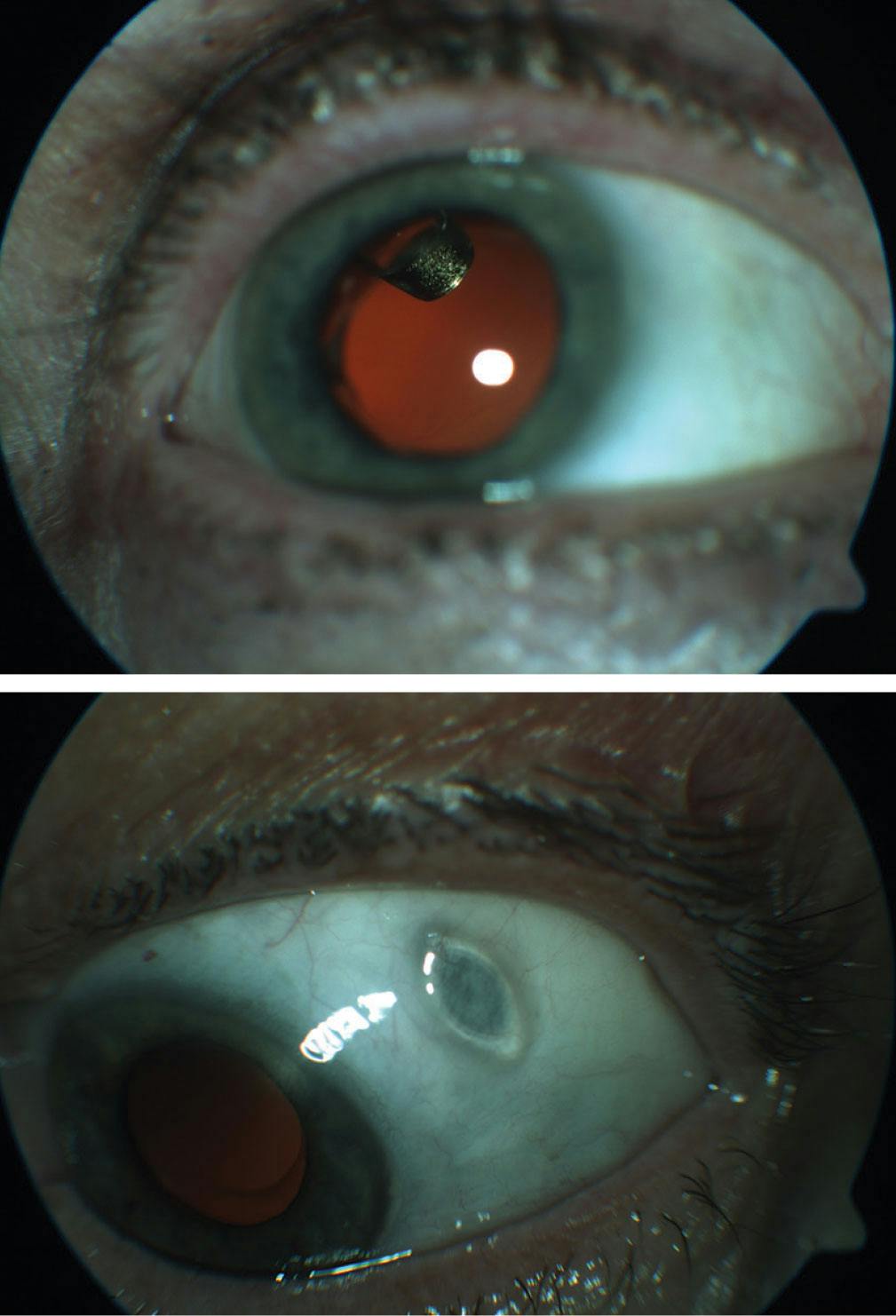
Figure 1. The PDS should be placed superiorly and inset toward the corner of the flap to facilitate refill-exchanges in the clinic. Courtesy of David A. Eichenbaum, MD, FASRS.
The final step is to fully cover the implant with the conjunctiva-Tenon’s flap. I typically use 8-0 Vicryl and close the distal corner first, targeting 1 mm to 2 mm of overlap onto the cornea because the tissue retracts posteriorly postoperatively. I ensure there is plenty of flap elasticity and undermine more now if needed to achieve traction-free closure over the flange. I am careful not to close the radial incision over the flange of the implant. If the implant's placement is too close to the radial incision and the conjunctiva is closing over the flange, I recommend generous conjunctival overlap along the radial edge.
IN CLINICAL TRIALS: IMPLANTS AND SUBRETINAL DELIVERY
Several surgical innovations currently under investigation may soon send certain AMD patients into the OR for novel treatment approaches.
Subretinal Gene Therapy
By David A. Eichenbaum, MD, FASRS
There are several technologies under investigation to mitigate frequent intravitreal anti-VEGF injections, including subretinal gene therapy with ABBV-RGX-314 (Regenexbio/Abbvie). This therapy requires vitrectomy followed by subretinal injection. The following tips and tricks can help make subretinal injection and bleb creation approachable and successful.
The first step is good visualization (Figure 2). In the ABBV-RGX-314 clinical trials, all subjects are pseudophakic, and, per protocol, we are using 23-gauge instrumentation with a retractable polyamide subretinal injection cannula. The same techniques can be applied to subretinal injection with 25-gauge nonretractable polyamide injectors. I perform the entire subretinal injection case under wide-angle visualization and do not use a high-magnification lens. I stain the vitreous with diluted triamcinolone to ensure that there is complete vitreous separation without vitreoschisis—even a thin sheet of posterior hyaloid will inhibit subretinal injection.
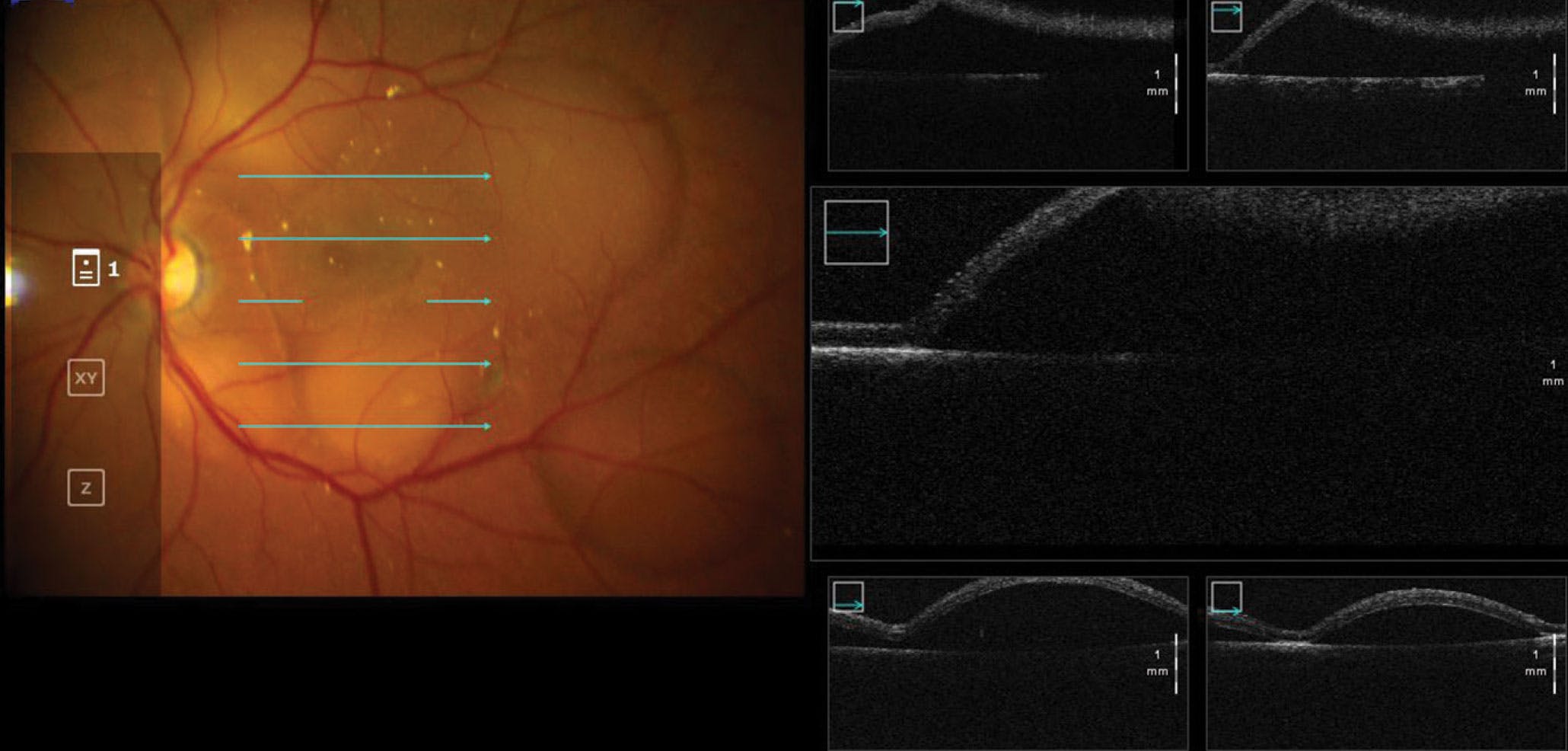
Figure 2. Intraoperative OCT can help surgeons ensure proper bleb placement during subretinal gene therapy procedures. Courtesy Charles C. Wykoff, MD, PhD.
Next, the surgical protocol includes inflating the finished bleb’s borders to well outside (at least 2 disc diameters) the macula in the inferior periphery and not allowing the bleb to touch the optic nerve. In my experience, subretinal blebs propagate posteriorly, and I place my bleb inferonasally; thus, I try to start my bleb as anteriorly as I can comfortably visualize. The 200 ul of gene therapy product injected generates a surprisingly large bleb, and, although I prefer one bleb, the trial allows for multiple blebs, if necessary.
It is vital to have a good spotter in the OR for accurate dosing. Before I begin my bleb, I turn my syringe with the gene product to my circulating nurse who then uses a penlight to illuminate the markings. I advance the bung to a visible marking with well more than 200 ul of fluid in the syringe. As soon as my bleb starts propagating, I voice “bleb,” and the circulating nurse counts down 200 ul from that point. Filling a single bleb with a wide-open pedal takes about 60 seconds.
When initiating the bleb, I do not cut the tip of the polyamide subretinal cannula into an angle. I place my round cannula directly on the peripheral retina where I start my bleb, generating a very slight blanching of the retinal pigment epithelium-choroid, then pull back ever so slightly before hitting the pedal and starting the bleb. Surgeons can also start the flow of fluid before “touching down” and using the jet of fluid and the cannula tip to initiate the bleb.
To minimize efflux from the bleb, hold your cannula stable to keep from enlarging the tiny retinotomy, and plug the bleb for approximately 5 to 10 seconds after completing the injection. Upon withdrawing the cannula, some drug may flow out of the bleb, but this should be small with an atraumatic retinotomy and a few seconds of plugging. Scleral depression should be performed before bleb formation, not after.
To ensure that the subretinal drug stays in the inferior periphery, partially fill the eye with air and sit the patient up for several hours. I perform a 2/3 fluid-air exchange and instruct the patient to keep at least a 45° upright angle for 24 hours.
SING IMT: An Intraocular Telescopic Device for AMD
By Albert J. Augustin, MD
The Smaller-Incision, New-Generation Implantable Miniature Telescope (SING IMT, Samsara Vision; not yet FDA approved) offers a significant improvement over the original version for late-stage AMD patients, as it is smaller, less invasive, and capable of enhancing both distance and near visual acuity. Implanting the SING IMT requires a modified cataract surgery approach.
The SING IMT implantation begins with peribulbar anesthesia administered approximately 10 minutes before surgery. After adequate iris dilation, a conjunctival peritomy is performed at the 12 clock position, with scleral bleeding controlled using bipolar coagulation. A 2.75 mm sclerocorneal tunnel is created approximately 1 mm from the corneal limbus. Two side-service paracenteses are made at the 5 and 7 clock positions, and a dispersive OVD is injected into the anterior chamber to maintain stability. A continuous manual circular anterior capsulorhexis (5.5 mm to 6 mm) is completed, followed by standard cataract surgery procedures to prepare the eye for implantation.
The SING IMT is preloaded in the Tsert delivery system, including the cartridge and injector. Before implantation, the anterior chamber and capsular bag are filled with viscoadaptive OVD. The sclerocorneal incision is enlarged to 7.5 mm to 8 mm to accommodate the device, with the injector tip positioned at a 45° angle to the corneolimbal incision. As the tip reaches the capsulorhexis plane, the SING IMT is carefully inserted into the capsular bag (Figure 3). The two inferior haptics and one superior haptic are secured within the capsular bag. Two or three nylon sutures (10-0) are applied to securely close the sclerocorneal incision.
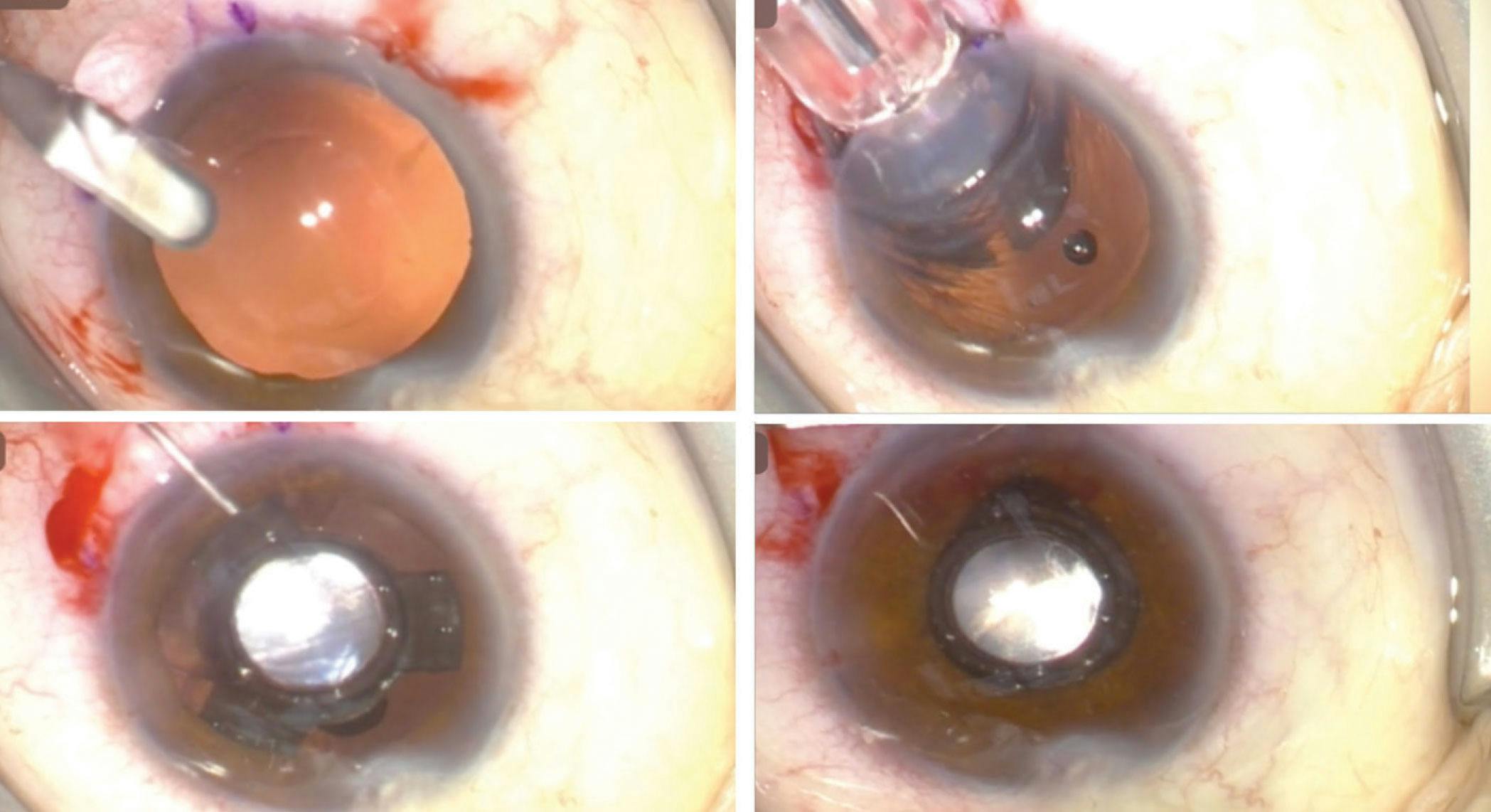
Figure 3. Implantation of the SING IMT involves a modified cataract surgery followed by implantation of the device using the company’s Tsert delivery system. Courtesy of Albert J. Augustin, MD.
After removing the OVD, an iridectomy is performed at the 12 clock position to prevent a postoperative pupillary block. Finally, 0.1 mL of intracameral cefuroxime is injected and the conjunctiva is sutured to ensure stability and minimize the risk of dislocation. The procedure takes approximately 20 to 30 minutes, with no significant complications reported. A successful implantation depends on achieving a sufficiently wide anterior capsulorhexis to avoid injector misalignment and associated complications.1,2
Postoperative care is critical to optimize outcomes and prevent complications, such as infection, inflammation, and device dislocation. The postoperative regimen includes topical antibiotics and antiinflammatory agents, administered for up to 30 days. Additional medications, including NSAIDs and cycloplegic agents, may be prescribed based on individual patient needs. The most crucial aspect of postoperative care is visual rehabilitation, which begins approximately 4 weeks after surgery. Rehabilitation involves six to eight biweekly sessions, designed to help patients adapt to the SING IMT’s magnified central vision for activities such as reading and writing, while relying on peripheral vision for navigation and spatial awareness. Although rehabilitation is gradual, significant improvements in daily activities, such as watching television and recognizing faces, can be observed even after a few weeks of consistent practice.3
NEW CHALLENGES IN THE OR
These new surgical implants and techniques might not challenge a surgeon’s skillset, but success can be assured by attention to the nuances of the surgery and adherence to the surgical best practices. Hopefully, more surgical tools find their way out of the pipeline and into retina ORs to help patients with AMD and other retina diseases.
1. Savastano A, Caporossi T, Sasso P, et al. A new intraocular telescopic device for age-related macular degeneration. Ophthalmol Retina. 2022;6:971-972.
2. Toro MD, Vidal-Aroca F, Montemagni M, et al. Three-month safety and efficacy outcomes for the smaller-incision new-generation implantable miniature telescope (SING IMT). J Clin Med. 2023;12:518.
3. Sasso P, Savastano A, Vidal-Aroca F, et al. Enhancing the functional performance of patients with late-stage age-related macular degeneration implanted with a miniature telescope using rehabilitation training. Ophthalmol Ther. 2024;13(3):697-707.


_1784132761.jpg?auto=compress,format&w=75)





